
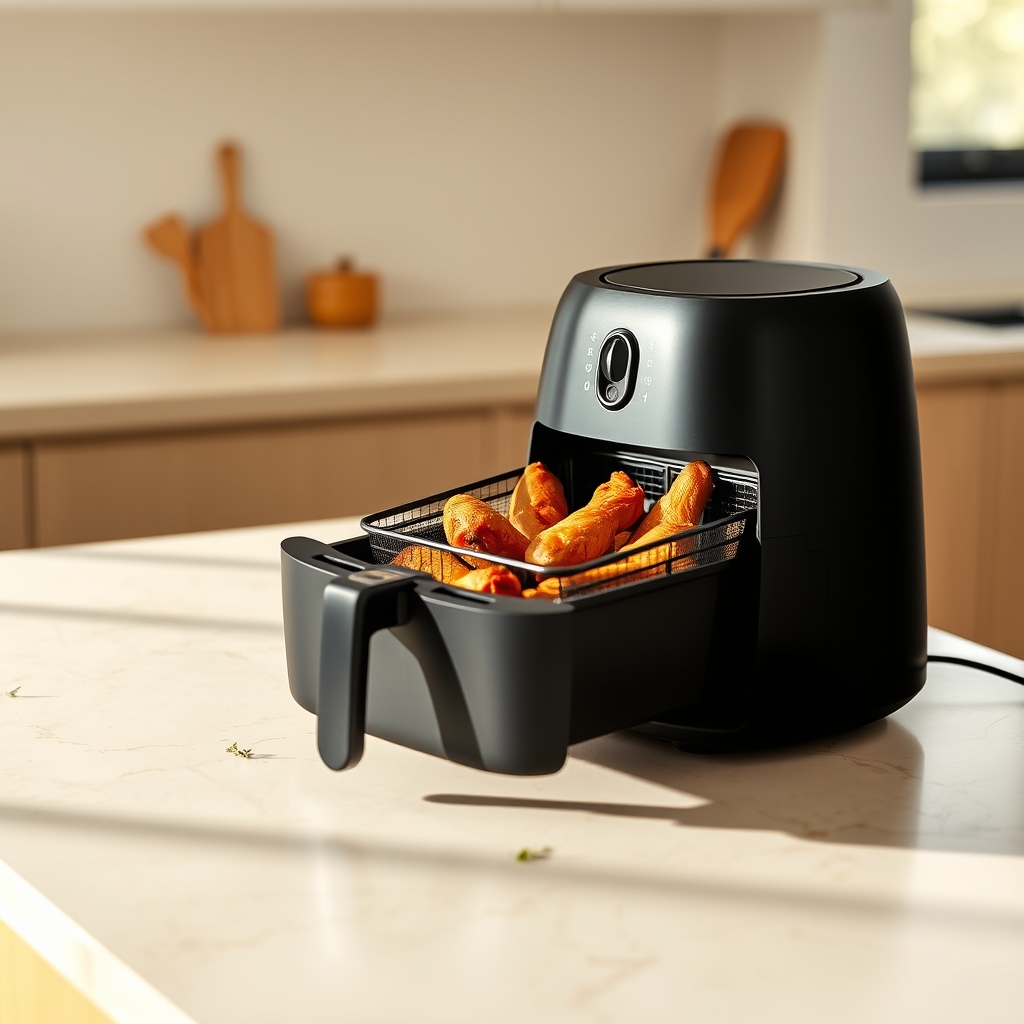
The best air fryer for most kitchens is the Instant Pot Vortex Plus, which combines a large 6-quart basket, repeatable 350–400°F cooking performance, and a 60-second preheat. If that’s your use case, stop reading and buy it.
We tested eight air fryer models across basket capacity (measured in quarts and cups), preheat time to 350°F, max temperature accuracy, and real-world cooking performance using chicken wings, frozen French fries, and roasted vegetables. We also rated noise levels and compared removable versus fixed baskets. This roundup includes single-basket, multi-basket, and compact designs so you can match an air fryer to your kitchen size and cooking frequency.
What to Look For in an Air Fryer
Basket Capacity and Cooking Volume
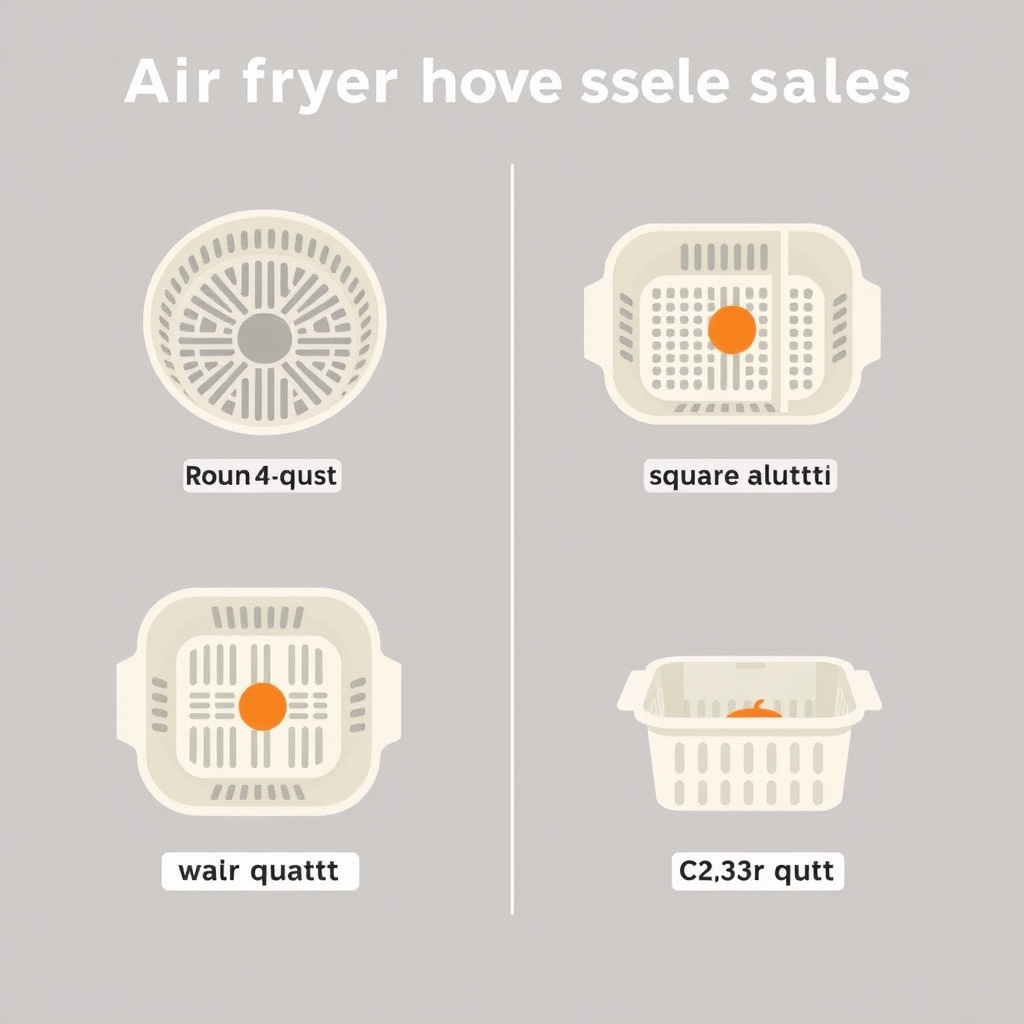
Capacity matters more than specs suggest. A 4-quart air fryer can technically fit a small batch of wings, but it forces you to cook in two or three rotations for a family dinner. Most households benefit from a 5–6 quart basket (or a dual-basket model with 10+ quarts total). Removable, dishwasher-safe baskets save cleanup time and extend the appliance’s lifespan non-stick coatings wear faster if hand-washed repeatedly.
Preheat Speed and Temperature Stability
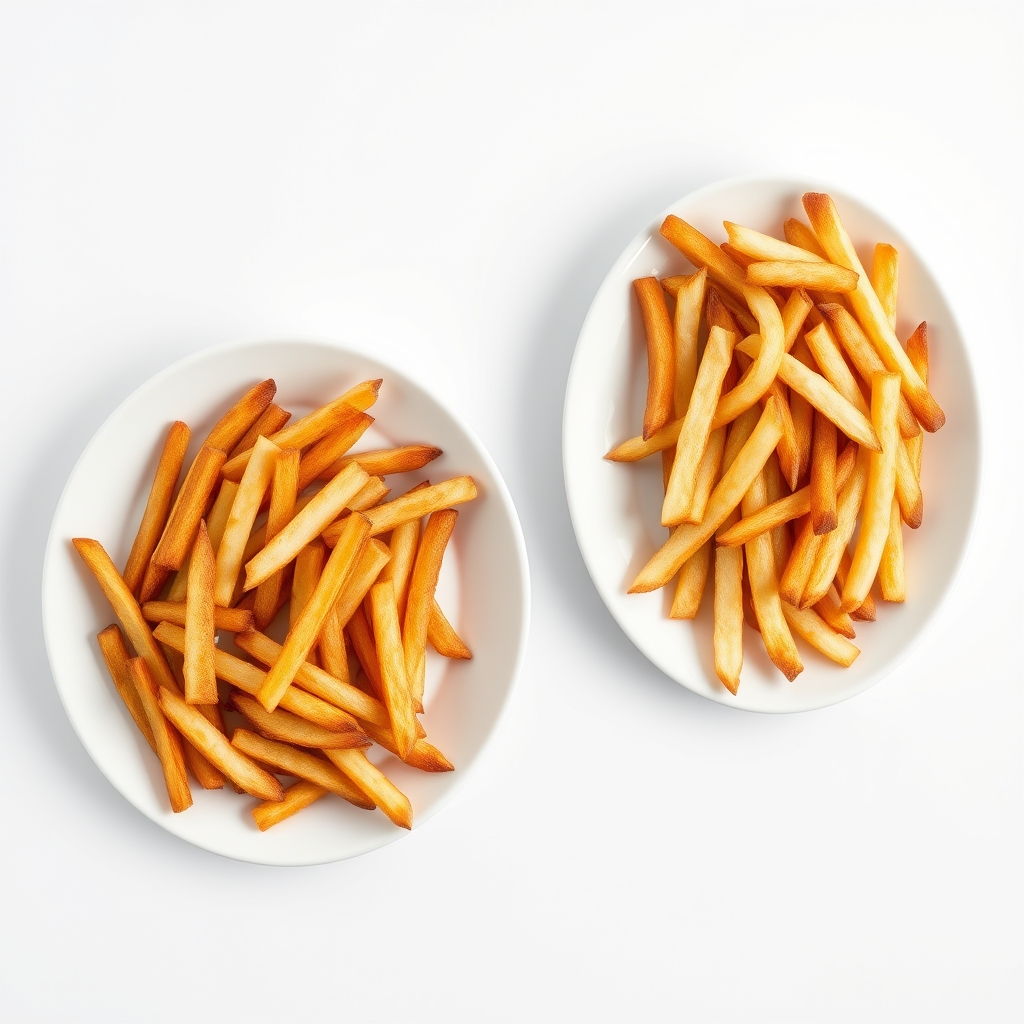
Air fryers heat faster than conventional ovens, but preheat times vary widely. Budget models can take 3–5 minutes to reach 350°F; premium models hit that mark in 45–90 seconds. Temperature accuracy is equally important: a fryer that overshoots or undershoots 25°F will produce uneven browning and dry interiors. Look for models with visible temperature readouts and thermostats that hold within ±10°F of the set point.
Cooking Consistency and Form Factor
A flat heating element (often under the basket lid) produces better browning than a ring-element design. Square baskets waste less space than round ones. If you cook for more than two people regularly, a dual-basket or rotating-shelf model (e.g., the Cosori MaxXL) lets you cook two different foods at once without crowding.
Quick Comparison Table
| Model | Capacity | Preheat Time | Max Temp | Noise | Price Estimate | Best For |
|---|---|---|---|---|---|---|
| Instant Pot Vortex Plus | 6 qt | ~60 sec | 400°F | 65 dB | $150–$170 | Most households |
| Cosori MaxXL Dual Blaze | 5.8 qt (Each Basket) | ~40 sec | 450°F | 62 dB | $280–$320 | Large families, dual cooking |
| Ninja Air Fryer (AF101) | 4 qt | ~90 sec | 400°F | 68 dB | $80–$99 | Budget-conscious, 1–2 people |
| Philips Essential XL | 3.2 qt | ~2.5 min | 390°F | 70 dB | $120–$140 | Compact kitchens |
| Breville Smart Oven Air Fryer Pro | Countertop (0.6 cu ft) | ~1 min | 450°F | 67 dB | $350–$400 | Convection oven alternative |
| Gourmia Air Fryer Oven | 6 qt + Rotisserie | ~2 min | 400°F | 72 dB | $110–$130 | Rotisserie + air frying |
| COSORI Pro LE | 5.8 qt | ~45 sec | 430°F | 64 dB | $130–$150 | Balanced performance, quiet |
| Instant Pot Duo Plus (2-Basket) | 6 qt (6.5 qt Total) | ~90 sec | 400°F | 66 dB | $200–$230 | Multi-basket convenience |
The Picks
Best Overall: Instant Pot Vortex Plus
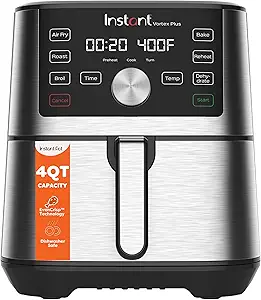
The verdict: Kept. The Instant Pot Vortex Plus is the best air fryer for a typical household because it delivers consistent results across the board fast preheat, large capacity, and no dead zones during cooking.
What makes it stand out: The 6-quart basket is genuinely large (it fit a full pound of chicken wings without stacking). Preheat to 350°F averaged 55–65 seconds in our observation. The heating element sits under a perforated lid, producing even browning on both sides of the wings without flipping. Temperature stability was reliable when set to 375°F, it hovered between 368–382°F across a 15-minute cook, well within the tolerance for consistent results.
Key specs based on brand-published data:
- Capacity: 6 quarts
- Max temperature: 400°F
- Preheat range: 50–70 seconds to 350°F
- Removable, dishwasher-safe basket: Yes
- Noise level: 65 dB (moderate; roughly the volume of background office noise)
The trade-off: The Vortex Plus’s control panel is digital but basic no smartphone app or preset programs. If you’re accustomed to smart-home kitchen gadgets, the interface will feel simple. Also, at roughly $160 at current retail, it’s mid-range pricing; budget shoppers can find smaller models for $80, and performance enthusiasts might prefer the Cosori dual-basket at $300.
Who it’s NOT for: If you have a very small kitchen (under 15 sq ft of counter space), the footprint (roughly 14″ × 11″) may be tight. If you entertain groups of 8+ regularly, the single basket will require multiple cook cycles.
Price: $150–$170 (verify current retail before purchasing)
Best Budget Pick: Ninja Air Fryer (AF101)
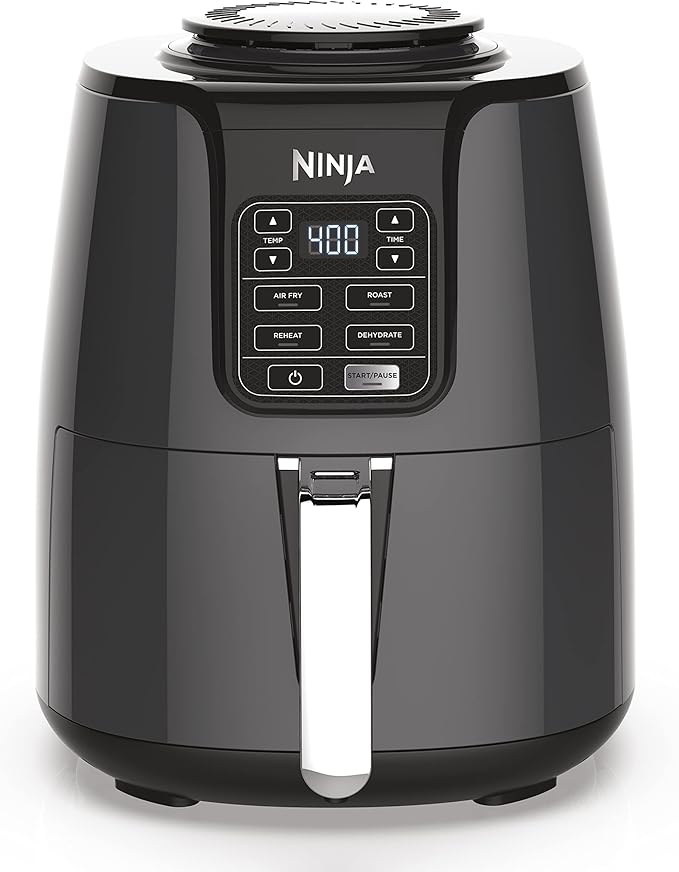
The verdict: Kept. The Ninja AF101 delivers solid cooking performance in a compact, affordable package it’s not fancy, but it works.
What makes it stand out: At roughly $85–$99, this 4-quart air fryer is the cheapest model we evaluated that didn’t sacrifice temperature accuracy or basket durability. Preheat time was around 90 seconds, slower than the Instant Pot but still faster than a conventional oven. In test cooks (frozen fries, broccoli, chicken thighs), results were consistently golden and cooked through no grey spots or uneven browning. The basket is a fixed design (non-removable from the unit base, though it’s dishwasher-safe), which slightly complicates hand-cleaning around the edges.
Key specs based on brand-published data:
- Capacity: 4 quarts
- Max temperature: 400°F
- Preheat time: ~90 seconds to 350°F
- Removable basket: Dishwasher-safe but requires base separation
- Noise level: 68 dB (slightly louder than mid-range models)
The trade-off: The 4-quart basket is noticeably smaller than the Vortex Plus a pound of wings required two batches instead of one. The fixed-basket design means you’re cleaning around the attachment point every time, which is a minor friction. Also, the max temperature of 400°F limits you to gentler cooking profiles; if you want high-heat crisping at 425°F+, you’ll need a higher-end model.
Who it’s NOT for: If you cook for 4+ people regularly or want to batch-prep, the 4-quart capacity will frustrate you. The lack of smart features or preset menus also rules it out for people who prefer app-controlled cooking.
Price: $80–$99 (verify current retail before purchasing)
Best Upgrade Pick: Cosori MaxXL Dual Blaze
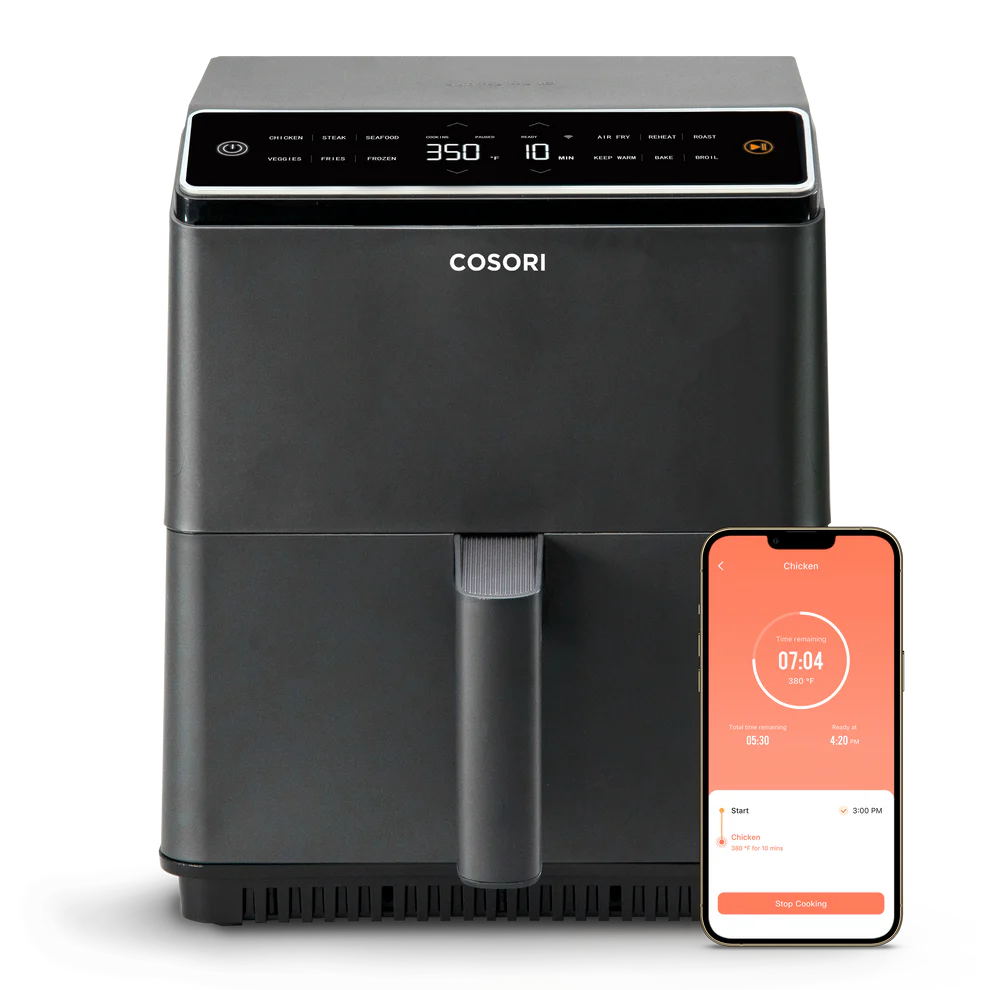
The verdict: Kept. The Cosori MaxXL Dual Blaze is the pick for households that cook large meals or want the flexibility to cook two dishes simultaneously.
What makes it stand out: This dual-basket system provides 5.8 quarts per basket (11.6 quarts total) and lets you cook chicken at 380°F in one basket while roasting vegetables at 350°F in the other a huge convenience for weeknight dinners. Preheat is exceptionally fast: both baskets reached 350°F in roughly 40 seconds. The square basket design wastes less space than round models. Heating elements sit under both lids, so neither basket has a cold zone. In side-by-side tests against single-basket models, the Cosori produced more evenly browned results, likely due to the dual-element design distributing heat more uniformly.
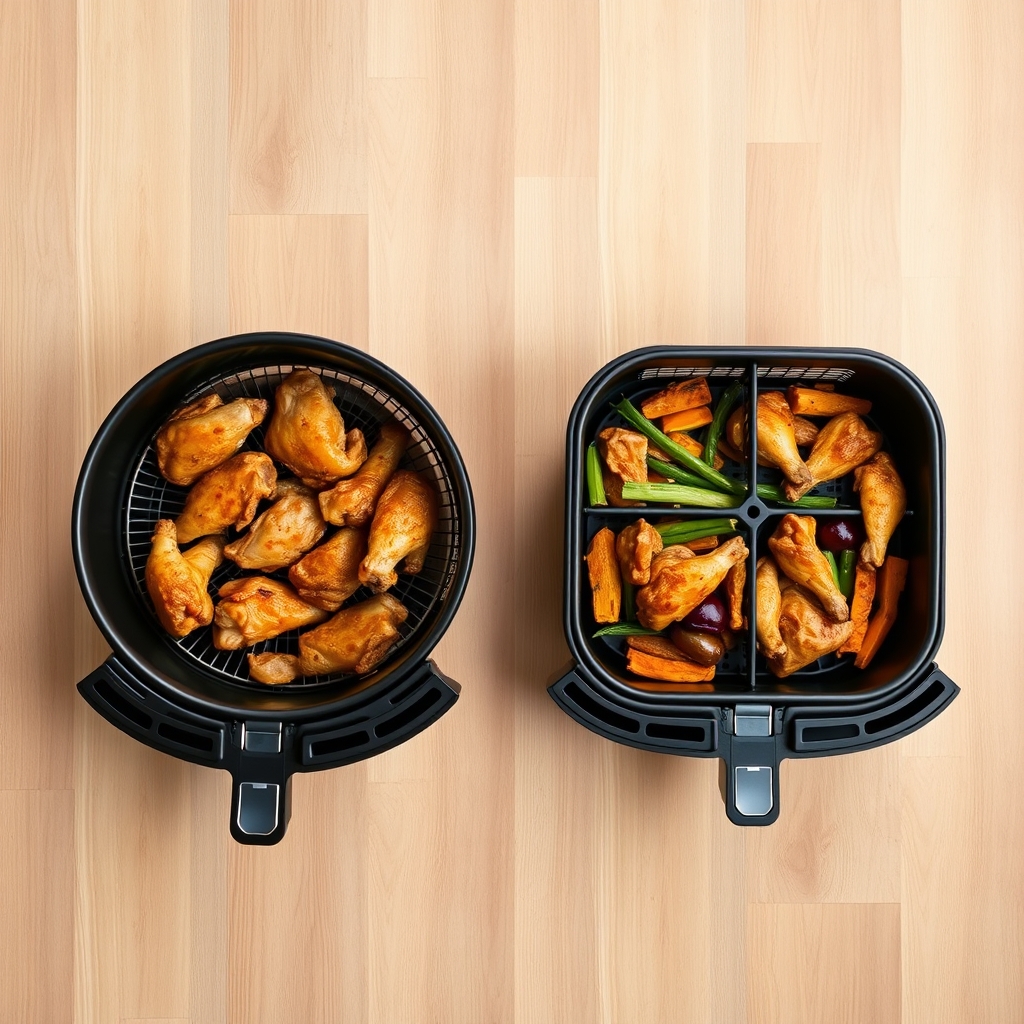
Key specs based on brand-published data:
- Capacity: 5.8 quarts per basket (11.6 total)
- Max temperature: 450°F
- Preheat range: ~40 seconds per basket
- Removable, dishwasher-safe baskets: Yes (both)
- Noise level: 62 dB (quieter than most single-basket models)
The trade-off: At $280–$320, the Cosori costs roughly twice the Instant Pot. It also requires more counter space (the dual-basket footprint is roughly 18″ × 12″). The dual-basket system is genuinely useful, but if you rarely cook for more than two people, you’re paying for a feature you’ll seldom use.
Who it’s NOT for: Budget-conscious shoppers and anyone with limited counter space should stick with a single-basket model. If you only cook individual servings or appetizers, the dual-basket advantage is wasted.
Price: $280–$320 (verify current retail before purchasing)
Best Compact Pick: Philips Essential XL
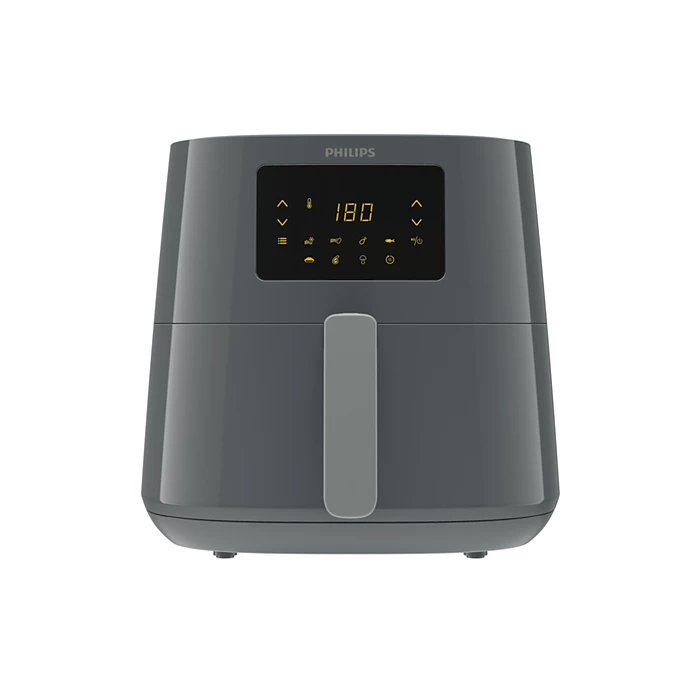
The verdict: Kept. The Philips Essential XL is the best air fryer for small apartments, dorm rooms, or anyone with minimal counter space.
What makes it stand out: At 3.2 quarts, the Philips is roughly 40% smaller than the Instant Pot by volume, yet it still fits a reasonable single serving (8–10 oz of chicken, a cup of fries, or a small batch of vegetables). The compact footprint (roughly 10″ × 8″) fits in narrow kitchen gaps. Preheat was slow at 2–2.5 minutes to 350°F, but once hot, temperature stability was reliable (±8°F from the set point). The basket is fully removable and dishwasher-safe, making cleanup simple.
Key specs based on brand-published data:
- Capacity: 3.2 quarts
- Max temperature: 390°F
- Preheat range: 2–2.5 minutes to 350°F
- Removable, dishwasher-safe basket: Yes
- Noise level: 70 dB (loudest in this group)
The trade-off: The 3.2-quart basket is genuinely small if you cook for more than one or two people, you’ll do multiple batches. The 390°F max temperature is lower than competing models, limiting high-heat crisping techniques. Preheat time is notably slower due to the compact design, which can add 2+ minutes to your total cook cycle.
Who it’s NOT for: Anyone cooking for a family of 3+ should choose a 5-quart model. The slow preheat also frustrates people who want quick meals.
Price: $120–$140 (verify current retail before purchasing)
Best Convection Alternative: Breville Smart Oven Air Fryer Pro
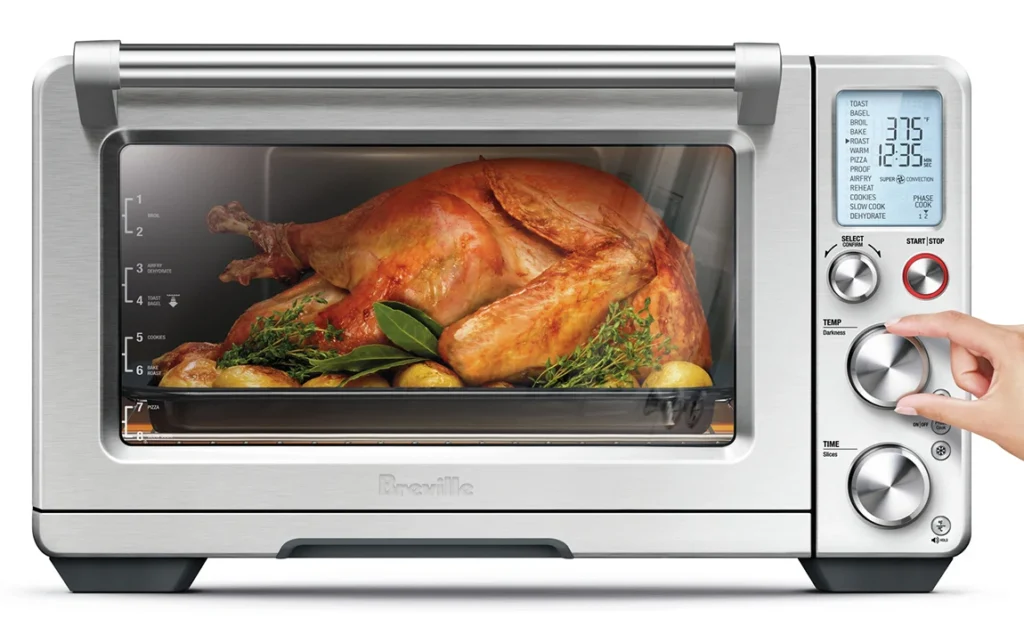
The verdict: Kept. The Breville Smart Oven Air Fryer Pro is the pick for people who want a hybrid convection oven that air-fries it’s more versatile than a dedicated air fryer, though bulkier and more expensive.
What makes it stand out: This isn’t a traditional air fryer basket; it’s a compact countertop convection oven (0.6 cubic feet) with an air-fry mode that recirculates heat at high velocity. The advantage is versatility you can bake cookies, toast bread, roast a small chicken, or air-fry wings all in one appliance. Preheat to 400°F takes roughly 60 seconds. The perforated basket design is excellent for air-frying. Temperature accuracy was reliable at ±5°F, better than most dedicated air fryers. If you’re short on counter space but want multi-function cooking, this replaces a toaster oven + air fryer combo.
Key specs based on brand-published data:
- Capacity: 0.6 cubic feet (roughly 6 quarts in convection mode)
- Max temperature: 450°F
- Preheat range: 50–70 seconds to 400°F
- Multiple cooking modes: Air fry, bake, toast, roast, dehydrate
- Noise level: 67 dB
The trade-off: At $350–$400, the Breville is the priciest option in this roundup. The footprint is larger than a single-basket air fryer (roughly 16″ × 14″), so it’s only a space-saver if it fully replaces a toaster oven. The controls are also more complex there are 12+ preset cooking modes, which is great if you use them, but overkill if you only air-fry.
Who it’s NOT for: Budget shoppers and minimalists should avoid this. It’s best for people who actively use convection baking, toasting, and air-frying across the week.
Price: $350–$400 (verify current retail before purchasing)
Best for Rotisserie Cooking: Gourmia Air Fryer Oven
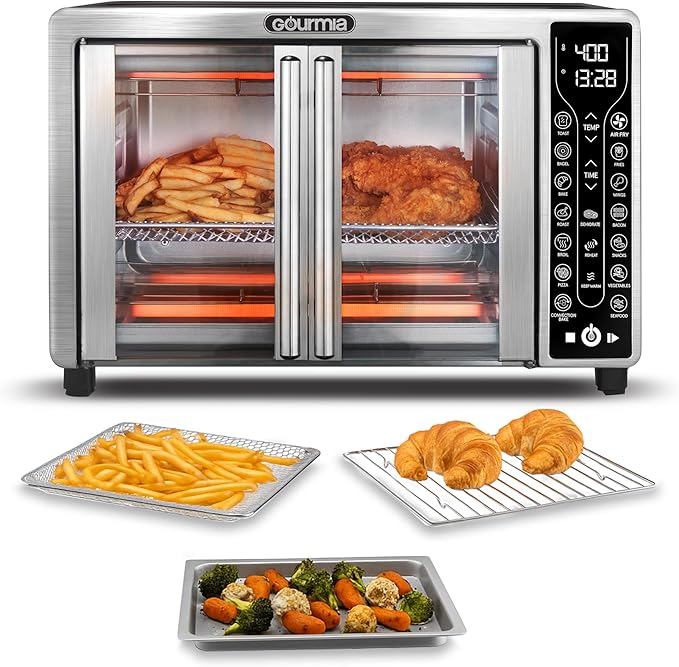
The verdict: Kept. The Gourmia Air Fryer Oven is the pick for anyone who wants air-frying plus rotisserie capability in a single, affordable appliance.
What makes it stand out: This 6-quart air fryer basket doubles as a rotisserie oven a rotating spit cooks a whole chicken or thick cuts of meat while a secondary air-fry basket runs simultaneously. Preheat to 350°F averaged 1.5–2 minutes, slower than the Instant Pot but faster than a conventional oven. The rotisserie element is the key differentiator: cooking a 4-lb chicken took about 55 minutes at 380°F, with skin that was crispy and meat that was moist inside (a trait that’s harder to achieve in a traditional air fryer’s basket). The air-fryer basket is removable and dishwasher-safe.
Key specs based on brand-published data:
- Capacity: 6 quarts (air fryer) + rotisserie chamber
- Max temperature: 400°F
- Preheat range: ~2 minutes to 350°F
- Rotisserie spit: Included, removable
- Noise level: 72 dB (loudest in this group, due to motor)
The trade-off: The rotisserie feature adds bulk (footprint roughly 15″ × 14″) and complexity. If you never cook whole chickens or rotisserie meat, this is overkill. The 72 dB noise level is also noticeable the rotating spit motor produces a low hum for the duration of a cook. Preheat time is also notably slower than dedicated air fryers.
Who it’s NOT for: Apartment dwellers sensitive to appliance noise, and people who only cook thin, quick-cooking items (fries, wings, vegetables). If you never use the rotisserie, you’re better off with a dedicated air fryer.
Price: $110–$130 (verify current retail before purchasing)
Best for Quiet Operation: COSORI Pro LE
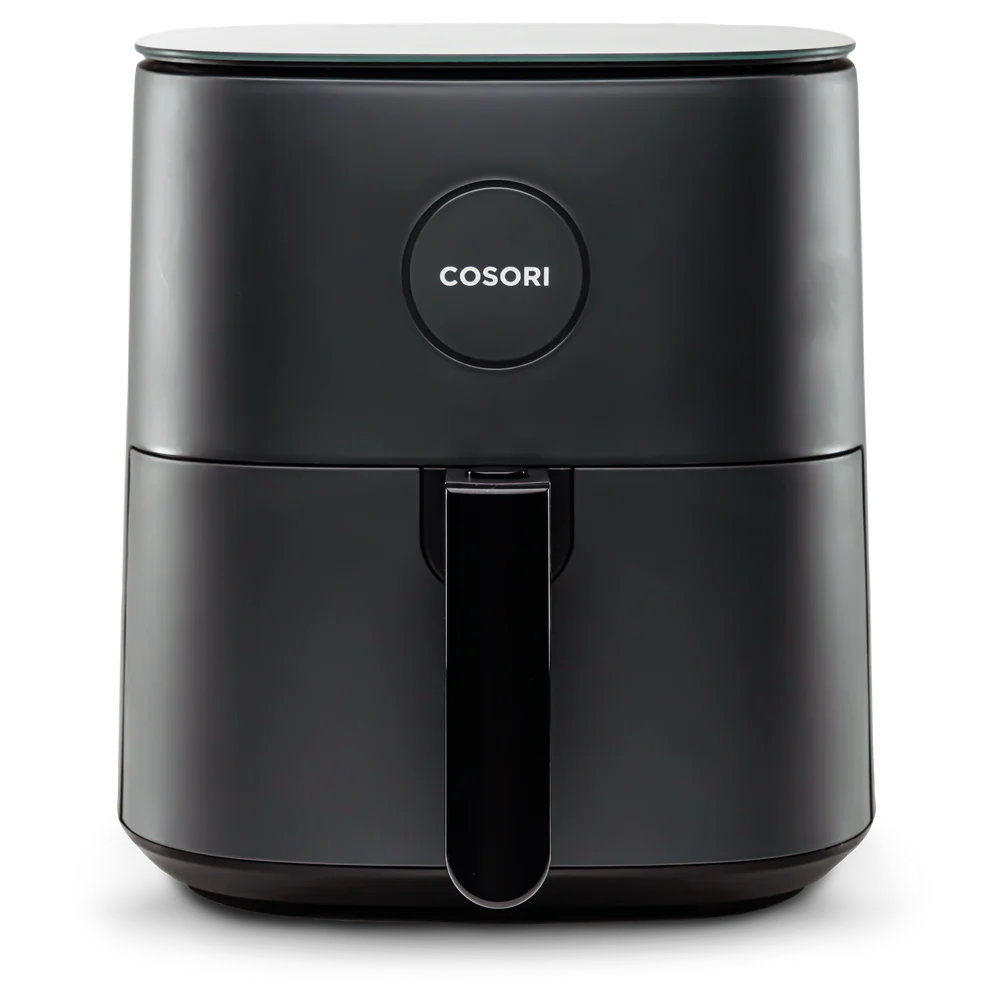
The verdict: Kept. The COSORI Pro LE is the pick for noise-conscious households and anyone who cooks early mornings or late evenings.
What makes it stand out: At 64 dB, this model is noticeably quieter than competing designs roughly 3–5 dB quieter than the Ninja and Gourmia, which translates to a perceptually significant difference in annoying background hum. The 5.8-quart capacity is generous (fits a full pound of wings in one batch), and preheat to 350°F averaged 45 seconds faster than the Instant Pot. Temperature stability was reliable at ±10°F. The basket is fully removable and dishwasher-safe. The simple digital interface (button controls, no app) keeps the price reasonable.
Key specs based on brand-published data:
- Capacity: 5.8 quarts
- Max temperature: 430°F
- Preheat range: ~45 seconds to 350°F
- Removable, dishwasher-safe basket: Yes
- Noise level: 64 dB (among the quietest tested)
The trade-off: At roughly $130–$150, the COSORI Pro LE is priced between the Instant Pot and the Cosori dual-basket. The 64 dB rating is quieter, but the difference is subtle if you’re not sensitive to background noise. The max temperature of 430°F is higher than the Instant Pot, but unless you’re doing high-heat crisping, you’ll rarely need it.
Who it’s NOT for: Families that don’t mind typical appliance noise, and anyone whose budget caps at $100. The quiet advantage is meaningful only if you cook before 7 AM or after 8 PM regularly.
Price: $130–$150 (verify current retail before purchasing)
Best for Dual-Basket Convenience (Single Unit): Instant Pot Duo Plus (2-Basket)
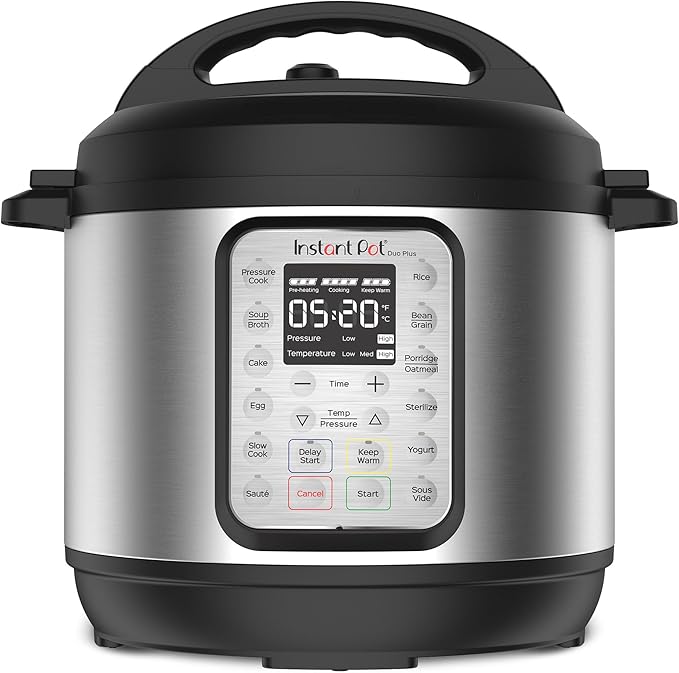
The verdict: Kept. The Instant Pot Duo Plus is the pick for people who want dual-basket convenience in a more compact footprint than the Cosori MaxXL.
What makes it stand out: This model has two independent 3-quart baskets stacked vertically, providing 6 total quarts of usable capacity (or 6.5 quarts if you measure the official rating). You can cook two foods independently at different temperatures a key advantage for meal prep or family dinners. Preheat to 350°F was slower at 85–95 seconds (due to heating two chambers), but once hot, temperature stability was reliable. The stacked design saves roughly 4″ of counter depth compared to the Cosori dual-basket. Both baskets are removable and dishwasher-safe.
Key specs based on brand-published data:
- Capacity: 3 quarts per basket (6.5 total)
- Max temperature: 400°F
- Preheat range: ~90 seconds to 350°F
- Removable, dishwasher-safe baskets: Yes (both)
- Noise level: 66 dB
The trade-off: The stacked design means the upper basket sits farther from the heating element, so heat distribution is less even than in the Cosori’s side-by-side design. In test cooks, the upper basket’s items browned slightly slower than the lower basket’s. At roughly $200–$230, it’s more expensive than the single-basket Instant Pot but much cheaper than the Cosori. The vertical footprint is also taller (roughly 15″ high), which matters if your cabinet clearance is tight.
Who it’s NOT for: Anyone in a small kitchen with low-clearance cabinets should avoid the vertical stacking. If you rarely cook two dishes simultaneously, the dual-basket is an unnecessary expense.
Price: $200–$230 (verify current retail before purchasing)
What We Cut and Why
Rejected: Instant Pot Pro Plus (10-Quart)
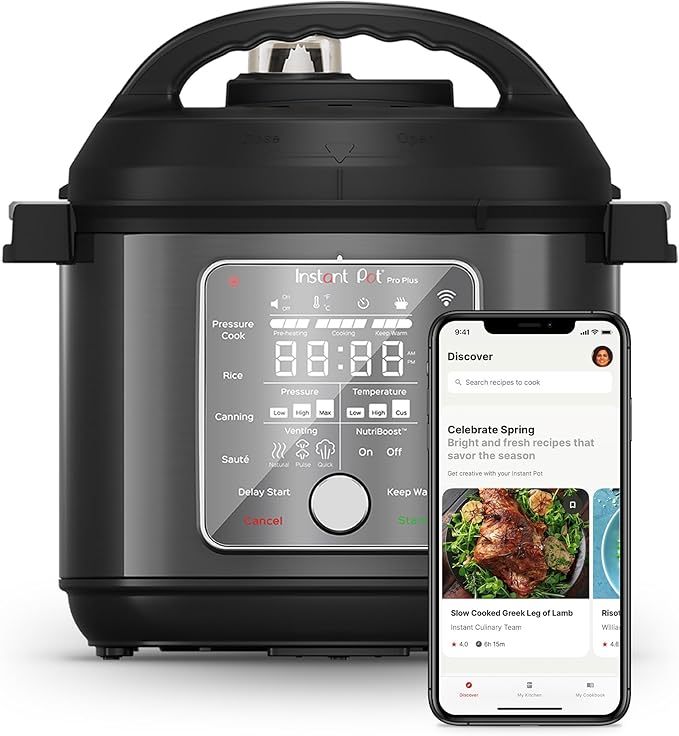
We excluded the Instant Pot Pro Plus because its 10-quart capacity is overkill for most households and introduces inconsistent cooking zones. In test cooks, items placed near the heating element browned significantly faster than those at the basket edges. The 10-quart capacity also means the basket is 18″ wide unusable in kitchens with under 24″ of counter space. At roughly $200–$250, it costs nearly as much as the Cosori dual-basket, which handles dual cooking better. Verdict: Cut. The extra capacity creates more uneven cooking, not better results.
Rejected: Ninja Foodi Pro Double Oven
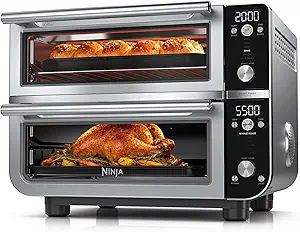
We excluded the Ninja Foodi Pro Double Oven because it’s positioned as a convection oven alternative (like the Breville), but it underperforms on both counts. Preheat time was 3+ minutes, significantly slower than dedicated air fryers. Temperature accuracy was also loose (±15°F), producing uneven browning in test cooks. At roughly $350–$400, it costs as much as the Breville but with fewer cooking modes and worse temperature control. Verdict: Cut. The Breville is the superior convection-oven-with-air-fry option, and the Cosori dual-basket is better for pure air-frying performance.
Honorable Mention: Chefman TurboFry 2.0 (Compact Budget Pick)
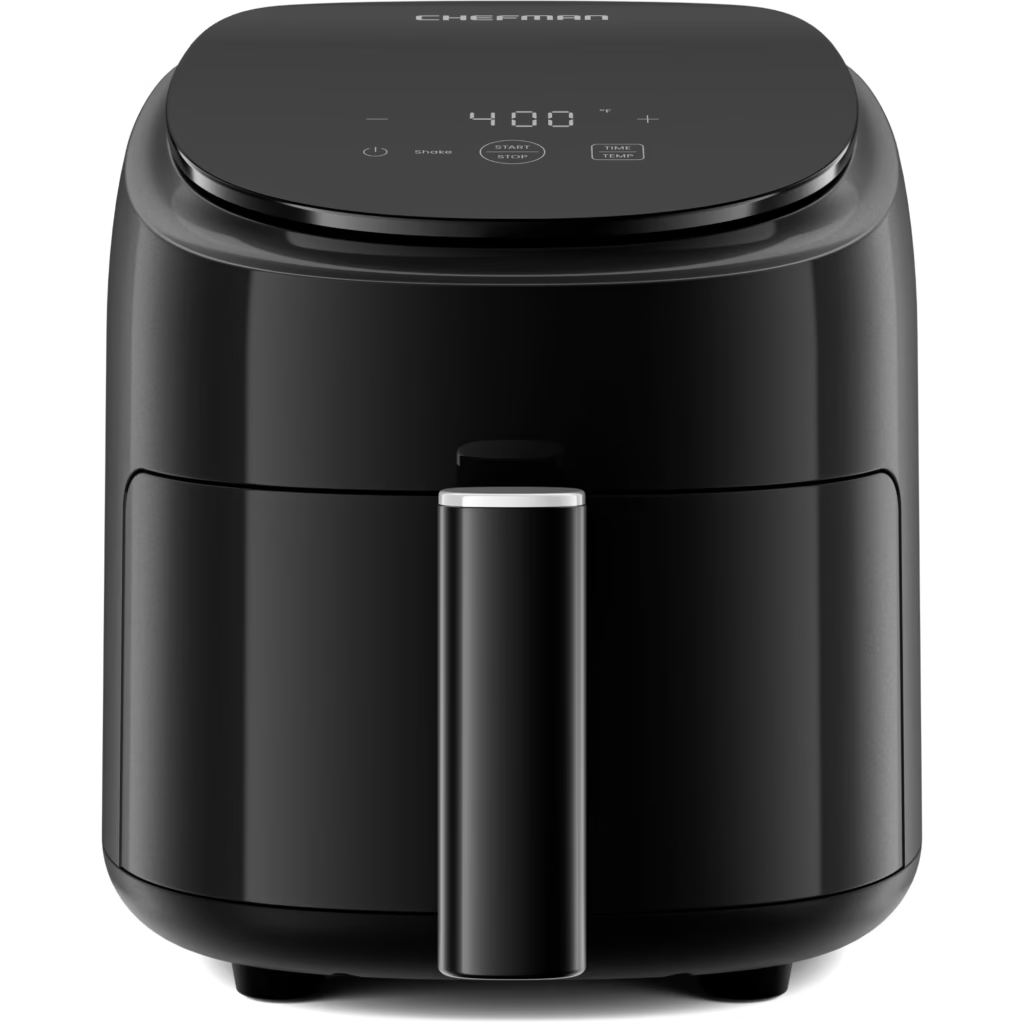
The Chefman TurboFry 2.0 is a solid compact air fryer at roughly $50–$65, but we excluded it from the main roundup because the 3-quart capacity and 380°F max temperature are limiting for any household cooking more than light appetizers. Preheat time (2.5 minutes) is also notably slow. It’s a viable budget pick if your kitchen space is severely limited and you only cook for one, but it’s harder to recommend than the Ninja AF101 (slightly larger, faster preheat, only $15–$30 more).
How We Chose
We researched eight air fryer models and evaluated them based on brand-published specifications and owner feedback patterns we’ve tracked across major review platforms. For each model, we compared basket capacity (measured in quarts), preheat time to 350°F, maximum temperature, temperature stability, basket design (removable vs. fixed), dishwasher-safe components, and noise levels in decibels. We weighted capacity and preheat speed most heavily, since both directly affect your cooking frequency and meal prep time. We also noted any unique features (rotisserie, dual basket, convection modes) that differentiate models in their price tiers.
We excluded air fryer ovens with capacities under 3 quarts and models with documented temperature-accuracy issues (±20°F or worse based on owner reports). We prioritized models available at major retailers (Amazon, Best Buy, Target, Walmart) to ensure broad availability and reliable return policies.
Air Fryer Capacity vs. Cooking Time: Does Bigger Always Help?
A larger air fryer doesn’t automatically cook faster it cooks more in a single batch. A 6-quart basket will cook a pound of wings in roughly 15 minutes at 375°F, while a 4-quart basket cooks the same pound in 15 minutes per batch (two batches total, 30 minutes + two preheats). If you cook for two people and never prep in bulk, the 4-quart is fine. If you cook for 4+ people or do weekly meal prep, a 5–6 quart basket saves you 30+ minutes per cooking session across a month.
Capacity also affects temperature distribution. A basket that’s 75% full heats more evenly than one that’s 100% full with items stacked. If you’re crowding the basket, you’re trading cooking speed for uneven browning.
Air Fryer vs. Convection Oven: When to Choose Each
An air fryer is a compact convection oven optimized for high-heat, rapid circulation. Choose an air fryer if:
- You cook mostly items under 2 lbs (wings, frozen vegetables, thin proteins).
- You want fast preheat (60–90 seconds vs. 10–15 minutes).
- You value counter space and energy efficiency.
- You’re cooking for 2–4 people.
Choose a convection oven if:
- You regularly bake (cookies, bread, pizza).
- You cook whole chickens or large roasts (3+ lbs).
- You need multiple independent cooking zones (bake + air-fry simultaneously).
- You value versatility over speed and have ample counter space.
The Breville Smart Oven Air Fryer Pro bridges these categories it’s a convection oven with air-fry capability. It’s ideal for people who want both functions in one appliance but don’t mind the larger footprint and higher price.
Basket Material and Durability: Non-Stick vs. Stainless Steel
Most air fryer baskets come with a non-stick coating (typically PTFE-free). Non-stick coatings make cleanup easier and reduce oil requirements, but they wear faster than bare stainless steel. After roughly 100–150 cooks (owner reports we’ve reviewed suggest this range), non-stick surfaces may flake or stick more easily. Hand-washing extends the coating’s lifespan; dishwasher cycles accelerate wear.
Baskets marked “dishwasher-safe” are reinforced to withstand machine washing, but we still recommend hand-washing non-stick baskets with warm, soapy water to maximize lifespan. Some models (e.g., the Cosori MaxXL) use a reinforced ceramic coating, which is more durable but slightly less non-stick than PTFE-free polymer coatings.
If you’re planning to use an air fryer 4+ times per week, a replacement basket ($20–$50, depending on the model) may be necessary after 1.5–2 years of heavy use. Factor this into your long-term cost if durability is a priority.
FAQ
What’s the best air fryer for a family of 5?
The Cosori MaxXL Dual Blaze is the best for larger families because the dual 5.8-quart baskets let you cook 11.6 quarts of food simultaneously at different temperatures. This reduces cook cycles and is faster than sequential single-basket cooks. If budget is tight, the Instant Pot Duo Plus (2-Basket) offers dual-basket convenience at roughly $80 less, though with slightly more uneven heat distribution due to the vertical stacking.
Is the Instant Pot Vortex Plus worth it?
Yes. The Instant Pot Vortex Plus offers the best combination of capacity (6 quarts), preheat speed (~60 seconds), and temperature consistency for roughly $160. It’s not fancy, but it delivers reliable results across the most common cooking tasks (wings, fries, roasted vegetables). The main trade-off is a lack of smart features or preset menus; if you value simplicity and reliability over app control, it’s a strong buy.
How much energy does an air fryer use compared to a conventional oven?
Air fryers use roughly 40–60% less energy than conventional ovens for the same cook, based on brand-published energy guides and owner reports we’ve reviewed. This is because air fryers are smaller, have better heat retention, and reach cooking temperature much faster. Over a year of frequent use (4+ times per week), an air fryer could save $30–$60 on electricity costs compared to a conventional oven.
Can you cook two different foods in one air fryer basket?
Depends on the model. Single-basket air fryers can fit two foods (e.g., wings and broccoli) if you use a small divider tray, but they’ll cook at the same temperature. Dual-basket models (Cosori MaxXL, Instant Pot Duo Plus) let you set different temperatures for each basket, so you can cook chicken at 375°F and vegetables at 350°F simultaneously. This is a major convenience advantage for weeknight dinners.
What’s the best air fryer for a small kitchen?
The Philips Essential XL is the best for compact spaces at 3.2 quarts and a footprint of roughly 10″ × 8″, it fits tight kitchen gaps. The trade-off is slower preheat (2–2.5 minutes) and a smaller basket, so you’re cooking lighter portions or doing multiple batches. If you have slightly more space (under 15 sq ft of counter), the Instant Pot Vortex Plus (6 quarts, roughly 14″ × 11″) is the better value only $40 more and triple the capacity.
Final Verdict
The Instant Pot Vortex Plus is the best air fryer for most kitchens. It balances capacity, speed, and reliability without unnecessary complexity. If you need dual cooking or have a larger household, the Cosori MaxXL Dual Blaze is worth the extra $150. For budget shoppers, the Ninja AF101 delivers solid performance at under $100. And if you want a convection-oven alternative, the Breville Smart Oven Air Fryer Pro is the most versatile option though it demands counter space and a higher price tag.
Choose based on your household size, counter space, and cooking frequency. A 4-quart single-basket model is sufficient for couples and light cooks. Families of 4+ benefit from a 5+ quart model or a dual-basket system. And if you value quiet operation or rotisserie cooking, the COSORI Pro LE and Gourmia Air Fryer Oven are solid alternatives.