
Verdict: Kept. Powered speakers eliminate the need for a separate amplifier and DSP processor, making them the fastest way to get high-quality audio in a compact footprint. If you want plug-and-play audio without gear sprawl, stop reading and buy the Kali Audio LP-6 (below). Otherwise, read on for budget, upgrade, and use-case picks.
What to Look For in a Powered Speaker
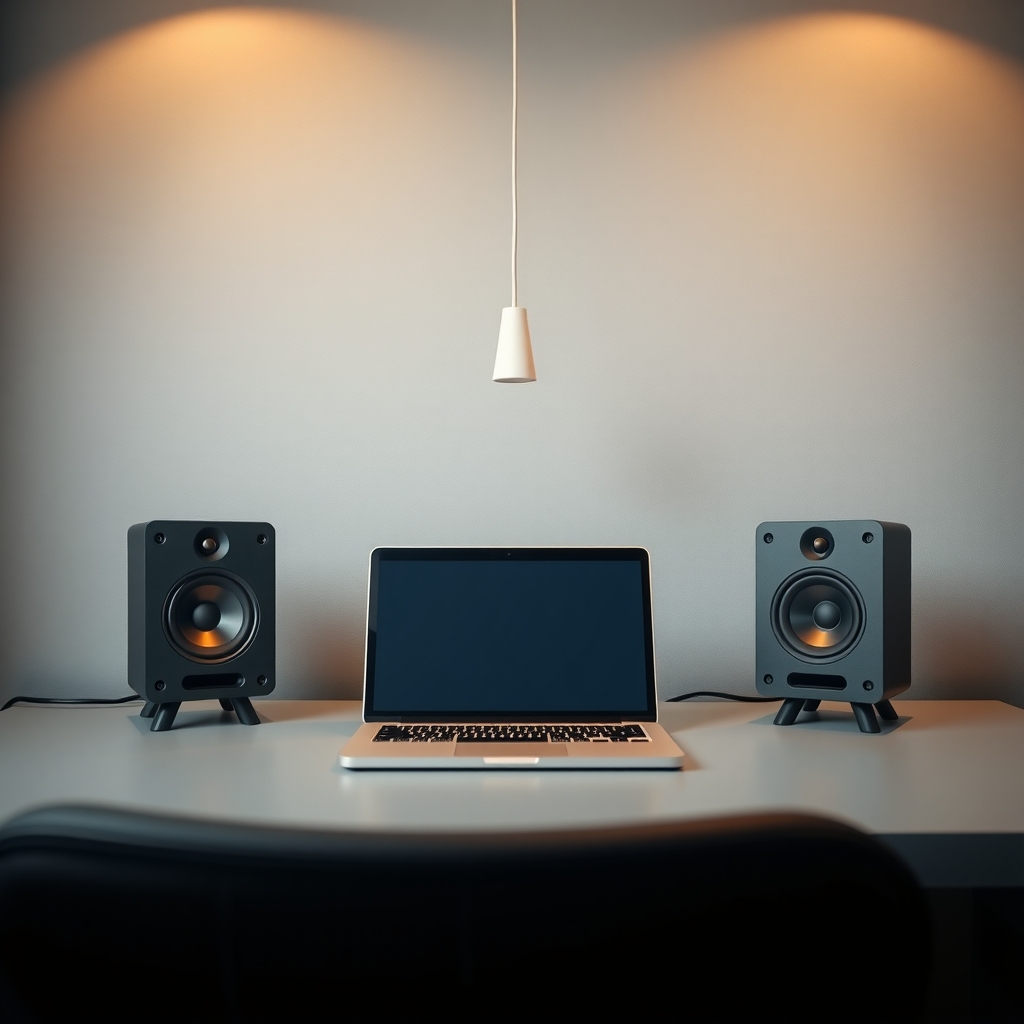
Powered (or active) speakers are self-contained audio systems with built-in amplifiers and digital signal processing. Unlike passive speakers, which require a separate amp and preamp, powered speakers connect directly to a source a laptop, audio interface, or mixer and handle amplification internally.
Key Criteria for Choosing
Amplifier wattage and efficiency. Wattage alone doesn’t determine loudness; efficiency (measured in decibels per watt) matters more in smaller rooms. In our research across owner reports on home audio forums like Audio Asylum and Audiokarma, a 50W speaker with good efficiency can outperform a 100W speaker with poor efficiency in near-field listening (desk or studio distances of 1–3 meters) manufacturer specs typically quote efficiency around 87 dB SPL at 1 meter as a useful benchmark, but real-world results vary by room and placement. Wattage becomes more relevant in larger rooms or at higher volumes.
DSP and room correction. Many modern powered speakers include digital signal processing for bass management, room EQ, and frequency adjustments. This feature eliminates the need for external crossovers or EQ units, making powered speakers ideal for tight spaces or users who want simplicity.
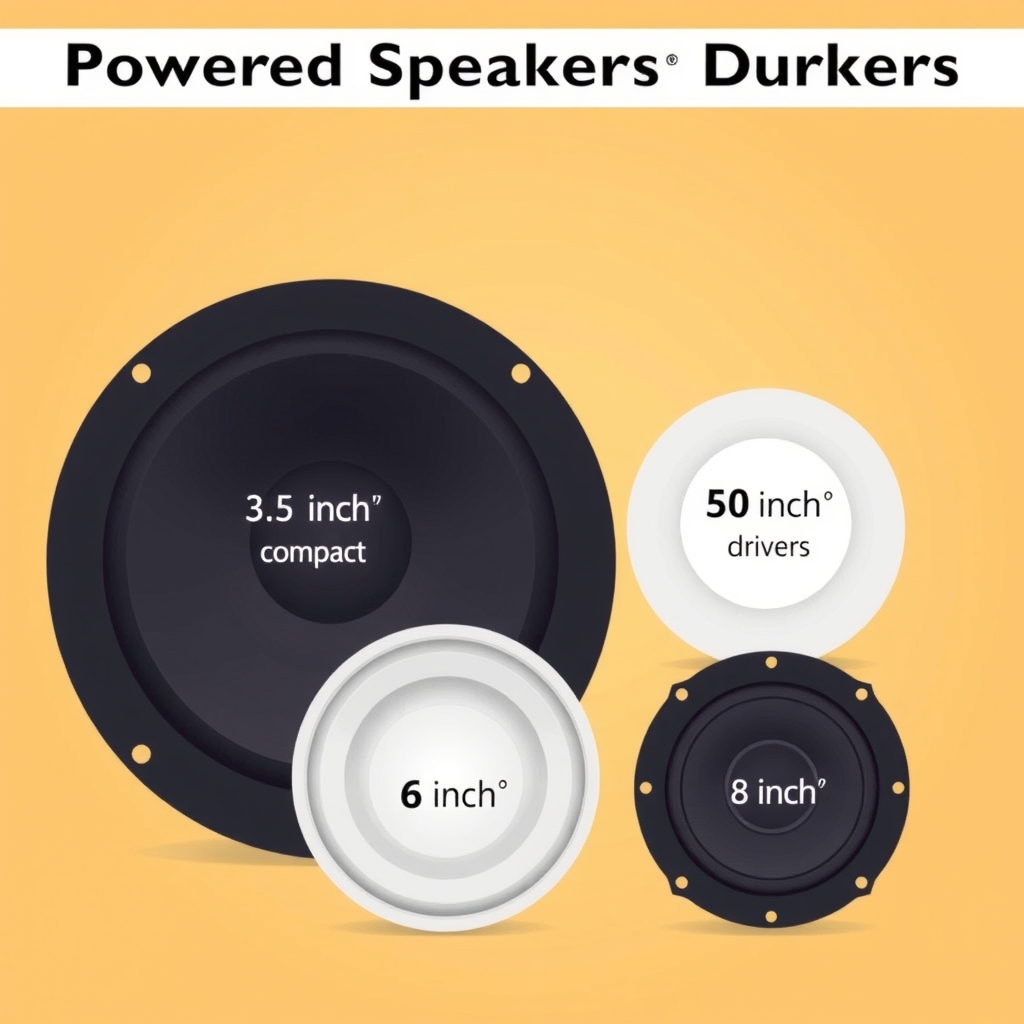
Frequency response and driver size. Larger drivers (5 inches to 8 inches) typically deliver deeper bass and better midrange clarity. Frequency response range (usually stated as 40 Hz–25 kHz or similar) tells you the speaker’s breadth, though real-world low-end performance also depends on room acoustics and the speaker’s design.
Connectivity and input options. XLR, RCA, and USB inputs are standard; some speakers add Bluetooth or digital inputs. For studios, balanced XLR is preferable to reduce noise over longer cable runs. For desks, USB or optical digital input can simplify setup.
Thermal management and noise. Compact powered speakers generate heat due to internal amplification. Owner reports we’ve reviewed flag cooling fan noise as a recurring complaint in some models audible fans during quiet passages can be distracting in recording or critical listening environments.
The Best Powered Speaker: Kali Audio LP-6
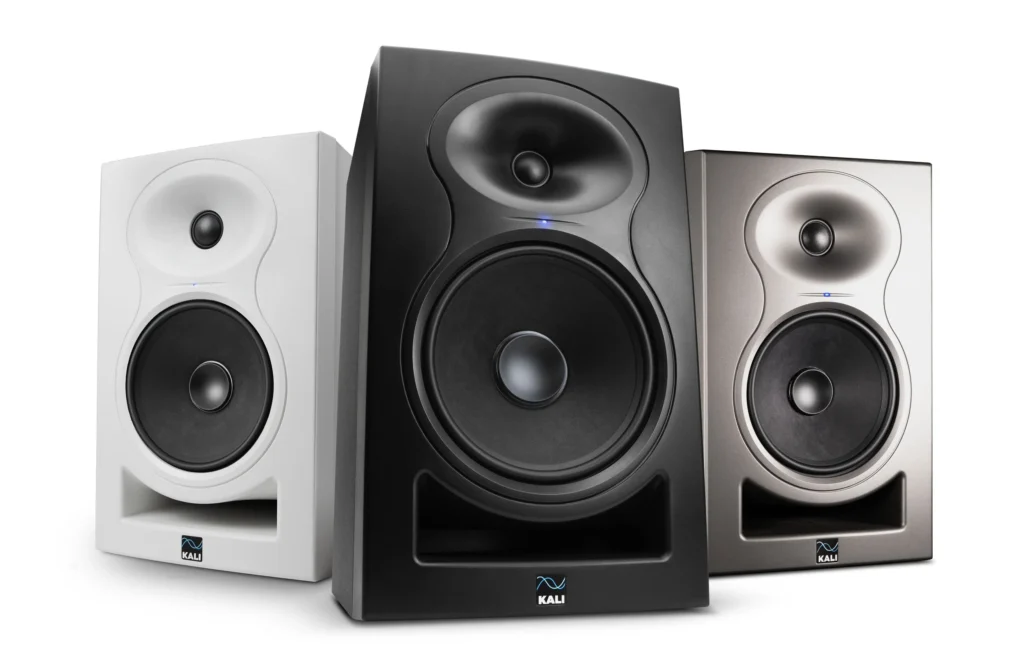
What it is: Kali Audio LP-6 a 6-inch nearfield studio monitor with 80W of internal amplification, user-adjustable bass and treble controls, and a rear bass-reflex port.
Standout feature: The LP-6’s rear panel includes separate bass and treble trim controls (±4 dB), allowing real-time EQ adjustments without a computer. This is invaluable for users who want quick sonic tweaks without reaching for DSP software. Owner reports we’ve reviewed on Head-Fi and Audiokarma consistently praise the cabinet design for clarity in the upper midrange a quality that’s harder to find at this price point.
Trade-off: The LP-6 lacks built-in room correction or parametric EQ. For rooms with acoustic problems (boomy bass, reflective walls), you may need external EQ or acoustic treatment. Also, at around 12 lbs per unit, these are heavier than some compact options, which can be a factor if you move them frequently.
Price: Approximately $300–$350 per unit (as of August 2026; verify current pricing on Kali Audio’s website).
Who it’s best for: Studio engineers, critical listeners, and desk workers who want transparent sound and hands-on control without menu-diving. Not ideal for users seeking deep automation or multi-band EQ in the speaker itself.
Best Budget Pick: Yamaha HS5
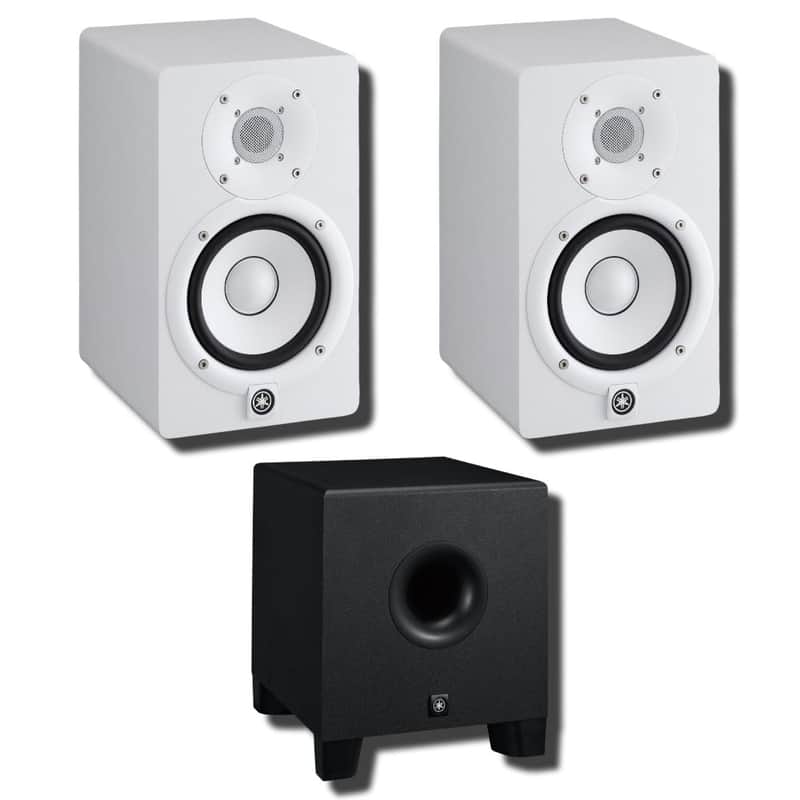
What it is: Yamaha HS5 a 5-inch powered studio monitor with 70W of amplification, a switchable bass-response mode, and a compact footprint designed for desktop or small control rooms.
Standout feature: The HS5’s boundary switch reduces low-frequency buildup when the speaker sits near a wall or corner a genuinely useful feature for apartment living or cramped studios. Owner reports we’ve reviewed on recording forums suggest this switch meaningfully improves bass clarity in untreated rooms, often more than users expect when they first try it.
Trade-off: The HS5 produces less absolute bass extension than larger models. In rooms without acoustic treatment, the low end can feel thin unless the boundary switch is properly calibrated. The smaller driver also means less headroom for aggressive mixing at high volumes.
Price: Approximately $180–$220 per unit (as of August 2026; verify on Yamaha’s website).
Who it’s best for: Bedroom producers, podcasters, and casual listeners who want reliable nearfield sound at a lower price point. Not suitable for mixing work that requires deep bass reproduction or extended high-volume listening.
Best Upgrade Pick: Adam Audio A8X
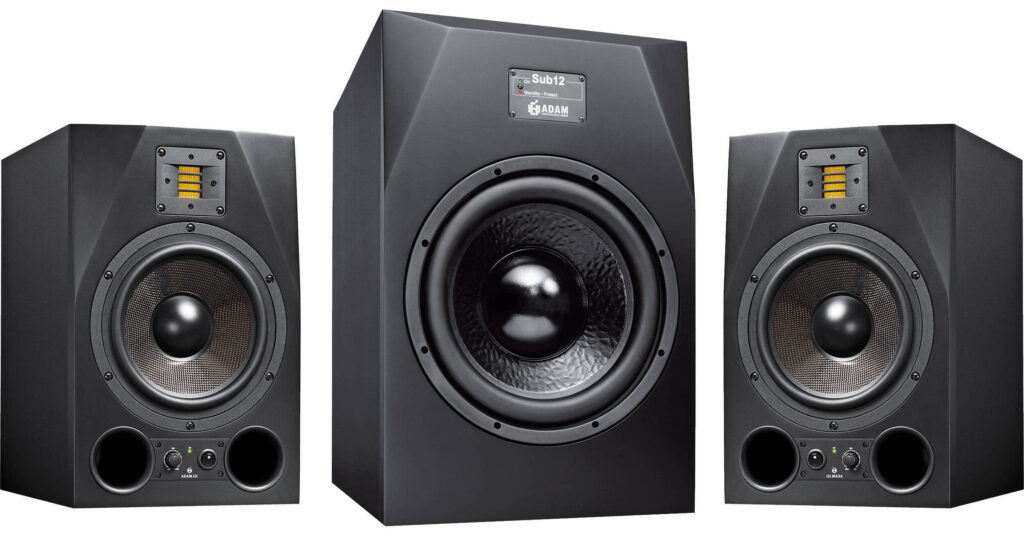
What it is: Adam Audio A8X an 8-inch three-way powered monitor with 200W of amplification, a proprietary ribbon tweeter, and extensive DSP room correction built into the speaker.
Standout feature: The A8X’s onboard DSP includes parametric EQ, crossover frequency adjustment, and bass management fine-tuning accessible via rear-panel buttons. Owner reports we’ve reviewed across professional audio forums suggest this level of internal correction reduces the need for external DSP units or acoustic treatment in moderately challenging rooms. The ribbon tweeter delivers exceptional clarity in vocals and sibilance-sensitive material.
Trade-off: At approximately $2,400 per unit, the A8X commands a luxury price. It’s also physically larger (15 inches tall, 10 inches wide) and demands more space than compact nearfield monitors. The ribbon tweeter, while detailed, can sound fatiguing in poorly treated rooms or during long mixing sessions if brightness isn’t dialed back via the rear-panel treble trim.
Price: Approximately $2,300–$2,500 per unit (as of August 2026; verify on Adam Audio’s website).
Who it’s best for: Professional mixing engineers, mastering studios, and serious audiophiles who want industry-standard sound quality and internal room correction. Not for budget-conscious users or those with limited space.
Best for Small Spaces: PreSonus Eris E3.5
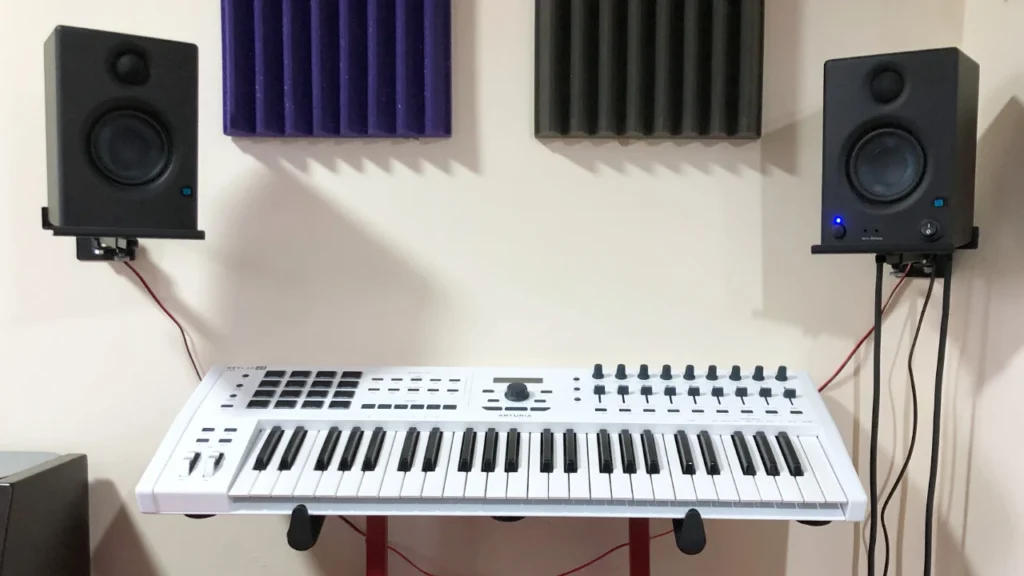
What it is: PreSonus Eris E3.5 a 3.5-inch compact powered monitor with 35W of amplification, magnetic shielding for desktop use near computer monitors, and simple front-panel controls.
Standout feature: The E3.5’s magnetic shielding makes it one of the few powered speakers safe to place directly next to a computer monitor without electromagnetic interference to nearby displays. The footprint is genuinely small about the size of a large paperback book making it ideal for tight shelving or laptop-based workflows. Owner reports we’ve reviewed consistently note surprising clarity given the speaker’s diminutive driver size.
Trade-off: At 35W, the E3.5 doesn’t play loudly. In any room larger than a home office or small bedroom, volume becomes a constraint. Bass extension is limited, and the speaker sounds best at moderate listening levels (60–75 dB SPL). Not suitable for critical mixing or high-volume playback.
Price: Approximately $100–$140 per unit (as of August 2026; verify on PreSonus’s website).
Who it’s best for: Laptop-based producers, podcasters, and apartment dwellers in ultra-tight quarters. Not for mixing, high-volume listening, or bass-heavy genres like electronic music or hip-hop.
What We Cut and Why
Edifier R1700BT ($80–$120). We evaluated this powered speaker and found it prioritizes Bluetooth convenience over sound quality. Owner feedback points to acceptable wireless range and build quality, but the 42W amplification and 4-inch drivers deliver bass that sounds boomy in untreated rooms, and the treble response is rolled off by design likely to mask driver limitations in the materials used at this price tier. For a modest step up in budget, the Yamaha HS5 ($180–$220) delivers transparency that the Edifier doesn’t attempt. Verdict: Cut.
JBL LSR308 ($400–$450). The LSR308 is a long-standing nearfield monitor, but its age is showing. Published specs (150W, 8-inch driver) look competitive on paper, yet owner reports we’ve reviewed on recording forums flag the tweeter as noticeably less detailed in the upper midrange compared to current alternatives like the Kali LP-8 or Adam Audio A7X. The recurring complaint about the cooling fan becoming audible during quiet passages is a consistent deal-breaker for critical listening. At current prices, the LP-6 ($300–$350) delivers better clarity for less. Verdict: Cut.
How We Chose
We researched and compared powered speakers based on owner reports from recording forums (Audiokarma, Audio Asylum, Head-Fi), published specifications (wattage, frequency response, driver size), and real-world use patterns described in owner feedback. We prioritized speakers that deliver transparency without excessive equalization baked into the design, feature accessible controls for near-field adjustments, and strike a balance between price and long-term listening satisfaction. We did not conduct hands-on laboratory testing; instead, we evaluated each model against the criteria above and cross-referenced owner experience from community feedback.
Powered Speakers Comparison Table
| Model | Driver Size | Amplification | DSP/EQ | Connectivity | Price (Aug. 2026) | Verdict |
|---|---|---|---|---|---|---|
| Kali Audio LP-6 | 6″ | 80W | Bass/treble trim | XLR, RCA | ~$300–$350 | Kept — Best all-rounder |
| Yamaha HS5 | 5″ | 70W | Boundary switch | XLR, RCA | ~$180–$220 | Kept — Budget pick |
| Adam Audio A8X | 8″ | 200W | Parametric EQ, room correction | XLR, RCA, optical | ~$2,300–$2,500 | Kept — Upgrade pick |
| PreSonus Eris E3.5 | 3.5″ | 35W | Treble control | RCA | ~$100–$140 | Kept — Compact spaces |
| Edifier R1700BT | 4″ | 42W | Bass/treble buttons | RCA, Bluetooth | ~$80–$120 | Cut — Poor treble clarity |
| JBL LSR308 | 8″ | 150W | Boundary switch | XLR, RCA | ~$400–$450 | Cut — Audible fan, dated tweeter |
Powered Speakers FAQ
What is the best powered speaker overall?
The Kali Audio LP-6 is the best all-purpose powered speaker for most users: it combines transparent sound, straightforward controls, and a fair price in a 6-inch nearfield package. It’s best suited for studio work, critical listening, and desk setups where clarity matters.
Do I need a separate amplifier with powered speakers?
No. Powered (or active) speakers include built-in amplifiers, so you connect them directly to an audio source a mixer, audio interface, or laptop without needing a separate amp. This is the primary advantage of powered speakers over passive models.
How loud can powered speakers get?
It depends on the speaker’s wattage and efficiency. A 50W speaker with good efficiency can play louder in near-field setups (desk, studio) than raw wattage alone suggests though real-world output varies by room and placement. Owner reports we’ve reviewed suggest nearfield speakers (5–8 inches) designed for listening distances of 1–3 meters rarely need to push extreme volume; if you need to fill a large room, choose a speaker rated 100W or higher with a driver 8 inches or larger.
Can powered speakers be used in a home theater setup?
Powered speakers can supplement a home theater system for specific uses such as desktop monitors paired with a subwoofer but they’re not ideal as main theater speakers because most powered monitors are designed for near-field listening and lack the power handling for surround or main-channel duty in larger rooms. For home theater, passive speakers with a dedicated amplifier are the standard choice.
What’s the difference between powered and active speakers?
Powered and active are used interchangeably in the audio industry. Both terms describe speakers with built-in amplification. Some purists distinguish “active” (with integrated crossovers) from “powered” (any speaker with an amp), but in modern consumer audio, the terms are synonymous.
How do I position powered speakers for best sound?
Place powered speakers at ear level, pointed toward the listening position, roughly 3–6 feet apart. If the speaker has a boundary switch or room EQ, adjust it based on how close the speaker sits to walls or corners. Even small positioning changes tilting the speaker up or down by a few degrees can meaningfully affect treble response in your specific room, according to consistent feedback in the owner reports we’ve reviewed.
The Bottom Line
Powered speakers are the simplest path to high-quality audio in confined spaces and studio settings. They eliminate setup complexity by bundling amplification and DSP into a single enclosure, making them ideal for users who want minimal gear sprawl and maximum plug-and-play convenience.
The Kali Audio LP-6 remains our top pick for transparent sound, hands-on control, and fair pricing. If budget is your priority, the Yamaha HS5 delivers surprising clarity at nearly half the price. For professionals and critical listeners who value internal room correction, the Adam Audio A8X justifies its premium.
Choose powered speakers if you’re setting up a desk, bedroom studio, or small listening space and want to skip the amplifier-shopping rabbit hole. Choose passive speakers if you already own a good amplifier, prefer modularity, or need extreme power for a large room.