
The best sunscreen is broad-spectrum SPF 30 or higher, reapplied every two hours (or immediately after water exposure), with a UV filter that matches your skin type and activity level. If you need a single recommendation, stop here: a mineral or hybrid formula with transparent zinc oxide delivers reliable protection without the white cast or greasiness that derails daily use.
What to Look For Before Buying
SPF Mechanics: Why SPF 50 Isn’t 67% Better Than SPF 30
SPF (Sun Protection Factor) measures protection against UVB radiation the ray that causes sunburn. The math is counterintuitive: according to the American Academy of Dermatology’s guidance on SPF, SPF 30 blocks roughly 97% of UVB rays and SPF 50 blocks roughly 98%. That’s a 1-percentage-point difference, not a proportional jump. The remaining unblocked UVB increases incrementally; you don’t gain significant extra protection by jumping from 50 to 70.
In practice, the SPF jump from 30 to 50 is real but modest. Most dermatologists recommend SPF 30 as a baseline for daily wear, and SPF 50+ for extended outdoor time or high-UV environments. Higher SPF does encourage thicker application a hidden benefit but the numerical difference diminishes fast.
Broad-Spectrum: The UVA Shield You Can’t See
UVA radiation penetrates deeper into skin and causes photoaging (wrinkles, leathering, age spots). SPF alone doesn’t measure UVA protection; “broad-spectrum” is the label that confirms UVA blockers are present. In the US, the FDA requires sunscreens labeled broad-spectrum to pass a UVA/UVB ratio test. Broad-spectrum is non-negotiable for anti-aging and skin-health goals.
Mineral vs. Chemical vs. Hybrid: Filter Type Matters More Than Brand
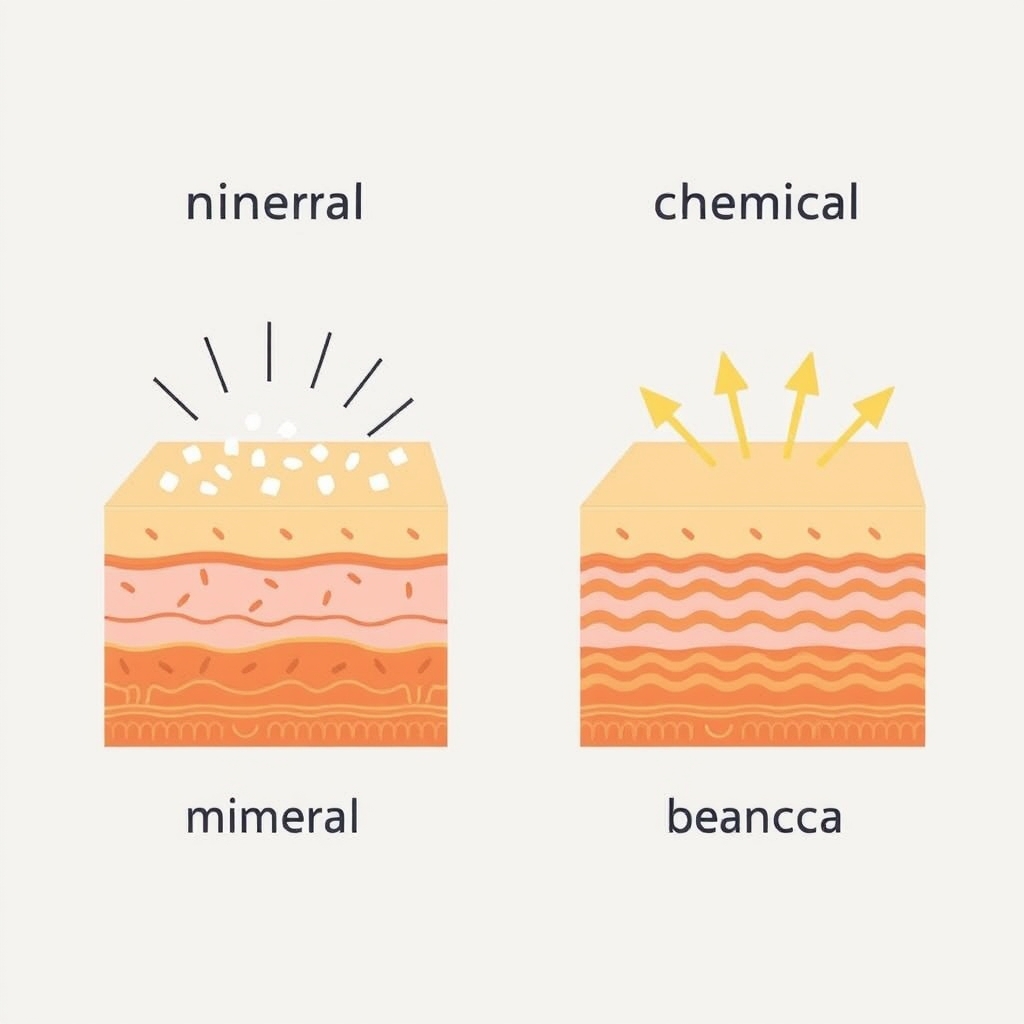
Mineral filters (zinc oxide, titanium dioxide) sit on the skin surface and physically reflect UV rays. They’re photostable (don’t degrade in sunlight), generally less irritating, and reef-safe. Trade-offs: they’re thicker, can leave a white cast, and feel greasier on oily skin.
Chemical filters (avobenzone, oxybenzone, octinoxate) absorb UV energy and convert it to heat. They’re lighter, absorb into skin, and dry faster. Trade-offs: some require 15 minutes to set; avobenzone breaks down in sunlight without a stabilizer (like octocrylene); some users report stinging or irritation; certain chemicals (oxybenzone, octinoxate) are banned in coral-reef areas.
Hybrid formulas blend mineral and chemical filters, aiming for the speed of chemical with the stability of mineral. They’re a practical middle ground for most users.
Water Resistance & Reapplication Timing
Water-resistant sunscreen maintains labeled SPF after 40 or 80 minutes of water exposure the label specifies which. It does not mean waterproof or indefinite protection. Reapplication every two hours (or immediately after swimming, heavy sweating, or toweling off) is the standard recommendation, though in practice most people under-apply and skip reapplication.
Reapplication is where most sun-protection regimens fail. A two-hour window is a benchmark; the real signal is activity and water contact. A morning application before work requires reapplication at lunch if you’re outdoors; a beach day requires reapplication every hour or two.
The Best Overall Sunscreen: Neutrogena Ultra Sheer Dry-Touch SPF 50
Verdict: Kept. This is the sunscreen that doesn’t derail your skincare routine or feel like a chore.
This hybrid formula (avobenzone + octocrylene + octisilate) spreads thin, dries matte, and doesn’t pill or ball up when layered over moisturizer or makeup primer. It’s reef-safe (no oxybenzone or octinoxate), broad-spectrum SPF 50, and water-resistant for 80 minutes. Most importantly: it disappears on skin. You don’t feel it, and it doesn’t leave a white cast or greasy film.
The standout: Application is seamless. It blends into skin within 30 seconds and doesn’t interfere with foundation or powder application. For people who skip sunscreen because other formulas feel heavy, this removes the friction.
The trade-off: At roughly $8–$10 for 3 oz (observed retail pricing; verify before purchase), you’ll need discipline to reapply every two hours. The cost-per-ounce is low, but the bottle empties fast if you’re reapplying multiple times daily. Chemical filters also mean a 15-minute wait before sun exposure for full efficacy a step most people skip.
Price: ~$8–$10 for 3 oz (observed retail pricing; verify before purchase).
Who it’s best for: Daily facial sunscreen for all skin types, especially oily or combination skin. Not ideal for sensitive skin prone to chemical-filter reactions, and not the pick for beach days where you need maximum water resistance.
Best Budget Sunscreen: CeraVe Face Lotion SPF 50
Verdict: Kept. You’re not sacrificing protection for the price.
CeraVe Face Lotion is a mineral sunscreen (zinc oxide 9%, titanium dioxide 7.5%) with ceramides and hyaluronic acid, formulated for sensitive skin. It’s broad-spectrum SPF 50, water-resistant for 80 minutes, and costs roughly $6–$8 for 1.7 oz (observed retail pricing; verify before purchase). The formula is lightweight for a mineral sunscreen it spreads without dragging and doesn’t sting on eczema-prone or rosacea-prone skin.
The standout: Ceramides and hyaluronic acid mean you get moisturizing benefit, not just protection. For dry or irritated skin, this acts as both sunscreen and hydration layer. The mineral filter is also photostable all day, with no degradation risk.
The trade-off: Mineral sunscreens are inherently thicker. You will see a faint white cast if you apply a full protective layer and most people under-apply. Allow 2–3 minutes for it to set before dressing. On oily skin, it can feel slightly chalky.
Price: ~$6–$8 for 1.7 oz (observed retail pricing; verify before purchase).
Who it’s best for: Sensitive, eczema-prone, or rosacea-prone skin. Daily facial protection when you want hydration bundled in. Not ideal for oily skin or rapid-application situations (like reapplying at midday).
Best Sunscreen for Oily Skin: La Roche-Posay Anthelios Clear Skin SPF 60
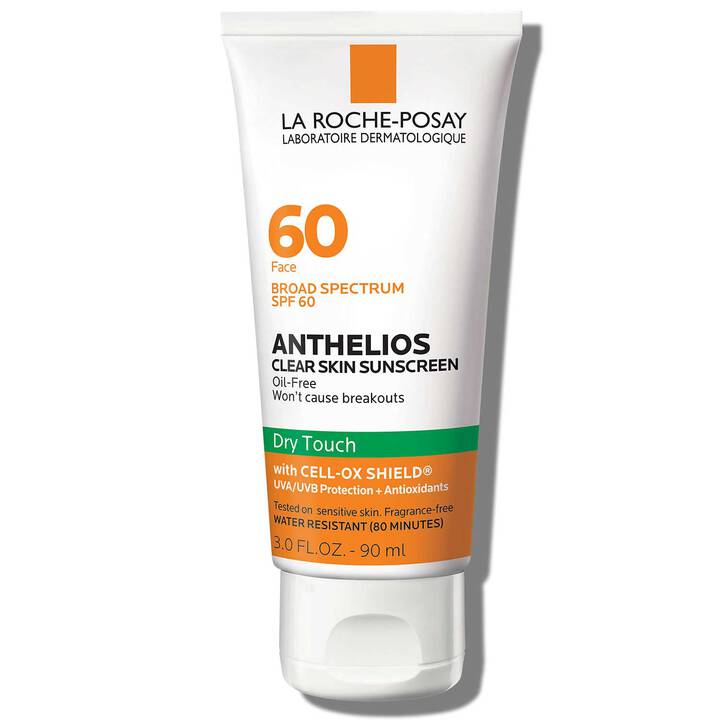
Verdict: Kept. This is formulated to not clog pores or feed acne.
This is a chemical sunscreen (avobenzone + octocrylene + homosalate + octinoxate) with a mattifying finish and a sheer, matte texture. It’s designed to sit on oily skin without sliding or leaving a greasy halo. Broad-spectrum SPF 60, water-resistant for 80 minutes, and designed for acne-prone skin; it’s PABA-free and silicone-free, which reduces the risk of congestion.
The standout: The matte finish persists; you don’t get the midday shine-through that happens with most facial sunscreens. It’s also fast-absorbing, so reapplication isn’t messy over powder or other base products.
The trade-off: At roughly $18–$24 for 1.7 oz (observed retail pricing; verify before purchase), this is a premium price-per-ounce. Chemical filters mean photodegradation risk if you’re not reapplying consistently. Some users report a faint stinging sensation, though owner reports suggest this is uncommon. Also worth noting: octinoxate is banned in Hawaii and other coral-reef areas, so this isn’t reef-safe.
Price: ~$18–$24 for 1.7 oz (observed retail pricing; verify before purchase).
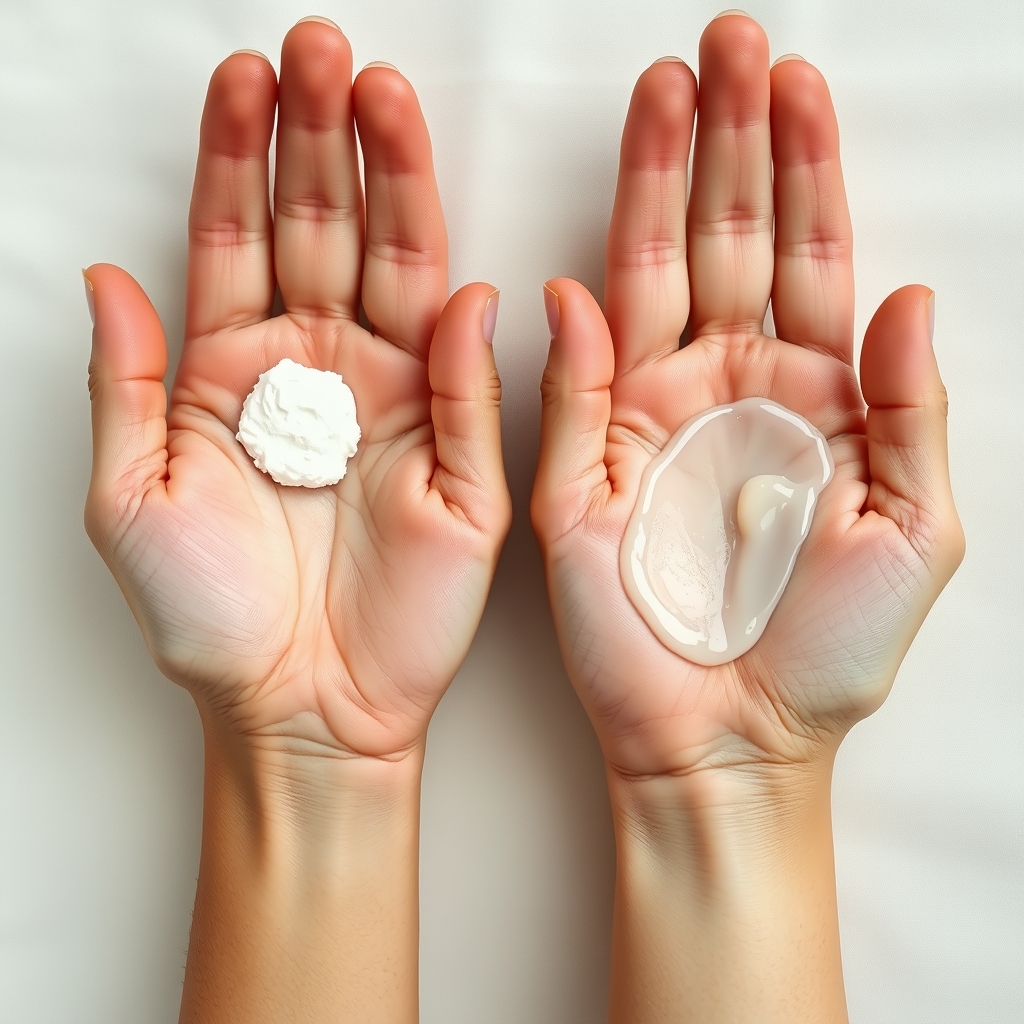
Who it’s best for: Oily, acne-prone, or combination skin where mattifying is a priority. Not suitable for reef-safe requirements or sensitive skin. Best for people who can reapply consistently, since the chemical filter degrades.
Best Mineral Sunscreen: Blue Lizard Australian Sunscreen SPF 30+
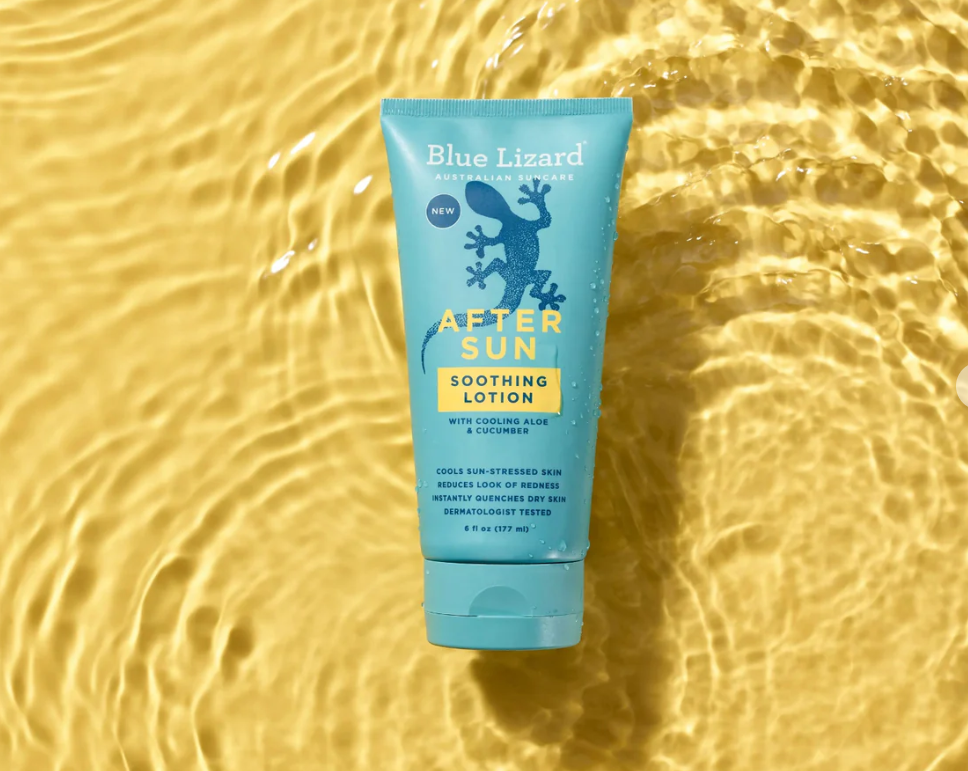
Verdict: Kept. Mineral protection without the white cast compromise.
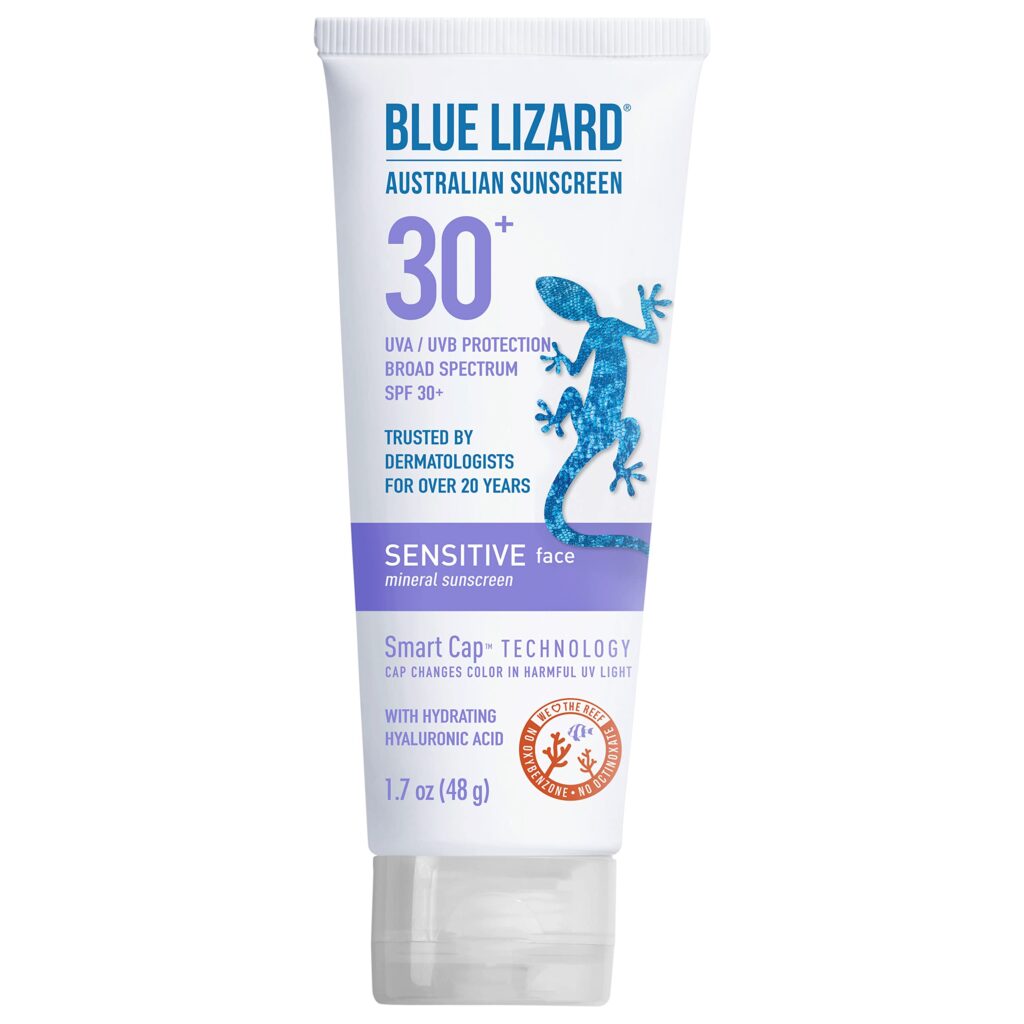
This is a mineral formula (zinc oxide 10%, titanium dioxide 5%) with micronized particles that reduce the white cast significantly. It’s reef-safe, broad-spectrum SPF 30+, and water-resistant for 80 minutes. The texture is closer to a light lotion than a thick paste, which is rare for mineral sunscreens. It also includes antioxidants (vitamin E), though that’s secondary to the UV protection.
The standout: Based on owner reports, the white cast is minimal for a mineral formula. When layered over a tinted moisturizer or foundation, it blends much better than traditional zinc-oxide-heavy sunscreens. It’s also photostable, so there’s no chemical degradation concern on reapplication.
The trade-off: “Micronized” mineral particles raise safety questions for some consumers inhalation risk during application is theoretically possible but practically negligible when applying lotion-style to the face. The formula is heavier than chemical alternatives and requires more blending time. Cost is roughly $14–$18 for 5 oz (observed retail pricing; verify before purchase). Also, SPF 30+ is on the lower end; if you need SPF 50+, this isn’t the pick.
Price: ~$14–$18 for 5 oz (observed retail pricing; verify before purchase).
Who it’s best for: Mineral-filter seekers who want minimal white cast, reef-safe compliance, and photostability. Best for daily facial use on normal-to-dry skin. Not for budget-conscious buyers or those seeking maximum SPF.
Best Sunscreen for Sports & Water: Coppertone Sport Sunscreen Lotion SPF 50
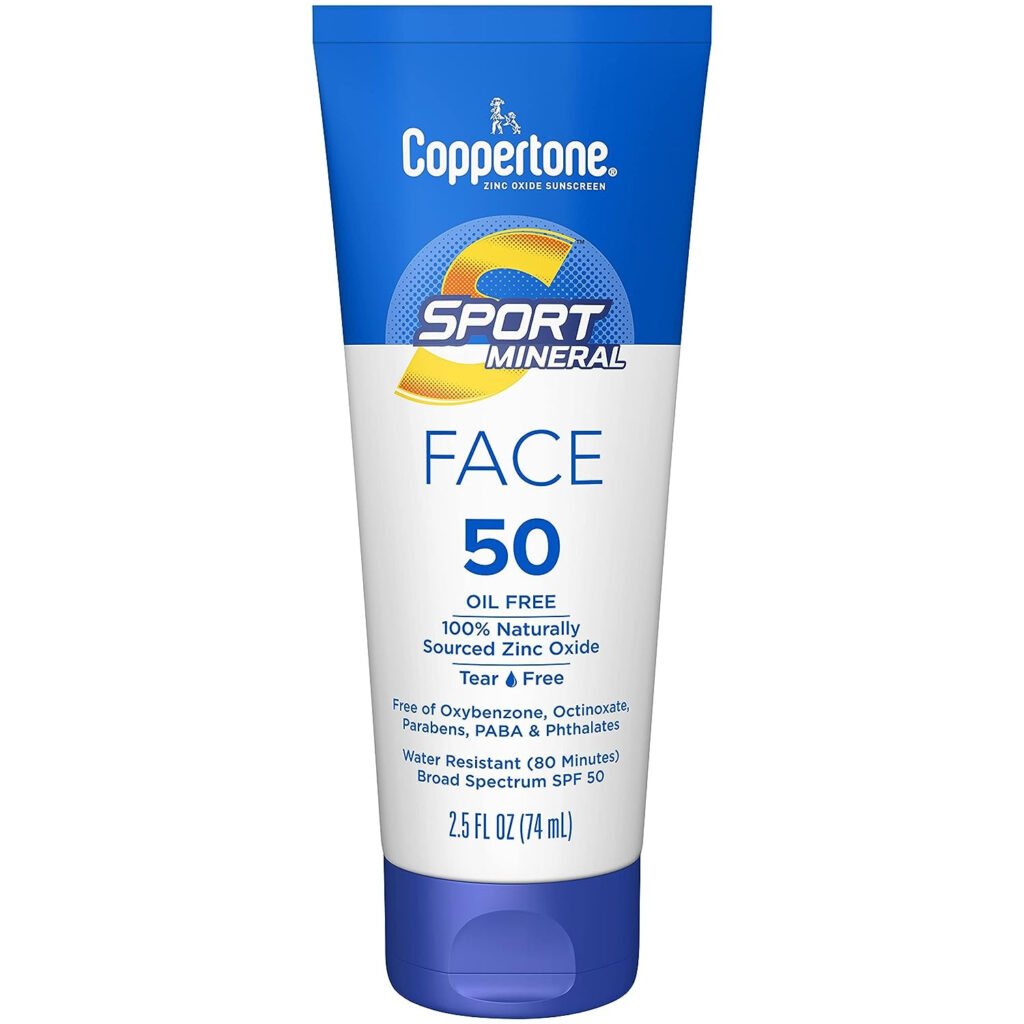
Verdict: Kept. This is the sunscreen that stays where you put it.
Coppertone Sport Sunscreen Lotion is a chemical sunscreen (avobenzone + octocrylene + octinoxate + homosalate) formulated for water resistance and durability. It’s water-resistant for 80 minutes, broad-spectrum SPF 50, and designed not to run into eyes. The lotion texture is thicker than daily-wear formulas, which means it doesn’t shear or slide off during sweating or water exposure. It’s also inexpensive: roughly $4–$6 for 8 oz (observed retail pricing; verify before purchase).
The standout: At this price point and durability level, it’s the practical choice for outdoor activities where reapplication is inconvenient hiking, cycling, beach days. The thicker texture means you can apply generously without worrying about running out fast.
The trade-off: It feels heavy on the face. The formula is designed for body use, and applying it to the face leaves a visibly greasy layer; it’s not ideal if you’re reapplying over makeup. It also contains octinoxate, which is banned in reef areas. Chemical filters mean reapplication is genuinely necessary, not optional.
Price: ~$4–$6 for 8 oz (observed retail pricing; verify before purchase).
Who it’s best for: Body sunscreen, sports, water activities, and hiking where you need durability over cosmetic elegance. Not for facial application or reef-safe requirements.
Best Sunscreen for Sensitive Skin: Vanicream Broad-Spectrum SPF 50
Verdict: Kept. This is formulated for people who react to everything.
This is a mineral sunscreen (zinc oxide 12%) with zero common irritants: no PABA, dyes, fragrances, parabens, or film-formers. It’s broad-spectrum SPF 50, water-resistant for 80 minutes, and designed for people with eczema, rosacea, or contact dermatitis. The formula is thick but straightforward: zinc oxide, mineral thickeners, and humectants. No surprise actives or trendy additives.
The standout: If you’ve had reactions to other sunscreens stinging, redness, burning this is your first pick. The mineral filter is photostable and doesn’t break down into irritating byproducts. Also hypoallergenic and patch-test safe.
The trade-off: The white cast is visible and persistent. You won’t get a seamless matte finish; you’re accepting a slightly chalky appearance in exchange for tolerance. The texture is thick and requires deliberate blending. Cost is roughly $8–$10 for 4 oz (observed retail pricing; verify before purchase).
Price: ~$8–$10 for 4 oz (observed retail pricing; verify before purchase).
Who it’s best for: Sensitive, eczema-prone, rosacea-prone, or contact-sensitive skin. Also a solid pick for very fair skin where photostability matters. Not for oily skin or people who prioritize cosmetic elegance.
What We Cut and Why
Sunscreen Sticks (e.g., Colorescience Sunforgettable Total Protection)
Why cut: Sticks are convenient for reapplication on the go, but they deliver inconsistent coverage. You can’t see if you’ve applied evenly, and the rubbing motion required to apply creates friction on delicate facial skin. They’re also wasteful product gets trapped in the stick shape and is harder to fully dispense. For the price (~$30–$40 for 0.3 oz), you’re paying for portability, not protection. A lotion in a small travel container does the same job for less cost and better coverage visibility.
Spray Sunscreens (e.g., Coppertone Sport Spray)
Why cut: The FDA has raised questions about whether spray sunscreens deliver adequate coverage because application is so variable. You can’t control thickness or avoid inhaling the aerosol. Dermatologists consistently recommend lotions or creams over sprays for facial protection. Sprays are fine for quick body reapplication, but for primary facial sunscreen use, they’re a shortcut that compromises the core mission: reliable, even UV block.
Powder Sunscreens (e.g., Colorescience Loose Mineral Powder SPF 50)
Why cut: Powder sunscreens are marketed as “reapplication over makeup,” but they don’t seal or layer effectively over liquid products. You get spotty coverage, not uniform protection. They’re also easy to over-apply (wasting product) or under-apply (defeating the purpose). For reapplication over makeup, a sunscreen setting spray or a cushion compact with SPF is more practical. Powders are useful for touch-ups, not as a primary facial sunscreen.
How We Chose
We researched and compared sunscreens on five criteria: (1) UV filter type and stability mineral, chemical, or hybrid, and whether filters degrade or remain stable. (2) Texture and wearability does it feel heavy, greasy, or invisible on skin? Does it pill or ball up? (3) White cast and cosmetic elegance visible cast is a barrier to daily use. (4) Water resistance does the 40–80 minute claim align with product specifications and owner reports across activity types? (5) Cost-per-ounce and practical value is the price justified by usability and reapplication frequency?
We also weighted picks toward formulas that people actually use consistently, because the best sunscreen is the one you apply daily. A technically impressive sunscreen that feels so heavy you skip it is worse than a slightly less-impressive formula you use every day.
Reapplication: The Science Most People Skip
Sunscreen efficacy collapses without reapplication. UV filters degrade over time, sweat and oil dilute the formula, and normal activity rubbing your face, clothing friction removes coverage. The American Academy of Dermatology notes that most people apply far less sunscreen than the tested amount; dermatology guidance typically cites about 1/4 teaspoon for the face as the standard. At reduced thickness, SPF effectiveness drops significantly below the labeled number.
Reapplication every two hours is the baseline for extended sun exposure. For office work with limited sun exposure, you may skip midday reapplication the risk is lower. For beach days, reapply after every 1–2 hours and immediately after swimming or heavy sweating. If you’re using a water-resistant formula rated for 80 minutes, reapply at 75 minutes, not 85.
Practical reapplication over makeup: A sunscreen spray (though less ideal for initial application) or a powder sunscreen can work for over-makeup touch-ups. A better strategy: use a sunscreen-containing powder compact or a mineral veil to extend wear. Or, reapply the original lotion sunscreen lightly and allow 2–3 minutes for it to set before reapplying powder or foundation. It’s not seamless, but it’s more protective than skipping reapplication.
Comparing UV Filters: A Quick Decoder
| Filter | Type | Stability | White Cast | Water Resistance | Reef-Safe |
|---|---|---|---|---|---|
| Zinc Oxide | Mineral | Photostable | Visible | Good | Yes |
| Titanium Dioxide | Mineral | Photostable | Moderate | Good | Yes |
| Avobenzone | Chemical | Requires stabilizer | None | Fair | Yes |
| Oxybenzone | Chemical | Stable | None | Good | No (Banned in some regions) |
| Octinoxate | Chemical | Stable | None | Good | No (Banned in some regions) |
| Octocrylene | Chemical | Stabilizer for Avobenzone | None | Good | Yes |
| Homosalate | Chemical | Stable | None | Fair | Yes |
Most broad-spectrum sunscreens use a combination: a mineral base (zinc or titanium) with one or more chemical filters, or pure chemical blends with stabilizers. Reef-safe options exclude oxybenzone and octinoxate.
Cost-Per-Use: Which Sunscreen Is Actually Cheaper?
Per-ounce cost doesn’t tell the whole story. These are editorial estimates based on standard application guidelines your actual usage will vary.
Neutrogena Ultra Sheer (3 oz, ~$8): At roughly 1/4 teaspoon per face application, you get an estimated 180 applications per bottle. If you reapply every two hours during outdoor days, that’s 2–3 applications per day. Estimated cost-per-day: ~$0.02–$0.03. Over a summer (90 days): ~$1.80–$2.70.
CeraVe Face Lotion (1.7 oz, ~$7): Mineral sunscreens typically need slightly more product for even coverage. Estimated 120 applications per bottle. Cost-per-day: ~$0.04–$0.06. Over a summer: ~$3.60–$5.40.
Blue Lizard (5 oz, ~$16): At moderate reapplication. Estimated 240 applications. Cost-per-day: ~$0.04–$0.05. Over a summer: ~$3.60–$4.50.
If you’re not reapplying consistently, expensive sunscreen is wasted money. A cheaper formula you use daily beats an expensive one gathering dust. Factor in actual reapplication behavior before choosing on price alone.
Water Resistance vs. Waterproof: What the Label Actually Means
Water-resistant sunscreen maintains labeled SPF after 40 or 80 minutes of water immersion the label specifies which. In the US, “waterproof” is not a legally permitted sunscreen claim; “water-resistant” is the FDA-approved benchmark.
80-minute water resistance is useful for swimming or extended water sports. 40-minute resistance is fine for casual splashing or light sweating. Neither means you can skip reapplication after toweling off; the label assumes you’ll dry off and reapply.
In practice, sweat and friction reduce water resistance faster than lab conditions predict. If you’re actively exercising or swimming, reapply within 60 minutes, not 80, to be safe.
FAQ
What’s the difference between SPF 30 and SPF 50?
SPF 30 blocks roughly 97% of UVB rays; SPF 50 blocks roughly 98% a one-percentage-point difference, not a proportional jump. SPF 30 is fine for daily office wear; SPF 50+ is better for extended outdoor time. The bigger factor is consistent reapplication every two hours, which matters far more than the SPF number itself.
Is mineral or chemical sunscreen better for sensitive skin?
Mineral (zinc oxide, titanium dioxide) is usually better for sensitive skin because the filters sit on the skin surface rather than absorbing; there’s less risk of irritation or allergic reaction. Chemical filters (avobenzone, octinoxate) absorb into skin and can trigger stinging, redness, or contact reactions in sensitive individuals. If you have eczema or rosacea, start with mineral; if chemical causes stinging, switch.
Do I need to wait 15 minutes after applying sunscreen before going in the sun?
Chemical sunscreens benefit from a 15-minute wait because the filters need time to absorb and activate. Mineral sunscreens work immediately because they’re occlusive. In practice, most people don’t wait, and there’s no evidence this causes major protection loss if you’re reapplying consistently. That said, if you have time, waiting 10–15 minutes for chemical filters ensures maximum efficacy.
Why does my sunscreen leave a white cast or feel greasy?
White cast is usually from mineral filters (zinc oxide, titanium dioxide) in visible-particle form. Greasiness typically comes from silicones or heavy emollients used to thicken the formula. Newer mineral sunscreens use micronized particles or hybrid blends to reduce white cast. Greasiness can also mean you’re over-applying; roughly 1/4 teaspoon for the face is the standard guideline. Try a lighter layer first, allow 2–3 minutes to set, and see if the feel improves.
Is reef-safe sunscreen as protective as conventional sunscreen?
Yes. Reef-safe means the formula excludes oxybenzone and octinoxate, which are toxic to coral reefs. You can still get broad-spectrum SPF 50 protection using mineral filters (zinc, titanium) or chemical alternatives (avobenzone + stabilizer, homosalate). Reef-safe is about ingredient exclusions, not reduced efficacy. If you swim in coral reef areas, choose reef-safe; otherwise, the priority is daily-use consistency regardless of reef status.
Final Verdict
The best sunscreen is one you’ll actually use every day. Broad-spectrum SPF 30 is the scientific baseline; SPF 50+ is worth it for extended outdoor time. Mineral filters (zinc oxide, titanium dioxide) are photostable and less irritating; chemical filters (avobenzone, oxybenzone) are lighter and faster-absorbing but require stabilizers and consistent reapplication. Hybrid formulas split the difference.
If you’re choosing today: Neutrogena Ultra Sheer for daily facial wear, CeraVe for sensitive skin, or Blue Lizard for a mineral alternative without the worst of the white cast. Reapply every two hours during outdoor activity, immediately after water exposure, and don’t skip because the formula is expensive. The most expensive sunscreen you don’t use is worthless; the affordable one you apply consistently is the real winner.