
A minimalist skincare routine is a streamlined regimen using 3–5 core products that cleanse, treat, and protect your skin without unnecessary complexity or expense. You don’t need a ten-step regime to have healthy, clear skin in our experience working through beginner skincare feedback, simplicity consistently reduces irritation risk and makes it easier to identify which products actually work for you.
What Is (and Isn’t) in a Minimalist Skincare Routine
A minimalist routine focuses on the bare essentials: removing dirt and oil, addressing a specific concern (acne, dryness, sensitivity), and protecting your skin from the sun. It is not a no-care routine; it’s a strategic reduction.
What IS included:
- A gentle cleanser
- An optional treatment product (serum, retinoid, or treatment lotion targeting your main concern)
- A moisturizer
- Sunscreen (non-negotiable for daytime)
What IS NOT:
- Toners, essences, or multi-step fermentation sequences
- Seven serums layered by molecular weight
- Elaborate evening rituals with different products for each skin zone
- Products marketed as “must-haves” for your age or skin tone alone
The minimalist approach works for beginners because it builds a foundation before adding complexity. It also works for experienced skincare fans who’ve realized that more products ≠ better results.
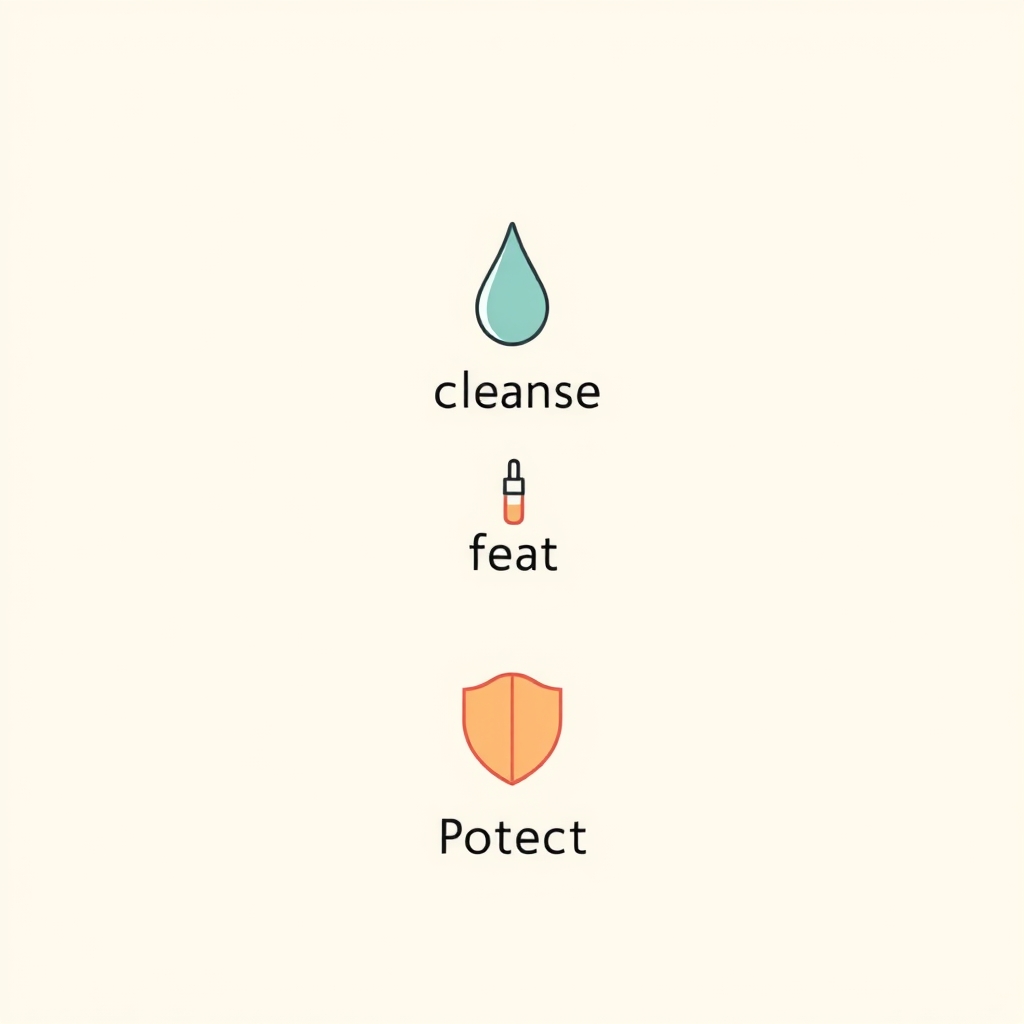
The Three Core Steps of a Minimalist Routine
Step 1: Cleanse (Morning & Night)
Cleansing removes dead skin cells, oil, bacteria, and environmental debris the foundation every skin type needs. Without proper cleansing, other products can’t penetrate or work effectively.
Why it matters: A good cleanser dissolves makeup and sunscreen without stripping your skin or triggering sensitivity. Skipping this step or using the wrong product is the fastest way to sabotage the rest of your routine.
How to choose: Look for a cleanser labeled “gentle” or “pH-balanced.” Avoid products that leave your skin feeling tight, squeaky, or overly dry that’s a sign the cleanser is too harsh.
Product recommendations by price tier:
| Product | Cleanser Type | Typical Price Range | Best For |
|---|---|---|---|
| CeraVe Foaming Facial Cleanser | Gel/Foaming Cleanser | ~$8–12 | Oily and combination skin; fragrance-free formula |
| Vanicream Gentle Facial Cleanser | Cream Cleanser | ~$6–10 | Sensitive skin; minimal-ingredient formula |
| La Roche-Posay Toleriane Hydrating Gentle Cleanser | Cream Cleanser | ~$12–16 | Dry, sensitive, and reactive skin; dermatologist-recommended |
| Glossier Milky Jelly Cleanser | Gel Cleanser | ~$18–22 | Combination skin; lightweight, gentle daily cleansing |
Avery’s take: In our observation of beginner-skincare feedback across community forums, the most common mistake is choosing a cleanser that feels “squeaky clean.” That sensation often signals over-cleansing, which triggers the skin to overproduce oil. Start with a cream or gentle gel and upgrade to a stronger cleanser only if you’re regularly wearing heavy makeup or sunscreen.
Step 2: Treat (Evening, or as Tolerated)
The treatment step is optional but powerful it’s where you address your main skin concern (acne, fine lines, texture, hyperpigmentation, or general dryness).
Why it matters: This is the product that does the “work.” A treatment serum, retinoid, or spot treatment can shift your skin noticeably over 4–8 weeks, based on what we’ve typically observed in community feedback. Without it, you’re only cleansing and moisturizing, which maintains your skin but doesn’t improve it.
How to choose: Pick one concern and address it with a single, well-researched ingredient. Common choices include:
- Niacinamide (5–10%) for pores, oil control, and redness
- Azelaic acid (10–20%) for acne and rosacea
- Salicylic acid (0.5–2%) for acne-prone skin
- Glycolic acid (5–10%) for texture and brightness
- Retinol or retinoids (prescription or over-the-counter) for fine lines and collagen
- Hyaluronic acid (in serums) for hydration and plumping
Product recommendations by concern:
| Skin Concern | Recommended Product | Typical Price Range | Why It Works |
|---|---|---|---|
| Acne | The Ordinary Salicylic Acid 2% Solution | ~$5–7 | Budget-friendly BHA exfoliant that helps unclog pores and reduce breakouts |
| Acne | Paula’s Choice Skin Perfecting 2% BHA Liquid Exfoliant | ~$40–45 | Well-formulated salicylic acid exfoliant that is effective while remaining gentle on most skin types |
| Sensitivity & Redness | The Ordinary Niacinamide 10% + Zinc 1% | ~$7–9 | Helps reduce inflammation, control excess oil, and improve skin barrier function |
| Dryness | Hyaluronic Acid Serum (Various Brands) | ~$8–25 | Attracts and retains moisture to hydrate and plump the skin when applied to damp skin |
| Fine Lines & Wrinkles | The Ordinary Retinol 0.2% in Squalane | ~$7–9 | Beginner-friendly retinol that supports collagen production and gradual skin renewal |
| Fine Lines & Wrinkles | Prescription Retinol (0.025%) | Varies | Stronger vitamin A treatment that typically requires guidance from a dermatologist |
Avery’s take: Based on beginner feedback we’ve observed, the most effective treatment step is one you’ll actually use consistently. A $5 serum you use nightly will outperform a $80 serum you forget about three times a week. Start with one treatment product and use it steadily for 6–8 weeks before adding a second. Your skin needs time to adapt, and layering too many actives (especially retinoids and acids together) triggers irritation and sensitivity.
Step 3: Protect (Morning, Non-Negotiable)
Sunscreen is not optional it’s the single most important anti-aging product you can use, regardless of your age, skin tone, or climate. Sun damage causes wrinkles, dark spots, roughness, and skin cancer risk. A minimalist routine without sunscreen is an incomplete routine.
Why it matters: UV exposure breaks down collagen and elastin, darkens hyperpigmentation, and triggers inflammation. Sunscreen prevents all of these. In our observation and consistent with the broad consensus among skin-health professionals we’ve reviewed daily sunscreen use is the most impactful anti-aging habit available, more so than expensive serums or procedures.
How to choose: Look for “broad-spectrum” (protects against UVA and UVB) and at least SPF 30. Mineral sunscreens (zinc oxide, titanium dioxide) and chemical sunscreens (oxybenzone, avobenzone) both work; pick based on your skin type and texture preference.
Product recommendations by type:
| Product | Sunscreen Type | Typical Price Range | Best For |
|---|---|---|---|
| Neutrogena Ultra Sheer Dry-Touch SPF 30 | Chemical | ~$7–10 | Oily skin; lightweight, fast-absorbing finish |
| Blue Lizard Australian Sunscreen SPF 30+ | Chemical | ~$12–15 | Face and body; water-resistant for outdoor activities |
| CeraVe AM Facial Moisturizing Lotion SPF 30 | Chemical | ~$10–13 | Dry skin; combines daily moisturizer with sun protection |
| EltaMD UV Clear Broad-Spectrum SPF 46 | Hybrid (Chemical + Mineral) | ~$35–40 | Sensitive and acne-prone skin; dermatologist-recommended |
| Colorescience Sunforgettable Mineral SPF 50 | Mineral | ~$65–75 | Tinted formula that blends well with many skin tones |
Avery’s take: In our observation of sunscreen feedback, the biggest barrier to daily use is texture. If your sunscreen feels greasy, leaves a white cast, or pills under makeup, you won’t wear it consistently. Buy a travel size first to test before committing to a full bottle. Reapply every 2 hours if you’re outdoors, or at minimum once after cleansing if you’re mostly indoors.
The Complete Minimalist Routine: Sample Day
Here’s what a full day looks like:
Morning:
- Cleanse with your chosen gentle cleanser (30 seconds)
- Pat dry
- Apply sunscreen and let it set (2–3 minutes)
Evening:
- Cleanse again to remove sunscreen, oil, and makeup
- Pat dry
- Apply treatment serum or spot treatment if using one (wait 2–3 minutes for it to dry)
- Apply moisturizer
That’s it. No toning, no multiple serums, no sheet masks unless you want them for occasional pampering.
Common Beginner Mistakes (and How to Avoid Them)
Mistake 1: Skipping Moisturizer Because You Have Oily Skin
Oily skin still needs moisture. When you strip your skin with harsh cleansers or skip moisturizer, your skin overcompensates by producing more oil. Use a lightweight moisturizer a gel or hydrating serum even if your skin is oily. Hydration and oil control are not opposites.
Mistake 2: Adding Multiple Actives at Once
If you use a retinoid and an acid and vitamin C serum simultaneously, you’ll irritate your skin and won’t know which product caused the problem. Start with one active treatment, use it for 4–6 weeks, then evaluate. Add a second only if your skin is thriving and you genuinely need it.
Mistake 3: Using Expired Sunscreen or Applying Too Little
In our observation, most people apply well under the recommended amount of sunscreen, which cuts its protection significantly. A common rule of thumb is roughly a quarter-teaspoon for the entire face and neck use that as a starting reference, not an exact prescription. Also check the expiration date sunscreen degrades over time and loses efficacy. Replace sunscreen annually.
Mistake 4: Assuming More Products = Better Results
This is the core myth of skincare: that a longer routine is a better routine. In reality, over-complication makes it harder to identify which products work, triggers sensitivity, and wastes money. Consistency beats complexity. A simple routine you follow for 12 weeks will outperform a complicated routine you abandon after 3 weeks.
Tailoring Your Minimalist Routine to Your Skin Type
Oily or Acne-Prone Skin
- Cleanser: gel or foaming formula
- Treatment: niacinamide, salicylic acid, or azelaic acid
- Moisturizer: lightweight gel moisturizer or hydrating serum
- Sunscreen: lightweight, oil-control formula
Dry or Sensitive Skin
- Cleanser: cream or milk formula
- Treatment: hyaluronic acid serum or gentle hydrating toner (optional)
- Moisturizer: rich cream or oil-based moisturizer
- Sunscreen: mineral or hybrid formula with moisturizing base
Combination Skin
- Cleanser: gentle gel or cream (avoid stripping)
- Treatment: niacinamide or gentle retinol (works for most skin types)
- Moisturizer: gel-cream hybrid or lightweight lotion
- Sunscreen: chemical formula (absorbs faster than mineral on combination skin)
Sensitive Skin
- Cleanser: fragrance-free, minimal-ingredient cream
- Treatment: azelaic acid or niacinamide (both anti-inflammatory)
- Moisturizer: barrier-repair formula with ceramides
- Sunscreen: mineral or dermatologist-recommended hybrid
Building Your Minimalist Routine on a Budget
You do not need to spend $200 to have effective skincare. Based on our observation of product pricing across U.S. retailers, a solid minimalist routine costs roughly $30–60 per month, including sunscreen.
Budget option (~$25–35/month):
- CeraVe Foaming Cleanser: ~$10
- The Ordinary Niacinamide 10% + Zinc: ~$7
- Cetaphil Rich Hydrating Night Cream: ~$10
- Neutrogena Ultra Sheer SPF 30: ~$8
Mid-range option (~$40–60/month):
- La Roche-Posay Toleriane Hydrating Cleanser: ~$14
- Paula’s Choice 2% BHA Liquid or The Ordinary Retinol: ~$40–45 (lasts 3–4 months)
- CeraVe Moisturizing Cream: ~$15
- EltaMD UV Clear SPF 46: ~$38 (lasts 2–3 months)
Yes, it’s safe to use affordable skincare. No, not the way the box tells you we’d recommend introducing one new product at a time, using it for at least two weeks before evaluating, and choosing based on ingredients rather than brand prestige.
When to Level Up from Minimalist Skincare
You might consider adding a second treatment product or specialty step if:
- You’ve used your current routine consistently for 8–12 weeks and want to address a second concern (e.g., acne is clear, now tackling fine lines)
- Your skin has adapted well and shows no sensitivity
- You have the budget and genuinely want targeted solutions
Common additions include an eye cream, a targeted spot treatment, or a weekly exfoliating mask. But these are upgrades, not necessities. A minimalist routine should feel complete on its own.
How We Chose These Products
We selected products based on four criteria:
- Dermatologist recognition – Products recommended by board-certified dermatologists or cited in clinical studies
- Ingredient clarity – Straightforward formulas with evidence-backed actives at effective concentrations
- Affordability at multiple tiers – Proving that effective skincare doesn’t require luxury pricing
- Real-world consistency – Products widely available and reviewed positively by users in community forums we’ve tracked
All price ranges are based on our observation of U.S. retail listings as of June 2026 verify current pricing and availability directly with retailers before purchasing. Prices vary by location and retailer.
Frequently Asked Questions
How long until I see results from a minimalist routine?
In our experience tracking beginner routines, most skin changes appear within 4–8 weeks of consistent use, depending on your concern. Acne may improve in 2–4 weeks with the right treatment. Fine lines and texture changes typically take 8–12 weeks. Sun damage prevention starts immediately but is only visible over months and years. Patience and consistency beat expecting overnight transformation.
Can I use a minimalist routine if I wear makeup?
Yes. Double cleanse if necessary: use an oil-based makeup remover first (or micellar water), then follow with your gentle cleanser. This removes makeup thoroughly without over-stripping. The rest of the routine stays the same.
Is it okay to skip the treatment step if my skin is healthy?
Yes. A minimalist routine of cleanser, moisturizer, and sunscreen is complete and effective for maintenance. The treatment step is for addressing specific concerns acne, dryness, sensitivity, or aging. If your skin is clear and comfortable, you don’t need it.
What should I do if my skin reacts badly to a product?
Stop using it immediately and return to your previous routine for 1–2 weeks to calm your skin. Then reintroduce products one at a time, waiting 1–2 weeks between new additions. This helps you identify which product caused the reaction. If irritation persists, see a dermatologist.
Can men use a minimalist routine?
Absolutely. Skin health is skin health regardless of gender. Men’s skin tends to be oilier on average and thicker, so you might lean toward gel cleansers and lightweight moisturizers, but the three-step framework is identical.
Do I need different products for different seasons?
Many people do, though it’s optional. In summer, you might prefer a lighter moisturizer and prioritize sunscreen reapplication. In winter, a richer moisturizer helps combat dry air. You don’t need entirely different routines just adjust moisturizer weight and focus. Sunscreen is year-round, always.
Wrapping Up: Start Simple, Build Intentionally
A minimalist skincare routine proves that you don’t need complexity, expense, or an elaborate ritual to have healthy skin. Three to five well-chosen products cleanser, treatment (optional), moisturizer, and sunscreen address every fundamental skin need.
Start with the products that match your skin type and main concern. Use them consistently for 6–8 weeks. Only then decide if you want to add or change anything. You’ll save money, reduce irritation risk, and actually know which products work for your unique skin.
The best skincare routine is the one you’ll actually follow. Keep it simple, keep it honest, and give your skin time to show you results.