
What Is a Skincare Routine?
A skincare routine is a sequence of cleansing, treating, and moisturizing steps performed in a specific order to address your skin’s needs and improve its health and appearance. The routine works because each product prepares your skin for the next one thinner textures go on first so heavier ones can seal them in, and active ingredients are applied to clean skin where they work best.
Yes, order matters. No, you don’t need eight products. Do this instead: cleanser, treatment (optional), moisturizer, sunscreen (morning only) takes about two minutes.
What IS and IS NOT in a Skincare Routine
What IS in a skincare routine:
- Cleansing (face wash, micellar water, oil cleanser)
- Treatment products (serums, essences, exfoliants, targeted treatments)
- Moisturizing (creams, lotions, hydrating layers)
- Sun protection (SPF, typically morning only)
- Optional add-ons (masks, oils, spot treatments)
What IS NOT in a skincare routine:
- Makeup application (that’s a separate step)
- Dermatological procedures (professional treatments are separate)
- Hair or body care (different skin, different rules)
- Nutritional or supplement routines (those support skin from inside, not topically)
Skincare routines are topical meaning you apply products to the surface of your skin. They work best when combined with basic habits (sleep, hydration, sun avoidance) but do not replace medical treatment for acne, eczema, or other skin conditions.
The Core Skincare Steps: What You Actually Need
Cleanser: The Foundation
A cleanser removes dirt, oil, makeup, and environmental debris from your skin so other products can work. Cleansing happens twice daily (morning and evening) for most people or once daily if you have dry or sensitive skin.
Types of cleansers:
- Foam cleansers– tend to be more astringent, better for oily skin
- Gel cleansers– lightweight, often good for oily and combination skin
- Cream or milk cleansers– gentler, better for dry and sensitive skin
- Oil cleansers– dissolve makeup and sebum; work for all types but especially oily skin
- Micellar water– very gentle, effective for sensitive skin, works as a makeup remover
What to look for: a cleanser that removes dirt without leaving your skin feeling tight or dry. If your face feels squeaky after cleansing, the cleanser is too harsh.
Treatment Products: Optional but Effective
Treatment products address specific concerns acne, hyperpigmentation, fine lines, texture and are applied after cleansing but before moisturizer. They are optional; a cleanser + moisturizer routine is valid on its own.
Common treatment product types:
- Serums– lightweight, concentrated active ingredients (vitamin C, niacinamide, hyaluronic acid), applied to damp or dry skin
- Essences– hydrating, water-based treatments that go on right after cleansing (more common in Korean skincare)
- Exfoliants– remove dead skin cells via chemical (acids, enzymes) or physical (scrub) methods; typically 2–3 times per week, not daily
- Targeted treatments– spot treatments for acne, brightening creams for dark spots, eye creams for the delicate under-eye area
- Toners and astringents– balance pH and hydration; can be hydrating or drying depending on formula
The difference between a serum and an essence: Essences are thinner and more hydrating; serums are more concentrated with active ingredients. Both can go in a routine, but order matters (essence first, then serum).
Moisturizer: Non-Negotiable
A moisturizer hydrates your skin and seals in the products you applied before it. Every skin type benefits from a moisturizer even oily skin needs one (just a lightweight one).
Moisturizer types:
- Lightweight gels and lotions– best for oily and combination skin
- Creams– richer, better for dry skin
- Oils– very occlusive, can be used alone or mixed into a cream; good for dry and mature skin
Apply moisturizer to damp skin (right after your serum or treatment) so it locks in hydration.
Sunscreen: Morning Only
Sunscreen (SPF 30 or higher) is the most important anti-aging product you can use. Apply it every morning, even on cloudy days, even if your moisturizer contains SPF (you’d need to use so much moisturizer that it becomes impractical).
Types of sunscreen:
- Chemical (organic) sunscreen– absorbs into skin, tends to be lighter
- Physical (mineral) sunscreen– sits on skin surface, visible white cast unless formulated carefully
- Hybrid sunscreens– blend both types
Apply sunscreen as the last step of your morning routine, after moisturizer has dried.
The Layering Rule: Thinnest to Thickest
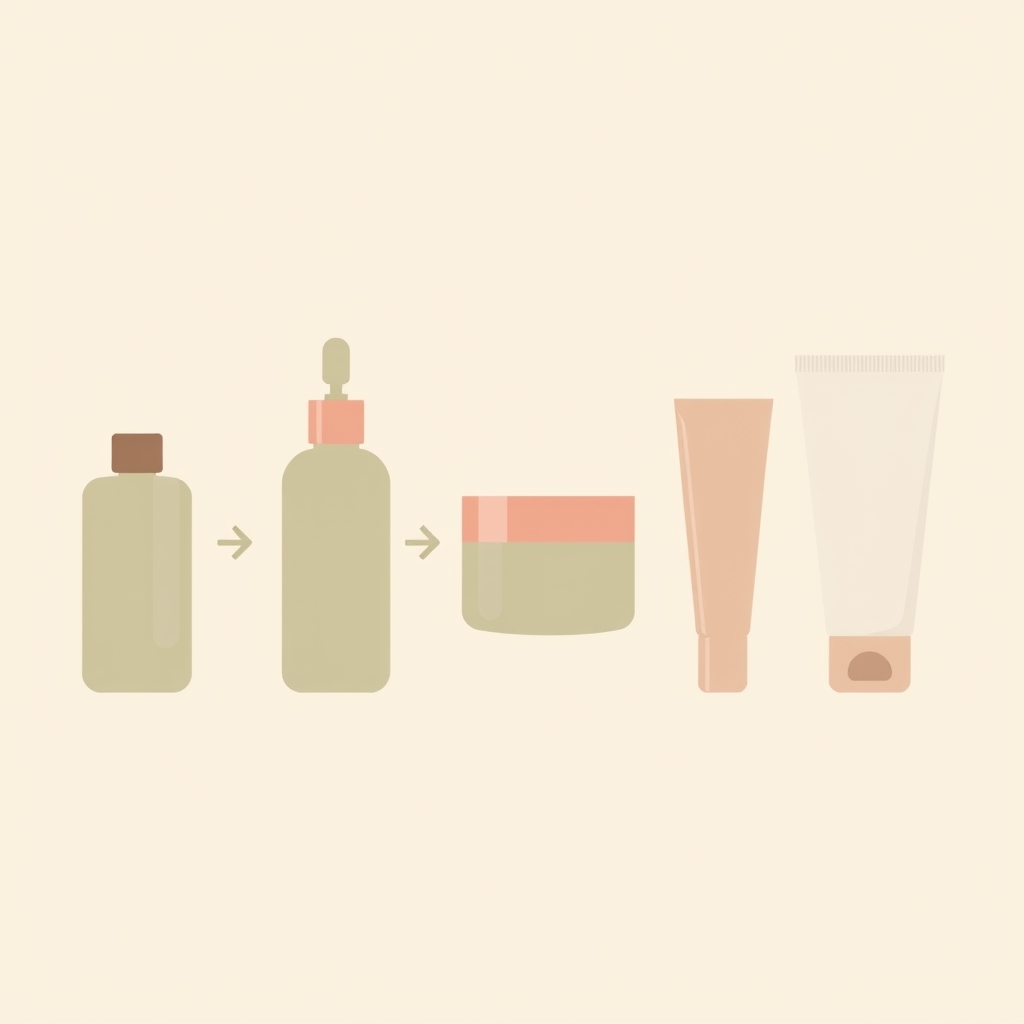
The golden rule of skincare layering is: apply products from thinnest to thickest texture. This ensures each layer absorbs properly and nothing sits on top of heavier products, blocking their effectiveness.
Typical order (thinnest to thickest):
- Cleanser
- Toner or essence (if using)
- Serum or treatment
- Eye cream (optional, dab gently do not rub)
- Moisturizer
- Oil (optional, on damp skin or mixed into moisturizer)
- Sunscreen (morning only)
Why it matters: If you apply a thick cream before a serum, the serum cannot penetrate. If you apply sunscreen before moisturizer dries, the sunscreen may not form a protective barrier. Order ensures efficacy.
Exception: Sunscreen always goes last in the morning, even if it feels thicker than your moisturizer, because it needs to sit on top to protect.
Morning Skincare Routine: Step-by-Step
The Minimum Morning Routine (2 minutes)
- Cleanser– Splash face with water or use a gentle cleanser. Rinse thoroughly.
- Moisturizer– Apply to damp skin, working upward from neck to forehead.
- Sunscreen– Wait 1–2 minutes for moisturizer to set, then apply SPF 30+. Wait another minute before applying makeup if you wear it.
A Moderate Morning Routine (4–5 minutes)
- Cleanser– Use your chosen cleanser, rinse with water.
- Toner or essence– Pat on damp skin with your fingers or a cotton pad.
- Serum– Apply a few drops to your face and neck, gently pressing in.
- Moisturizer– Apply to damp skin.
- Sunscreen– Final step, allow 1–2 minutes to set.
A Full Morning Routine (6–8 minutes)
- Cleanser– Rinse thoroughly.
- Essence– Pat onto damp skin.
- Serum or treatment– Target any specific concerns (brightening, hydration, acne).
- Eye cream– Dab lightly around the orbital bone (do not tug).
- Moisturizer– Apply generously to face and neck.
- Face oil– Optional; mix into moisturizer or apply to damp skin.
- Sunscreen– Final step, allow to set before makeup.
Evening Skincare Routine: Step-by-Step
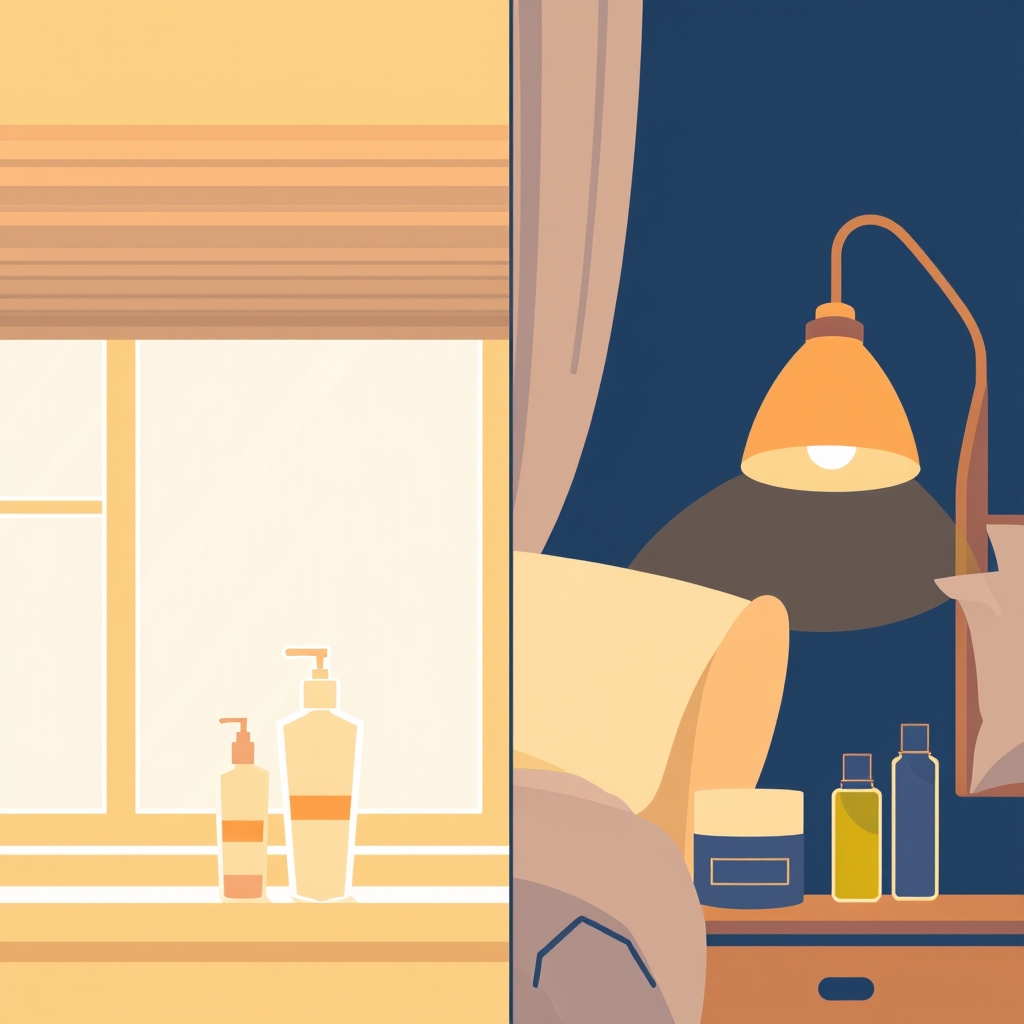
Evening routines can be longer because you’re not rushing out the door, and your skin benefits from time to absorb richer products overnight.
The Minimum Evening Routine (3 minutes)
- Cleanser– Use a cream or gentle cleanser to remove the day’s dirt and sunscreen.
- Moisturizer– Apply generously; nighttime is when skin repairs itself.
A Moderate Evening Routine (5–6 minutes)
- First cleanser (optional)- If you wear makeup or sunscreen, use an oil cleanser or micellar water first to dissolve it.
- Second cleanser– A gentle cream or gel cleanser removes remaining residue.
- Toner– Pat on damp skin.
- Serum or treatment– Apply your chosen active treatment.
- Moisturizer or night cream– Richer formulas are fine at night; your skin won’t sweat them off onto pillows as much as during the day.
A Full Evening Routine (7–10 minutes)
- First cleanser (oil or micellar water)– Massage gently for 30 seconds, then rinse or wipe off.
- Second cleanser (water-based)– Remove all traces of makeup and first cleanser. Rinse thoroughly.
- Toner or essence– Pat onto damp skin.
- Exfoliant (2–3 times per week, not nightly)– Apply for the recommended time, then rinse.
- Serum or treatment– Vitamin C, niacinamide, retinol, or brightening treatments belong here.
- Eye cream– Dab gently.
- Moisturizer or night cream– Use a richer formula than your daytime moisturizer if you have dry skin.
- Face oil– Apply to damp skin or mix into night cream for extra hydration and occlusion.
- Spot treatment (if needed)– Acne treatment or targeted repair serum on specific areas only.
Note: Retinol and other potentially irritating actives typically belong in the evening routine, not morning, because sun exposure can interact with some ingredients. Apply retinol 2–3 times per week to start, not nightly.
How to Customize for Your Skin Type
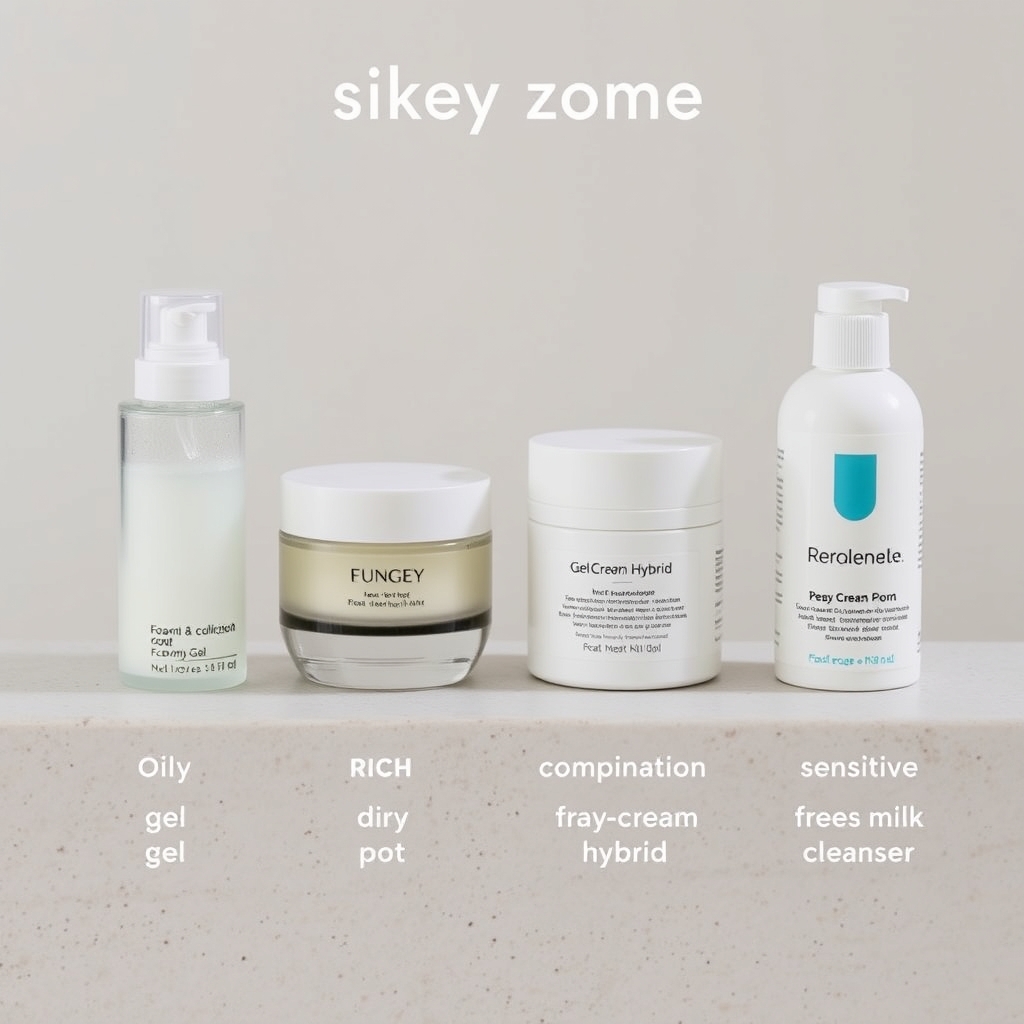
Oily Skin
Goals: Control sebum, prevent congestion, avoid heaviness.
Product choices:
- Cleanser: foam or gel type, can be slightly astringent
- Serum: lightweight, water-based (hyaluronic acid, niacinamide)
- Moisturizer: lightweight gel or lotion, skip heavy creams
- Oil: optional; if used, very light and only on damp skin
- Exfoliant: salicylic acid (BHA) 2–3 times weekly helps control oil and unclog pores
Morning routine: Cleanser → serum → lightweight moisturizer → sunscreen (gel or mineral).
Evening routine: Cleanser → serum → lightweight moisturizer. Add a BHA exfoliant 2–3 times weekly instead of serum.
Dry Skin
Goals: Hydrate, nourish, avoid stripping.
Product choices:
- Cleanser: cream or oil cleanser; avoid anything foaming
- Serum: hydrating (hyaluronic acid, glycerin, peptides)
- Moisturizer: rich cream; heavier is better
- Oil: beneficial; use nightly or mixed into moisturizer
- Exfoliant: gentle, enzyme-based; avoid harsh scrubs; once weekly max
Morning routine: Cleanser → essence or hydrating serum → rich moisturizer → oil (optional) → sunscreen.
Evening routine: Cleanser → essence or serum → rich night cream → oil. Can add a hydrating mask 1–2 times weekly.
Combination Skin
Goals: Balance hydration in dry zones with oil control in the T-zone (forehead, nose, chin).
Product choices:
- Cleanser: gel or mild foam
- Serum: lightweight and hydrating (not heavy)
- Moisturizer: gel-cream hybrid (hydrates without being heavy)
- Oil: optional; use only on dry areas
- Exfoliant: mild AHA or BHA; salicylic acid on oily zones only
Morning routine: Cleanser → serum → lightweight moisturizer → sunscreen. Can spot-treat the T-zone with a lighter gel if needed.
Evening routine: Cleanser → serum → moisturizer. Add a mild exfoliant 2–3 times weekly. On dry patches, add a richer cream or oil after moisturizer.
Sensitive Skin
Goals: Soothe, avoid irritation, strengthen the skin barrier.
Product choices:
- Cleanser: very gentle, often labeled “for sensitive skin” (micellar water, hydrating milk cleanser)
- Serum: minimal actives; hydrating and soothing (centella asiatica, niacinamide, aloe)
- Moisturizer: fragrance-free, minimal actives
- Oil: optional; can help seal the barrier
- Exfoliant: avoid; physical and chemical exfoliants can be irritating
Morning routine: Gentle cleanser → hydrating serum or essence → moisturizer → sunscreen (mineral, less likely to irritate).
Evening routine: Gentle cleanser → hydrating serum → rich moisturizer. Skip active treatments; focus on barrier repair.
Common Beginner Mistakes (and How to Fix Them)
Mistake 1: Applying Products to Completely Dry Skin
The problem: Serums and moisturizers absorb better on damp skin because water helps them penetrate.
The fix: After cleansing, gently pat your skin until it’s barely damp not dripping, but not dry either. Apply your serum and moisturizer within 30 seconds while that moisture is still present.
Mistake 2: Using Too Much Product
The problem: More product doesn’t equal better results; excess sits on your skin without absorbing, clogs pores, and wastes money.
The fix: Use a pea-sized amount of serum, a nickel-sized amount of moisturizer for your face and neck combined. Sunscreen is the exception use ¼ teaspoon for your face and neck to ensure adequate protection.
Mistake 3: Layering Incompatible Actives
The problem: Combining vitamin C, retinol, and strong exfoliants in one routine irritates and damages your skin.
The fix: Use actives on separate days or in separate routines. Vitamin C in the morning, retinol in the evening, exfoliant 1–2 times weekly. Start with one active, establish tolerance, then add another.
Mistake 4: Skipping Sunscreen Because It “Feels Greasy”
The problem: No sunscreen means UV damage, which ages skin faster than any serum can fix.
The fix: Switch sunscreen formulas. Try a gel, a chemical sunscreen, or a lightweight hybrid. Sunscreen goes on last so it sits on top and might feel slightly slick that’s normal and protective.
Mistake 5: Waiting Too Long Between Product Applications
The problem: Leaving 10+ minutes between each layer wastes time and doesn’t improve absorption.
The fix: Apply each layer immediately after the previous one dries (15–30 seconds for serums, 30 seconds for moisturizer). Your routine should take 3–8 minutes total, not 30.
Myth: “More Steps = Better Skin”
The truth: A simple, consistent routine beats a complex routine you abandon. Start with cleanser + moisturizer + sunscreen. Add one treatment product at a time, and wait 4–6 weeks to evaluate results before adding another. Most skin improves dramatically with just those three foundations and one targeted serum.
Real Brands and Products to Start With
If you’re building your first routine, here’s what to look for at different price points:
Budget-friendly (drugstore):
- CeraVe Foaming Facial Cleanser– oily skin, under $10
- Neutrogena Hydro Boost Hydrating Tint Serum– lightweight, affordable hydrating serum
- CeraVe Moisturizing Cream– fragrance-free, works for most skin types, $15–20
- Neutrogena Ultra Sheer Dry-Touch SPF 30– accessible sunscreen, under $10
Mid-range:
- La Roche-Posay Toleriane Purifying Foaming Cleanser– sensitive skin, around $15
- The Ordinary Hyaluronic Acid 2% + B5– hydrating serum, ~$5–7 (own brand of Deciem, available through Sephora and similar retailers)
- Cetaphil Rich Hydrating Night Cream– good for dry skin, $15–20
- La Roche-Posay Anthelios SPF 60– lightweight, mineral-based, $30–35
Premium (specialty retailers):
- Augustinus Bader The Rich Cream– luxe moisturizer, around $80–90 (but very concentrated)
- Skinceuticals C E Ferulic– gold-standard vitamin C serum, $160–170
- SkinCeuticals H.A. Intensifier– hydrating serum, $98
How to choose: Start with a cleanser and moisturizer from your skin type category (above), add a drugstore sunscreen, and use this routine for 2 weeks. Once you’re comfortable, add one serum or treatment product. Avoid buying a full routine from one brand on day one; mix and match based on your specific needs.
How We Chose
We prioritize clarity and simplicity for beginners: a routine that works must be easy to remember and execute daily. We chose brands and products based on wide availability (drugstore or online), a balance of price and efficacy observed across owner reviews, and proven track records for the stated skin concerns. We named specific products rather than generic categories so you have a starting point. Prices observed reflect US retail ranges at publication; check your local retailer for current pricing.
What This Guide Does NOT Cover
This primer focuses on topical skincare routines for healthy skin with minor concerns (hydration, oiliness, sensitivity). It does not address:
- Medical skin conditions– acne, eczema, psoriasis, rosacea (consult a dermatologist)
- Professional treatments– facials, lasers, injectables, chemical peels (separate from at-home routines)
- Body skin care– routines differ significantly from face care
- Specific active ingredient science– vitamin A, niacinamide, peptides (each warrant their own deep dive)
- Contradictions with prescriptions– if you take oral isotretinoin (Accutane) or use topical retinoids prescribed by a doctor, consult your dermatologist before adding other actives
FAQ
Q: Do I really need a morning and evening routine, or can I just do one? A: A basic morning routine (cleanser, moisturizer, sunscreen) and evening routine (cleanser, moisturizer) will maintain skin health. Most people benefit from a slightly richer evening routine because skin repairs overnight, but one-a-day is valid if that’s what you’ll stick to.
Q: How long should I wait between applying one product and the next? A: Not long. Apply each layer as soon as the previous one feels dry to the touch roughly 15–30 seconds for serums, 30 seconds for moisturizer. Your whole routine should take 3–8 minutes. Waiting longer doesn’t improve absorption.
Q: Can I mix all my products together and apply at once? A: Technically, yes, but it defeats the purpose of layering. Mixing products can prevent proper absorption and may cause ingredients to interact in unpredictable ways. Apply them in order, one at a time.
Q: What if I’m allergic or sensitive to a product? A: Stop using it immediately. Introduce new products one at a time, waiting 1–2 weeks between additions to identify what causes a reaction. Patch-test new products on a small area of skin first, not your whole face.
Q: Do I need a different routine for seasons (summer vs. winter)? A: Many people use a lighter moisturizer in summer and a richer one in winter. Sunscreen stays year-round. Otherwise, your core routine stays the same adjust only the texture and richness of moisturizer, not the order.
Q: Is it OK to skip my routine if I’m tired? A: Cleanse before bed, always it removes the day’s dirt and sunscreen. A full routine can wait, but cleansing and a basic moisturizer should not. If you’re exhausted, do the minimum: cleanser, moisturizer. That takes 60 seconds.