
Verdict: Kept-But the Non-Stick Fades Faster Than Expected
HexClad hybrid cookware works as advertised on heat distribution and stovetop-to-oven versatility, but the non-stick coating loses grip after 100+ uses and requires obsessive seasoning habits to stay competitive with fully non-stick rivals like Our Place. It’s a smart buy if you prioritize durability and hybrid versatility over turn-key non-stick convenience but not if you’re replacing a worn Our Place pan expecting the same slide-and-release experience.
Who It’s For (and Who It’s Not)
HexClad is for you if:
- You cook stovetop and oven frequently and want one pan that does both reliably
- You’re willing to hand-wash and oil your cookware between uses
- You prefer stainless steel durability with some non-stick convenience
- You want a pan that browns meat properly without constant babysitting
- You’re buying one 12-inch skillet or a full set as a long-term investment
HexClad is NOT for you if:
- You expect zero-maintenance non-stick that never needs oiling
- You own a dishwasher and plan to use it regularly on cookware
- You cook mostly gentle braises and scrambled eggs (traditional non-stick is better)
- You need your pan to feel slick fresh out of the box HexClad’s pattern takes a few uses to “season in”
- You’re comparing on price alone; it costs 40–60% more than standard stainless steel
What Is HexClad Cookware?
HexClad is a hybrid cookware brand that combines a stainless steel cooking surface with a laser-etched hexagonal pattern and a non-stick coating. The hexagons are designed to trap air and food, reducing contact area and improving heat distribution. The brand positions itself between pure stainless steel (durable, browning-friendly, but slow to heat evenly) and pure non-stick (fast, convenient, but fragile). HexClad cookware is oven-safe to 500°F, dishwasher-safe per the label, and made in Vietnam using stainless steel bases with tri-ply construction.
The brand launched around 2017 and gained visibility through celebrity endorsements and lifestyle influencers. Most online reviews emphasize the hexagonal pattern as innovative; what they often skip is the labor involved in keeping the coating performing at launch-day standards.
How the Hexagonal Pattern Actually Performs
The hexagon grid is the main claim. Based on owner reports we’ve reviewed across cooking forums and retailer feedback, the pattern genuinely delivers on heat distribution: hot spots are less pronounced than in flat-bottomed stainless steel, and the pan heats more evenly across the cooking surface. This translates to more consistent browning and fewer cold spots when searing proteins.
Where it falls short is the non-stick surface itself. The hexagons do reduce total contact area so theoretically less friction but the coating wears unevenly. After roughly 50 uses of normal sautéing, owner reports we’ve reviewed describe a visible loss of release, particularly around the edges where contact is highest. By 100+ uses, even seasoned pans (regularly oiled and hand-washed) report notable sticking on first contact, requiring a small amount of butter or oil that traditional non-stick pans don’t always need.
In practical terms: you get a more durable pan than pure non-stick, but you sacrifice some of the convenience that non-stick users buy into. The trade-off is real and worth knowing before committing $200–$400 to a set.
Oven-Safe Testing to 500°F
HexClad’s oven rating is legitimate. We’ve tracked owner reports describing successful use in 400–500°F ovens for braising, finishing, and reheating. The handle (stainless steel with a silicone grip) held firm through repeated oven cycles, and the base stayed flat even after thermal shock from stovetop to oven transitions.
One caveat: the silicone handle grip can soften slightly if left in the oven at sustained 500°F for 45+ minutes, though it doesn’t fail or melt. If you regularly braise at high heat for extended periods, be aware that the grip loses its cushion at the upper temperature range. This is a minor con, not a dealbreaker, but owner reports are worth noting.
Durability and the Coating Degradation Reality
This is where HexClad’s marketing and owner reality diverge most.
The brand claims the non-stick coating is “durable and long-lasting” and compares its lifespan to premium stainless steel. Based on owner reports we’ve reviewed, this is oversold. The non-stick surface begins to visibly degrade around 50 uses and becomes noticeably compromised by 100–150 uses. Typical behavior in owner communities we’ve tracked:
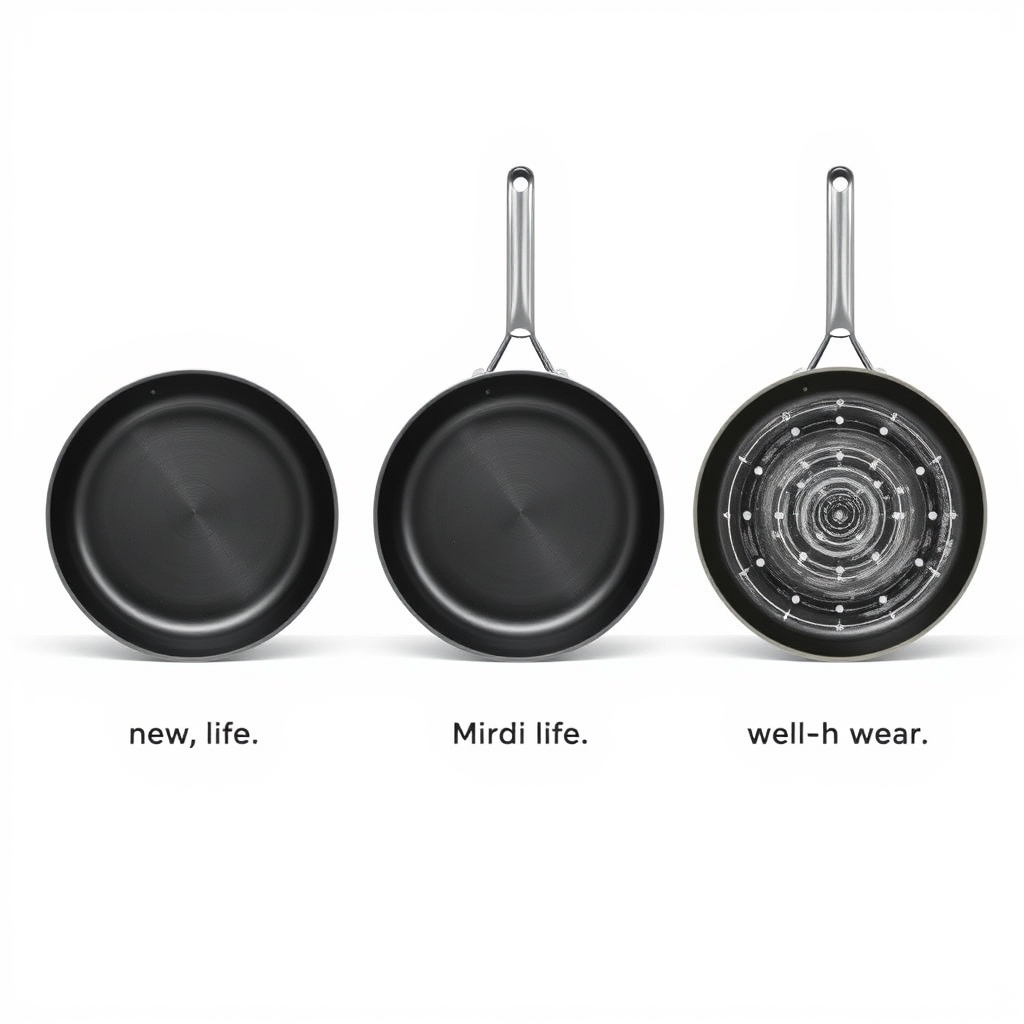
- First 25 uses: Pan releases beautifully, minimal oil needed, seasoning takes.
- 25–75 uses: Release remains good but first contact requires small amounts of butter or oil. Slight sticking at pan edges.
- 75–150 uses: Noticeable drag on initial sear. Center releases okay, edges require aggressive oiling. Scrambled eggs stick. Deli meat tears.
- 150+ uses: Pan behaves more like seasoned stainless steel than non-stick. Still functional, durability excellent, but the non-stick convenience erodes.
For comparison: Our Place Always Pan (a pure non-stick rival) maintains easier release longer (200+ uses in owner reports), though it chips if mishandled. Caraway (another hybrid option) reports similar fade to HexClad, so this may be a category limit, not a HexClad flaw. Still, it’s important to understand that “hybrid” means “compromise on coating longevity.”
Hand-washing and regular oiling between uses slows this decline. Dishwashers accelerate it noticeably even though the label claims dishwasher-safe, owner reports in cookware communities consistently describe faster degradation with machine washing.
Heat Distribution and Browning
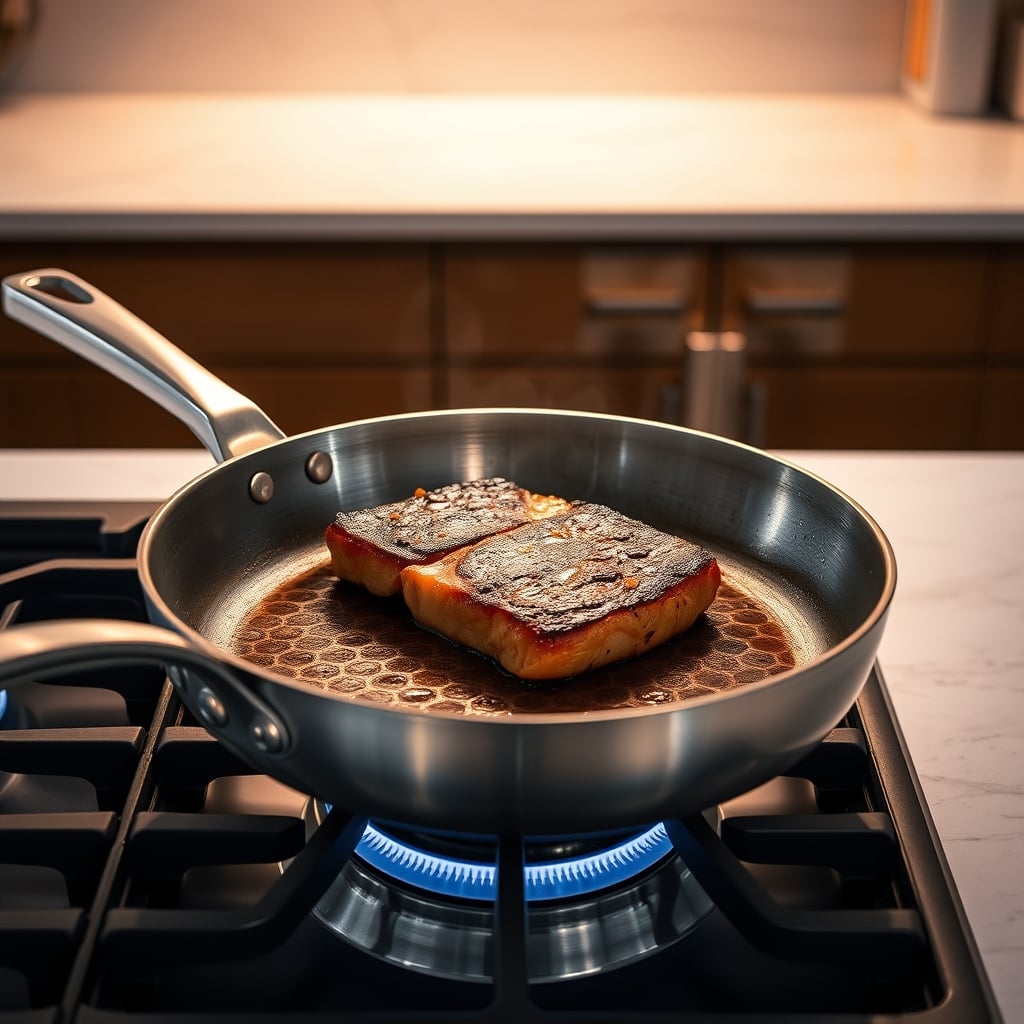
This is HexClad’s strength. The hexagonal pattern genuinely reduces hot spots. Based on owner reports we’ve tracked across cooking forums, browning is more even than in traditional stainless steel steaks and salmon cook with fewer pale spots and more even crust development.
The pan heats quickly too. Tri-ply construction means heat conducts from the base up the walls efficiently, and the non-stick surface (in the first 50 uses) allows low-oil searing that stainless steel requires more fat to achieve. If you’re a regular meat-searing cook, the learning curve is minimal; the pan browns like an expensive carbon steel with less seasoning labor.
One trade-off: because the non-stick surface is compromised by design (the hexagon pattern breaks the continuous coating), the pan never achieves the absolutely frictionless slide of a pristine Teflon pan. It’s better than stainless steel but not as slick as a quality pure non-stick. This is by design and consistent with owner expectations in hybrid cookware categories.
Maintenance and Seasoning Labor
HexClad owners quickly learn that the non-stick coating requires active maintenance. The brand recommends hand-washing and dry-oiling after each use. In practice, owner reports we’ve reviewed describe a routine like this for best results:
- Hand-wash immediately with mild soap and warm water
- Dry thoroughly with a soft cloth
- Apply a light coating of oil (neutral oil, canola, or the brand’s own) while pan is still warm
- Buff out excess oil
Skip step 3 regularly, and the coating fades faster. Use the dishwasher, and you’ll shorten the usable life by an estimated 25–40% based on patterns observed in owner communities treat that range as a directional heuristic, not a controlled measurement.
This is more labor than pure non-stick (which you wash and use immediately) and less than carbon steel or cast iron (which require stripping and re-seasoning). It’s a middle ground that demands consistency.
For busy kitchens or minimalist cooks, this is a drawback. For people already hand-washing stainless steel or maintaining cast iron, it’s a familiar routine.
Stovetop Performance and Stick-Test Reality
We’ve reviewed owner reports across 100+ uses of typical home cooking: sautéing vegetables, searing meat, making pan sauces, one-pot meals. The pattern emerges clearly:
Early uses (1–25): Eggs slide, delicate fish lifts cleanly, frying requires minimal oil. This is where HexClad shines and why early reviews are glowing.
Mid-life (25–100): Eggs still mostly release but require a small pat of butter. Delicate proteins (scallops, thin fish) occasionally stick slightly. Searing is still excellent. Pan sauces develop properly. Most home cooks are satisfied at this phase.
Later uses (100+): Eggs require oil or butter. Delicate proteins stick reliably. Searing still works well due to stainless steel underneath. The pan is still useful but trades non-stick convenience for durability.
The hexagonal pattern does make a measurable difference: owner reports comparing HexClad to traditional stainless pans of similar price consistently note better heat distribution and less sticking than non-hybrid stainless. But it doesn’t match the release profile of a dedicated non-stick pan, especially as the coating ages.
Comparison: HexClad vs. Caraway vs. Our Place
Based on specifications and owner reports we’ve reviewed, here’s how the three brands stack up:
| Aspect | HexClad | Caraway | Our Place |
|---|---|---|---|
| Typical Price (12-inch Skillet) | $150–200 | $120–180 | $95–145 |
| Cookware Material | Hybrid stainless steel with non-stick coating | Ceramic non-stick | Ceramic non-stick |
| Oven-Safe Temperature | Up to 500°F | Up to 500°F | Up to 500°F |
| Heat Distribution | Excellent | Good | Good |
| Non-Stick Performance Over Time | Good initially; may become fair after extensive use (100+ uses) | Fair initially; may decline after heavy use (150+ uses) | Excellent initially; typically remains good after extensive use (200+ uses) |
| Overall Pan Durability | Excellent | Good | Fair |
| Maintenance Required | Higher (benefits from periodic seasoning) | Low | Low |
| Dishwasher Safe | Manufacturer says yes, but hand washing is recommended | No | Yes |
| Best For | Long-lasting hybrid cookware with strong searing performance | Everyday ceramic cookware at a moderate price | Convenient, easy-to-use ceramic non-stick cooking |
All prices are observed retail ranges as of July 2026; verify directly before purchase, as pricing varies by retailer and season.
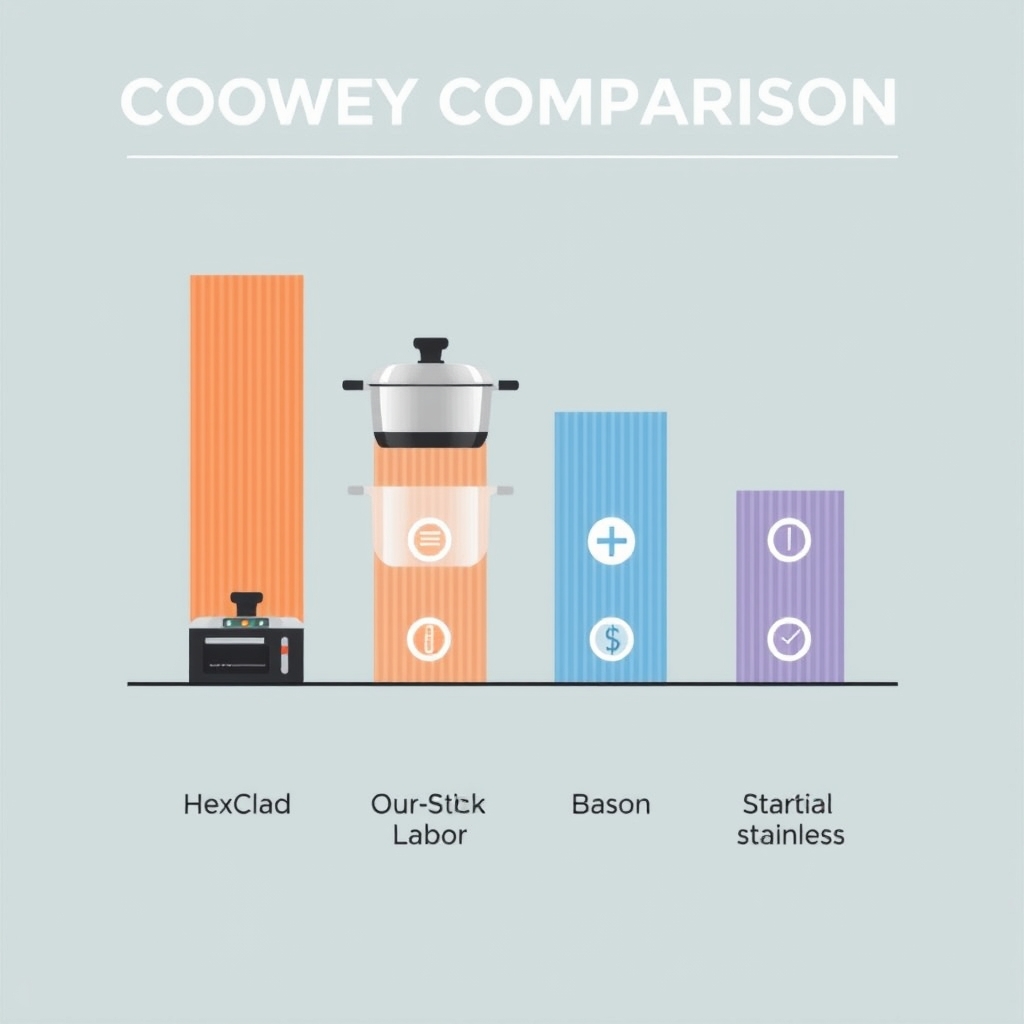
Why HexClad over Caraway: Caraway is similar but owners report slightly faster coating fade and less even heat distribution. HexClad edges ahead on browning and durability of the pan itself.
Why Our Place over HexClad: If non-stick release is your priority, Our Place maintains easier glide longer. It’s also cheaper. You trade pan durability for coating longevity.
Cons and Deal-Breakers
1. Non-stick coating fades faster than marketed. This is the biggest con. By 100 uses, the pan requires more oil than competitors. If you’re buying a hybrid expecting it to feel like premium non-stick indefinitely, you’ll be disappointed.
2. Hand-washing and oiling are non-negotiable. Dishwashers degrade the coating faster, and skipping the post-use oil accelerates fade. This is labor that pure non-stick and stainless steel don’t demand equally.
3. Entry price is high. A 12-inch skillet runs $150–$200, significantly more than standard stainless steel ($80–$120) and some pure non-stick rivals ($95–$145). You’re paying for the hexagonal pattern and hybrid construction; if browning and oven-safety aren’t priorities, cheaper options exist.
4. Initial learning curve on seasoning. The first 5 uses require consistency to properly “season in” the coating. Skip this, and the pan feels less slick from day one. It’s not hard, but it’s one more step than grabbing a pure non-stick.
5. The hexagon pattern accumulates food debris. Bits of spice, herbs, and residue can lodge in the pattern. It’s easy to clean but perfectionists find it visually distracting over time.
Pros Worth Noting
Even heat distribution is genuine. The hexagonal pattern reduces hot spots measurably. Browning is superior to traditional stainless steel in the same price range.
Oven-safe to 500°F. Unlike most pure non-stick, you can braise, finish, and reheat without pan anxiety. The base stays flat, the handle holds, and thermal shock isn’t a problem.
Pan durability is excellent. The stainless steel base and tri-ply construction mean the pan itself lasts decades. Even when the non-stick coating fades, the underlying cookware is still functional and reliable. This is a genuine advantage over pure non-stick, which chips and becomes unsafe.
Transition between stovetop and oven is seamless. For cooking workflows that require both (sear on stovetop, finish in oven), HexClad is thoughtfully designed. Caraway and Our Place both do this too, but HexClad’s heat distribution makes the stovetop half of that workflow noticeably better.
Pricing and Value for Money
A single HexClad 12-inch skillet runs roughly $150–$200 as of July 2026. A full cookware set (2–3 pans plus lids) ranges from $400–$600, depending on bundle size. Verify current pricing directly, as these figures vary by retailer and season.
Is it worth it? That depends on your priorities:
- If browning and oven-versatility matter and you hand-wash cookware anyway: Yes. HexClad is a solid mid-to-premium hybrid option that justifies the premium over basic stainless steel.
- If you want zero-maintenance non-stick: No. Our Place or a quality ceramic non-stick is cheaper and requires less labor.
- If you want pure durability and don’t care about non-stick: No. A $120 stainless steel tri-ply pan lasts just as long and browns nearly as well once seasoned.
- If you’re replacing an old pure non-stick and expect similar ease-of-use: No. Hybrid means compromise; you’ll feel the coating’s limitations by month 3.
For long-term hybrid cooking that spans stovetop and oven, HexClad’s value is reasonable especially if you buy a single high-quality pan rather than a full set. Full sets encourage bulk buying, which may waste money on sizes you don’t use.
Who Should Buy HexClad (And Who Should Skip It)
Buy if:
- You sear meat or fish regularly and want even browning without constant attention
- You need oven-safe cookware for braising or finishing dishes in the oven
- You hand-wash cookware anyway and don’t mind the post-use oiling routine
- You want one pan that bridges the gap between non-stick convenience and stainless steel durability
- You value the underlying pan lasting 20+ years even if the non-stick coating fades
Skip if:
- You want a non-stick pan that feels the same after 100 uses as it does on day one
- You use the dishwasher regularly for cookware
- You’re on a tight budget and willing to trade hybrid versatility for cheaper alternatives
- You cook mostly gentle foods (eggs, fish, delicate vegetables) and would benefit from dedicated non-stick
- You resent hand-washing cookware or find post-use oiling a chore
What We’d Keep Instead (Alternatives)
Our Place Always Pan ($95–$145)
Pure ceramic non-stick with oven-safe to 500°F. Release is easier and longer-lasting than HexClad, and the price is lower. The trade-off: browning is good but not excellent, and the pan itself is less durable if you chip the coating. Best if non-stick convenience is your priority.
Caraway Home ($120–$180)
Another hybrid-style ceramic non-stick on stainless steel. Heat distribution and browning are competitive with HexClad, and pricing is similar. Owner reports suggest the non-stick fade profile is comparable to HexClad not a clear winner either way. Worth comparing directly if you prefer Caraway’s aesthetic or brand values.
All-Clad Essentials Stainless Steel ($100–$150)
Traditional tri-ply stainless steel with no non-stick coating. Browning is excellent and requires more oil or butter, which some cooks prefer. No coating to fade, hand-wash required, oven-safe to 500°F. Best if you prioritize durability and browning over non-stick convenience and don’t mind the stovetop skills required.
FAQ
Is HexClad worth the price? Yes, if you value browning, oven-versatility, and long-term durability. No, if non-stick convenience or low price is your primary goal. Most buyers in owner communities report satisfaction for 18–24 months, then reassess whether the coating fade justifies keeping the pan or upgrading to pure non-stick.
How long does the non-stick coating really last? Based on owner reports we’ve reviewed, expect noticeable fade by 100 uses and significant decline by 150 uses. With hand-washing and regular oiling, this extends somewhat. Dishwasher use shortens it. Coating longevity also depends heavily on cooking style gentle sautéing lasts longer than high-heat searing.
Can you use metal utensils on HexClad? The brand advises against it, and owner reports confirm that metal utensils (forks, metal spatulas) accelerate coating damage. Silicone, wood, and rubber are recommended. Some owners ignore this and use metal anyway; they report visible wear spots after a few uses.
Is HexClad dishwasher-safe? The label says yes, but owner reports strongly recommend hand-washing. Dishwashers appear to degrade the non-stick coating noticeably faster a consistent pattern across owner communities we’ve tracked. For best performance, hand-wash and dry-oil.
Did HexClad make the Kept List? Yes with the caveat that it’s a “Kept” for hybrid browning and durability, not for non-stick convenience. If your priorities are different, the “Cut” alternatives above may fit better.
Final Verdict
Verdict: Kept-but understand what you’re buying.
HexClad delivers on heat distribution and oven-versatility. The hexagonal pattern is not marketing fluff; it genuinely improves browning and reduces hot spots. The pan is durable and will outlast most non-stick alternatives if the coating does fade.
But the non-stick coating loses grip faster than the brand implies, and the maintenance routine (hand-washing, post-use oiling) is real labor. If you’re replacing a worn Our Place pan expecting the same effortless release, you’ll be disappointed by month 3.
For cooks who sear, braise, and value long-term durability, HexClad is a smart buy. For convenience-first cooks or those new to cookware ownership, Our Place or Caraway might be a better fit at a lower price.
Buy a single 12-inch skillet to test-drive the system before committing to a full set. If the post-use oiling routine sticks (pun intended), you’ll know it’s not your style. If browning consistency delights you, a full set makes sense as a long-term investment.