
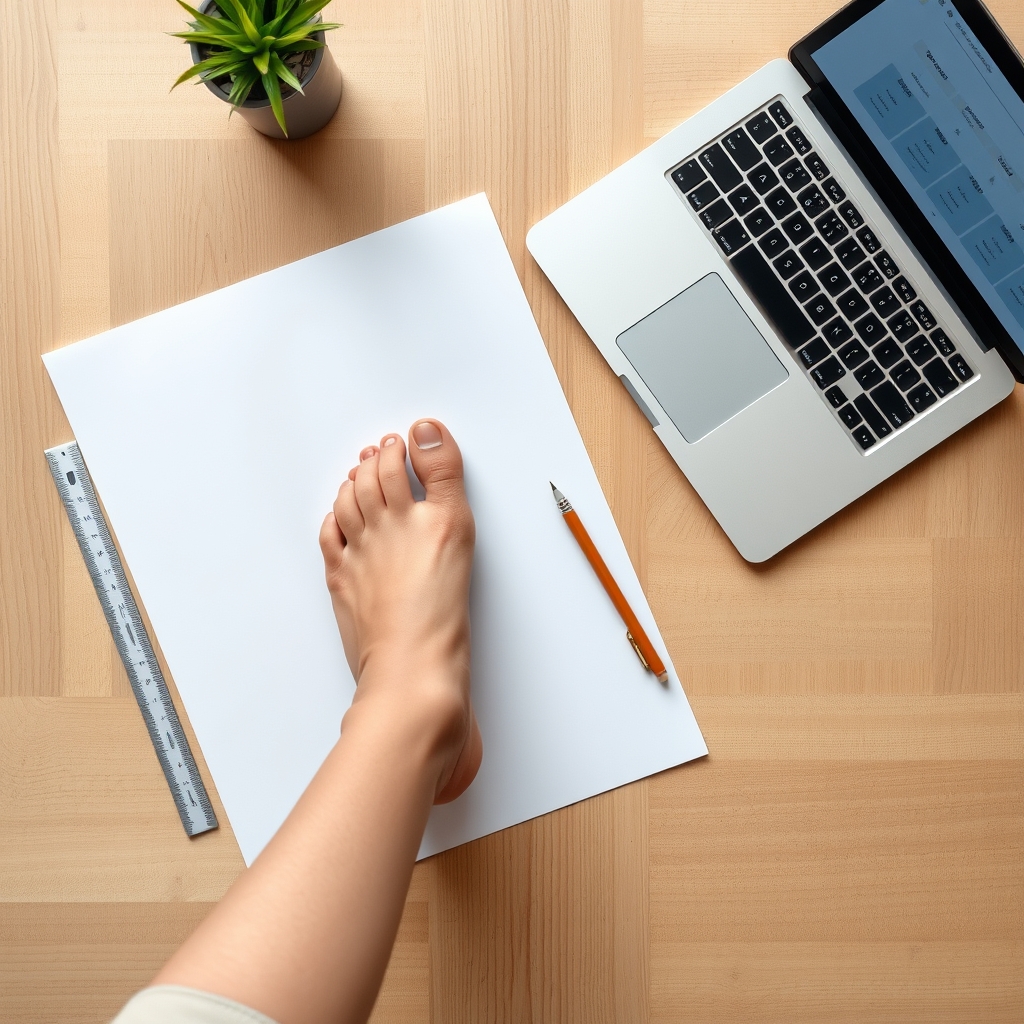
The direct answer: measure both feet in the afternoon, compare your measurement to the specific brand’s sizing chart (not a generic one), and factor in width, arch height, and forefoot volume before you buy. Most returns happen because people skip measurement or assume all brands fit the same way. This guide takes you through the full process in about 30 minutes including a printable foot measurement template and a comparison of how the biggest brands actually fit.
What You’ll Need
- A ruler or measuring tape (physical is better than digital for accuracy)
- A pencil
- A flat piece of paper or cardstock
- An internet connection to access brand sizing charts
- Your shoe size information from 2–3 brands you already own (for comparison)
Step 1: Measure Your Feet in the Afternoon
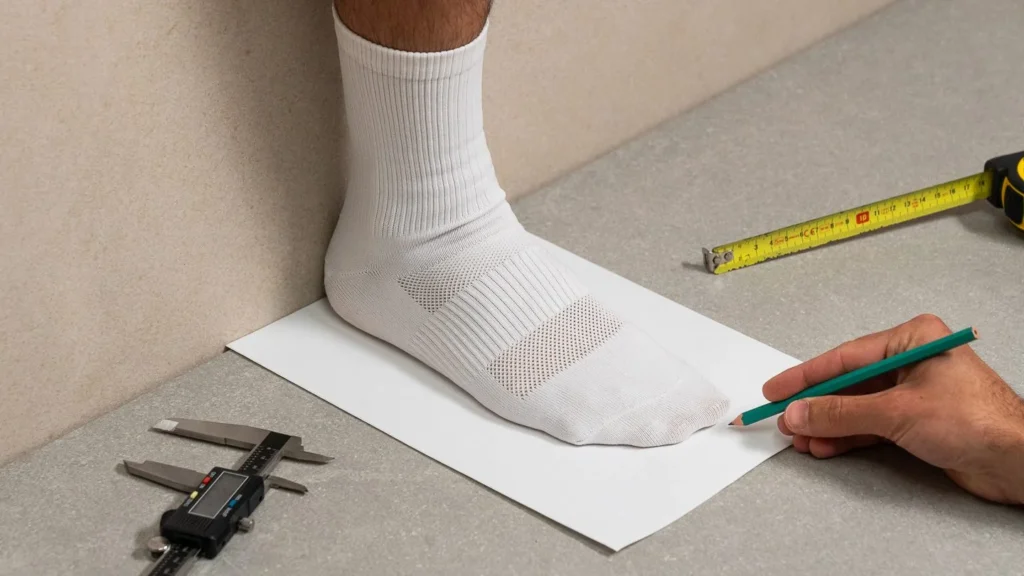
Feet swell during the day, so measure them in the late afternoon or evening when they’re at their largest. This prevents you from buying shoes that fit in the morning but pinch by evening.
Place the paper on a hard, flat surface (not carpet). Stand on it wearing the socks you plan to wear with your new shoes. Using a pencil, mark the back of your heel and the tip of your longest toe. Measure the distance between those two marks in inches or centimeters. Repeat for both feet they’re often different sizes, sometimes by a half or full size.
Write down both measurements. If one foot is larger, you’ll size up to fit that foot.
Step 2: Convert Your Measurement to Shoe Sizes Using a Brand-Specific Chart
Do not use a generic online converter. Generic charts are wrong more often than they’re right because they assume “average” foot proportions, and yours may not match.
Instead, go directly to the brand’s official website and find their sizing guide usually in the FAQ or “How to Measure” section. Reputable brands (Nike, Adidas, Birkenstock, New Balance, Clarks, Salomon, etc.) publish their own charts that cross-reference foot length in millimeters or inches to shoe size in US, UK, EU, and other standards.
For example, a 9.5-inch foot might be a US 10 in Nike, a US 9.5 in Adidas, and a US 11 in some European brands. The reason: different brands use different lasts (the wooden forms they shape shoes around), so their sizing is not standardized across the industry.
Step 3: Check Width and Fit Type Before Adding to Cart
Length is only one dimension. Your shoe needs to fit in width, arch height, and forefoot volume, too and online retailers often list these in the product description or sizing notes.
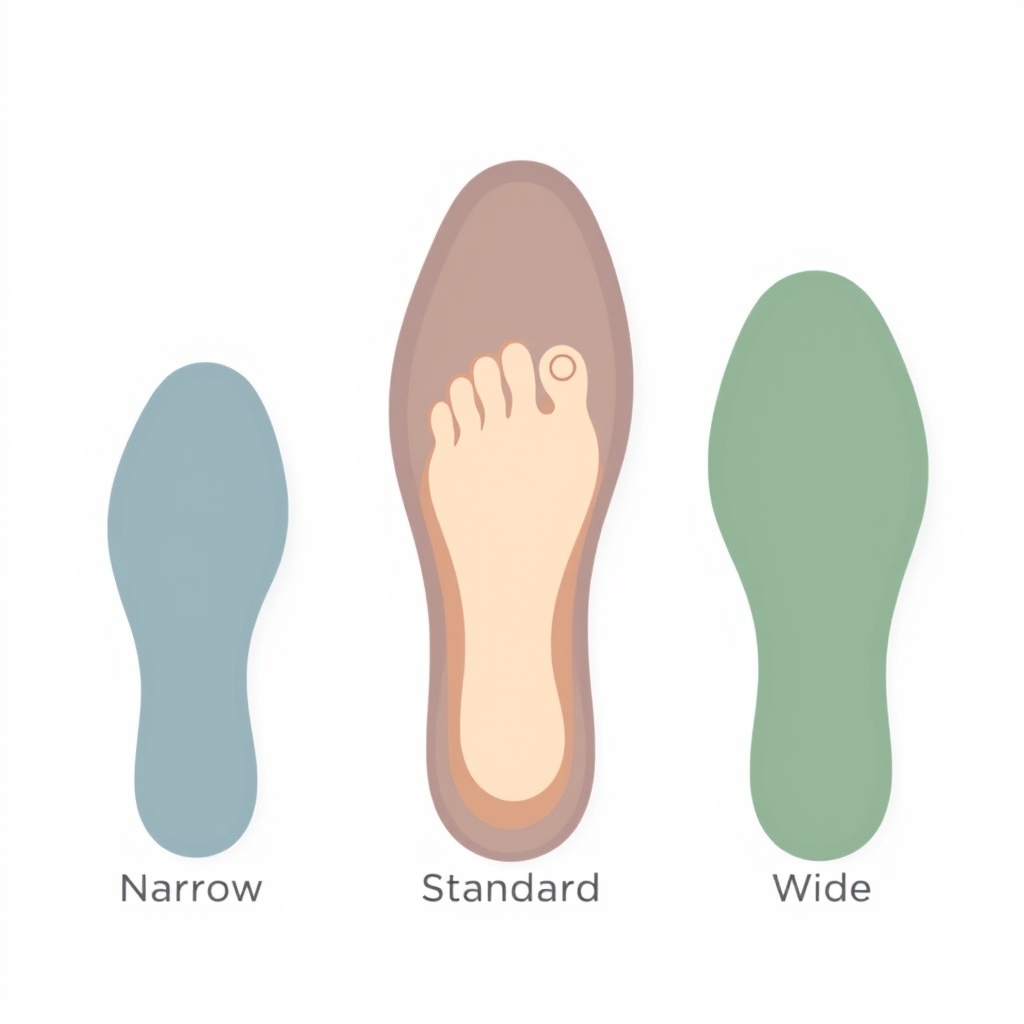
Width sizing: Most brands offer standard, narrow (B or N), and wide (D, 2E, or 4E) in women’s and unisex shoes. Men’s sizing is often less detailed. If your foot measurement fell within the “width” range for your length size, note whether that brand tends to run wide, narrow, or true-to-width. Check the product reviews for this real customers will tell you.
Arch and forefoot: Some brands note whether their shoes are “snug through the midfoot” or “roomy in the toe box.” This matters a lot. A shoe can be your length but still feel wrong if your arch is high and the shoe is flat, or if you have a wide forefoot and the toe box is tapered.
Before you check out, scan the top 5–10 customer reviews on the product page. Ignore the 5-star “Perfect fit!” and 1-star “Terrible!” reviews. The 3- and 4-star reviews are goldmines: they’ll tell you “runs small,” “very roomy,” “narrow heel, wide toe,” etc.
Step 4: Account for Break-In Time and Material Shrinkage
Not all shoes fit perfectly out of the box, and that’s normal. Leather stretches; canvas molds to your foot; synthetic materials sometimes shrink slightly during manufacturing.
If a shoe is described as “tight initially but breaks in” and you love the style, it’s usually safe to buy. But if a shoe is already loose or has a roomy fit, ordering a larger size will only make the problem worse.
For shoe categories that are new to you (e.g., your first pair of running shoes or climbing shoes), check whether that category is known for requiring break-in. Rock climbing shoes, for example, are traditionally sized to fit tight and commonly reported to soften after 5–10 wears. Athletic shoes and casual shoes usually have less dramatic break-in.
Step 5: Understand Return Policies Before You Click “Buy”
Even experienced shoe buyers get returns wrong on occasion. Know the retailer’s policy upfront.
Look for retailers that offer at least 30 days and free returns. Some brands (Zappos, Nordstrom, REI) allow 365 days; others (many fast-fashion sites) give 14 days or charge a restocking fee. If the site doesn’t clearly state the return window and whether returns are free, contact customer service before you buy.
Also check: Does the return need to be unworn? Some sites accept worn returns; others require shoes in original condition. This matters if you need to test the fit by walking in them at home.
The Mistake Everyone Makes
The #1 reason people return shoes: they measure their old shoes instead of their feet. Shoes stretch and mold to your foot over time, so measuring an old pair tells you what size that shoe stretched to, not your actual foot size. This is how you end up with sizes 10, 11, and 10.5 in your closet all supposedly “your size.”
The second most common mistake: assuming US size is universal. A size 9 from Adidas and a size 9 from Allen Edmonds fit very differently because they’re made on different lasts. Always use the specific brand’s chart.
Third: ignoring the afternoon swell. If you buy shoes based on a morning measurement, they’ll feel tight by 5 p.m. when your feet expand.
Brand-Specific Sizing Notes (Runs Large, Small, or True)
Based on patterns in customer feedback and owner reports, here’s how major brands typically fit relative to their stated size. This is not absolute individual shoes within a brand vary but it’s a useful baseline for narrowing your starting size:
| Brand | Typical Fit | Common Notes |
|---|---|---|
| Nike | True to Size | Fit varies by model; check reviews for the specific shoe before buying. |
| Adidas | True to Size or Slightly Narrow | Often features a narrow heel and a slightly tapered toe box. |
| New Balance | True to Size | Generally offers a roomier fit and more wide-width options than Nike or Adidas. |
| Clarks | Runs Large | Consider sizing down by ½ to 1 full size; roomy forefoot. |
| Birkenstock | Runs Large | Buy your normal size; avoid sizing down unless you’re between sizes. |
| Salomon (Hiking/Trail) | Runs Small | Consider going up ½ size, especially in women’s models. |
| Dr. Martens | Runs Large | Size down 1 full size; leather typically requires a 20–30 wear break-in period. |
| Allbirds | True to Size | Feels snug at first but naturally stretches after a few wears. |
| Crocs | Runs Large | Many wearers prefer sizing down 1 full size for a more secure fit. |
| Converse | Runs Small to Narrow | Consider going up ½ size, especially if you have wider f |
Always verify with the product’s specific reviews and the brand’s official sizing guide. This table reflects commonly reported customer experience, not a universal rule.
How to Account for Width and Narrow Fee
If your foot width fell into the “narrow” range on the brand’s chart, or if you’ve historically had trouble with shoes slipping at the heel, look for shoes marked as “slim fit” or “narrow width” (usually labeled B in women’s or offered explicitly by the brand).
Narrow-width options are less common in mainstream retailers, but they’re available at specialty brands like New Balance, Birkenstock, Clarks, and many European brands. If your preferred shoe doesn’t come in narrow, the next best option is to look for a shoe with an adjustable closure (laces, straps, or buckles) rather than slip-ons, so you can cinch it down.
If you have very narrow feet (AAA or less common), you may have better luck with kids’ or youth sizes (they tend to be narrower), or with specialty narrow-focused retailers.
How to Account for Width and Wide Feet
Wide feet are more common than narrow, and most brands offer wide (D or 2E) sizes, especially in athletic and casual shoes. If the shoe you love doesn’t come in wide, here’s the priority order:
- Check if the brand makes a wide version of that specific shoe. If it does, order the wide.
- Look for unstructured, soft styles slip-on sneakers, moccasins, and soft leather shoes tend to accommodate wider feet even in standard width.
- Avoid tapered or structured toe boxes. Dress shoes and pointed-toe styles are less likely to stretch to fit a wide foot comfortably.
- Consider going up a size in a narrower brand (e.g., sizing up in Adidas if Nike’s standard width feels snug). This often works for width without creating extra length, depending on the shoe’s proportions.
Wide-specific brands to explore: New Balance, Birkenstock, SAS (casual), and many orthopedic or comfort-focused labels.
Return Strategies to Get It Right the Next Time
If your first pair doesn’t fit and you return them, use that experience to refine your next order.
When you receive your replacement shoes:
- Try them on indoors first, preferably on a hard floor, for 5–10 minutes
- Note any areas of pressure or looseness while walking around
- Wear them for a few hours at home if the return policy allows worn shoes; this tells you whether they’ll break in or are genuinely the wrong size
- Compare the fit to your old shoes if you have a pair in the same brand this is the best real-world reference
- If they’re still wrong, document your notes (“too tight across the ball of foot,” “heel slips”) in your return message, and mention these specifics when you reorder
Most online retailers learn from return notes. Providing specific feedback helps you get matched with the right size faster.
Common Fit Mistakes to Avoid
Mistake 1: Buying based on what “feels roomy” in the store. A shoe that feels perfect in a climate-controlled store after 10 minutes feels different after an hour of real walking, especially if you’re wearing thicker socks or your feet swell. Order your measured size, not what feels roomy upfront.
Mistake 2: Assuming a smaller size will “get you there.” Forcing feet into shoes that are too small causes blisters, black toenails, and bunion pain. Comfort now saves money and pain later.
Mistake 3: Not considering insole thickness. Orthotics and thick insoles take up space inside the shoe. If you use insoles, measure with them inside your shoes, or add 0.25–0.5 inches to your measurement before sizing.
Mistake 4: Ignoring seasonal swelling. Feet swell more in heat and humidity. If you’re ordering summer shoes in winter, measure in the afternoon; if you’re ordering winter boots in summer, account for the possibility that your feet run smaller when cool.
Mistake 5: Trusting online shoe size converters without verification. Converters are tools, not gospel. Always cross-check against the brand’s official chart.
FAQ
Q: How do I know if my shoes are truly my size or just stretched?
A: If you’ve worn a pair regularly for 6+ months, it has likely stretched slightly. A shoe that fit snugly when new often fits comfortably after wear. When you order a new pair in the same brand, size based on your foot measurement, not the stretched shoe you can always return if it’s too tight initially.
Q: What if my two feet are different sizes?
A: Size up to fit your larger foot. If the difference is more than a half size, consider buying two pairs in different sizes and returning one. Some specialty retailers accept this; check the policy first.
Q: Should I buy a size up to “leave room for socks”?
A: No. Measure with the socks you plan to wear. The shoe should fit snugly around your heel and midfoot; there should be about a thumb’s width of space in the toe box to allow for swelling and movement, but not more. Too much room causes heel slip and blisters.
Q: How do I know if a shoe will stretch or shrink?
A: Check the material. Full-grain leather stretches; synthetic materials usually hold their size or shrink slightly. Mesh and knit fabrics have minimal stretch. Read product reviews for that specific shoe customers will mention stretch or shrinkage.
Q: Do I really need to measure every time I buy shoes?
A: If you’re buying from a brand you’ve owned before and your feet haven’t changed, you can skip measurement. But if you’re trying a new brand, buying a different category (e.g., first running shoes, first hiking boots), or haven’t measured in a year, measure again. Your feet can change with age, pregnancy, weight shifts, or orthotic use.
Q: What’s the best way to break in tight shoes?
A: Wear them around the house for short periods (15–30 minutes) multiple times over 1–2 weeks. Leather will soften; most synthetics will mold slightly. If a shoe is painful (pinching, rubbing, sharp pressure) rather than just stiff, it’s likely the wrong size, not a break-in issue.
Getting the Most Out of Shoes You Already Own
Once you’ve mastered sizing, here’s how to extend the life of shoes you buy online.
Protect the insole. If you know you’ll be wearing orthotics or insoles, use them from day one, not after your original insole wears out. This prevents the shoe from molding to a shape you don’t want.
Rotate your shoes. Wearing the same pair every day accelerates wear. If you can, rotate between two or more pairs so each gets recovery time. This is especially important for cushioned athletic shoes, where the foam compresses and needs time to re-expand.
Clean them promptly. Dirt and salt accelerate deterioration. Wipe down canvas or synthetic uppers after wearing in wet or dirty conditions. For leather, use a soft cloth and a leather-appropriate cleaner.
Store them correctly. Keep shoes in a cool, dry place away from direct sunlight, which fades color and can crack leather. Stuff them with newspaper or shoe trees to maintain shape during long-term storage.
Replace insoles and laces regularly. These wear faster than the shoe itself. Fresh insoles can add comfort and life to a shoe that’s otherwise holding up fine. If laces fray, replacing them costs almost nothing and keeps the shoe looking maintained.
Conclusion
Choosing the right shoe size and fit online is a learnable skill that pays off every time you buy. Measure your feet in the afternoon, use the specific brand’s sizing chart, factor in width and fit personality, and check return policies before you buy. Most importantly: if your first pair doesn’t fit, use that feedback to refine your next order. After one or two cycles, you’ll have a clear profile “I’m a size 9 in Nike, a 9.5 in Adidas, and I prefer roomy toe boxes” and your return rate will drop to nearly zero.
The 30 minutes you invest in proper measurement now saves you weeks of waiting for returns and reorders later.