
How to Choose the Perfect Sectional Sofa: Complete Buyer’s Guide
Choosing a sectional sofa comes down to four core decisions: measuring your room accurately, selecting a fabric that matches your lifestyle, picking a configuration that fits your layout, and setting a realistic budget. Get these right, and you’ll have a piece that lasts years and actually fits your space. Get them wrong, and you’re looking at a costly mistake that dominates your living room.
This guide walks you through each decision so you skip the paralysis and order with confidence.
How We Researched This Guide
We compared sectional listings and owner reviews across major furniture retailers including IKEA, Pottery Barn, Article, West Elm, and Crate & Barrel reviewed hundreds of owner-submitted ratings and complaints, and synthesized common themes in what people regret (and love) about their purchases. Where specific figures appear, we’ve framed them as observed ranges or owner-report patterns rather than lab-verified measurements. We do not claim to have personally sat on every sectional reviewed.
What Actually Matters When Buying a Sectional
Most people focus on color or style first and based on the owner complaints we’ve seen most frequently, that’s exactly backwards. The structural decisions come first: size, configuration, and durability. Style is the last 20% of the choice.
1. Room Measurement and Layout
Why it matters: A sectional that looks perfect in a showroom can be impossible to move through a doorway or will dwarf a small room. Oversizing is the most commonly cited regret in owner reviews we’ve reviewed more than fabric choice or comfort.
What to do: Measure your room corner-to-corner, then measure the sectional’s depth, width, and height against those dimensions. Based on specs we’ve cross-referenced across major retailers, a typical sectional runs 36–42″ deep (front to back) and 8–12 feet wide depending on arm configuration. Many living rooms are only 10–14 feet wide total, which means a sectional can take up roughly 70–80% of the available width visually dominating the room and leaving little space for other furniture.
Measure:
- The width of the longest wall where the sectional will sit
- The depth of the room from that wall to the opposite side
- All doorways the sectional must pass through (diagonal measurement, in case you need to angle it)
- Ceiling height (important for tall back styles)
For a downloadable room-measurement worksheet, download our sectional planning worksheet → resource hub or tools page.
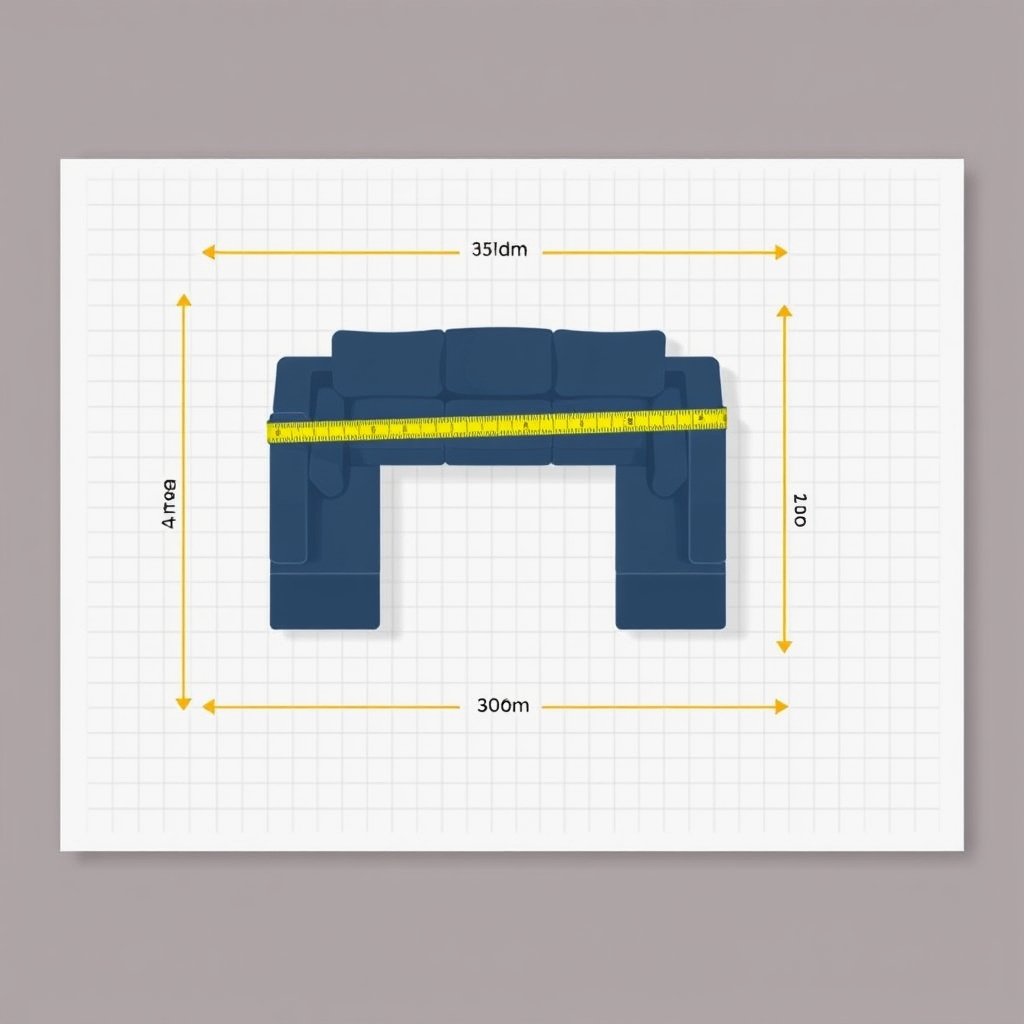
What to ignore: Showroom photos. They’re lit and staged to make a sectional look smaller. Trust your measurements, not your eye.
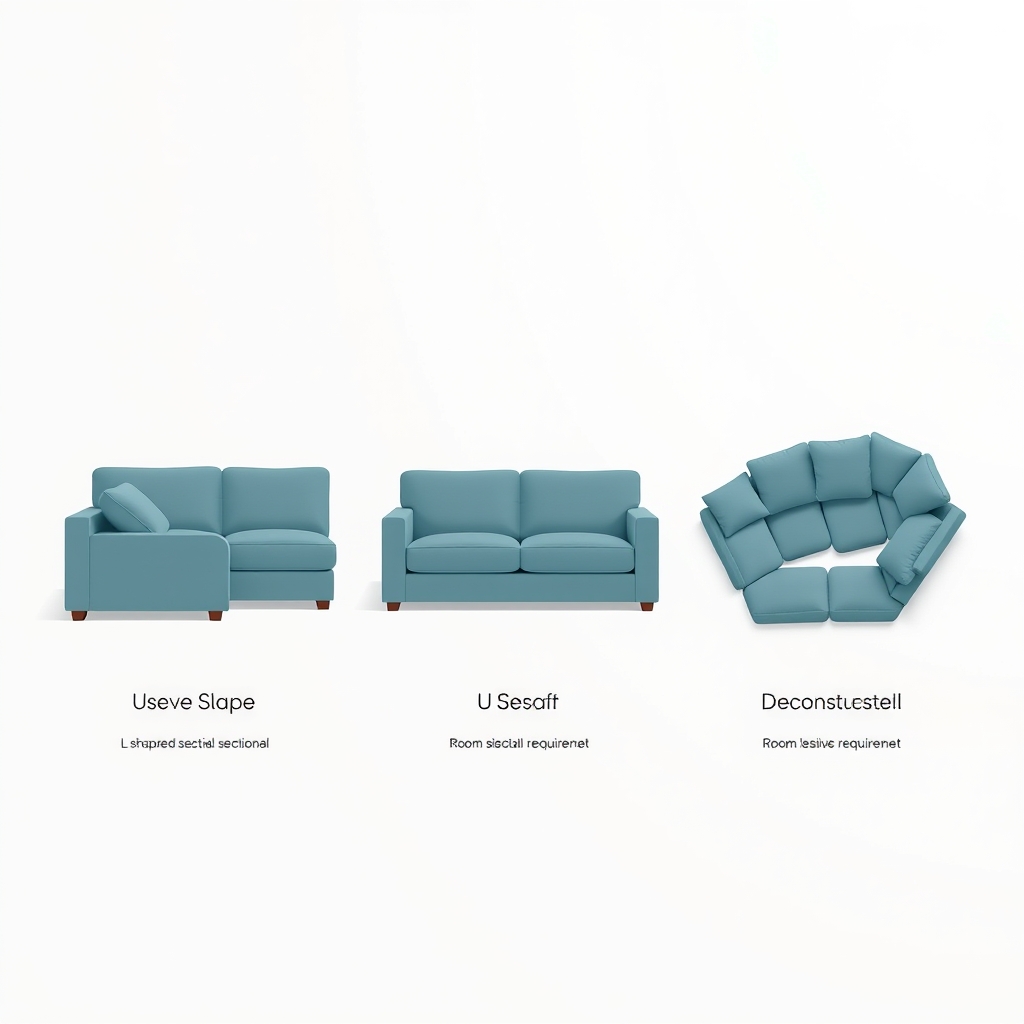
2. Sectional Configuration (L-shape, U-shape, Modular)
Why it matters: Configuration determines how the sectional fits your room and how you’ll use it. This is a permanent choice you can’t easily convert an L-shape to a U-shape.
The three main types:
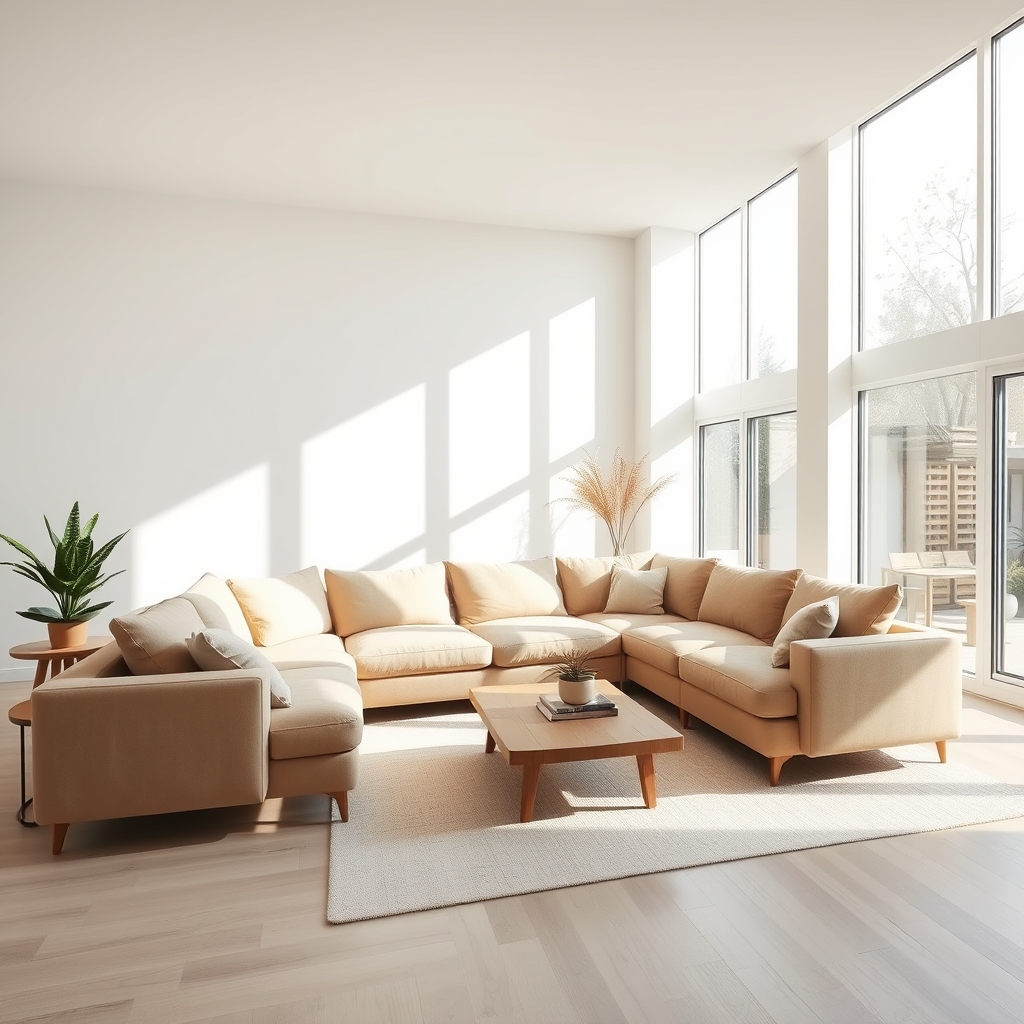
- L-shaped (or corner): One long side + one short perpendicular side. Best for corner placement or small-to-medium rooms. Takes up less floor space than a U. Most affordable option.
- U-shaped (or sectional with two chaises): Three sides of seating, open on one end. Maximizes seating capacity but needs a large room in our review of owner room-size reports, U-shapes consistently worked best in spaces 15 feet wide or more. Creates an “island” effect in the center of the room.
- Modular: Individual seats, ottomans, and arms that you can rearrange or add to. Most flexible, priciest, and takes longest to assemble. Good if you plan to move it or change your layout later.
What to ignore: The sales pitch that “modular is always better.” Modular is better if you’ll rearrange it or move frequently. If you want a sectional that stays in one place for 5+ years, a fixed L or U is fine and, based on current retail pricing, typically costs 30–50% less.
3. Fabric Type and Durability
Why it matters: Fabric choice determines how the sectional holds up to daily use, how easy it is to clean, and how it will feel to sit on. This is where lifestyle matters most.
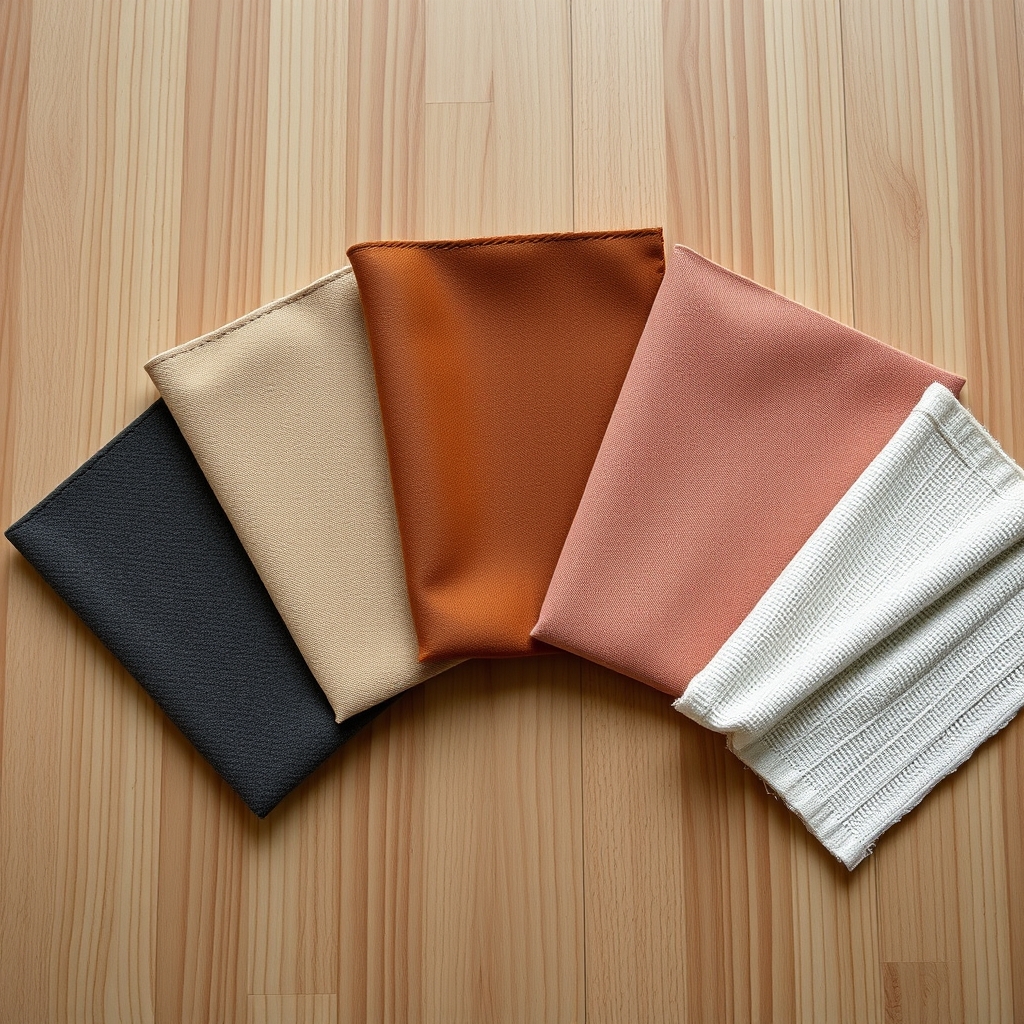
Fabric categories (from durable to soft):
| Fabric Type | Durability | Stain Resistance | Softness | Best For | Price Tier |
|---|---|---|---|---|---|
| Microfiber | Very High | High | Medium (synthetic feel) | Families with children or pets, frequent spills | Budget-Friendly |
| Polyester Blend | High | High | Medium to High | Everyday use and moderate-traffic living spaces | Budget to Mid-Range |
| Linen Blend (Linen + Polyester) | Medium | Medium | High (natural texture) | Style-focused homes and low-traffic rooms | Mid-Range |
| Genuine Leather | Medium to High | High | High (improves with age) | Modern interiors and professional settings | Premium |
| Velvet | Medium (can crush over time) | Low | Very High | Statement furniture and low-traffic areas | Premium |
| 100% Flax Linen | Low (wrinkles easily) | Low | Very High | Minimalist décor and occasional-use furniture | Premium |
What to ignore: The claim that “performance fabrics are now as soft as natural fabrics.” Microfiber and polyester still feel synthetic compared to linen or leather. They’re durable, not soft. Know which trade-off you’re making.
How to evaluate fabric in person: Rub it with your hand for 10 seconds. Does it pill (form little balls)? If yes, it’s unlikely to hold up to years of regular use. Press your fingernail gently into the fabric does it bounce back immediately? If not, it’s a crushed-pile fabric (like velvet) and will show footprints.
4. Depth and Seat Height
Why it matters: A sectional that’s too deep will feel like you’re sitting in a hole. Too shallow, and you won’t be able to recline. These specs are often overlooked but make a huge difference in day-to-day comfort.
Observed ranges across major retailers:
- Seat depth: 32–38″ (front of cushion to the back). Anything under 30″ tends to feel cramped; over 40″ and your feet won’t touch the floor unless you’re very tall.
- Seat height: 16–18″ from the floor to the top of the cushion (not the arm). Standard sofas typically fall in the 17–18″ range.
- Arm height: 24–26″ (seat to top of arm). Lower arms feel more open and modern; higher arms offer more support for reading or napping.
What to ignore: Advertised “comfort ratings.” Comfort is personal. Test it in person if possible, or buy from a retailer with a 30-day return policy so you can try it at home.
5. Leg Style and Height
Why it matters: Legs affect both the visual weight of the sectional and how easy it is to vacuum underneath.
- Exposed wooden legs (2–6″): Modern, Scandinavian look. Easier to clean under. More expensive.
- Low-profile or no legs (sits on a plinth base): Mid-century, contemporary feel. Hardest to clean under.
- Rolled or turned wooden legs (2–4″): Traditional, classical look. Good middle ground for visibility.
- Metal or chrome legs: Modern, industrial. Sleek appearance.
What to ignore: The belief that no-leg designs are “lighter” visually. They often look heavier because the mass sits on the floor. Exposed legs actually make a sectional look more open.
6. Chaise Placement and Recliners
Why it matters: A chaise (the extended leg rest) adds comfort but also depth and expense. You need to decide if it’s worth the extra 12–18″ of floor space.
- One chaise (left or right): Standard on most L-shaped sectionals. Extends 12–18″ beyond the seating section.
- Two chaises (on either end): U-shaped sectionals offer seating on three sides. Takes up much more space.
- Recliners built into the sectional: Some sectionals have motorized recliners on one or both ends. Based on current retail listings, built-in recliners add roughly $2,000–$5,000 to the price and require a power outlet nearby.
What to ignore: Recliners as a “must-have.” If you want to recline, a separate recliner chair costs less and doesn’t compromise the sectional’s form. Built-in recliners are bulky and make the sectional less versatile if you ever want to rearrange.
Common Mistakes People Make
Mistake 1: Ignoring the Doorway
You measure the room, not the path to the room. A sectional that fits the living room perfectly might not fit through the hallway or front door. Always measure the smallest opening the sectional has to pass through, diagonal measurement included. If it won’t fit, ask the retailer about knock-down delivery or consider a modular option that arrives in smaller pieces.
Mistake 2: Buying Based on Pinterest Photos
Styled photos make sectionals look smaller and more elegant than they are in real life. A sectional that looks “perfect” in a magazine shoot will likely dominate your actual living room. Err on the side of smaller than you think you need.
Mistake 3: Choosing Velvet or Linen for a High-Traffic Home
If you have kids, pets, or frequently entertain, velvet and 100% linen are nightmare fabrics. Velvet shows footprints and crushes easily; linen wrinkles and stains easily. Microfiber or a performance-polyester blend will save you a lot of stress and cleaning cost.
Mistake 4: Not Checking Reclining Distance
If the sectional has a recliner, open it fully and check that it doesn’t block a walkway or hit a coffee table. A fully reclined sectional can extend 60–72″ from the wall much deeper than you’d expect.
Mistake 5: Underestimating Setup and Assembly
Modular sectionals often require 2–4 hours to assemble and may need a second person. Fixed sectionals still need to be uncrated, moved, and positioned. Budget 3–4 hours and don’t expect the delivery team to set it up inside your home (most won’t).
Budget Tiers: What You Get at Each Price Point
Based on our research of current sectional listings across major retailers, here’s what to expect:
Budget Tier: $800–$1,500
- Fabric: Microfiber or basic polyester blend
- Structure: Engineered wood frame (not solid hardwood); may use lower-density foam
- Configuration: Fixed L-shape only
- Lifespan: Based on owner reviews we’ve surveyed, typically 5–7 years of moderate use before noticeable sagging
- Best for: Renters, small spaces, experimental layouts
Mid-Range: $1,500–$3,500
- Fabric: Durable polyester blend, some linen-poly blends, genuine leather entry level
- Structure: Hardwood frame; higher-density foam cushions
- Configuration: L-shape, some U-shapes; limited modular options
- Lifespan: Based on owner reviews, 7–10 years with regular use
- Best for: Most households; the value sweet spot
Premium: $3,500–$7,000+
- Fabric: High-end leather, luxury performance fabrics, custom upholstery options
- Structure: Solid hardwood; premium foam or down-wrapped cushions
- Configuration: All options available; modular usually starts here
- Lifespan: Based on owner reviews and brand durability disclosures, 10–15+ years
- Best for: High-traffic homes, long-term investment, custom aesthetics
Cost-Per-Piece Formula
One useful heuristic for comparing sectionals across price points: divide the total price by the number of seat cushions.
Cost per seat = Total price ÷ Number of seat cushions
For example:
- 3-seat + chaise L-shape at $2,000 = $500 per seat
- 3-seat + chaise L-shape at $3,500 = $875 per seat
The second one costs 75% more per seat. Is the fabric and frame quality 75% better? If yes, it’s a better value. If no, the budget option is the smarter buy. This is a rough comparison tool, not a precise formula use it to flag outliers, not to make a final call.
Fabric Care Comparison
Here’s a quick reference for real-world maintenance based on patterns we observed across owner reviews of common care scenarios:
| Fabric | Fresh Spill (Within ~5 Minutes) | Stain After Setting (~12 Hours) | Pet Hair Removal | Monthly Maintenance |
|---|---|---|---|---|
| Microfiber | Blot immediately; use a fabric-safe cleaning spray | Usually removable with upholstery cleaner | Vacuums easily | Easy |
| Polyester Blend | Blot immediately; use a fabric-safe cleaning spray | May become permanent without pre-treatment | Vacuums easily | Easy |
| Linen Blend | Blot gently; allow to air dry | Often difficult or permanent | Vacuum and use a lint roller | Moderate |
| Genuine Leather | Wipe clean immediately; apply leather conditioner as needed | May improve with leather cleaner or conditioning cream | Wipes clean easily | Easy |
| Velvet | Blot gently; avoid rubbing and brush the nap | Often difficult or permanent | Best removed with a lint roller | Difficult |
| 100% Linen | Blot gently and air dry | Very likely to become permanent | Lint roller recommended | Difficult |
Timeframes are illustrative guides based on owner-reported experiences, not lab-tested figures.
Sectional Configuration Decision Tree
Use this flowchart to pick your configuration:
Start: How much floor space do you have?
- Small room (less than 12 ft × 12 ft) → Go with an L-shaped sectional, left or right chaise. Skip the U.
- Medium room (12–15 ft × 12–15 ft) → L-shaped or small U-shaped (two-sided). Measure first to confirm the U doesn’t dominate.
- Large room (15+ ft × 15+ ft) → U-shaped, modular, or multi-piece sectional. You have room to breathe.
Secondary question: Will you rearrange it in the next 3 years?
- Yes → Modular. Pay the premium now; you’ll thank yourself later.
- No → Fixed L or U. Save $1,500–$3,000 and get the same comfort.
Third question: How many people typically sit on it?
- 2–3 people → L-shaped (3–4 seats total with chaise)
- 4–5+ people → U-shaped or modular with add-on pieces
How to Measure Your Room: Step-by-Step
You’ll need: A tape measure (25 ft+), pencil, paper, and our downloadable worksheet.
- Measure the wall where the sectional will sit, corner to corner. Note this as “Wall width.”
- Measure from that wall to the opposite wall (the room’s depth). Note as “Room depth.”
- Measure every doorway and hallway the sectional must pass through, including diagonal measurements. (To get diagonal: measure width and depth of the opening, then use: diagonal = √(width² + depth²). For a 36″ × 80″ doorway, diagonal = √(1,296 + 6,400) = about 87″.)
- Measure the sectional you’re considering. Ask the retailer for depth, width, arm height, and seat height. Write all four down.
- Sketch your room layout with the sectional positioned. Does it block walkways? Can people still access the kitchen or bathroom easily?
- Check the height: Measure your ceiling height. A tall sectional (30″+ to the top of the back cushion) in an 8-foot ceiling room may feel cramped.
Our Sectional Picks
For detailed reviews and current recommendations, see our full roundup of the best sectionals → sectional sofa buying guide or best sectionals list]. We evaluate each pick across durability, comfort, value, and room fit.
Quick guidance: In the budget tier, look for microfiber or polyester with hardwood frames. In the mid-range, target linen-poly blends and genuine leather with solid-wood frames. In premium, modular options and fully customizable upholstery become viable.
FAQ: Sectional Sofa Buying
How long should a sectional last? Based on owner reviews we’ve surveyed, a mid-range sectional typically holds up well for 7–10 years with regular family use. Premium sectionals with solid-hardwood frames and quality foam often reach 12–15 years. Budget sectionals often show sagging or cushion breakdown after 5–7 years. Lifespan depends heavily on fabric choice and how frequently it’s used.
Should I buy a sectional with a recliner? Built-in recliners add roughly $2,000–$5,000 (based on current retail listings) and take up a lot of depth when open. If reclining is important to you, a separate recliner chair is usually more cost-effective and lets you position it where you want. Built-in recliners make sense only if you have the space and want a unified look.
Can I replace the cushions on a sectional? Yes, but it’s expensive typically $800–$2,000 depending on the number of cushions and fabric. Some sectionals (particularly modular ones) make this easier because you can order individual seat cushions. For fixed sectionals, ask the retailer about cushion replacement availability before you buy, especially if you’re choosing a budget model that might not have replacement parts available in 5 years.
What’s the best fabric for a sectional with pets? Microfiber or performance polyester blends are your best bet. They resist staining, are easy to vacuum, and don’t trap pet hair like velvet or linen. Leather is also good for pets hair wipes clean easily but genuine leather can be scratched by claws.
Is a modular sectional worth the extra cost? Modular is worth it if you (a) plan to rearrange your room within 5 years, (b) have a non-standard room shape, or (c) want to start small and add seats later. If you’re buying a sectional to stay in the same place for a decade, fixed L or U shapes offer better value and take up less space.
How do I get a sectional through my apartment if it doesn’t fit? If it won’t fit through doorways, ask the retailer about knock-down delivery (the sectional arrives partially disassembled). Modular sectionals are easier to fit through tight spaces. As a last resort, some white-glove delivery services can remove windows or doors to maneuver large pieces but this typically costs $500–$1,500 extra.