
Stainless Steel vs. Non-Stick Cookware: Which One to Keep
Do you cook with high heat, build fond for sauces, and accept hand-washing? Choose stainless steel. Are you a weeknight-dinner cook who values minimal cleanup and non-negotiable non-stick performance? Non-stick is your keeper. Both are solid choices but they’re solving different cooking problems, and the right pick depends on how you actually cook, not on marketing.
The Core Difference: Cooking Style, Not Quality
Stainless steel and non-stick aren’t competitors on a hierarchy of “better” cookware. They’re fundamentally different tools. Stainless steel is forgiving of high heat, builds flavorful browned surfaces (fond), and lasts decades with care. Non-stick prioritizes ease: food slides, cleanup is rinsing, and you can cook with minimal fat. The trade-off is real, and choosing the right one means honest self-assessment of what happens in your kitchen.
Feature Comparison Table
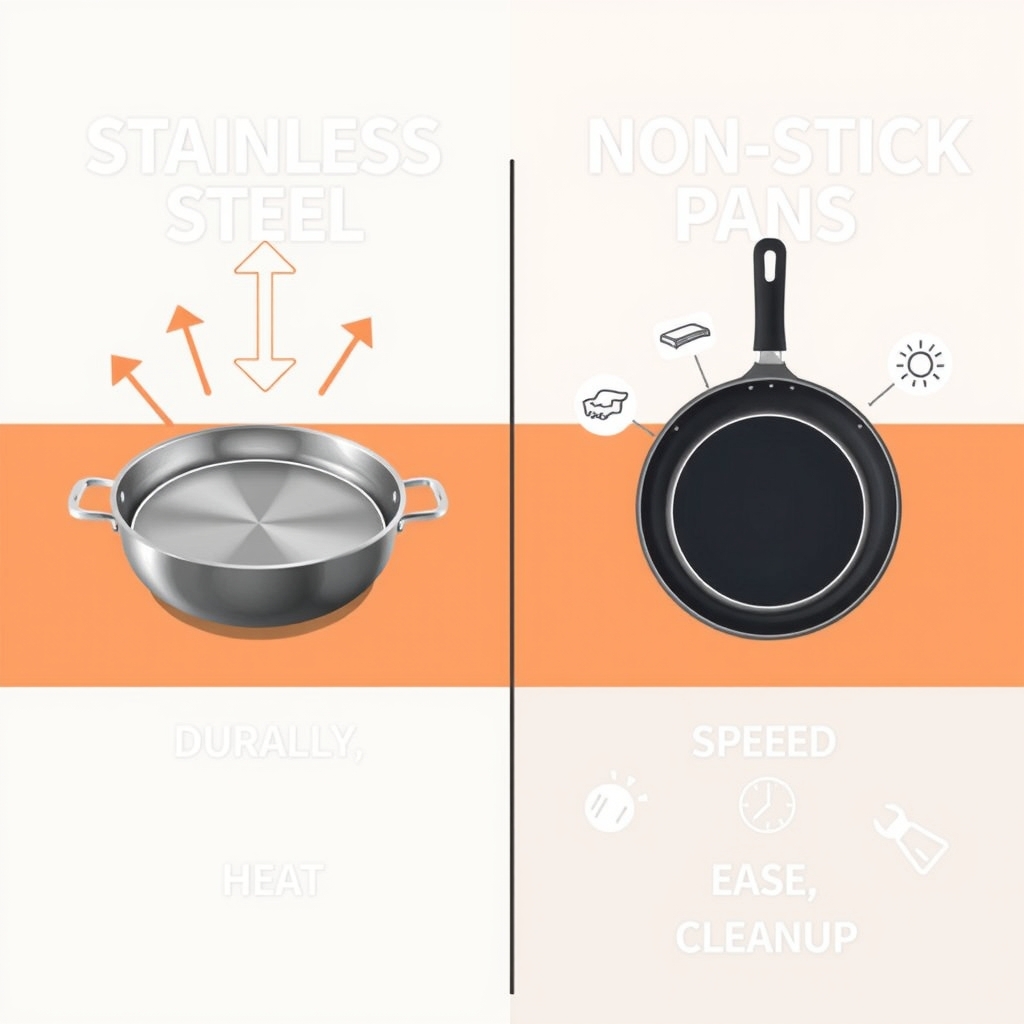
| Feature | Stainless Steel | Non-Stick |
|---|---|---|
| Heat Distribution | Moderate to good; depends on core construction | Excellent; heats quickly and cools quickly |
| High-Heat Tolerance | Excellent, often 500°F+ | Moderate; typically 400–500°F maximum depending on coating |
| Browning/Fond Development | Excellent; creates browned bits for sauces | Poor; the non-stick surface reduces fond formation |
| Food Release | Requires adequate fat and proper technique | Excellent by design |
| Cleaning | Hand-washing often recommended; dishwasher use may void some warranties | Easy to clean; many are dishwasher-safe |
| Durability (Years) | 10–20+ years is common in owner reports | Typically 3–8 years in owner reports |
| Resale/Hand-Me-Down Value | High; remains functional for decades | Low; coating eventually degrades |
| Cost (Entry Point, Aug. 2026) | ~$30–$100+ per pan, depending on brand and construction | ~$20–$60 per pan; replacement may be needed sooner |
| Health Considerations | No coating concerns; generally inert cooking surface | Modern PTFE coatings are generally designed without PFOA; older formulations had different concerns |
| Versatility Across Cooking Methods | Excellent for searing, sautéing, braising, and oven finishing | Best for eggs, pancakes, and delicate fish; less suitable for high-heat searing |
Stainless Steel: The Workhorse
Why Stainless Steel Wins for Serious Cooking
Stainless steel shines when you want control and permanence. It heats to high temperatures without degrading, develops browned fond that becomes the base of pan sauces, and won’t fail you in a decade. Oven-safe to 500°F (and often higher), stainless steel moves seamlessly from stovetop to oven essential for finishing a frittata, braising a pot roast, or getting a sear on a steak before a low-temperature braise.
The learning curve is real. New users often struggle with food sticking because they expect non-stick behavior. The reality: stainless steel requires proper technique adequate fat, the right pan temperature (test it with a drop of water that forms a ball and rolls), and patience. Once you develop the habit, sticking becomes rare.
Durability and Lifespan
Based on owner reports we’ve reviewed, stainless steel cookware routinely lasts 10–20 years or more, often handed down as heirlooms. The coating doesn’t degrade. Scratches don’t compromise function. Dishwasher cycles won’t shorten its life (though hand-washing is gentler and many manufacturers recommend it). Stainless steel is a long-term investment that holds its value in a way few kitchen tools do.
Maintenance Reality
Stainless steel requires hand-washing for best results, though many are technically dishwasher-safe. Hard water deposits and spots are cosmetic they don’t affect cooking performance. Stubborn food buildup comes off with a paste of baking soda and water or a quick soak. No special oils, season-and-store rituals, or temperature limits to track.
The Health Question
Stainless steel is inert. There’s no coating to worry about degrading, leaching, or failing. If you have concerns about non-stick coatings (historically or perceived), stainless steel removes that variable entirely.
Non-Stick: The Convenience Play
Why Non-Stick Wins for Ease
Non-stick is the workhorse of weeknight cooking. Eggs don’t stick. Pancakes flip cleanly. Delicate fish doesn’t shred. You use less fat, which is genuinely easier on your health and your calorie count if that matters. Cleanup is a rinse and a soft sponge no soaking, no scrubbing, no hand-washing discipline required. If you cook five nights a week, those 15 minutes of cleanup add up.
Non-stick also distributes heat quickly and evenly, so it preheats fast and responds rapidly to temperature adjustments. For quick, high-frequency cooking the reality of most home kitchens non-stick is genuinely more pleasant.
Modern Non-Stick Safety
Historical concerns about PTFE (Teflon) and PFOA (a manufacturing chemical) drove legitimate skepticism. Modern non-stick cookware is PTFE-based but PFOA-free, and PTFE itself is considered inert and safe by the FDA and major health organizations, even if ingested accidentally. Overheating (above 500°F) can theoretically degrade the coating, but modern non-stick is engineered to handle 400–500°F safely.
If you’re uncomfortable with non-stick coatings regardless of safety data a valid personal preference stainless steel is your answer.
The Durability Trade-Off
Based on owner reports we’ve reviewed, non-stick coatings typically remain effective for 3–8 years of regular use. Factors that accelerate wear include high heat, metal utensils, aggressive scrubbing, and stacking (friction). Some users report 10+ years; others see degradation in 2 years. The variability is real.
Once a non-stick pan’s coating begins to fail food sticks or coating flakes replacement is usually the move. Refinishing isn’t cost-effective. This means non-stick cookware is inherently consumable; plan on cycling through pans over time.
Cost Math
As of August 2026, entry-level non-stick pans typically run $20–60. Stainless steel entry points are $30–100+, but the per-year cost over a 15-year lifespan is generally lower than replacing non-stick pans every 5 years. If durability is your priority, stainless steel’s math wins. If you want to minimize upfront cost, non-stick is cheaper today.
Head-to-Head: Where They Actually Differ
Searing and Browning
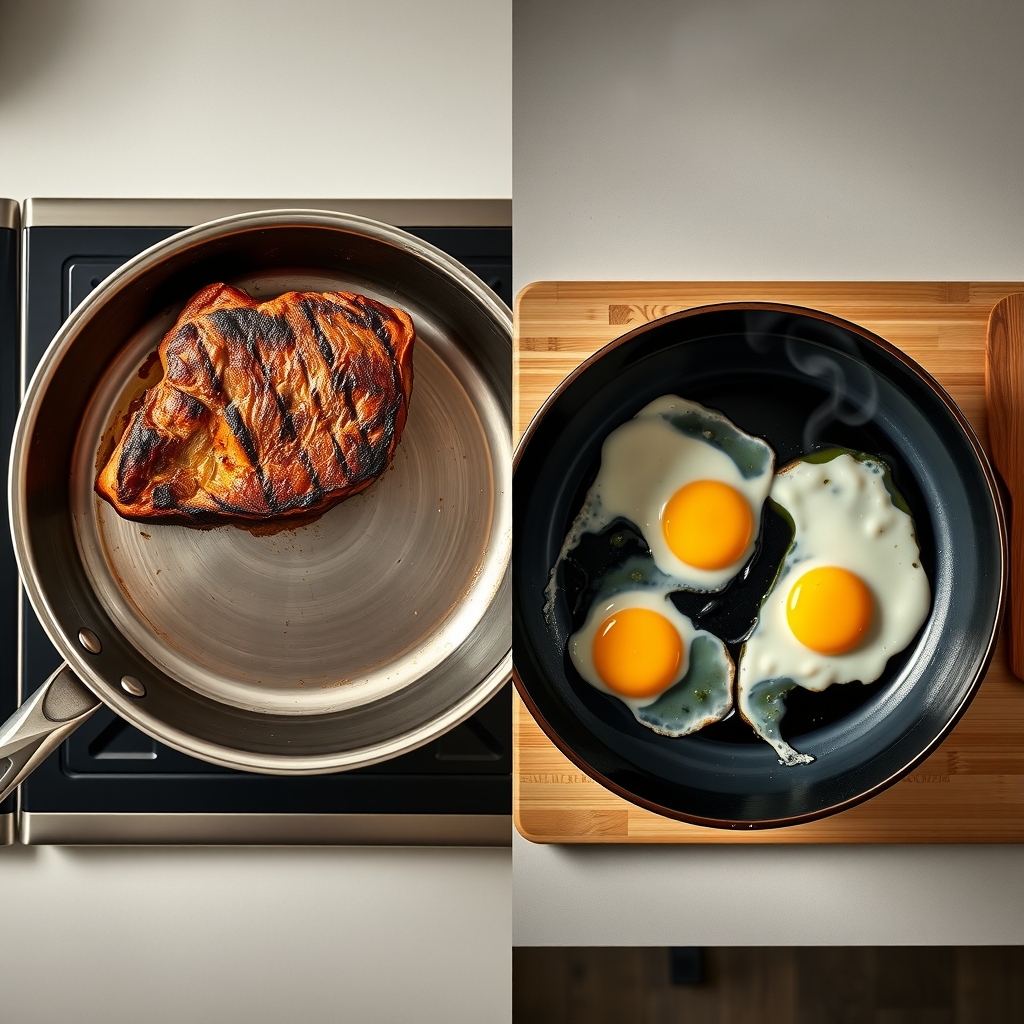
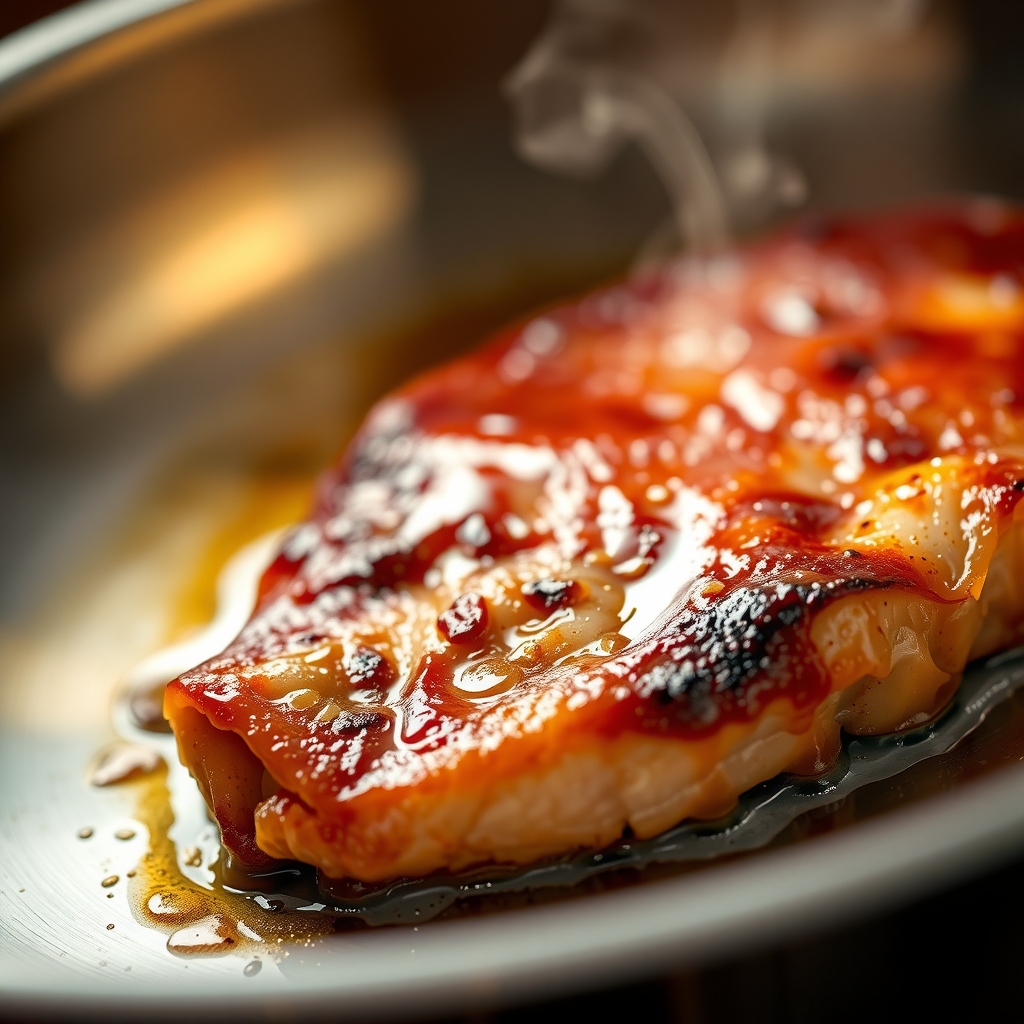
Stainless steel wins decisively. Non-stick is deliberately engineered to prevent browning (that’s the point of the coating). If you want a caramelized crust on chicken, a seared steak, or fond to build a sauce, non-stick won’t deliver. Stainless steel excels here. This is not a knock on non-stick it’s design by intention but it’s a hard limit if searing is part of your cooking.
Heat Tolerance
Stainless steel wins for extreme temperatures. Safe to 500°F+, stainless steel moves to the oven without concern. Non-stick tops out around 400–500°F; exceeding that risks coating degradation. If you’re oven-finishing dishes at high temperature, stainless steel is safer.
Ease of Cleaning
Non-stick wins decisively. A quick rinse, maybe a soft sponge, and you’re done. Stainless steel benefits from hand-washing and can require soaking or a baking-soda scrub for tough spots. If cleanup time is non-negotiable in your life, non-stick saves hours yearly.
Long-Term Cost
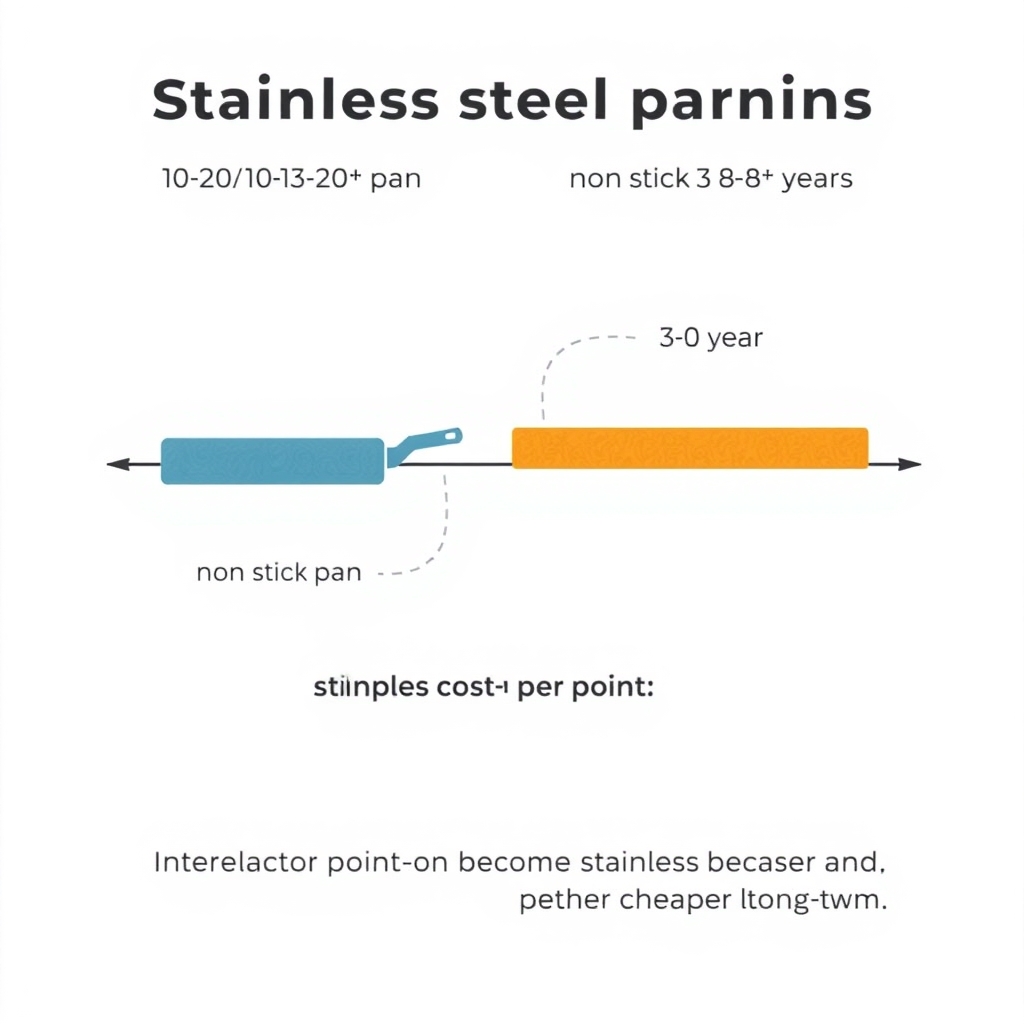
Stainless steel wins if you cook regularly. Over 15 years, one multi-ply stainless steel pan in the $80–120 range costs less per year than cycling through non-stick pans at $30–50 apiece every 5–7 years. If you cook casually, non-stick’s lower entry cost might offset the replacement cycle.
Health Perception
Stainless steel wins if you’re uncomfortable with coatings. If modern non-stick safety data doesn’t reassure you, stainless steel removes the variable. This is not a scientific argument (modern non-stick is safe) but a comfort argument, which is valid for your own kitchen.
Versatility Across Cooking Tasks
Stainless steel wins broadly. It handles searing, sautéing, deglazing, braising, oven-finishing, and acidic foods (tomato sauces can degrade some non-stick coatings over time). Non-stick is narrower: exceptional for eggs, pancakes, delicate proteins, and low-oil cooking, but limited for high-heat work or fond-based sauces.
Keep Stainless Steel If…
You’re a cook who sears, sautés, and builds pan sauces. If browning, fond, and high-heat flexibility matter, stainless steel is non-negotiable. It’s also the choice for:
- Home cooks who want one set of pans for life
- People cooking acidic foods regularly (tomato sauce, lemon, wine)
- Anyone oven-finishing dishes at 450°F+
- Cooks who appreciate the learning curve (building technique, understanding heat)
- Households where hand-washing is acceptable
Stainless steel loses only on cleanup speed. Accept that trade-off, and it’s the keeper for most serious home cooks.
Keep Non-Stick If…
You cook quick weeknight meals and value easy cleanup as a non-negotiable. Non-stick is the right choice for:
- People cooking breakfast (eggs, pancakes, bacon)
- Weeknight one-pan dinners where searing isn’t the goal
- Cooks preparing delicate fish or vegetables that stick easily
- Anyone avoiding oil (dietary preference or health reason)
- Households where dishwasher convenience matters
- People who cook casually and don’t want to maintain technique
Non-stick loses on durability and high-heat versatility. Budget for replacement every 5–8 years, and don’t try to sear a steak.
Hybrid Approach: The Practical Middle Ground
Most competent home kitchens use both. A stainless steel 10–12-inch skillet handles proteins and sauces. A non-stick 8-inch holds eggs and pancakes. You get browning when you need it and ease when you prioritize it. As of August 2026, total upfront cost for quality entry-level pans in each type runs roughly $100–150. That’s reasonable for a kitchen that stays functional for a decade.
The PTFE and PFOA Question: What You Actually Need to Know
Historical non-stick cookware was manufactured using PFOA (perfluorooctanoic acid), a chemical linked to health concerns in large-scale industrial exposure. Manufacturers phased PFOA out around 2013. Modern non-stick cookware is PFOA-free by law in most markets.
The coating itself PTFE (polytetrafluoroethylene, brand name Teflon) is considered inert and safe by the FDA, WHO, and major health bodies. Accidental ingestion of PTFE flakes (if a pan is old and damaged) isn’t dangerous, though it’s also not ideal. Overheating non-stick (above 500°F) can theoretically degrade the coating.
If you trust modern safety data, non-stick is safe. If you prefer to avoid the coating entirely as a matter of personal comfort, that’s valid stainless steel removes the variable. The choice is yours.
Pricing Reality
Based on observed retail pricing across the cookware market as of August 2026, entry-level stainless steel runs $30–50 per pan (single-ply or thin multi-ply), with quality multi-ply climbing to $80–150+. Non-stick entry points are typically $15–40 per pan, with premium brands reaching $60+. Both markets have wide ranges depending on brand reputation and construction.
As a rule of thumb: spend $50–80 on a stainless steel skillet and you’ll likely get 10+ years of reliable service. Spend $30–50 on non-stick and plan to replace it in 5–7 years. The long-term math favors stainless steel if durability is a priority; the short-term budget favors non-stick if upfront cost matters.
Maintenance and Care
Stainless Steel Care
- Hand-wash when possible; mild dishwasher-safe but gentle hand-washing extends life
- Avoid abrasive scrubbers; use soft sponges or cloths
- Remove hard-water deposits with a mixture of white vinegar and baking soda
- Don’t soak indefinitely; rinse and dry promptly
- Metal utensils are fine; stainless steel won’t scratch from normal use
Non-Stick Care
- Hand-wash only; dishwasher (if claimed safe) will degrade the coating faster
- Use silicone, wood, or plastic utensils only; metal utensils peel the coating
- Avoid preheating an empty pan at high temperatures; preheat with a small amount of oil or butter
- Don’t use abrasive cleaners or steel wool; soft sponges only
- Replace the pan when food begins to stick consistently despite proper technique
FAQ: Stainless Steel vs. Non-Stick
Which cookware is actually better?
Neither is “better” universally. Stainless steel is better if you sear, sauté, and deglaze; non-stick is better if you prioritize ease and quick cleanup. Choose based on your actual cooking habits, not abstract quality. If you’re serious about cooking, stainless steel becomes the keeper because it does more and lasts longer.
Is non-stick cookware safe to use?
Modern non-stick cookware is PFOA-free and considered safe by the FDA and major health organizations. PTFE (the coating) is inert and safe even if accidentally ingested. The historical concerns about PFOA are valid for pre-2013 cookware or industrial exposure, not modern home use. If you’re uncomfortable with coatings regardless of safety data, stainless steel avoids the variable.
How long should non-stick cookware last?
Based on owner reports we’ve reviewed, non-stick coatings typically remain effective for 3–8 years of regular use. High heat, metal utensils, aggressive scrubbing, and stacking accelerate wear. Some users report 10+ years; others see degradation in 2 years. Plan for replacement as a normal part of ownership.
Can you use metal utensils on stainless steel?
Yes. Stainless steel won’t scratch from metal utensils or normal dishwashing. It’s durable and designed for everyday use. Non-stick requires silicone, wood, or plastic utensils only; metal utensils peel the coating.
What’s the best cookware for a beginner?
For absolute beginners, non-stick is more forgiving because food releases easily and cleanup is quick. You can develop cooking skills without worrying about sticking. Once you’re comfortable, adding a stainless steel pan lets you explore searing and sauce-building. Hybrid ownership (both types) is the long-term practical answer.
Should I buy expensive cookware sets?
No, not necessarily. A quality $50–80 stainless steel skillet and a $30–50 non-stick pan outperform many $300 sets. Avoid buying more pans than you actually use; start with two one stainless, one non-stick and add if needed. Quality beats quantity and brand hype every time.
The Verdict
For the serious home cook: Stainless steel is the keeper. It handles high heat, builds fond, oven-finishes without worry, and lasts decades. Yes, you hand-wash. Yes, you develop technique. The payoff is a tool that grows with you and never fails.
For the weeknight-dinner cook: Non-stick is the keeper. Eggs slide, pancakes flip, cleanup is instant, and you use less oil. Replace it every 5–8 years and don’t look back. It’s a consumable, and that’s okay.
For most kitchens: Own both. A 10–12-inch stainless steel skillet and an 8-inch non-stick pan cover 80% of what you’ll cook. Total investment: $100–150. Lifespan: stainless steel forever, non-stick replaced once or twice. This is the realistic setup that works.
Stop comparing specs. The deciding question is simple: Do you sear, sauté, and build sauces, or prioritize effortless cleanup? Answer that, and the keeper picks itself.