
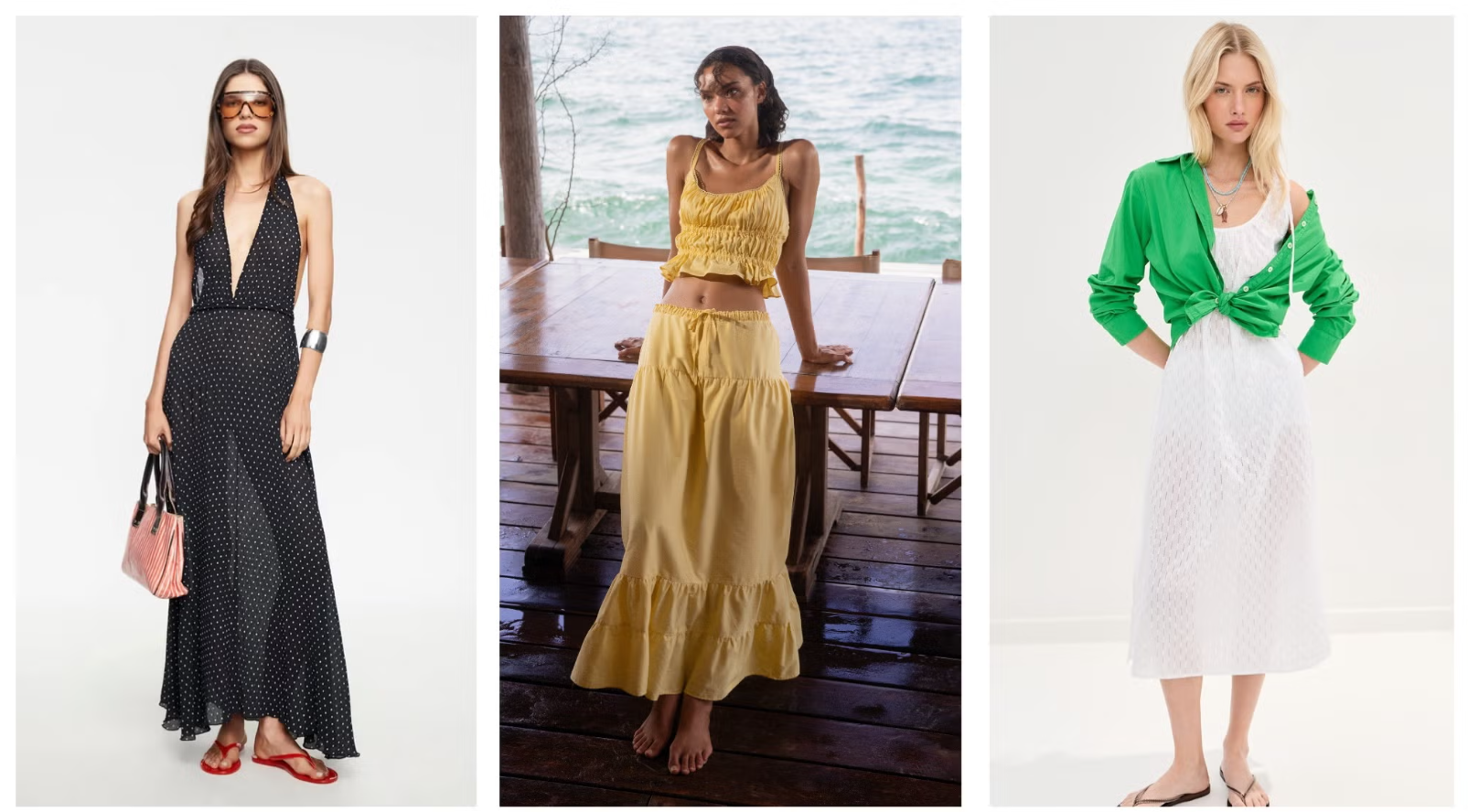
Sustainable fashion marketing can feel like a foreign language. Brands throw around terms like “deadstock,” “upcycled,” and “regenerative” without explaining what they actually mean or whether they matter. This glossary breaks down 40+ real sustainable fashion terms in plain English, so you can spot genuine environmental commitments from greenwashing.
Each definition includes a real-world example and why it matters to you as a buyer. Use the sections below to learn the terms that matter most to your purchasing decisions.
How We Researched This Glossary: These definitions are drawn from publicly available certification standards (GOTS, Fair Trade, B Corp, Responsible Wool Standard), published brand supply chain disclosures, and widely cited industry research on textile environmental impact. Where quantitative ranges appear, they reflect the consensus range across published lifecycle assessment literature not proprietary testing.
Understanding Core Sustainable Fabric Terms
What Is Deadstock?
Deadstock is fabric or garment inventory that manufacturers or retailers couldn’t sell and would otherwise discard. Deadstock is real, usable material not damaged or flawed just surplus from cancelled orders, overproduction, or end-of-season inventory.
In plain terms: It’s the overstocked t-shirt pile that a factory would throw away if a brand didn’t buy it first.
Why it matters to you: Deadstock brands (like Reformation or Collina Strada) give excess fabric a second life, preventing landfill waste without requiring new fabric production. It’s genuinely waste-reducing though it’s not “sustainable fabric” itself, it’s sustainable use of existing fabric.
Related terms: Overstock, Upcycling
What Is Upcycling?
Upcycling is transforming pre-owned or surplus materials (deadstock, vintage garments, waste fabric scraps) into new products of equal or higher quality and value.
In plain terms: Taking a vintage denim jacket and redesigning it as a cropped vest, or turning post-consumer textile scraps into a new quilt.
Why it matters to you: Upcycled garments require no virgin material extraction. They’re a true circular economy solution though upcycled pieces are typically limited-edition and may cost more per unit because labor is hand-intensive. Brands like Patagonia Worn Wear specialize in upcycled designs.
Common myth: “Upcycled” doesn’t mean “made from recycled material” recycling breaks fibers down; upcycling keeps them intact in a new product.
Related terms: Downcycling, Deadstock, Circular Economy
What Is Regenerative Agriculture?
Regenerative agriculture is farming that rebuilds soil health, increases biodiversity, and sequesters carbon leaving land healthier than it was before harvest.
In plain terms: Instead of depleting soil with monoculture cotton or linen, regenerative farms rotate crops, use cover crops, and avoid synthetic pesticides so soil gets richer each year.
Why it matters to you: Cotton and linen are among the most water-intensive crops in fashion. Regenerative farming cuts water use, eliminates synthetic pesticides, and supports farming communities with premium prices for their raw materials. Brands like Patagonia, The Good Fill, and Outerknown source regenerative materials. The Regenerative Organic Alliance (ROA) certifies farms that meet specific standards.
Common myth: “Organic” doesn’t necessarily mean regenerative organic farming avoids synthetic chemicals but doesn’t guarantee soil health or carbon sequestration.
Related terms: Organic Cotton, Fair Trade, Carbon Footprint
What Is Organic Cotton?
Organic cotton is cotton grown without synthetic pesticides, artificial fertilizers, or GMO seeds, verified by third-party certification (usually GOTS, Global Organic Textile Standard).
In plain terms: Cotton farmed the way cotton was grown before synthetic chemicals existed using natural pest management and crop rotation.
Why it matters to you: Conventional cotton uses roughly 16% of global insecticides despite occupying only about 2.5% of cropland, according to figures widely cited in textile industry reports. Organic cotton eliminates that chemical load on soil, water, and farm workers’ health. Organic is cheaper to produce than regenerative but still carries environmental cost (water use, land clearing). Everlane and Reformation use GOTS-certified organic cotton in core collections.
Related terms: GOTS Certification, Regenerative Agriculture, Fair Trade
What Is GOTS Certification?
GOTS (Global Organic Textile Standard) is a third-party verification that cotton (or other natural fibers) was grown without synthetic chemicals and processed without harmful dyes, bleach, or heavy metals.
In plain terms: A seal that confirms organic farming and that the whole supply chain from farm to finished fabric meets strict environmental and labor standards.
Why it matters to you: A GOTS label is one of the most credible certifications in fashion because it audits both the farm and the mill. If a brand claims “organic cotton” but doesn’t display GOTS, it’s harder to verify. Patagonia, Allbirds, and Organic Basics use GOTS-certified materials prominently.
Related terms: Organic Cotton, Third-Party Certification, Greenwashing
Fair Labor & Supply Chain Transparency
What Is Fair Trade?
Fair Trade means garment workers and raw material producers (farmers, cotton pickers) are paid a guaranteed minimum wage or premium price, work in safe conditions, and have the right to organize verified by auditors like Fair Trade USA or Fair Trade International.
In plain terms: The people who made your shirt earned a living wage and worked in decent conditions, not a sweatshop.
Why it matters to you: An estimated 80 million garment workers globally earn less than a living wage, based on figures cited across labor rights organizations. Fair Trade certification guarantees minimum pay, health and safety standards, and freedom from child labor. However, Fair Trade doesn’t guarantee environmental sustainability a Fair Trade garment can still be made from conventional cotton. Patagonia, People Tree, and Reformation use Fair Trade certified suppliers.
Common myth: “Ethical” doesn’t have an official definition look for Fair Trade, B Corp, or similar third-party certifications instead.
Related terms: Living Wage, Sweatshop, B Corp Certification
What Is a Living Wage?
Living wage is the income required for a full-time worker to meet basic needs (food, housing, healthcare, transportation) in their region different from the legal minimum wage, which is often below the living wage.
In plain terms: If you work 40 hours per week, you should earn enough to rent a home, eat, and afford healthcare in your city not a fraction of that.
Why it matters to you: Garment workers in countries like Bangladesh or Vietnam often earn minimum wage that falls well short of a living wage a gap that labor rights auditors have documented in repeated industry reports. Fair Trade and B Corp certified brands commit to living wages. Everlane publishes factory wages and costs transparently.
Related terms: Fair Trade, Sweatshop, Labor Practices
What Is a Sweatshop?
Sweatshop is a factory where workers toil long hours in unsafe conditions (poor ventilation, chemical exposure, no fire exits) for below-minimum wages with no legal protections.
In plain terms: A place where your jeans were made by someone working 12-hour shifts in a cramped room with no safety equipment, earning almost nothing.
Why it matters to you: The fast fashion model relies on sweatshops to keep prices low. Choosing brands with transparent supply chains and labor certifications (Fair Trade, B Corp, SA8000) is the most direct way to avoid supporting sweatshop labor. Reformation and Patagonia audit their factories publicly.
Related terms: Fair Trade, Living Wage, Supply Chain Transparency
What Is B Corp Certification?
B Corp is a legal certification proving a company meets high standards for social and environmental impact, worker treatment, community involvement, and transparency audited by B Lab, a nonprofit.
In plain terms: A seal that proves the company is not just profitable, but also genuinely committed to people and planet, and will be held accountable for those commitments year after year.
Why it matters to you: B Corp is one of the more rigorous third-party certifications in fashion because it audits financials, labor practices, and environmental impact together, and renewal is required. Patagonia, Allbirds, and Reformation hold B Corp status. It’s not perfect some critics argue the bar is lower than it should be but it’s a strong signal of commitment.
Related terms: Fair Trade, Third-Party Certification, Greenwashing
Environmental & Production Terms
What Is Carbon Footprint?
Carbon footprint is the total greenhouse gas (GHG) emissions primarily CO₂ produced across a garment’s lifecycle: raw material farming, manufacturing, shipping, use, and disposal.
In plain terms: The amount of climate damage your jacket caused from the cotton field to your closet (and beyond).
Why it matters to you: Lifecycle assessment studies commonly cited in the textile industry suggest a typical cotton t-shirt generates roughly 2–3 kg of CO₂ equivalent over its lifecycle mostly from manufacturing and shipping. Synthetic fibers often carry higher carbon loads due to fossil-fuel-based production. Choosing durable pieces, natural fibers, and secondhand reduces footprint more than any single “low-carbon” label. Patagonia publishes estimated carbon footprints for some products.
Related terms: Lifecycle Assessment, Water Footprint, Synthetic Fibers
What Is Water Footprint?
Water footprint is the total freshwater consumed and polluted to produce a garment, measured in gallons or liters across farming, processing, and dyeing.
In plain terms: The amount of water needed to grow the cotton, dye it, and sew it into a finished garment much of it in water-scarce regions.
Why it matters to you: Cotton is water-intensive; lifecycle assessment literature reports a wide range of roughly 700–2,700 gallons of water per conventional cotton t-shirt, depending on farming intensity and regional irrigation practices. Regenerative or organic farming reduces water footprint because it relies more on rainwater and avoids chemical runoff. Linen uses far less water than cotton. Patagonia and Reformation highlight water metrics for key materials.
Related terms: Regenerative Agriculture, Organic Cotton, Dyeing & Finishing
What Is Lifecycle Assessment (LCA)?
Lifecycle Assessment (LCA) is a scientific method that quantifies the environmental impact of a product across every stage: raw material extraction, manufacturing, transportation, use, and end-of-life disposal.
In plain terms: A cradle-to-grave audit that asks: “How much damage to water, soil, and air did this shirt cause, from cotton field to landfill?”
Why it matters to you: LCA is the most rigorous way to compare environmental impact. However, not all LCAs are equal different studies use different assumptions and scopes. When a brand claims “80% lower impact,” check whether they’ve published the full LCA or just a cherry-picked metric. Patagonia, Reformation, and Allbirds publish or reference third-party LCA studies.
Related terms: Carbon Footprint, Water Footprint, Greenwashing
What Is Dyeing & Finishing?
Dyeing & finishing are the chemical processes that color fabric and add properties like water resistance, softness, or wrinkle-resistance.
In plain terms: The step where a white cotton shirt becomes blue or where a synthetic gets coated with stain-guard using chemicals that can pollute water if not managed properly.
Why it matters to you: Textile dyeing is widely cited as among the largest industrial water-pollution sources globally. Low-impact dyes (plant-based, synthetic dyes with closed-loop systems) and GOTS-certified mills minimize chemical discharge. Some finishes (PFCs, perfluorinated compounds) persist in the environment indefinitely. Patagonia and Reformation use low-impact dyes and avoid legacy chemicals.
Related terms: GOTS Certification, PFC-Free, Water Footprint
What Is PFC-Free?
PFC-free means a garment was not treated with perfluorinated compounds synthetic chemicals used to create water and stain resistance.
In plain terms: The jacket doesn’t have the chemical coating that makes it repel water forever (but also makes it persist in your body and the environment for a very long time).
Why it matters to you: PFCs (PFOA, PTFE) are “forever chemicals” that bioaccumulate in human blood and wildlife, and have been linked to immune suppression and thyroid issues in research studies. They’re banned in some countries but still used in water-resistant apparel. PFC-free finishes use plant-based waxes or newer chemistries (like fluorine-free DWR) instead. Patagonia, Allbirds, and Outdoor Voices commit to PFC-free manufacturing.
Related terms: Dyeing & Finishing, Greenwashing
Fiber & Material Terms
What Are Synthetic Fibers?
Synthetic fibers are man-made materials derived from crude oil or other fossil sources: polyester, nylon, acrylic, spandex. They do not biodegrade and shed microplastics when worn or washed.
In plain terms: Your yoga pants are probably made from petroleum. When they go in the wash, tiny plastic fibers slip into rivers and oceans.
Why it matters to you: Synthetic fibers are cheap and durable, but production relies on fossil fuels and generates significant carbon emissions. Washing synthetic garments releases microplastics; microfiber shedding research consistently finds that a single fleece jacket can shed hundreds to thousands of fibers per wash cycle, with estimates varying by fabric construction, wash temperature, and garment age. Natural fibers (cotton, linen, wool) biodegrade, though they have their own environmental costs. The best choice depends on durability, wash frequency, and end-of-life disposal. Patagonia uses recycled polyester (from plastic bottles) to offset virgin synthetic use.
Common myth: “Microplastics won’t harm you if you don’t eat them.” They’re found in human blood and lungs long-term health effects are still being studied.
Related terms: Natural Fibers, Microplastics, Recycled Materials
What Are Natural Fibers?
Natural fibers are derived from plants or animals: cotton, linen, hemp, wool, silk, and alpaca. They are biodegradable.
In plain terms: Fabric made from something that grew or lived, not something refined from oil.
Why it matters to you: Natural fibers biodegrade, so they won’t persist in landfills for centuries. However, they still require resources: cotton uses lots of water, wool production involves animal welfare concerns, and linen farming can affect biodiversity if monocropped. The best natural fibers are organic, regeneratively farmed, and ethically sourced. Patagonia and Reformation prioritize natural fiber blends.
Related terms: Organic Cotton, Regenerative Agriculture, Animal Welfare
What Is Recycled Material?
Recycled material is fabric or fiber made from pre-consumer (manufacturing scraps) or post-consumer (used garments, plastic bottles, old fishing nets) waste.
In plain terms: Your new polyester shirt might be made from shredded plastic bottles or leftover fabric scraps from a factory.
Why it matters to you: Recycled material reduces new resource extraction and keeps waste out of landfills. However, recycling is not infinite most fibers degrade through each cycle and eventually end up in a landfill anyway (“downcycling”). Recycled polyester still sheds microplastics. Recycled fibers are better than virgin, but durability and end-of-life disposal still matter. Patagonia, Reformation, and Allbirds use post-consumer recycled materials in core collections.
Related terms: Downcycling, Circular Economy, Synthetic Fibers
What Is Tencel (Lyocell)?
Tencel is a brand name for lyocell, a regenerated cellulose fiber made from wood pulp using a closed-loop solvent process that recycles the vast majority of solvents used in production.
In plain terms: Fabric made from trees, processed in a way that doesn’t dump toxic chemicals into rivers.
Why it matters to you: Tencel is a good middle ground: it’s made from renewable wood (not petroleum), biodegrades, and the production process is significantly less polluting than viscose rayon (an older regenerated fiber that dumped chemicals into waterways). However, it still requires forest harvesting and industrial processing. Patagonia, Reformation, and H&M use Tencel in many styles.
Related terms: Viscose, Natural Fibers
What Is Viscose?
Viscose is a regenerated cellulose fiber made from wood pulp via a wet chemical process that historically dumped hazardous solvents into waterways if not properly managed.
In plain terms: Fabric made from trees, but the old way of processing it was pretty toxic.
Why it matters to you: Viscose is cheaper and softer than Tencel, but the older production methods pollute. Modern mills (especially in Europe) use closed-loop systems similar to Tencel. If a brand doesn’t specify production method, viscose carries higher environmental risk. Reformation and Patagonia disclose their viscose sourcing and favor closed-loop mills.
Related terms: Tencel, Dyeing & Finishing
Brand Accountability & Marketing Terms
What Is Greenwashing?
Greenwashing is marketing that exaggerates, misrepresents, or falsely claims environmental benefits to appeal to eco-conscious buyers without backing claims with real practices or third-party proof.
In plain terms: A brand slaps a leaf logo on a shirt and calls it “eco-friendly” when it’s made from virgin polyester in a sweatshop.
Why it matters to you: Greenwashing is widespread in fashion. Red flags include vague terms like “eco-friendly” or “sustainable” with no certification, a single organic piece in an otherwise conventional collection, or a new sustainability initiative announced after decades of fast fashion. Real sustainable brands publish detailed supply chain info, third-party certifications (GOTS, Fair Trade, B Corp), and acknowledge their shortcomings. Compare Patagonia’s detailed Footprint Chronicles (supply chain transparency) to a typical fast-fashion “green collection” with no accountability.
Common myth: “The brand is certified sustainable by [unnamed] organization.” Always check: who is the certifier? Are they independent or owned by the brand?
Related terms: Third-Party Certification, Supply Chain Transparency, Ecolabel
What Is Supply Chain Transparency?
Supply Chain Transparency means a brand publicly discloses who manufactures its garments, where, under what conditions, and often with audited labor and environmental practices.
In plain terms: You can find out which factory made your shirt, who worked there, how much they were paid, and whether the factory meets labor and environmental standards.
Why it matters to you: Transparency is the foundation of accountability. If a brand won’t say where it’s made or hides behind supplier names, it’s a major red flag. Real sustainable brands publish factory lists, worker wages, and third-party audit reports. Patagonia publishes its full supplier list, factory wages, and environmental audits. Reformation, Everlane, and Allbirds also provide factory-level transparency.
Related terms: Fair Trade, Labor Practices, Third-Party Certification
What Is Third-Party Certification?
Third-party certification means an independent organization (not the brand) audits and verifies that a garment meets specific environmental or labor standards, issuing a seal like GOTS, Fair Trade, or B Corp.
In plain terms: A trusted referee (not the home team) confirms that the brand’s sustainability claims are real.
Why it matters to you: Third-party certification is the strongest proof of accountability because the certifier has no financial incentive to lie they risk their reputation on accuracy. Self-reported claims (“We’re sustainable!”) are meaningless without external audit. Look for GOTS, Fair Trade USA, B Corp, SA8000, or Bluesign® certifications. Avoid brands that only cite in-house audits or unverifiable “sustainability scores.”
Related terms: GOTS Certification, Fair Trade, Greenwashing
What Is an Ecolabel?
Ecolabel is a claim or symbol (a leaf, a seal, a color) on packaging or a product tag intended to convey environmental benefits.
In plain terms: The little green sticker on your shirt that says “eco-friendly.”
Why it matters to you: Not all ecolabels are equal. Some (GOTS, EU Ecolabel, Bluesign) are rigorous third-party verified; others are self-created marketing. When you see an ecolabel, ask: Who issued it? Is it third-party verified or self-reported? If you can’t find answers, it’s probably greenwashing. Patagonia, Reformation, and Allbirds use only credible ecolabels (GOTS, B Corp, Fair Trade).
Related terms: Third-Party Certification, Greenwashing
Circular & End-of-Life Terms
What Is Circular Economy?
Circular economy is a business model where products are designed to be repaired, reused, refurbished, or recycled endlessly eliminating the concept of “waste” and replacing the “take-make-dispose” linear model.
In plain terms: Instead of making a shirt, selling it, and throwing it away, you make a shirt designed to last indefinitely and when you’re done, someone else wears it, or it gets recycled into a new shirt.
Why it matters to you: The circular economy is the theoretical ideal for sustainable fashion, but most brands are nowhere near it. True circular design means durable construction, repairability, recyclable materials, and closed-loop production. Few brands achieve full circularity; most are somewhere in between. Patagonia’s Worn Wear program and Reformation’s rental and resale options move toward circular thinking.
Related terms: Upcycling, Downcycling, Durability
What Is Downcycling?
Downcycling is processing used materials into lower-quality products that cannot be recycled further, eventually ending in landfills.
In plain terms: Your old polyester fleece gets shredded and turned into low-grade insulation that nobody wants and after one use, that insulation becomes garbage.
Why it matters to you: Most “recycled” synthetic garments are downcycled the fibers degrade through processing and can’t be endlessly recycled like metals or glass. This is why durability matters: a t-shirt you wear for 10 years has far lower impact than a cheap fast-fashion shirt you wear 3 times before downcycling. Choose quality pieces designed to last.
Related terms: Upcycling, Circular Economy, Durability
What Is Durability?
Durability is how long a garment lasts before it deteriorates, falls apart, or goes out of style.
In plain terms: Will your new jeans last 2 years or 10 years?
Why it matters to you: Durability is the single biggest factor in sustainable fashion. A durable garment you wear for 10 years has far lower environmental impact per wearing than a cheap shirt you discard after 3 wears. Fast fashion relies on disposable construction; sustainable brands design for longevity (reinforced seams, quality materials, classic styles). Patagonia guarantees garments for life and offers repairs; Reformation uses higher-quality construction than typical fast fashion.
Related terms: Circular Economy, Repairability
What Is Repairability?
Repairability is how easily a garment can be mended (seams resewn, zippers replaced, holes patched) by the wearer or a professional tailor.
In plain terms: If your favorite jacket’s zipper breaks, can you fix it for $20 or do you have to buy a new jacket?
Why it matters to you: Repairable garments last longer and generate less waste. Design choices matter: reinforced seam allowances, durable zippers, and simple construction make repairs easier. Many fast-fashion items are glued together or use irreplaceable components, making repair impossible. Patagonia’s Worn Wear program offers lifetime repairs; Everlane publishes care guides to extend garment life.
Related terms: Durability, Circular Economy, Vintage & Secondhand
What Is Vintage & Secondhand Fashion?
Vintage fashion is clothing produced 20+ years ago, typically one-of-a-kind or rare pieces; secondhand is pre-owned clothing of any age, resold through thrift stores, online marketplaces, or consignment shops.
In plain terms: Used clothes either from decades ago (vintage) or recently worn (secondhand).
Why it matters to you: Buying secondhand is the most sustainable fashion choice because it requires zero new production, resources, or labor. Vintage and secondhand extend garment life and prevent perfectly good clothing from reaching landfills. Platforms like Depop, Vestiaire Collective, and Poshmark enable secondhand resale. Some sustainable brands (Patagonia Worn Wear, Reformation Rental) have built secondary marketplaces into their models.
Related terms: Circular Economy, Durability, Fast Fashion
What Is Rental & Subscription Fashion?
Rental fashion allows you to wear a garment for a set period (days or months) and return it for cleaning and reuse; subscription fashion charges a recurring fee for regular shipments of new (or gently used) items.
In plain terms: Instead of buying a dress, you rent it for a weekend. Instead of owning 50 shirts, you get 3 shipped to you each month and swap them out.
Why it matters to you: Rental and subscription extend garment life by distributing wear across many users instead of one person. This works best for occasional-wear items (dresses, costumes) or for people who like variety. Long-term durability of high-quality pieces is still more sustainable than renting cheaply-made items repeatedly. Brands like Reformation Rental and ThredUp offer rental models.
Related terms: Circular Economy, Durability, Secondhand Fashion
Production & Labor Ethics
What Is Fast Fashion?
Fast fashion is a business model that prioritizes rapid, low-cost production of trendy garments with minimal labor costs, environmental oversight, or durability.
In plain terms: New styles hit stores every week, prices are cheap, and clothes fall apart after a few wears because the whole point is to get you to buy the next trend.
Why it matters to you: Fast fashion is the opposite of sustainability. It relies on sweatshops, generates massive textile waste, and encourages throwaway consumption. Sustainability-focused alternatives (Patagonia, Reformation, Allbirds, Everlane) prioritize durability, fair wages, and transparent supply chains. If a brand launches dozens of new styles weekly and undercuts competitors on price, it’s almost certainly fast fashion.
Related terms: Sweatshop, Durability, Labor Practices
What Are Labor Practices?
Labor practices encompass wages, working hours, safety conditions, and workers’ rights (freedom of assembly, protection from harassment) across a brand’s supply chain.
In plain terms: How the people who made your clothes were treated.
Why it matters to you: Poor labor practices (low wages, long hours, unsafe conditions, child labor) are linked to fast fashion economics. Ethical labor practices require brands to pay living wages, limit work hours, provide safety equipment, and allow workers to organize. Certifications (Fair Trade, B Corp, SA8000) verify practices. Patagonia, Reformation, and Everlane publish detailed labor information.
Related terms: Fair Trade, Living Wage, Supply Chain Transparency
What Is Animal Welfare?
Animal welfare in fashion refers to the treatment of animals used for fibers (wool, alpaca, silk, leather) and the practices used to source those materials ethically.
In plain terms: Whether the sheep shearing was painless, whether the silkworms were treated humanely, whether the leather came from an animal raised in good conditions.
Why it matters to you: Conventional animal farming (especially for wool and leather) can involve rough shearing, crowded conditions, and inhumane slaughter. Certifications like Responsible Wool Standard (RWS) and Leather Working Group (LWG) verify welfare standards. Plant-based alternatives (vegan leather, synthetic fibers) avoid animal use but may carry higher environmental cost. Patagonia uses RWS-certified wool.
Related terms: Organic Cotton, Natural Fibers, Responsible Sourcing
What Are Microplastics?
Microplastics are tiny plastic particles (less than 5 millimeters) shed from synthetic garments during washing, wearing, and disposal.
In plain terms: Every time you wash your polyester shirt, invisible plastic fibers wash into rivers and oceans and end up in fish, drinking water, and your body.
Why it matters to you: Textiles are consistently identified as a significant source of ocean microplastics in environmental research. Microplastics bioaccumulate in marine life and human tissues; long-term health effects are still being studied. Choosing natural fibers or higher-quality synthetics that shed less, washing less frequently, and using microfiber-catching washing machine filters all reduce shedding. Patagonia uses natural fibers where possible and publishes microplastics research.
Related terms: Synthetic Fibers, Natural Fibers, Water Footprint
Emerging & Specialty Terms
What Is Responsible Sourcing?
Responsible sourcing means a brand sources raw materials (cotton, wool, leather, dyes) from suppliers verified to meet environmental, social, and labor standards.
In plain terms: The brand checks that the cotton farmer wasn’t using slave labor, the wool producer treated sheep well, and the dye mill didn’t dump chemicals in a river.
Why it matters to you: Responsible sourcing is the foundation of sustainable fashion supply chains. It requires ongoing audits and transparency. Patagonia, Reformation, and Allbirds publish supplier sourcing information; many fast-fashion brands refuse to disclose.
Related terms: Fair Trade, Supply Chain Transparency, Labor Practices
What Is Traceability?
Traceability is the ability to track a garment’s origins and journey through the supply chain from fiber farm to finished product.
In plain terms: You can point to a shirt in your closet and know exactly which cotton farm grew the fiber, which mill processed it, and which factory sewed it.
Why it matters to you: Traceability enables accountability. If a factory is found to use child labor, a traceable supply chain lets brands immediately identify and fix the problem. Blockchain and other technologies are enabling better traceability, though full end-to-end traceability is still rare. Patagonia and Reformation work toward greater traceability in their supply chains.
Related terms: Supply Chain Transparency, Third-Party Certification
What Is Overstock?
Overstock is inventory that a brand produced more of than it could sell similar to deadstock but typically fresher or more recent.
In plain terms: A retailer ordered 10,000 blue sweaters but only sold 6,000, so the other 4,000 sit in a warehouse taking up space.
Why it matters to you: Overstock is a waste problem; if not sold, it’s discarded. Some brands and resellers (like Reformation Outlet or certain secondhand platforms) sell overstock at reduced prices, giving it a second life. Buying overstock is sustainable it prevents landfill waste and gets you quality pieces at a discount.
Related terms: Deadstock, Secondhand Fashion
What Is Zero-Waste Design?
Zero-waste design is cutting and layout engineering that uses 100% of fabric during manufacturing, with no scraps left over.
In plain terms: Instead of cutting a shirt pattern and throwing away the leftover scraps, the designer fits patterns together so every inch of fabric becomes part of a finished garment.
Why it matters to you: Textile cutting waste is a significant manufacturing problem industry estimates suggest around 15% of fabric becomes scrap during conventional pattern cutting. Zero-waste design eliminates that waste. However, it often requires more time and higher labor costs, so zero-waste pieces are typically more expensive. Only a handful of brands (like Zero Waste Daniel) specialize in zero-waste design; larger brands (Reformation, Patagonia) are experimenting.
Related terms: Deadstock, Circular Economy, Durability
FAQ: Sustainable Fashion Terms
How do I know if a brand is truly sustainable?
Look for third-party certifications (GOTS, Fair Trade, B Corp), published supply chain transparency, and specific environmental or labor metrics. Red flags: vague language like “eco-friendly” or “green” with no certification, no factory list, or a single green product in an otherwise conventional collection.
What is the difference between upcycling and recycling in fashion?
Upcycling keeps materials intact and transforms them into new products of equal or higher value (a vintage jacket redesigned as a vest). Recycling breaks fibers or materials down to raw form and rebuilds them often resulting in lower-quality output (downcycling). Upcycled pieces usually require less energy than recycled ones.
Is organic cotton actually better for the environment?
Organic cotton eliminates synthetic pesticides and artificial fertilizers, which is a genuine improvement for soil health, water quality, and farm worker safety. However, it still requires significant water and land. Regeneratively farmed organic cotton verified by GOTS and Regenerative Organic Certified is the highest-impact option currently available.
What does Patagonia’s B Corp certification mean for buyers?
Patagonia’s B Corp status, issued by B Lab, means the company is audited annually against strict standards for environmental impact, worker treatment, and governance and must demonstrate progress over time. It’s one of the most credible signals of genuine accountability in outdoor apparel, though no certification covers every supply chain risk.
What is greenwashing and how can I spot it?
Greenwashing is when a brand markets itself as sustainable without meaningful evidence. Spotting it: look for vague claims with no third-party certification, sustainability campaigns not backed by supply chain data, or a single “eco” product line from an otherwise conventional fast-fashion brand. Brands like Patagonia, Reformation, and Everlane publish factory lists and audit reports that level of specificity is the baseline for credibility.
Is secondhand fashion always more sustainable than buying new?
Generally yes buying secondhand requires no new production, saves raw materials, and keeps garments out of landfills. The exception: very low-quality fast-fashion pieces that have already degraded may not be worth extending, while a well-made new garment from a transparent brand can outlast multiple cycles of cheap secondhand pieces.