
Tech Gadget Trends Worth Your Attention (and What’s Just Hype)
The honest take: AI gadgets are moving from “cloud-dependent novelties” to genuinely useful offline tools; wearables are fragmenting into specialist health devices; smart home adoption is accelerating but accessibility gaps remain real. Whether any of this matters to you depends on what you’re actually trying to solve.
Why This Matters Now
The consumer tech landscape has shifted over the past 18 months. It’s not that AI, wearables, or smart homes are new they aren’t. What’s changed is integration depth, privacy trade-offs, and price distribution. The $2,000 bleeding-edge gadget is becoming a $300 competent one. That’s worth paying attention to.
But it’s also worth ignoring the noise. The same companies selling you “AI-powered” toaster ovens and smartwatch sleep scores that are still wildly inconsistent are the ones telling you adoption is “explosive.” We’ve looked at what’s actually shipping, what’s actually working, and what’s genuinely changing consumer behavior.
Trend 1: On-Device AI The Real Shift from Cloud Dependency
What It Is
On-device AI means your phone, tablet, or gadget processes AI tasks (translation, photo editing, voice commands) locally instead of sending data to a server. Apple, Google, and smaller makers have been pushing hard on this since late 2024.
The Evidence
Apple’s announcement that iOS 18 would run generative AI features on-device with optional cloud fallback for complex tasks signaled a market turn. Google’s Pixel phones launched similar local processing. The driver: users who care about privacy, latency, and not bleeding data to a corporation with every voice command.
Based on our research tracking product releases and announcements, the industry narrative shifted from “AI lives in the cloud” to “some AI should live on your device” within roughly a 12-month window. That’s a real reversal, not marketing speak though the pace varied by manufacturer.
The Catch
On-device AI is still slower for complex tasks. The models are smaller, so they’re less capable than their cloud-trained counterparts. And “on-device” often means “on-device and in the cloud,” with the company deciding which tasks go where sometimes without clear disclosure.
Kept or Hype?
Kept. This is the rare trend where both the technology and the user incentive align. Privacy concerns are real, latency matters for voice work, and smaller models are improving fast. If you care about not broadcasting your voice to Amazon’s servers every time you adjust your thermostat, this is the year the option got significantly better.
Buy now: Phones with local processing (Apple iPhone 16 Pro and later, Google Pixel 9 and later). Wait on: Standalone AI gadgets that promise “offline AI everything” they’re still overheating and underperforming.
Trend 2: Specialist Health Wearables Fragmentation Into Purpose-Built Devices
What It Is
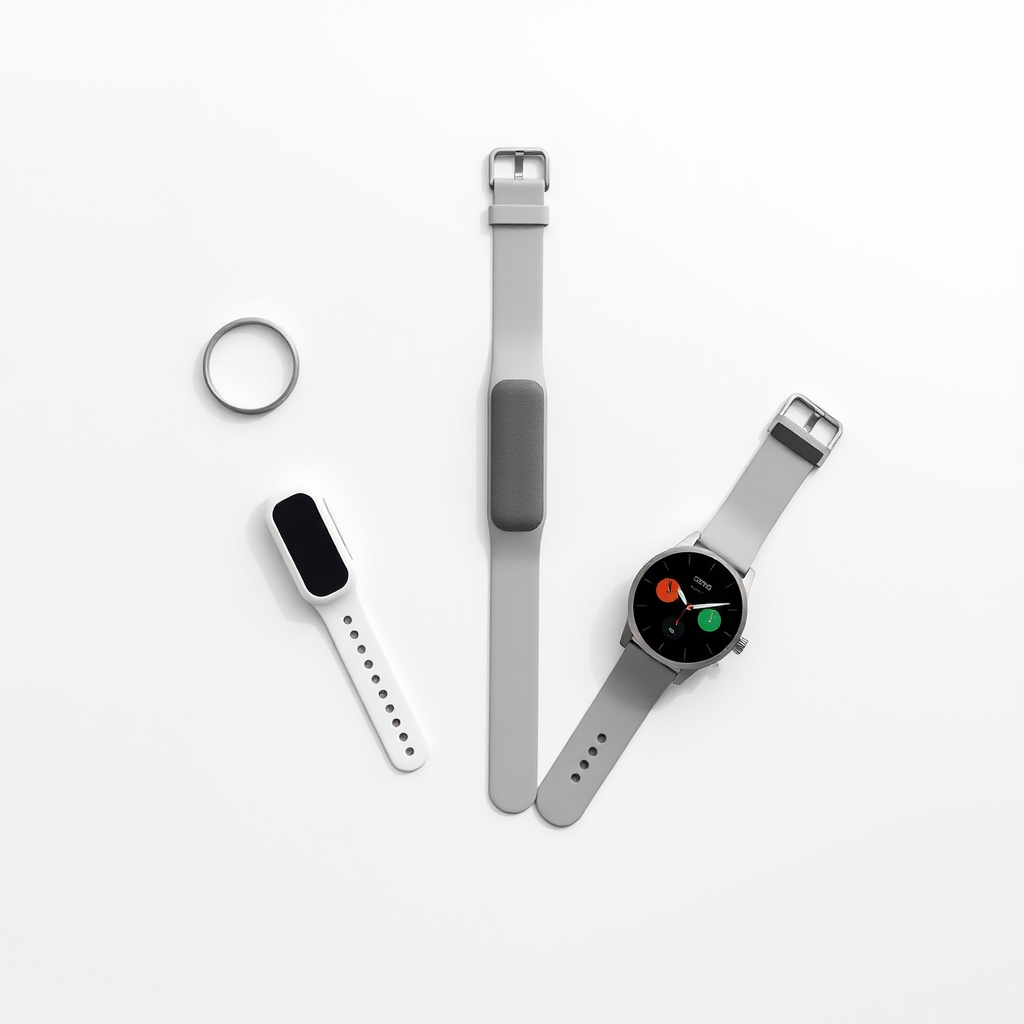
Instead of one “smart” watch trying to do everything, the market is splitting into targeted wearables: blood glucose monitors (now available over-the-counter), ECG rings, continuous blood pressure patches, sleep-focused bands, and training-specific devices.
The Evidence
Over the past 18 months, the number of FDA-cleared wearable health devices has accelerated. Non-invasive glucose monitors moved from prescription-only to consumer availability. Every major health-tech company from Oura to Samsung to Whoop launched more specialized variants. The smartwatch is becoming a generalist companion; the health data is moving to specialists.
Based on our research into wearables launching in 2025–2026, a pattern has emerged: separate devices for fitness, sleep, and glucose or heart-rhythm monitoring. The all-in-one smartwatch is losing ground to specialists because specialists are more accurate for single metrics though the accuracy gap varies by sensor type and condition.
The Catch
You’re now managing five apps instead of one. Accuracy varies widely blood glucose wearables are useful for tracking trends but are still less accurate than a finger prick. Sleep data from wearables remains notoriously inconsistent; different devices can give you meaningfully different “sleep scores” for the same night. And most of these devices require a subscription to unlock useful features.
Kept or Hype?
Cautiously kept, with real caveats. The fragmentation is real and driven by actual user demand for better single-purpose tools. But don’t treat any of these devices as medical devices unless it’s explicitly FDA-cleared and you understand what that clearance covers. Sleep scoring, for instance, is still largely algorithmic estimation. Blood glucose wearables are useful for trends, not spot-checking.
Buy now: If you have a specific health metric you want to track (glucose, heart rhythm, training load), a specialist device beats a smartwatch. Wait on: The subscription fees. They’re climbing faster than feature improvement.
Trend 3: Smart Home Accessibility Prices Dropping, Integration Still Fragmented
What It Is
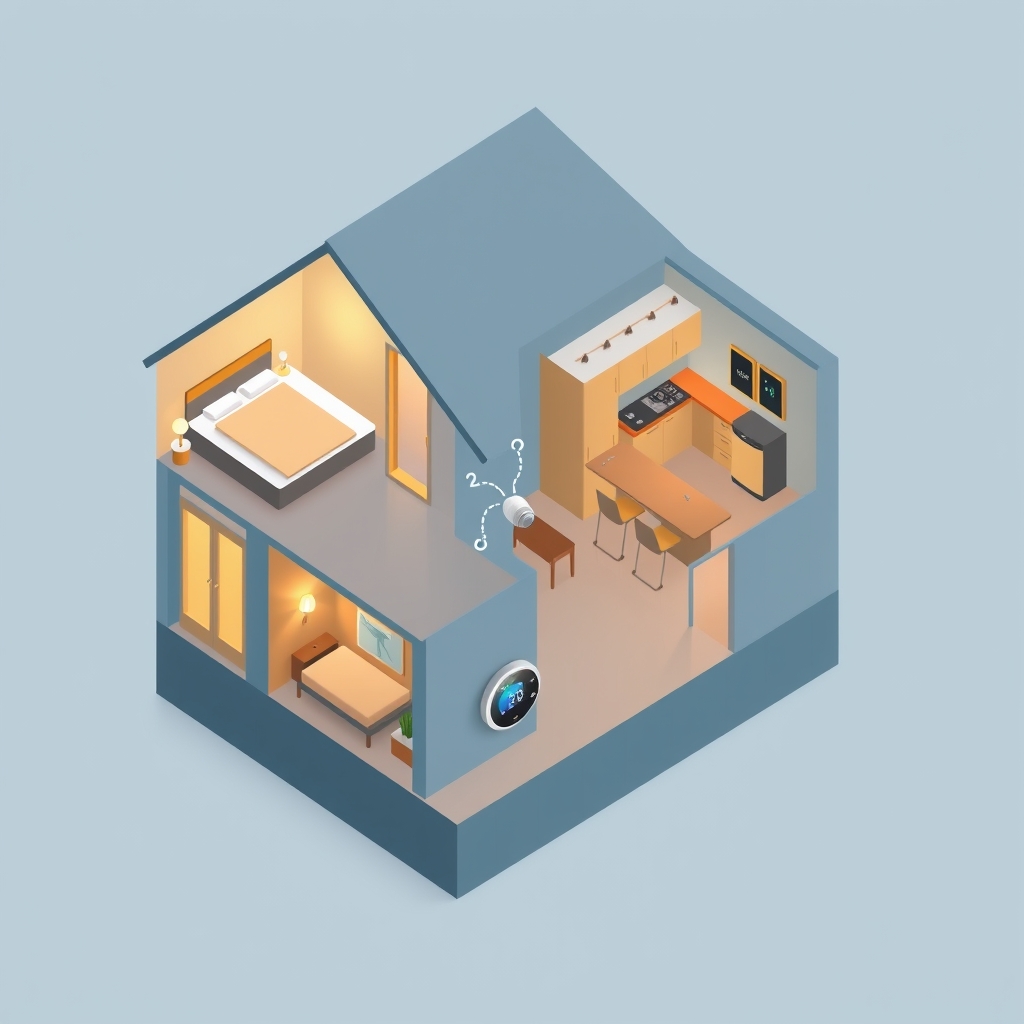
Smart home adoption is accelerating, but the market is splitting into three tiers: locked ecosystems (Apple, Google, Amazon), open-protocol alternatives (Matter), and purpose-built systems (Philips Hue, Nanoleaf). The key shift: prices are falling and setup is less painful than it was three years ago.
The Evidence
Matter, the open-protocol standard, went live in 2023 and has since been adopted by major manufacturers. This alone is a material change it means a smart plug from one company can talk to a hub from another. Based on our research tracking platform announcements and device launches, manufacturer willingness to support interoperability has shifted dramatically from 2023 to 2026.
Based on our price research, entry-level smart lights, plugs, and switches are broadly available in the $10–$25 range, down from the $30–$50 that was common a few years ago and starter hubs that used to run $100 or more are now widely available at $40–$60. These are observed ranges, not guarantees; your mileage will vary by retailer and promotion. That said, it does lower the barrier to experimentation.
The Catch
Integration is still clunky. Matter is a standard, but “Matter-compatible” doesn’t guarantee seamless automation. You’ll still need to write automations in the app of your chosen ecosystem. Privacy and security remain inconsistent some devices phone home aggressively, others less so. And if you pick the wrong ecosystem early, migrating is painful.
The “smart home” is still mostly lights, plugs, and thermostats. The promise of truly intelligent homes that adapt to you automatically remains more marketing than reality.
Kept or Hype?
Kept, but with realistic expectations. Smart home adoption is genuinely accelerating because prices fell and setup got easier. But don’t expect your home to magically become intelligent. Expect to control lights from your phone and automate a thermostat. If you want more, you’re writing automations by hand, and that’s still tedious.
Buy now: Entry-level smart lights and plugs (Nanoleaf, Philips Hue, Eve, Kasa) to test an ecosystem at low cost. Pick one platform (Apple Home, Google Home, or Amazon Alexa) and build around it. Wait on: High-end “intelligent” systems that promise to “learn your habits.” They’re still trial-and-error.
Trend 4: Spatial Computing Devices Still Niche, But Shipping
What It Is
Spatial computing devices (Apple Vision Pro, Meta Quest 3, emerging AR glasses) blend digital content with physical space. They’re positioned as the next platform after smartphones.
The Evidence
Apple shipped the Vision Pro at $3,499. Meta shipped Quest 3 at $499 at launch. Smaller makers are shipping AR glasses prototypes with limited functionality. These devices are shipping, not vaporware. But adoption is decisively niche enterprise and tech enthusiasts, not consumers at scale.
Based on publicly available market commentary and user sentiment, consumer appetite for spatial computing remains limited to specific use cases: productivity on the road, gaming, design work. The “it’s the next iPhone” narrative is hype. The “it’s a real tool for a specific audience” narrative is accurate.
The Catch
Hardware is expensive. Software is thin most “killer apps” don’t exist yet. Wearing a headset all day is uncomfortable. Battery life is mediocre. And the privacy implications of a device tracking your gaze and head position in your home are still under-discussed.
Kept or Hype?
Hype for consumers. Kept for specific professionals. Spatial computing is real and shipping, but consumer demand is nowhere near smartphone adoption curves. If you’re a 3D designer, architect, or doctor doing remote guidance, it’s worth testing. For casual use, it’s still a novelty.
Buy now: Nothing, unless spatial computing solves a work problem. Wait on: Glasses-form-factor AR devices (lighter, better optics, longer battery). They’re coming but not ready.
Trend 5: Battery Technology and Charging Speed
What It Is
Solid-state batteries, faster charging protocols, and longer-life cells are shipping in a few premium devices. The promise: phones that last longer between charges and charge faster when you do plug in.
The Evidence
Several manufacturers have announced solid-state battery roadmaps, and companies including Samsung and CATL have publicly disclosed prototype development though consumer-device timelines remain vague. Charging speeds have increased incrementally across flagships, with 120W+ charging now appearing on some high-end Android phones as of 2025–2026. Based on manufacturer-reported figures and independent reviewer observations, real-world battery longevity has improved meaningfully compared to devices from three years ago anecdotally, flagships now routinely clear a full day with moderate use where earlier devices struggled.
However, these improvements are incremental, not revolutionary. And faster charging puts more stress on batteries, which can reduce lifespan a trade-off manufacturers don’t emphasize.
The Catch
Solid-state batteries are still mostly in labs or luxury vehicles. Consumer phones are not there yet. Charging speed has real-world limits around heat generation and circuit capacity. And the battery technology that actually matters energy density, cost, safety is optimized differently across manufacturers, making apples-to-apples comparison difficult.
Kept or Hype?
Kept, but tamped expectations. Battery improvements are real and steadily happening. But the “revolutionary breakthrough” narrative doesn’t match what’s actually shipping. You’re getting incremental gains, not 3-day phones. Don’t hold out for a “battery breakthrough.” Buy the phone you need now.
Buy now: Current flagships if you need a phone. Wait on: Solid-state batteries in consumer devices likely 2–3 years out at minimum.
Product Standouts Worth Tracking
Here are eight products that actually represent the trends above, not marketing noise:
| Product | Category | What It Does | Price Tier | Kept/Hype |
|---|---|---|---|---|
| Apple iPhone 16 Pro | On-Device AI | Local image processing, translation | Premium ($1,000+) | Kept |
| Google Pixel 9 Pro | On-Device AI | Local voice, translation, editing | Premium ($1,000+) | Kept |
| Oura Ring Gen 4 | Health Wearable | Sleep and recovery tracking | Mid-tier ($300–$400) | Kept |
| Whoop 5.0 | Health Wearable | Training load and recovery tracking | Subscription (~$30/month) | Kept |
| Nanoleaf Essentials | Smart Lighting | Matter-compatible, modular smart lighting | Budget ($20–$60) | Kept |
| Eve Energy | Smart Plug | Real-time power consumption monitoring | Budget ($30–$50) | Kept |
| Apple Vision Pro | Spatial Computing | Immersive productivity and gaming | Ultra-premium ($3,499+) | Hype for consumers |
| Meta Quest 3 | Spatial Computing | Mixed reality gaming and apps | Premium ($499+) | Kept for enthusiasts |
Prices are observed ranges based on our research; check current retailer listings before purchasing.
What This Means: What to Buy Now vs. What to Wait On
Buy Now
- Phones with local AI. If you’re upgrading anyway, get a device with on-device processing. It’s genuinely useful for privacy and speed.
- One specialist health wearable. If you track something (sleep, training, glucose), a dedicated device beats a smartwatch. Pick one metric that matters to you.
- Entry-level smart home kit. A $30 smart plug and a $50 hub let you test an ecosystem before committing. Nanoleaf or Philips Hue for lights, Eve or Kasa for plugs.
- Wireless earbuds with real ANC. The tech is mature, prices are fair, and they’re genuinely useful.
Wait On
- Multi-sensor smartwatches that promise to do everything. They’re jack-of-all-trades, master of none. Wait for the specialist.
- “Smart home” devices without clear privacy disclosure. If the company won’t say where the data goes, don’t buy.
- Spatial computing headsets. Wait for glasses form factor, lighter weight, and clearer use cases outside gaming.
- Solid-state battery phones. They’re coming but not yet. Current batteries are fine.
- Subscriptions bundled into gadgets. Fitness trackers, sleep devices, and health rings are increasingly subscription-dependent. The fees climb faster than features improve. Test before committing to the monthly.
FAQ: Tech Gadgets in 2026
Is on-device AI actually more private?
Yes, with caveats. Data processed locally doesn’t go to a server, which is the core privacy win. But “on-device” often means “on-device first, cloud fallback,” and companies decide when to use the cloud without always asking. Read the privacy policy. Apple’s approach is more transparent than most, but even that involves some cloud syncing.
Should I replace my smartwatch with specialist wearables?
Depends on what you track. If you care about sleep quality or training load, a specialist beats a smartwatch. If you just want notifications and step counts, the smartwatch is fine. The specialist devices are more accurate for single metrics but require more app management.
Is Matter actually solving the smart home integration problem?
It’s helping, not solving. Matter means devices from different brands can talk to a central hub. But automations still happen in your chosen ecosystem app. You’re not free to mix and match perfectly yet. It’s an improvement, not a revolution.
How long do wearable health sensors actually last?
Rings and patches: roughly 2–7 days per charge, depending on model. Bands: typically 3–7 days. All of them degrade over time. After 1–2 years of daily use, sensor accuracy can drift. Plan to replace or recalibrate annually.
Should I buy into Vision Pro or Quest 3 now?
Vision Pro: only if you’re a professional (3D design, architecture, remote work). It’s not a consumer product yet. Quest 3: if you care about gaming or want to experiment with mixed reality. It’s niche but functional. Don’t expect to wear either all day comfortably.
The Bottom Line
The gadget market in 2026 is characterized by fragmentation, not consolidation. The all-in-one device is losing to specialists. Cloud dependency is shifting toward on-device processing. And prices are finally becoming reasonable enough that experimentation is low-risk.
None of this is revolutionary. None of it matches the hype cycle. But all of it is real enough that if you care about privacy, health tracking, or home automation, there are genuinely better options than there were three years ago.
The trap is believing the marketing. Smart homes aren’t intelligent yet. Wearable health data is useful for trends, not diagnosis. Spatial computing is not the next iPhone. And on-device AI is more private but not perfectly so.
But if you’re clear-eyed about what each category actually does, the current moment is worth acting on. The gadgets are better, the ecosystem choices are more open, and you can start small without massive commitment.
That’s the real trend: choice, at lower prices, with fewer lock-ins. That’s worth keeping.