
Which Home Cardio Machine Should You Buy?
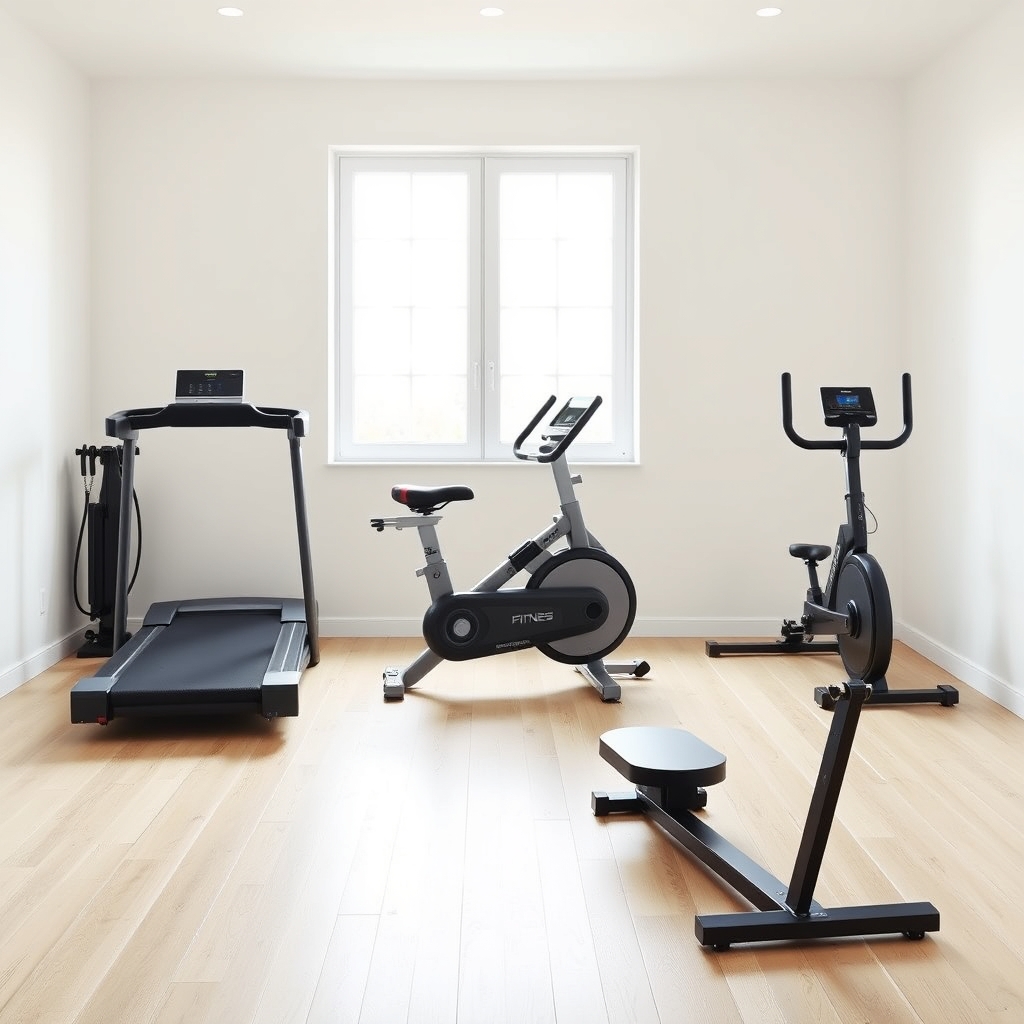
For most people, a stationary bike is the keeper it’s compact, low-impact, affordable, and built to last through years of inconsistent use. But the right choice depends on your space, joints, and what kind of sweat session you actually show up for. A rower wins if you want full-body muscle and serious calorie burn. A treadmill is your pick if you love running and have the floor space to justify it.
Before you buy, ask yourself one question: Do my knees and hips feel better on impact or resistance? If impact bothers you, cross treadmills off the list immediately. If resistance makes you feel stronger, the bike or rower will feel more rewarding. That single distinction removes half the comparison.
Quick Comparison: Treadmill vs Stationary Bike vs Rower
| Dimension | Treadmill | Stationary Bike | Rower |
|---|---|---|---|
| Footprint | 6–8 sq ft | 4–5 sq ft | 5–7 sq ft |
| Impact Level | High (greater joint stress) | None (seated exercise) | None (smooth gliding motion) |
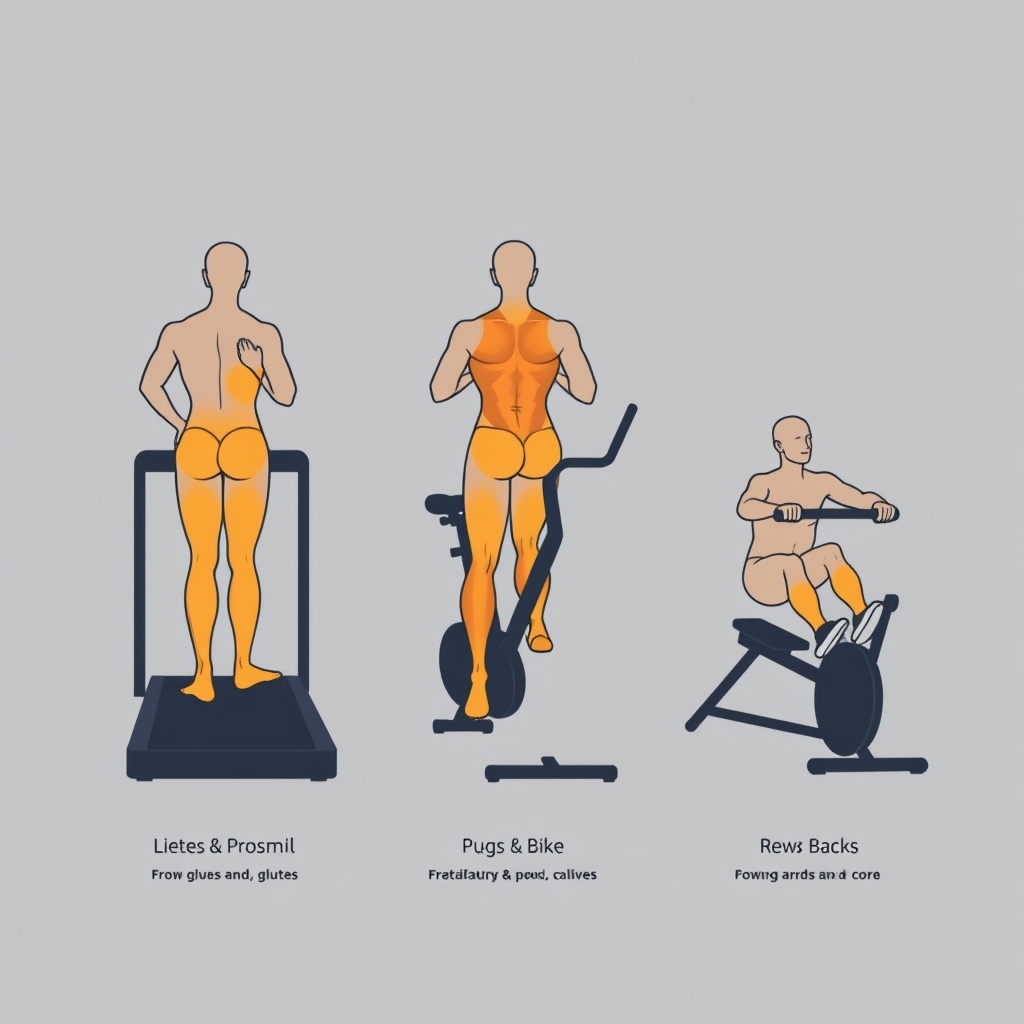
| Primary Muscle Groups | Legs, glutes, calves | Quadriceps, glutes, calves | Full body (back, arms, legs, and core) |
| Estimated Calories Burned (30 min) | ~250–400 (depending on speed and incline) | ~150–300 (depending on resistance) | ~200–350 (depending on intensity) |
| Learning Curve | None (natural walking/running motion) | Minimal | Moderate (proper rowing form is important) |
| Typical Price Range (Entry–Mid, June 2026) | $600–2,000 | $300–1,500 | $400–2,000 |
| Noise Level | Moderate to High | Low to Moderate | Low |
| Expected Durability (Heavy Use) | 5–8 years | 8–12 years | 7–10 years |
| Compact/Foldable Options | Available (typically on higher-priced models) | Common | Available on selected models |
Calorie estimates are approximate ranges drawn from published exercise physiology references; individual results vary significantly by body weight, fitness level, and effort. Durability ranges reflect commonly reported owner experiences and brand specs, not controlled testing.
The Treadmill: Familiar, High-Burn, High-Impact
The standout: Treadmills deliver the most intuitive cardio experience walking and running feel natural, and you can instantly adjust pace and incline. Calorie burn is competitive, and sprint intervals on a treadmill are straightforward to program.
The trade-off: Impact stress on knees, hips, and ankles accumulates over time, especially on hard floors. Treadmills take up the most space, weigh 200+ pounds, and are the loudest piece of equipment in this trio. If you have neighbors below or [limited square footage](https://keptlist.com/?p=1222) square footage, this is a liability. Many people also buy them with good intentions and use them as clothes racks after six months the intimidation factor is real.
Who keeps it: Runners and people without joint pain. If you love the feeling of outdoor running and want to replicate that indoors, a treadmill is worth the space trade-off. Anyone training for a running race will benefit from regular treadmill work. Skip it if you have knee or hip issues, or if your apartment floor is shared with downstairs neighbors.
Top model picks (based on commonly reviewed options, prices observed as of June 2026):
- Budget: Compact manual treadmill (~$200–$400, no motor) useful for walkers, saves space, but exhausting for daily runners.
- Mid-range: Motorized 2–2.5 HP treadmill (~$800–$1,200) solid for regular users, holds speeds up to 10 mph, quieter belt system.
- Premium: Treadmill with built-in training programs and incline (~$1,500+) adjustable incline mimics hill work, app integration, better motor longevity.
The Stationary Bike: Space-Efficient, Joint-Friendly, Affordable
The standout: Stationary bikes occupy 4–5 square feet, weigh less than 100 pounds for most models, and are nearly silent. No impact means zero joint stress, and the learning curve is essentially zero you sit, pedal, adjust resistance. Upright bikes feel like road cycling; recumbent bikes offer back support and are gentler on the lower back. Based on our review of current catalog listings as of June 2026, entry-level bikes start around $300–$400, making them the budget winner of this trio.
The trade-off: A bike works primarily the lower body (quads, glutes, calves) and misses the upper body and back almost entirely. Calorie burn is lower than a treadmill at the same perceived exertion you’ll need higher resistance or longer duration to match a runner’s energy expenditure. Boredom is real; sitting in one place for 45 minutes requires distraction (music, TV, a podcast or a serious mind-to-muscle connection).
Who keeps it: Anyone with limited space, joint pain, or a tight budget. If you live in an apartment, have creaky knees, or want the cheapest entry point into home cardio, a stationary bike is the rational choice. It’s also a strong option for people recovering from injury or anyone seeking low-impact movement long-term. The space efficiency means you can fit it in a spare corner, bedroom, or home office.
Top model picks (prices observed as of June 2026):
- Budget: Upright magnetic resistance bike (~$300–$500) silent, compact, durable, no fancy display.
- Mid-range: Upright or recumbent with adjustable seat and digital readout (~$700–$1,000) recumbent is more comfortable for longer sessions; data tracking helps motivation.
- Premium/Connected: Stationary bike with app integration (Peloton-style) (~$1,200+) on-demand classes, leaderboards, social motivation, but subscription costs add up.
The Rower: Full-Body Power, Efficient Calorie Burn, Steepest Learning Curve
The standout: Rowing engages your legs, back, shoulders, arms, and core simultaneously it’s the only machine in this trio that distributes effort across the full body. Calorie burn per session is competitive with treadmills, and you’re building functional strength alongside aerobic capacity. Rowing is low-impact and nearly silent. Many rower owners report that it feels more demanding than cycling in a way that translates quickly to visible fitness gains though that’s anecdotal and individual results vary.
The trade-off: Proper rowing form takes practice; bad form leads to lower back strain. Many beginners sit too upright, don’t fully engage the legs, and essentially turn it into an arm machine. You need a few sessions to groove the technique (legs drive first, back follows, arms finish then reverse the order on the return). The footprint is longer than a bike (5–7 feet), though many rowers fold vertically. Water and magnetic rowers sound better than air rowers but cost significantly more.
Who keeps it: People willing to learn correct form, serious fitness enthusiasts, and anyone seeking full-body conditioning in one machine. Rowers are well-suited to functional fitness training, athletic cross-training, and anyone who enjoys the mental challenge of mastering movement. Skip it if your back has structural issues, or if you lack the patience to drill technique.
Top model picks (prices observed as of June 2026):
- Budget: Air rower (magnetic damper hybrid) (~$400–$700) durable, louder than other types, but forgiving; the harder you pull, the more resistance, so effort pays off directly.
- Mid-range: Magnetic rower with digital display (~$900–$1,400) quiet, smooth, consistent resistance, good for steady-state work.
- Premium: Water rower (~$1,500+) widely regarded as the most satisfying feel, sounds like rowing on water, commonly reported to last 15+ years with proper care, but heaviest and most expensive.
Head-to-Head: Feature-by-Feature Breakdown
Space & Footprint
Winner: Stationary Bike (4–5 sq ft, often foldable, lightest at 50–90 lbs).
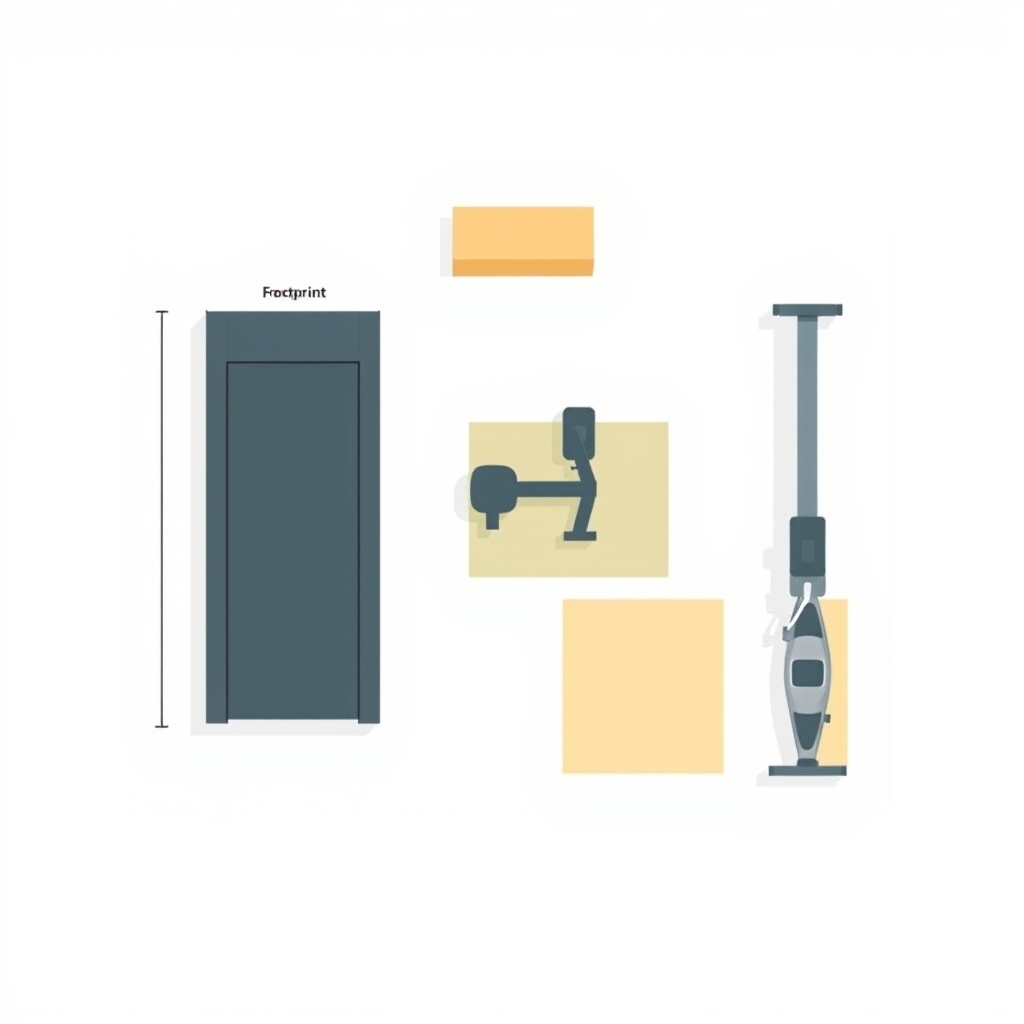
A bike fits in a corner or against a wall. Rowers need 6–7 feet of length and fold vertically (still 2–3 feet deep). Treadmills demand 6–8 feet of open floor and are the heaviest, making relocation a two-person job. If space is scarce, a bike isn’t a compromise it’s the only realistic choice.
Joint Impact
Winner (Tie): Stationary Bike & Rower (zero impact on either).
Both are zero-impact. A treadmill, even on a cushioned belt, transmits impact through your joints with every stride. If you have arthritis, past knee injuries, or are over 50 and concerned about long-term wear, cross treadmills off immediately. Bike and rower are equally safe in this regard; the difference between them is muscle engagement, not joint safety.
Full-Body Muscle Engagement
Winner: Rower (back, shoulders, arms, core, plus legs).
A treadmill works legs and glutes but leaves your upper body as a passenger. A bike isolates the lower body almost entirely. A rower distributes effort across your entire posterior chain and arms. Rower users commonly report feeling stronger overall not just fitter which aligns with the machine’s broader muscle recruitment. If you want one machine that builds strength and endurance, a rower is the only one in this trio that delivers both.
Calorie Burn (per 30-minute session, estimated ranges)
The following ranges are approximate estimates drawn from published exercise physiology references; actual calorie burn varies significantly by body weight, fitness level, and effort output:
- Treadmill: ~250–400 calories (running burns more than walking; heavier individuals burn more)
- Stationary Bike: ~150–300 calories (lower-impact effort typically means lower total expenditure)
- Rower: ~200–350 calories (depends heavily on power output and form efficiency)
Winner: Treadmill (raw calorie burn, especially at higher speeds). That said, rowers often deliver faster fitness gains per unit of effort because more muscle is recruited per stroke so “most efficient” is a closer call.
If your goal is pure calorie burn for weight loss, a treadmill at a brisk pace or incline edges out the competition. Rowers compress work into better full-body engagement, so you feel more accomplished per session. Bikes require longer, steadier sessions to match the calorie output of either.
Ease of Use
Winner: Treadmill (no learning curve walking is instinctive).
You get on a treadmill and move. A bike requires a proper seat height and handlebar position (dial it wrong and your knees will remind you). A rower requires understanding the power sequence (legs, back, arms) or you’ll develop bad patterns. For someone stepping into home fitness for the first time, a treadmill is immediately comfortable.
Workout Variety
Winner: Rower (power bursts, steady-state, intervals all translate into different intensity profiles).
A treadmill lets you vary speed, incline, and do intervals solid variety. A bike lets you adjust resistance and duration. A rower shifts naturally between high-power short bursts (building strength) and low-power long rows (aerobic base), and the resistance adjusts to your effort in ways that feel progressive. Rowers also integrate with app-based coaching platforms (Concept2’s ErgData, Ergatta) more seamlessly than most bikes at equivalent price points.
Durability & Long-Term Reliability
Winner: Stationary Bike (commonly reported to last 8–12 years of heavy use; fewer moving parts).
Stationary bikes use magnetic or friction resistance systems with minimal wear points. Treadmills are mechanically complex (motor, belt, deck) and commonly show wear after 5–8 years of heavy use based on owner reports and brand service data. Rowers are robust if maintained, but water rowers can develop leaks over time, and air rowers degrade if not cleaned regularly. Bikes are the closest thing to a “set it and forget it” cardio machine. These ranges reflect observed owner experiences and brand guidance, not controlled durability testing.
Noise Level
Winner: Stationary Bike (nearly silent with magnetic resistance).
A bike is quiet enough to use while someone sleeps in the next room. A rower is also quiet, with magnetic and water models producing minimal noise. A treadmill is loud the motor hums, the belt thuds, and high speeds amplify both. If you have shared walls or neighbors downstairs, a treadmill is not compatible with early morning or evening workouts.
Price Entry Point
Winner: Stationary Bike (quality models starting ~$300–$400 as of June 2026).
Based on our review of current catalog listings, a reliable stationary bike costs $300–$500. Rowers start around $400–$600. Treadmills begin at $600 and climb steeply. If budget is the limiting factor, a bike is the clear winner. You get years of durability without overspending.
Pricing Breakdown by Category
Based on our price research across major online retailers, here are the typical entry-to-mid-range ranges we observed as of June 2026:
| Price Tier | Treadmill | Stationary Bike | Rower |
|---|---|---|---|
| Budget (Entry-Level) | $600–900 | $300–500 | $400–700 |
| Mid-Range | $1,000–1,500 | $700–1,100 | $900–1,400 |
| Premium | $1,800+ | $1,200+ | $1,500+ |
Rent-to-own and subscription models (e.g., Peloton Bike+) blur these lines, but paying cash, a stationary bike gives you the most cardio capacity per dollar at every tier.
Use Cases: Which Machine for Which Goal?
You Want to Train for a 5K or Marathon
Choose: Treadmill
Running-specific fitness requires running-specific training. A treadmill mimics the exact motion and impact you’ll face on race day. You can dial in pace, practice negative splits, and build race-pace comfort. A bike or rower won’t translate directly to running performance.
You Have Bad Knees, Ankles, or Hips
Choose: Stationary Bike or Rower (Tie)
Both are zero-impact. A bike is easier to stick with long-term because the motion is familiar and forgiving. A rower builds more functional strength, which can stabilize joints over time. If your knees ache, start with a bike; if you want to rebuild overall strength, a rower is worth the form-learning investment. Avoid treadmills entirely if impact is an issue.
You Live in a Small Apartment
Choose: Stationary Bike
A bike fits in a closet-sized space. Rowers are long, and treadmills are both long and heavy. For city living or compact spaces, a bike is the only practical option.
You Want Maximum Calorie Burn in Minimum Time
Choose: Treadmill (raw burn), or Rower (efficient burn)
A treadmill at 6+ mph burns calories fastest based on published estimates. A rower at high power output approaches treadmill-level calories but engages more muscle, so you feel the work harder. If you’re time-constrained and willing to go hard, a rower’s full-body efficiency is compelling; if you prefer steady-state aerobic work, a treadmill is simpler.
You’re Recovering from an Injury
Choose: Stationary Bike
A bike allows pain-free movement with zero impact. You can adjust resistance to match your current capacity. A rower’s learning curve and back engagement might strain a recovering spine. A treadmill is out. A bike is forgiving and adaptable.
You Want to Build Strength and Endurance
Choose: Rower
Rowing is the only machine in this trio that builds meaningful upper-body and core strength alongside cardio. If you want one piece of equipment that serves dual purposes, a rower is it. This is especially relevant for functional fitness, athletic cross-training, or anyone building a stronger back and shoulders.
You’re New to Exercise and Want Easy Motivation
Choose: Stationary Bike with App/Community
A Peloton-style connected bike removes the intimidation factor. Classes feel social, the community is engaged, and the guided structure keeps you accountable. Treadmills and rowers have smaller connected ecosystems (though Concept2 rowers are building one via ErgData). If motivation is your real bottleneck, a subscription-based bike is worth the premium.
You Have a Limited Budget (~$500 or less)
Choose: Stationary Bike
At $300–$500 (as of June 2026), a magnetic stationary bike is the only option in this trio that delivers both durability and a minimal learning curve. Rowers at that price point are often compromised (cheap air rowers, flimsy construction). Treadmills at $500 are barely functional for regular use. A budget bike is the rational choice.
What We Didn’t Compare (and Why
Elliptical trainers: They sit between a treadmill and a bike in impact and muscle engagement decent for people seeking a hybrid, but they excel at nothing. We excluded them because they’re the compromise machine and rarely edge out a specialized choice.
Stair climbers / steppers: High muscle engagement, low impact, but exceptionally niche. Most home buyers prefer rowers or bikes for similar benefits.
Assault/fan bikes: Excellent for HIIT and power training, but their learning curve and singular purpose (high-intensity sprints) make them secondary machines, not primaries. We focused on machines suited to broader fitness goals.
FAQ: Treadmill, Stationary Bike, and Rower Question
Which cardio machine is best for weight loss?
For raw calorie burn per session, a treadmill especially at a brisk pace or incline burns more calories than a stationary bike or rower in most published estimates, making it the straightforward pick for weight loss. However, a rower at high intensity comes close while engaging more muscle groups, which can raise resting metabolic rate over time. The honest answer: the best machine for weight loss is whichever one you’ll use consistently paired with a calorie deficit a bike you ride four times a week beats a treadmill you avoid.
Is a stationary bike good for building leg muscle?
A stationary bike builds endurance in the quadriceps, glutes, and calves, but it does not produce significant muscle hypertrophy (size gains) on its own the resistance is lighter than strength training and the motion is repetitive rather than progressive. If visibly stronger legs are your goal, combine cycling with weight training, or consider a rower, which recruits more muscle fibers per stroke and challenges the posterior chain more broadly. A bike is excellent for leg fitness and cardiovascular tone, not muscle-building in isolation.
Do I need a folding treadmill to save space?
Folding treadmills save floor space when stored but are still 6–7 feet long, weigh 200+ pounds, and are awkward to move upright. If you’re trying to solve a genuine space problem, a stationary bike or rower is a more practical solution than a folding treadmill. Folding treadmills make the most sense in dedicated exercise rooms where you want the option to tuck the machine against a wall between sessions not in tight apartments.
Can I get a good workout on a stationary bike without paying for a Peloton subscription?
Yes a basic stationary bike with manual resistance delivers the same cardiovascular benefits as a connected model without the ongoing subscription cost. Adjust the resistance, ride steadily or do intervals, and track your time or distance; a non-connected bike in the $400–$700 range (as of June 2026) performs identically to a $2,000 Peloton in terms of fitness outcome. Subscriptions provide motivation and structure, not superior physiology.
Which machine is quietest for early morning workouts?
Stationary bikes with magnetic resistance are the quietest option in this comparison most operate below 60 decibels, quiet enough to use while a partner sleeps nearby. Magnetic and water rowers are similarly quiet. Air rowers and treadmills are noticeably louder treadmill motors and belt impacts can reach 70+ decibels making them a poor fit for shared living situations or early morning sessions.
Should I buy a used cardio machine to save money?
Used stationary bikes and rowers are generally good secondhand buys they hold up well, are commonly listed in good condition on resale platforms, and typically sell for 30–50% below retail. Used treadmills carry more risk: the motor and belt wear with use, and you’re inheriting someone else’s maintenance history. If buying used, prioritize bikes and rowers; if buying a treadmill, look for recent-model machines with remaining warranty coverage or buy new.
The Verdict: Which Machine Should You Actually Buy?
Best Overall: Stationary Bike– It wins on space, cost, durability, and joint safety. For most people balancing budget, apartment living, and workout consistency, a stationary bike is the rational pick. You’ll use it, you won’t injure yourself, and it will last a decade.
Best for Calorie Burn & Running Prep: Treadmill– If you run outdoors or are training for a race, a treadmill is the right tool. Runners with joint-healthy knees and hips and sufficient floor space will find treadmill sessions the most direct path to running fitness. Understand the noise and space trade-offs before buying.
Best for Strength + Cardio: Rower– If you want one machine that builds full-body strength and delivers serious cardiovascular work, a rower is the only option in this trio. The learning curve is real, but committed users commonly report the highest satisfaction and fastest fitness gains. Water rowers feel best; magnetic rowers are quieter and more affordable.
Best Budget Pick: Stationary Bike– A quality magnetic bike costs $300–$500 (as of June 2026) and will outlast more expensive machines. There is no lower-cost entry point to consistent cardio than a stationary bike.
Best for Small Spaces: Stationary Bike– If you have fewer than 50 square feet to work with, a stationary bike is the only viable option in this comparison.
Final Thought: The Machine You’ll Actually Use Wins
The best cardio machine is the one you’ll use four or more times per week. A $400 stationary bike gathering dust is worthless. A $2,000 treadmill you hate looking at loses every time. Ask yourself honestly: Do you love running? Do you enjoy seated, low-impact steady-state work? Do you crave the challenge of learning new movement patterns?
Your answer determines the keeper. Everything else is details.
Internal Linking Suggestions
- [“Best home gym equipment for small spaces”] → topic on space-efficient fitness setup
- [“Low-impact cardio alternatives for joint pain”] → guide on joint-friendly exercise options
- [“How to set up a home gym on a budget”] → budget fitness equipment article
- [“Treadmill vs outdoor running: which builds better fitness?”] → running-focused comparison
- [“Rower form guide: common mistakes and fixes”] → detailed rowing technique article
External Link Suggestions
- Concept2 Rower Official Site– for specifications, resale data, and authorized retailer information
- American Council on Exercise (ACE)– for calorie expenditure and exercise physiology guidance
- Mayo Clinic Joint Health– for authoritative guidance on joint-impact exercise classification
- Consumer Reports Equipment Reviews– for third-party durability and reliability data on major brands