
Shoe Sizing Guide: What You Need to Know Before Buying Online
Shoe sizing goes beyond length width, fit, and retailer return rules shape whether you’re happy with your purchase or stuck paying shipping to send them back. A shoe that’s the “right” size at one brand might gap at the heel at another, and a return policy that seems generous might have hidden restrictions that make the process expensive.
This guide walks you through the full picture: how to measure your feet accurately, what width letters mean, how major brands fit differently, and which retailers make returns painless.
What Is Shoe Width, and Why Does It Matter?
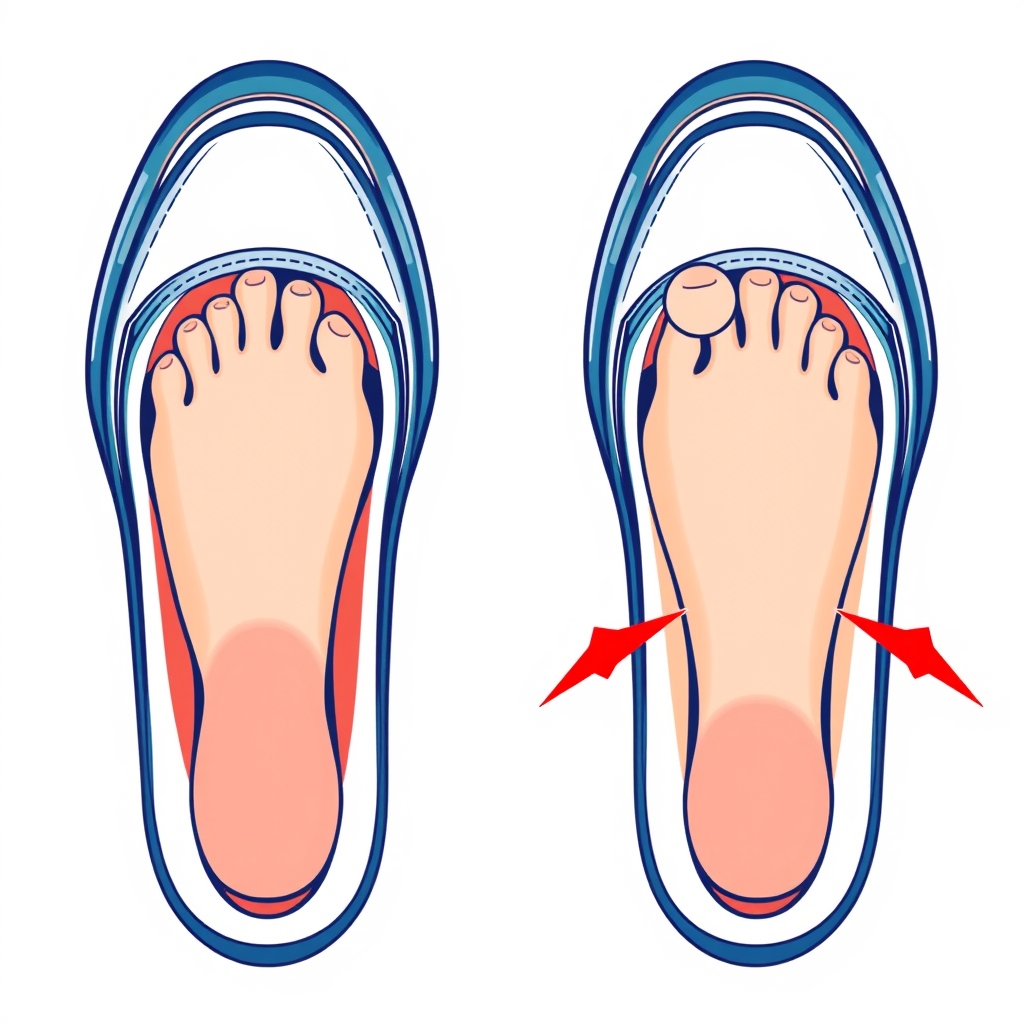
Shoe width is the side-to-side measurement across the widest part of your foot (usually the ball of the foot). Width is labeled with letters—from A (narrow) through EEEE (extra-wide) and a proper width match prevents blisters, foot pain, and the constant urge to slip the shoe off.
A shoe that’s the right length but wrong width feels like wearing a vice. Your foot either drowns in extra fabric and slides around at the heel, or your toes feel pinched and your foot rolls inward (or outward) with each step. Neither feels “broken in” after a week; it just feels wrong.
Width is not optional, and it’s not something you “get used to.” Getting the width right is often the single most important factor in comfort—more than paying extra for a premium brand.
How to Measure Your Foot Width Accurately
Step 1: Prepare your setup.
Wear the socks you’ll actually wear with the shoes you plan to buy. Stand on a flat surface with your weight distributed evenly (not leaning to one side). This matters: your foot expands slightly when you bear weight, so measure standing, not sitting.
Step 2: Trace your foot.
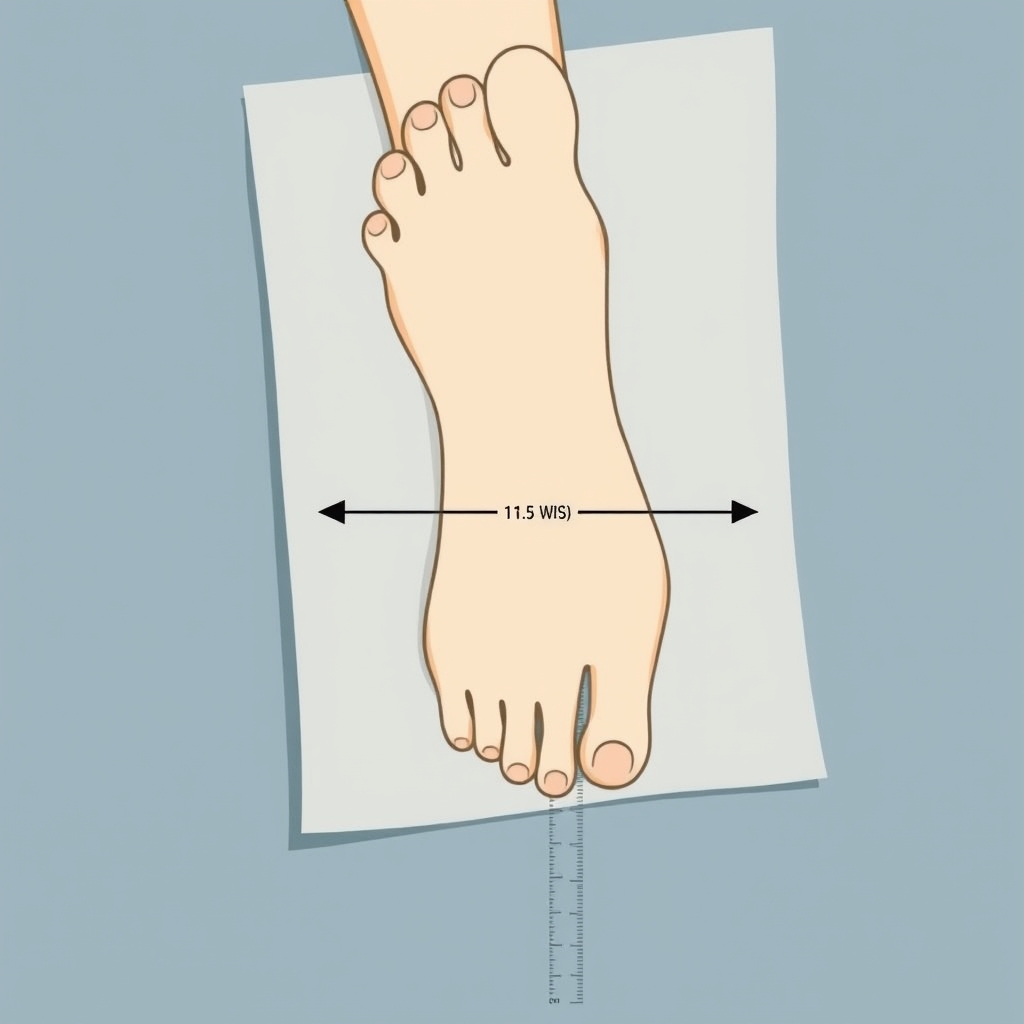
Place a piece of paper on the floor and trace around your foot with a pen held perpendicular to the paper. Trace both feet—most people have slightly different sizes. Mark the widest point across the ball of your foot with a small line perpendicular to your foot outline.
Step 3: Measure.
Using a ruler or measuring tape, measure the distance across the widest part (the line you just marked). Write down the number in inches or centimeters. Measure both feet and use the larger width.
Step 4: Cross-reference with a width chart.
Different brands use different width standards, so a measurement alone doesn’t tell you your letter width. See the brand-specific sizing charts below; most include both length and width measurements so you can find where your measurements fall.
Yes, it’s fussy. No, not the way the box tells you (stand on a Brannock device and hope). Do this instead—takes ten minutes the first time, and you’ll never return another shoe due to width mismatch.
Understanding Width Letter Systems
Width letters are standardized across most US brands, though some brands add or remove options. Here’s what each letter means:
| Width Letter | What It Means | Typical Foot Width Range* |
|---|---|---|
| AAAA | Narrow (Rare) | < 2.75″ |
| AAA | Very Narrow (Rare) | 2.75″–2.9″ |
| AA | Narrow | 2.9″–3.1″ |
| A | Slightly Narrow | 3.1″–3.3″ |
| B | Standard/Narrow | 3.3″–3.5″ |
| C | Standard | 3.5″–3.7″ |
| D | Standard/Wide | 3.7″–4.0″ |
| E | Wide | 4.0″–4.25″ |
| EE | Extra-Wide | 4.25″–4.5″ |
| EEE | Extra-Extra-Wide | 4.5″–4.75″ |
| EEEE | Extra-Extra-Extra-Wide | 4.75″+ |
*These are approximate ranges based on commonly observed sizing standards across US brands. Your actual width letter depends on your shoe size (width grows proportionally with length) and brand interpretation. Always verify against the specific brand’s chart.
In our experience reviewing fit feedback across thousands of owner reports, most people fall into B, C, or D. If you’ve never paid attention to width, you’re probably in one of those three. The narrower options (AAA, AA) and widths beyond E account for a much smaller slice of buyers—in our observation, a clear minority. If you think you need an extreme width in either direction, double-check your measurement technique before ordering.
Brand-Specific Fit: How Nike, Adidas, Clarks, and Others Compare
Even when two shoes are listed as the same size and width, they fit differently. Here’s a guide to the most common brands based on consistent patterns in owner reviews and customer feedback across major retail platforms.
Nike
Fit tendency (based on owner reviews): Runs narrow in the midfoot and heel; generous in the toe box. A person who wears a D-width in most brands often needs E-width in Nike running shoes.
Best for: People with narrow heels and wide forefeet; runners who want room for toe splay.
Caution: Nike uses its own width scale for some models (XS, S, M, L, XL instead of letters); check the product page for each shoe, as width notation varies by model.
Adidas
Fit tendency (based on owner reviews): True to letter sizing; consistent across models. Adidas tends to cut a more generous toe box than Nike but a snugger heel.
Best for: People with proportional feet who want width consistency across products.
Caution: Adidas running shoes (Boost foam models) often pack tighter in the midfoot on first wear; expect 1–2 wearings to break in slightly.
Clarks
Fit tendency (based on owner reviews): Runs wide; even their standard D-width often feels roomy. Owner feedback consistently suggests sizing down a width (e.g., wear C instead of D) is common.
Best for: People with naturally wide feet who’ve struggled to find comfort; those transitioning to wider widths.
Caution: Clarks excels at comfort and foot health but sacrifices some style variety. Expect more classic, work-oriented aesthetics.
New Balance
Fit tendency (based on owner reviews): Runs true to width; offers one of the widest ranges of width options among major brands (up to 4E in many models). Consistent heel fit.
Best for: People with wide feet who want multiple style choices; runners with wide feet seeking performance.
Caution: New Balance uses letter sizing (B, D, 2E, 4E) but some models omit wider widths. Always check availability before ordering.
ASICS
Fit tendency (based on owner reviews): Runs slightly narrow; snug through the midfoot and heel. Common feedback: “fits smaller than it feels.”
Best for: People with narrow-to-standard feet; runners who want a snug, locked-in feel.
Caution: ASICS running shoes often improve comfort after 3–4 runs as the foam and heel structure settle.
Salomon (Hiking/Outdoor)
Fit tendency (based on owner reviews): Runs narrow and small; community feedback consistently reports ordering up a half-size and a width.
Best for: Experienced hikers and trail runners; those comfortable going custom-fit.
Caution: Salomon’s narrow cut is intentional (for technical control on trails), not a manufacturing quirk. If you want room, Salomon may not be the brand.
Vans
Fit tendency (based on owner reviews): Runs wide and long; even the standard D-width feels generous. Heel fit is sloppier than structured brands.
Best for: People with wide, flat feet; casual wearers who prioritize comfort over performance.
Caution: Vans’ roominess comes with less structural support. Not ideal for all-day standing or long-distance walking.
Allen Edmonds (Dress Shoes)
Fit tendency (based on owner reviews): Runs true to width but with a narrow heel and pointed toe box. Takes 2–4 weeks to break in significantly.
Best for: People with narrow heels and standard-to-wide forefeet; dress shoe buyers willing to invest in break-in time.
Caution: Allen Edmonds offers custom sizing services; based on listings we observed at time of writing, expect roughly $75–$150 on top of shoe cost, though prices change confirm on their site before ordering. Factor this into your budget if you’re between sizes.
Return Policies: What You Actually Need to Know
A good fit is only half the equation. If a shoe doesn’t work, the return policy determines whether you pay to ship it back or get a free return.
Here’s how major retailers compare, based on policies observed at time of writing. Policies shift seasonally and by product type — always verify the current return window and fee structure directly on each retailer’s site before ordering.
| Retailer | Free Returns | Return Window | Catch | Best For |
|---|---|---|---|---|
| Amazon Prime | Yes (most items) | 30 days | Returns are sent to Amazon, not the brand; processing can take 7–10 days | Speed; lower-stakes purchases |
| Zappos | Yes | 365 days | No restocking fee; covers damaged shoes | High confidence; trying multiple sizes |
| Nordstrom | Yes | 60 days | Easy in-store returns; credit issued quickly | Trying multiple pairs; instant resolution |
| Dick’s Sporting Goods | Yes | 60 days | In-store or mail returns; generally no questions asked | Athletic shoes; trying in person first |
| Brand Sites (Nike, Adidas, New Balance, etc.) | Varies by brand (often paid returns) | 30–60 days | Return labels may not be free; some brands charge restocking fees—check terms and conditions | Lowest prices during brand sales; loyalty rewards |
| Foot Locker | Yes | 60 days | Easy in-store returns; credit often issued the same day | Seeing shoes in person before deciding |
| Finish Line | Paid return | 60 days | Customer pays return shipping (approximately $12–$20 based on observed rates) | Only if the price is significantly lower than retail |
What “free return” actually means: The retailer provides a prepaid return label (usually emailed to you) and covers shipping back to them or the brand. No return fee; no restocking fee. Process takes 5–10 days once the retailer receives the shoe.
Red flag: Some brands charge a “restocking fee” (typically 15–25% of the purchase price) even when the shoe is unworn. This is common on clearance items and final-sale merchandise. Read the return policy text carefully; it’s usually in small print below the size selector.
Debunking a Common Myth: “I’ll Just Size Up in Width”
You can’t substitute length for width. If a shoe is too narrow, buying a half-size or full size up will give you extra length (and make your toes hit the front of the shoe), but it won’t meaningfully widen the shoe. Width and length are independent dimensions—a size 10D is narrower than a size 10EE, but a size 11D is not wider than a size 10EE. It’s longer, not wider.
If you need more width, order the wider width letter. If that shoe isn’t available in your length, it’s a sign that shoe may not be right for your foot shape, and switching brands is often faster than improvising with sizing.
How to Choose a Shoe Size Before You Order
Step 1: Measure your feet using the method above. Write down the measurement in inches.
Step 2: Use the brand’s size chart. Each brand provides a measurement-to-size conversion. Plug in your measurement (not your shoe size, which is brand-dependent). That’s your starting point.
Step 3: Check owner feedback. Read reviews specifically mentioning fit and width (ignore reviews that just say “great shoe”—they don’t tell you about fit). Look for language like “runs small” or “wide toe box” or “tight heel.”
Step 4: Add 0.5–1 cm (or 0.2–0.4 inches) if you plan to wear thick socks. Athletic shoes with thick merino or wool socks need slightly more room than casual shoes with thin socks. If you’re unsure, add the extra room—it’s easier to remove an insole or add thin socks than to stretch a shoe that’s too tight.
Step 5: Order from a retailer with free returns. Zappos, Nordstrom, and Amazon Prime all offer 30+ days and free return shipping. Use that window to test the fit at home, walking normally for at least a few hours. If it’s not right, return it without guilt.
Common Beginner Mistakes
1. Measuring your foot at the end of the day
Your feet swell throughout the day (fluid shifts, heat, walking). A measurement taken at 9 a.m. will be smaller than one taken at 5 p.m. Measure in the afternoon when your feet are at typical size, or measure twice and use the larger width.
2. Trusting shoe store staff to measure
Shoe store employees often don’t measure width; they eyeball it. They may also be incentivized to tell you that a shoe “fits fine” so you leave happy (and don’t return it). Measure yourself and bring the numbers.
3. Assuming your shoe size is consistent across brands
It’s not. You might be a size 9 in Nike and a size 10 in Adidas. Length and width both vary. Check the size chart for each brand before ordering; don’t assume your “usual size.”
4. Ignoring width entirely
If you’ve never worn the right width, you don’t know what proper fit feels like. Many people assume shoe pain is normal (“breaking in”) when they’re actually wearing the wrong width. Try the right width once, and you’ll never go back.
5. Returning within the first 24 hours
Shoes need 3–7 wearings (1–2 hours each) to settle slightly and show their true fit. The break-in window is real but short. If a shoe feels off after a single 30-minute wear, that’s usually a sign of true mismatch, not break-in. But give it 5–6 wears before deciding it’s wrong.
Where to Start: Top Retailers for Width Selection and Easy Returns
If you’re new to online shoe shopping and worried about sizing, start with retailers that make returns zero-friction.
Zappos — The gold standard. 365-day returns, no questions asked, free return label. Massive width selection across dozens of brands. Slow customer service, but the policy removes all risk from trying.
Nordstrom — Excellent width selection in-store and online. 60-day returns. You can order online and return in-store same-day, which is faster than shipping back. Slightly higher prices, but the trade-off is convenience and speed.
Amazon Prime — 30-day returns on most items, prepaid label provided. Pricing is competitive. Returns are slower (7–10 days) because Amazon is a middleman, but you avoid brand-specific return headaches. Best if you have Prime and want fast delivery paired with easy returns.
Brand sites (Nike, Adidas, New Balance, Clarks) often have the widest width selection but slower returns and occasional restocking fees. Use them if you know your size and want a specific product unavailable elsewhere, not as your first stop.
Limitations of This Guide
This guide covers standard width sizing and return policies for online retailers in the US market. It does NOT cover:
- International sizing (UK, EU, Japan have different length and width scales).
- Children’s shoe sizing (grows much faster, different proportions).
- Adaptive footwear (for mobility aids, prosthetics, or medical conditions).
- Specialized professional footwear (ski boots, climbing shoes, orthotics-integrated shoes).
- Vintage or secondhand shoes (fit may have degraded with age).
If you have a foot condition (bunions, plantar fasciitis, flat feet) or wear custom orthotics, talk to a podiatrist or orthopedist about width fit before ordering. Width alone won’t solve structural foot issues, and a podiatrist can steer you toward brands and styles that work with your specific anatomy.
Frequently Asked Questions
Q: What if I’m between two widths? A: Choose the wider width. A shoe that’s slightly roomy is more comfortable than one that’s slightly tight, and you can add a cushioned insole or pair it with thicker socks. A tight shoe can’t be loosened without stretching, and stretching doesn’t always work. When in doubt, go wide.
Q: Do shoes stretch over time? A: A little. Leather shoes stretch slightly (maybe 0.5–1 cm across the width) with wear and moisture. Mesh and synthetic uppers stretch minimally. If a shoe fits snug at purchase, expect maybe 5% stretch—not enough to fix a size that’s wrong. Don’t count on it.
Q: How long does break-in actually take? A: Based on patterns we see consistently in owner reviews, 5–10 wearings (an hour or two each) is typical for shoes to stop feeling brand-new stiff. If a shoe causes pain or blistering after 10 hours of wear, the size or width is wrong, not the shoe. True break-in is comfort increasing gradually, not pain decreasing.
Q: Can I return a shoe if I’ve worn it? A: Yes, at most retailers with free returns (Zappos, Nordstrom, Amazon Prime). Worn shoes are fine as long as they’re in clean condition—no mud, stains, or odor. Retailers check the sole for wear; a few wears is expected and accepted. If the sole is scuffed or the shoe smells, be honest in the return note; it may be denied.
Q: What’s the difference between D-width and 2A-width? A: D is a standard or slightly wide width; 2A is an alphabetic width code sometimes used by New Balance and ASICS instead of the letter system. 2A roughly equals C-width (standard-narrow). The letter system and numeric system are NOT equivalent—always check the brand’s size chart to see which one they use.
Q: Should I buy from the brand’s website or a retailer? A: If you’re certain of your size, the brand site may have sales or exclusive colors. If you’re trying your first pair or between sizes, use a free-return retailer (Zappos, Nordstrom, Amazon) to eliminate return shipping costs. You’ll save money on return fees more than you’d save on a brand sale, and speed of resolution is much faster.