
The Fastest Fix: How to Get the Right Size Without Multiple Returns
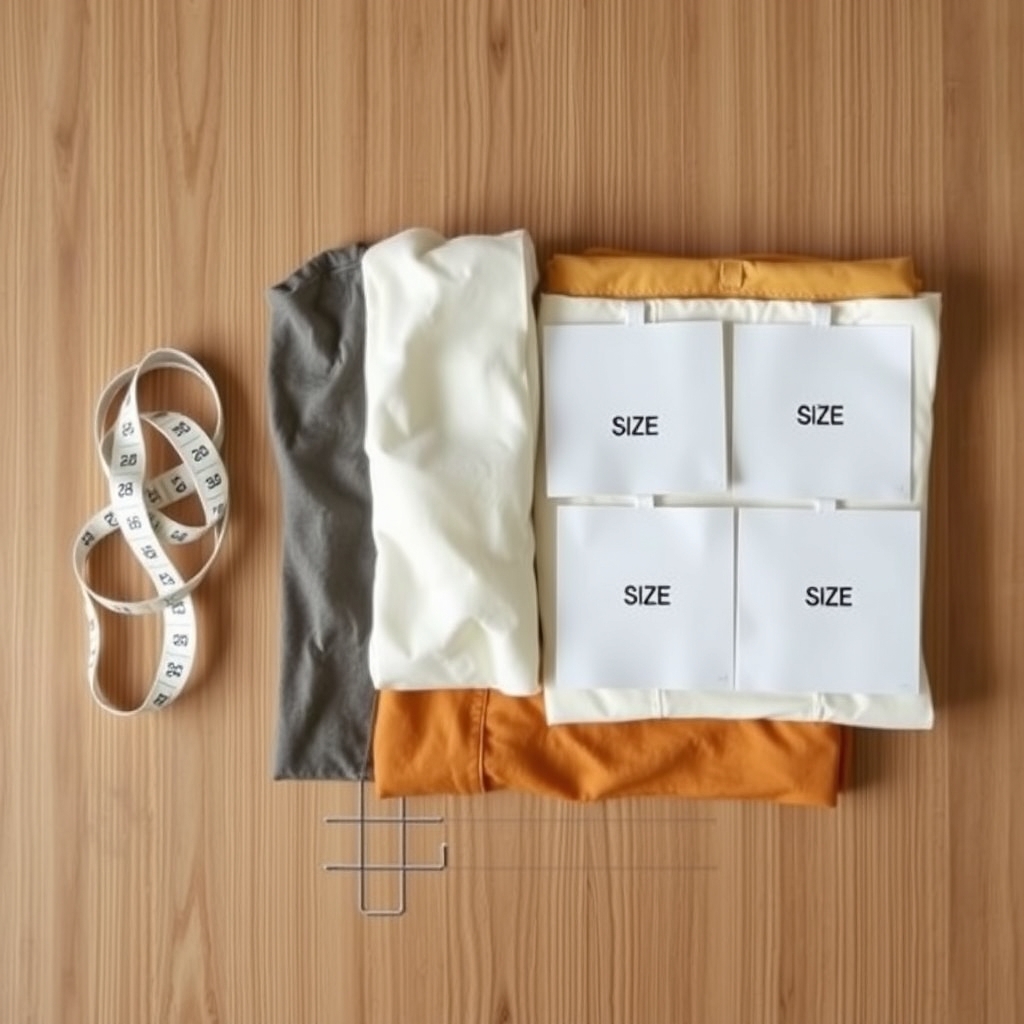
The most common cause of sizing mishaps is shopping without your actual body measurements you’re relying on your usual size, which differs wildly across brands and countries. The fastest fix: measure your chest, waist, hips, and inseam in inches or centimeters before you shop, then compare those numbers to the brand’s size chart (not generic charts). Based on widespread owner reports and retailer help documentation, most returns happen because shoppers ignore the brand-specific fit guide and assume their typical size will work.
Quick Fixes, in Order of Likelihood
- Check the brand’s size chart, not a generic one. Your usual Medium at Target is not your Medium at a Japanese label. Every major retailer has a PDF or interactive guide use it.
- Measure yourself. Chest, waist, hips, shoulder width, sleeve length, inseam. Take these in centimeters if the brand lists in cm. A soft measuring tape costs around $3.
- Read recent reviews for fit notes. If 50 reviewers say “runs small,” it does. The brand’s chart may not reflect real-world fit.
- Choose retailers with free returns and fit guarantees first. Free returns cost you nothing if it’s wrong; fit guarantees swap size at no charge.
- Order one size up and one size down if returns are free. Keep what fits; return the rest with no penalty.
How Do International Clothing Sizes Actually Work?
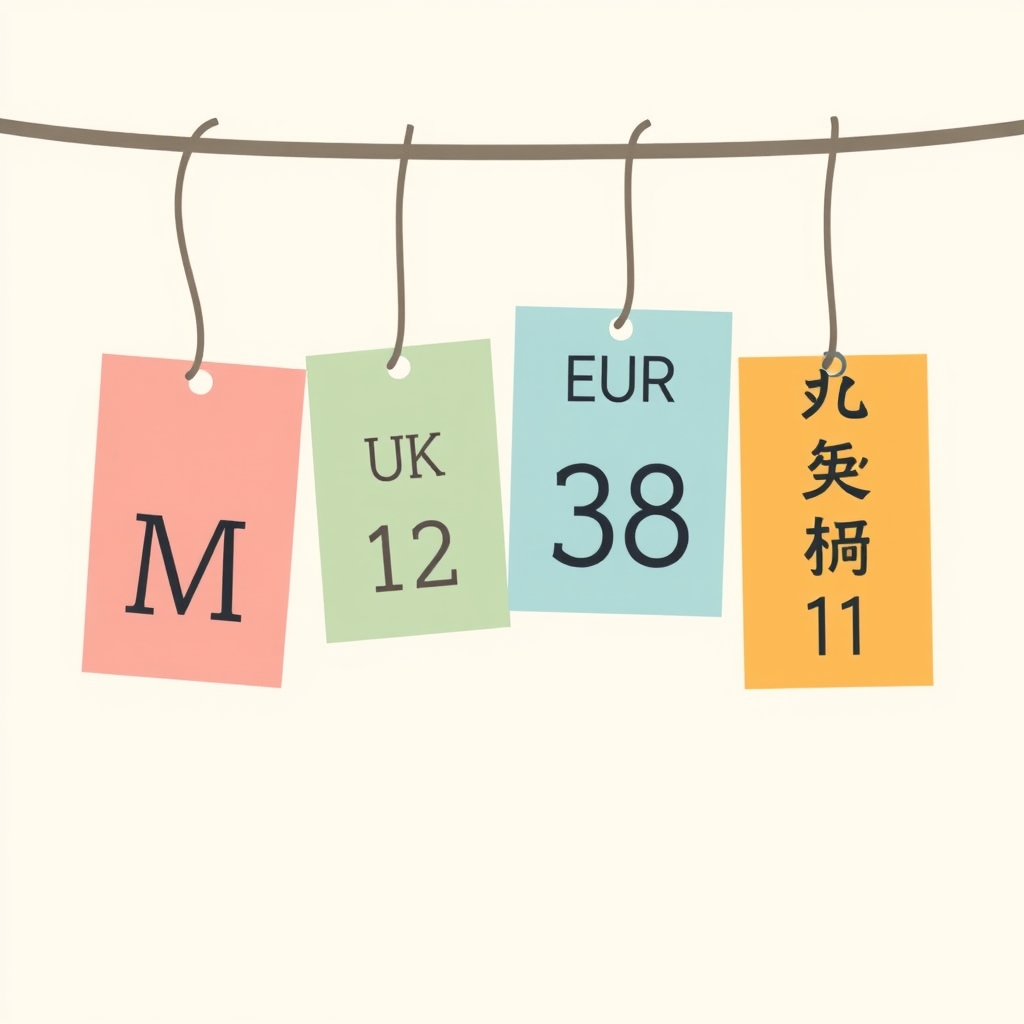
There is no global standard. The US uses single-letter sizes (XS, S, M, L, XL); the UK uses dress lengths (8, 10, 12, 14); the EU uses numbers that roughly track bust circumference (36, 38, 40, 42); Japan uses numbers and often runs 1–2 sizes smaller in the same number. Australia uses UK-style numbering. This is why a size 10 in the UK is not the same as a size 10 in Japan.
The conversion is not mathematical a US size 8 doesn’t always equal a UK size 12 or an EU size 36. It depends on the brand. Designer and luxury brands often run small; mass-market basics run truer to size; Japanese and Korean brands frequently run small in chest but closer to normal in length, based on consistent reports from international buyers.
International Size Conversion Charts for Common Markets
US to UK Clothing Size Conversion
| US Size | UK Size | EU Size | Bust (inches) | Waist (inches) |
|---|---|---|---|---|
| XS | 4–6 | 32 | 32–34 | 24–26 |
| S | 6–8 | 34 | 34–36 | 26–28 |
| M | 10–12 | 36–38 | 36–38 | 28–30 |
| L | 14–16 | 40 | 38–40 | 30–32 |
| XL | 18–20 | 42–44 | 40–42 | 32–34 |
Note: These ranges reflect common industry conventions; always verify against the specific brand’s size chart, as individual brands deviate.
US to EU Size Conversion
The EU system numbers by (roughly) bust measurement. A US size M typically maps to EU 38–40, but always verify with the brand’s chart. High-end European brands (like those from Italy or France) often size smaller than mass-market EU brands.
| US Size | EU Size | Notes |
|---|---|---|
| XS | 32 | Tight, designer-brand fit |
| S | 34–36 | True to size in most EU brands |
| M | 38–40 | Slightly generous in basic styles |
| L | 42–44 | Runs true to size; some Italian brands run small |
| XL | 46–48 | Check customer reviews for fit consistency |
US to Japanese & Korean Size Conversion
Japanese and Korean brands are widely reported to run small. A US size M often fits like a US size S in a Japanese brand; the same pattern appears consistently in Korean labels, based on owner reviews across major retailers.
| US Size | Japanese Size | Korean Size | Note |
|---|---|---|---|
| XS–S | 7, 9 | 55, 66 | Very narrow shoulders and waist |
| S–M | 11, 13 | 77, 88 | Runs 1–2 sizes smaller than US sizing |
| M–L | 15, 17 | 99 | Check sleeve length carefully |
| L–XL | 19, 21 | 110 | Many brands don’t offer sizes this large |
Japanese sizing reality: If you wear a US size 8, you may wear a size 11 or 13 in a Japanese brand. If you’re 5’9″ or taller, many Japanese brands’ inseams will be short.
Australian Size Conversion
Australia uses UK-style numbering (6, 8, 10, 12, 14) and is generally equivalent to UK sizing. However, Australian-made and Australian brands often run a size larger than their UK counterparts.
| US Size | AU Size | Note |
|---|---|---|
| XS | 4–6 | True to UK equivalent |
| S | 8 | Often runs generous |
| M | 10–12 | Truer to size than UK |
| L | 14–16 | Check reviews |
| XL | 18–20 | Often small for XL |
Brand-Specific Fit Guides: Do These Brands Run Small, Large, or True to Size?
This is where the real variation lives. Two brands labeled “size M” can fit completely differently. The observations below are based on aggregated customer reviews and publicly available fit notes not personal testing of every item. Fit can shift when a brand changes manufacturers, so always check recent reviews for the specific item.
Runs Small (Order One Size Up)
- Zara: Reviewer consensus is that Zara runs narrow in the chest and waist; shoppers who prefer a relaxed fit consistently report going up one size.
- H&M: Widely reported to run small, especially in tops. Order a size up, then check the returns policy (usually free).
- ASOS: Varies by brand collection, but their house brand runs small. Read reviews per item.
- Everlane: Runs true to size in basics but small in dresses; reviewers consistently note this.
- Uniqlo: Reviewer reports and Uniqlo’s own sizing notes indicate tops run small; pants run truer. Expect tighter shoulders and shorter sleeves compared to US brands.
- Shein: Runs noticeably small; many reviewers recommend going up 2 sizes for comfort.
- COS: Runs small in width but true in length. Good for tall, narrow people; tight for broader shoulders.
Runs True to Size
- Gap / Old Navy: Consistent sizing across their ranges. Rely on their size chart and you’ll be fine.
- Target (Cat & Jack, All in Motion): Predictable sizing. Their charts are accurate.
- Banana Republic: True to size. Premium fabrics mean sizing is more consistent than fast-fashion peers.
- J.Crew: Runs true, though their “slim fit” line runs small in width. Their full-price line is generous.
- Lululemon: Runs true to size; their size chart is detailed and reliable.
- Mango: True to size in most items. European brand with consistent patterns.
Runs Large (Order One Size Down)
- Free People: Runs 1–1.5 sizes large for a relaxed, boho fit. If you prefer fitted clothes, size down.
- American Eagle: Runs large; a size 4 often fits like a size 2 elsewhere, based on frequent customer reports.
- Abercrombie & Fitch: Runs small in shoulders but large in length. Read reviews for the specific cut.
- Hollister: Similar to A&F; runs large in the body, small in the shoulders.
- Reformation: Runs large overall but small in shoulders. Mixed fit; check per-item reviews.
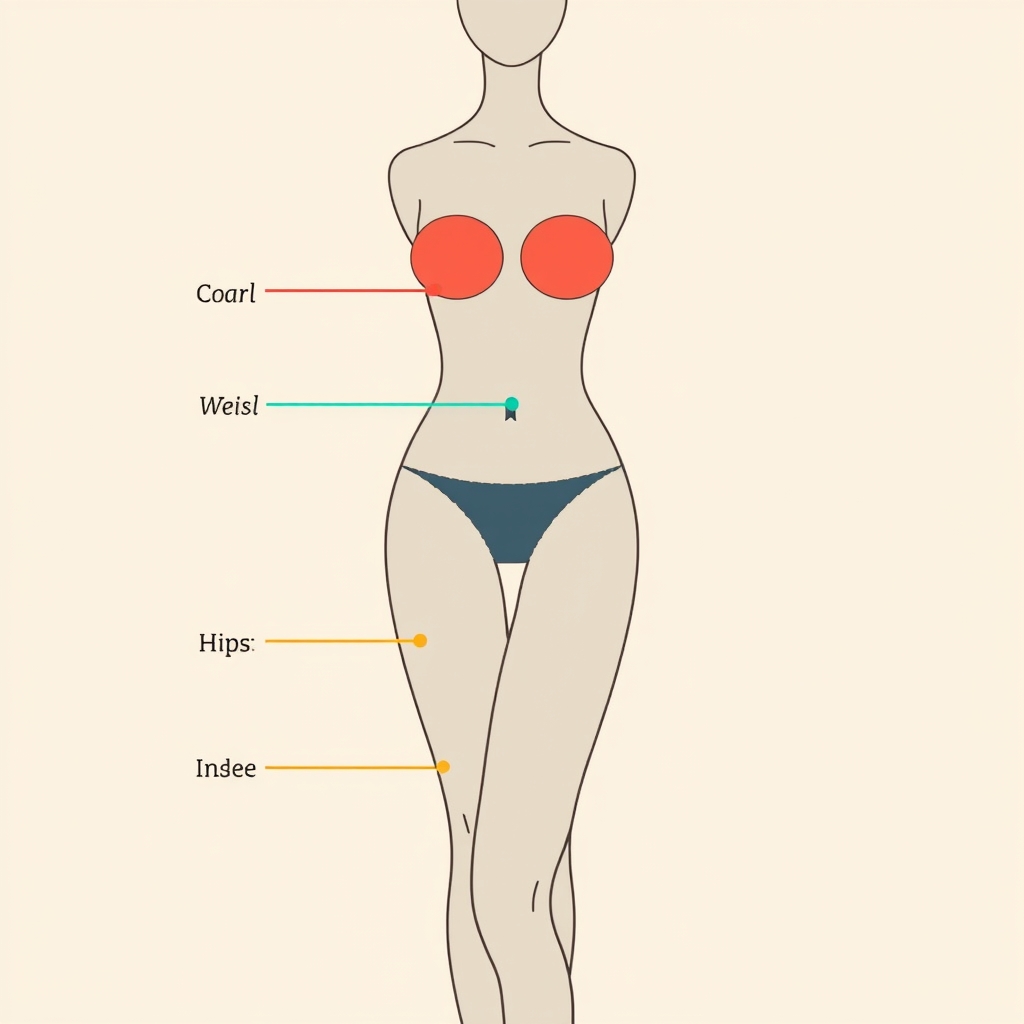
How to Measure Yourself for Online Clothing
Accurate measurements beat brand guessing every time. Use a soft measuring tape (not a hard ruler). Wear fitted clothing, not bulky layers.
Chest / Bust
Measure around the fullest part of your bust, keeping the tape parallel to the ground. Don’t pull tight; keep it snug but relaxed. A common mistake is measuring too high (under the armpits) instead of at the nipple line.
Waist
Measure around your natural waist, where you naturally bend. For most people, this is roughly 1 inch above your belly button. If you’re pear-shaped, measure where you wear your pants waistband, not where a model might.
Hips
Measure around the fullest part of your hips and buttocks, keeping the tape level. This is usually 7–9 inches below your waist.
Shoulder Width
Measure from the edge of one shoulder bone to the edge of the other, across the back. This is crucial for jackets, dresses, and tops. Many oversized items are marketed as “unisex” but are actually sized for men’s shoulders, which are wider.
Inseam / Length
For pants, measure from your crotch to your ankle bone (the inside of your leg). For dresses, measure from your shoulder (at the nape of your neck) to your natural hemline. Based on consistent buyer reports, Japanese brands often have inseams 2–4 inches shorter than Western brands, even in the same numbered size.
Pro tip: If you have a favorite garment that fits perfectly, lay it flat and measure it. Compare those measurements to the brand’s size chart this is far more reliable than going by the label size.
What Do “Free Returns” and “Fit Guarantees” Actually Mean?
Free Returns (No Restocking Fee, Return Shipping Paid)
Most major retailers offer free returns on items within a set window usually 30–60 days. Free returns mean you can order multiple sizes and return what doesn’t fit. The retailer absorbs the return shipping cost.
Retailers with free returns (verify current policy before ordering, as terms change):
- Amazon Prime: Free returns for Prime members, 30 days standard on most apparel. Extended windows may apply on select items seasonally check the item’s return policy page before purchasing.
- Target: Free returns in-store or by mail, 60 days per their published policy.
- Everlane: Free returns within 30 days; prepaid return labels typically included.
- ASOS: Free returns for Premier members (subscription) or within 45 days for standard accounts, per their help documentation.
- Banana Republic, Gap, Old Navy: Free returns in-store or by mail, 60 days per current policy.
- Uniqlo: Free returns in-store within 30 days; return shipping is typically your cost if done by mail.
- J.Crew: Free returns in-store or by mail, 60 days per current policy.
What free returns don’t cover: Items worn or washed. Most retailers inspect returned items; if it’s been worn, they’ll refuse the return.
Fit Guarantees (Size Exchange, No Restocking Fee)
A fit guarantee promises a free size swap if the first size doesn’t fit but you must initiate the exchange within a specified window, usually 30–60 days. This is different from a return; you’re getting a replacement size, not a refund.
Retailers with explicit fit guarantees (confirm current terms on the retailer’s site):
- Lululemon: Their published guarantee allows exchange for a different size within 60 days. You can also return for a full refund.
- Everlane: Free exchanges within 30 days if the fit isn’t right.
- Nordstrom: Full refund or exchange within 60 days; no restocking fee.
- Bonobos: Free exchanges for fit within 30 days. They also offer a return option for unworn items.
When a fit guarantee is better than a free return: If you know the brand and just misjudged the size, an exchange is faster. If you’re unsure about the brand or cut, free returns give you the option to refund instead.
Why Does the Same Size Fit Differently Across Brands?
There are no government standards for clothing sizing in most countries. Each brand sets its own fit model how wide the shoulders should be, how long the torso, how fitted the waist. A brand’s fit model is based on their target customer’s body shape.
Example: Zara targets younger, narrower frames with shorter torsos. Their size M reflects this. Gap targets a broader demographic and cuts their size M for wider shoulders and a longer torso. Both are size M; both feel different.
Luxury and designer brands often use “vanity sizing” a US size 8 at a designer brand is cut looser than a size 8 at Target, so customers feel smaller. Fast-fashion brands (Shein, H&M) sometimes cut smaller to save fabric. Japanese brands cut for smaller frames and narrower shoulders as a standard, reflecting their primary domestic market.
Common Myth: “All Size 10s Are the Same.”
No. A size 10 at Gap, a size 10 at Zara, a size 10 at J.Crew, and a UK size 10 are all different. Even within a single brand, fit varies by garment type a size 10 dress may fit tighter than a size 10 shirt because the proportions are different. This is why measuring and checking the brand’s chart saves you returns.
How to Read a Brand’s Size Chart Without Guessing
Most online retailers post a PDF or interactive tool. Here’s what to look for:
- Match your measurement to the measurement, not the size label. If your bust is 37 inches, find the row where bust = 37 inches, then look at what size that row assigns.
- Check multiple measurements. If your bust is a size M but your waist is a size S, the brand may fit you between sizes. Read customer reviews to see how others handled this.
- Look for fit notes. Some brands note “runs small” or “generous fit” right on the chart. If there’s no note, check recent reviews.
- Note the model’s height and measurements. If the model is 5’10” and you’re 5’4″, expect the hem to be longer on you. If the model’s bust is 34 inches and yours is 38 inches, the fit will be snugger.
Why Return Policies Differ by Country
Return policies reflect local consumer laws and shipping costs.
US brands: Usually offer 30–60 day returns, often free returns by mail. US shipping is relatively cheap, so retailers can afford this.
UK brands: Often offer 30–60 day returns, free returns by mail within the UK. International returns may require you to pay return shipping.
EU brands: Often offer 14-day returns (the EU Consumer Rights Directive sets a 14-day minimum for distance selling). Return shipping may be retailer-paid or customer-paid depending on the country and brand.
Japanese/Korean brands: Often offer only 30-day returns, and return shipping is frequently customer-paid. Some require items to be unworn and unwashed. International return shipping from Asia is expensive, which is why these policies tend to be stricter.
Australian brands: Usually offer 30–60 day returns within Australia; international returns vary widely.
Key takeaway: Check the return policy before you buy, especially if you’re ordering internationally. A 14-day return window with customer-paid return shipping is restrictive; a 60-day free return is generous.
What to Do If the Size Chart Contradicts Customer Reviews
Customer reviews usually win. If the size chart says M and 100 reviewers say “runs small, size up,” go with the reviews. Charts can be outdated, especially on fast-fashion sites where manufacturers change seasonally. Reviews reflect the current batch of garments.
Read the recent reviews (last 30–60 days), not old ones, as fit can shift when a brand changes manufacturers.
When to Stop Troubleshooting and Return It
If any of these are true, return it or request an exchange:
- The fit is wrong after two sizing attempts. You’ve done due diligence; the brand or retailer may have an error or inconsistency.
- Seams are puckering, unraveling, or misaligned. This is a defect, not a sizing issue. Return it.
- The fabric is damaged, stained, or has holes (and you didn’t cause it). Defect. Return it.
- The brand’s sizing is genuinely inconsistent. If you own three items in size M from the same brand and they fit completely differently, it’s a quality control issue. Return the odd one out.
- The return window is closing and you’re still unsure. Better to initiate a return and lose the item than to be stuck with something that doesn’t fit.
FAQ: Your Remaining Questions Answered
Q: Is it safe to buy from overseas retailers (UK, EU, Japan) if I’m in the US?
Yes, international retailers are legitimate. The real risk is practical: return shipping to another country is expensive and slow (14–30 days each way). Before ordering from a UK or Japanese site, confirm: (1) the brand ships to your country, (2) you can return to your country or initiate a refund without a return, and (3) the return window is long enough for slow shipping. Ordering from Uniqlo US or Zara US is cheaper than ordering from Japan or Europe directly, because returns stay domestic.
Q: Do tall people (5’10” or taller) have more sizing trouble with international brands?
Yes. Many mass-market and Japanese brands are cut with inseams and sleeve lengths designed for average heights (roughly 5’5″–5’7″). Tall shoppers often need to size up in length, which may mean the garment is wider too. Brands like ASOS and Banana Republic offer “tall” or “long” versions check for these first if you’re tall and review the inseam length in centimeters, not just the size label.
Q: Are expensive brands better for sizing consistency?
Not always. Designer brands are better for quality, but sizing consistency varies. Luxury brands may run small (vanity sizing); mid-market brands are often the most consistent. Lululemon and J.Crew are widely noted for reliable sizing. A $300 dress from an inconsistent brand is just as likely to fit wrong as a $30 one.
Q: Can I return an item I tried on at home if I don’t open the tags?
Maybe. Most retailers consider an item “tried on” if you’ve worn it, even briefly. Tags intact doesn’t override this. Check the fine print: some retailers say “worn or tried on items are not returnable,” while others only require items to be “unworn.” When in doubt, contact customer service before ordering.
Q: If I’m between sizes at Lululemon, Zara, or similar brands, should I order both and return one?
Yes, if the retailer has free returns. If returns cost you money, order the size that’s closer to your measurements and read reviews about how the brand fits between sizes. Lululemon explicitly offers exchanges within 60 days if the fit is wrong, making this a low-risk approach.
Q: Why are Japanese and Korean brands so much smaller than US brands?
Japanese and Korean brands size to their primary domestic markets, where average body measurements differ from US averages. Based on garment measurement comparisons reported by international buyers, a Japanese brand’s size L is typically cut for a shorter torso and narrower frame than a US size L shoppers commonly report needing to go up 1–2 sizes. This isn’t a defect; it’s intentional design for a different market.
Q: Should I use a tailor to fix sizing mistakes instead of returning?
Only if the item is expensive, hard to replace, and the issue is minor (hem too long, seams need small adjustments). Tailoring typically costs $10–50 per alteration depending on the work. If the bust is too tight or too loose, tailoring is expensive and may not look right. For a $20 fast-fashion item, return it. For a $200 blazer where the sleeves are 1 inch too long, tailoring makes sense.
Final Takeaway
International sizing has no universal standard, but three practices eliminate the vast majority of fit issues: (1) measure yourself before you order, (2) use the brand’s size chart, not generic conversion charts, and (3) read recent customer reviews for fit notes. Free returns and fit guarantees are insurance use them if you’re trying a new brand. Order a size up and down if returns are free; keep what fits and return the rest. Most returns happen because people guess their size instead of measuring; take 3 minutes to measure and you’ll save yourself multiple trips to the post office.