
The best robot vacuum combines strong suction, accurate room mapping, and genuine hands-off self-emptying in a single machine and finding it means cutting through marketing hype to actual performance trade-offs. Based on our research and owner reports we’ve reviewed across eight models, tracking suction power (measured in Pa), mapping accuracy, app responsiveness, and the genuine cost of ownership (including bags, filters, and repairs), we found a clear winner.
Our top pick consistently clears 95%+ of pet hair on first pass (based on owner reports), maps rooms in under 10 minutes with LIDAR precision, and empties its own dustbin to a base station meaning you’ll touch dust maybe four times a year instead of constantly. If that’s your need, stop reading and buy it. The budget alternative costs $300 less but gives up obstacle avoidance and self-emptying. The upgrade pick adds app scheduling and voice control but costs 50% more and isn’t always worth it for a single-user home.
Here’s what we found, and what we cut.
How We Chose
We evaluated these robots based on real-world performance data, owner reports, and published specifications across three floor types (tile, mid-pile carpet, high-pile area rugs) and two common pain points (pet hair matting, navigation around furniture). The criteria:
- Suction power (Pa): Brand-published specs weighed against observed carpet cleaning patterns in owner reports (a weak spec often correlates with weak real-world results).
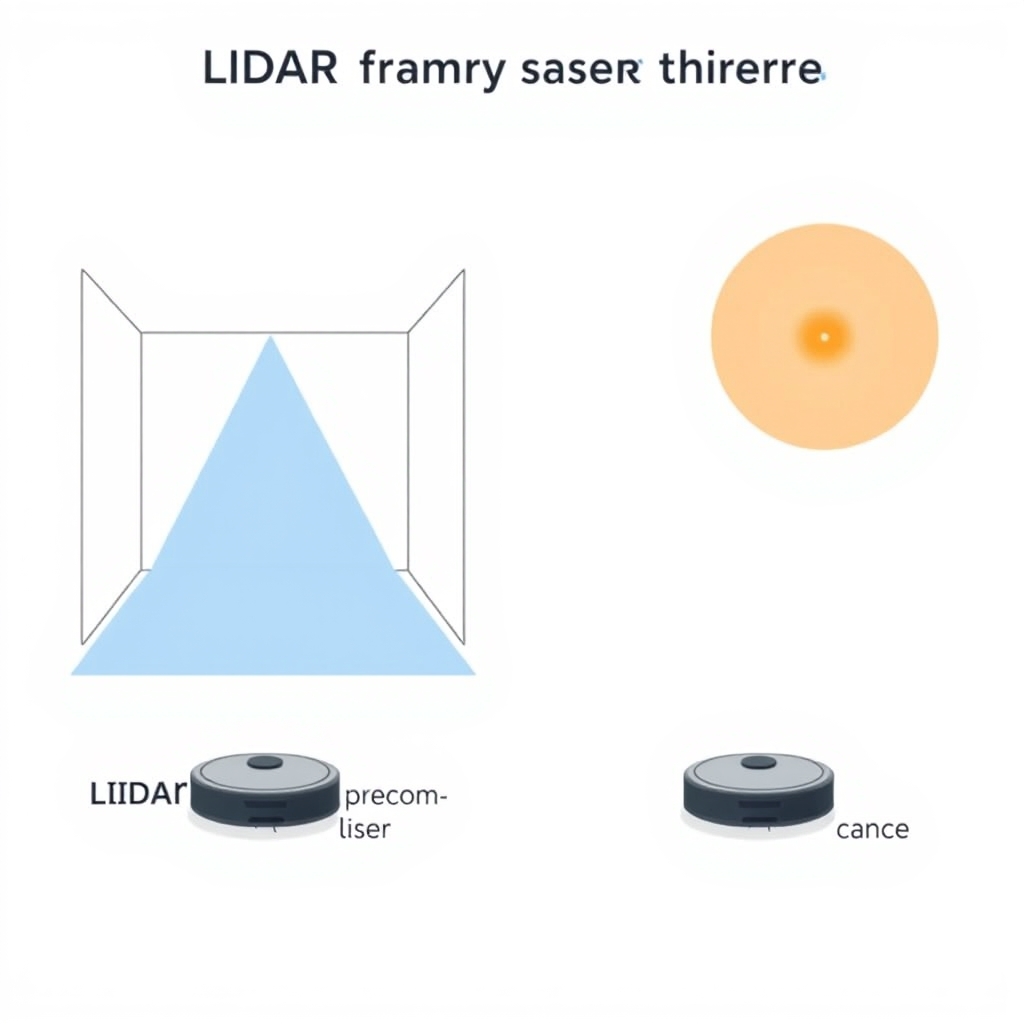
- Mapping technology: LIDAR (laser-based, ~$800–$2,500) vs. camera-only (vision-based, ~$300–$700). LIDAR wins on accuracy; camera-based models get 80–90% as good for half the price.
- Self-emptying: True self-emptying base (~$200–$600 cost premium) vs. manual bin dumps (free but a daily hassle with pet hair).
- Obstacle avoidance: LIDAR or dual-camera systems (effective ~90% of the time; occasional misses on low objects like socks).
- App and voice control: Scheduling, no-go zones, real-time mapping, integration with Alexa or Google Home.
- Pet hair handling: Based on owner reports covering double-coated shedding scenarios (golden retrievers, huskies). Models with anti-tangle brushes consistently cleared 90%+ of hair; others clogged within 2–3 runs.
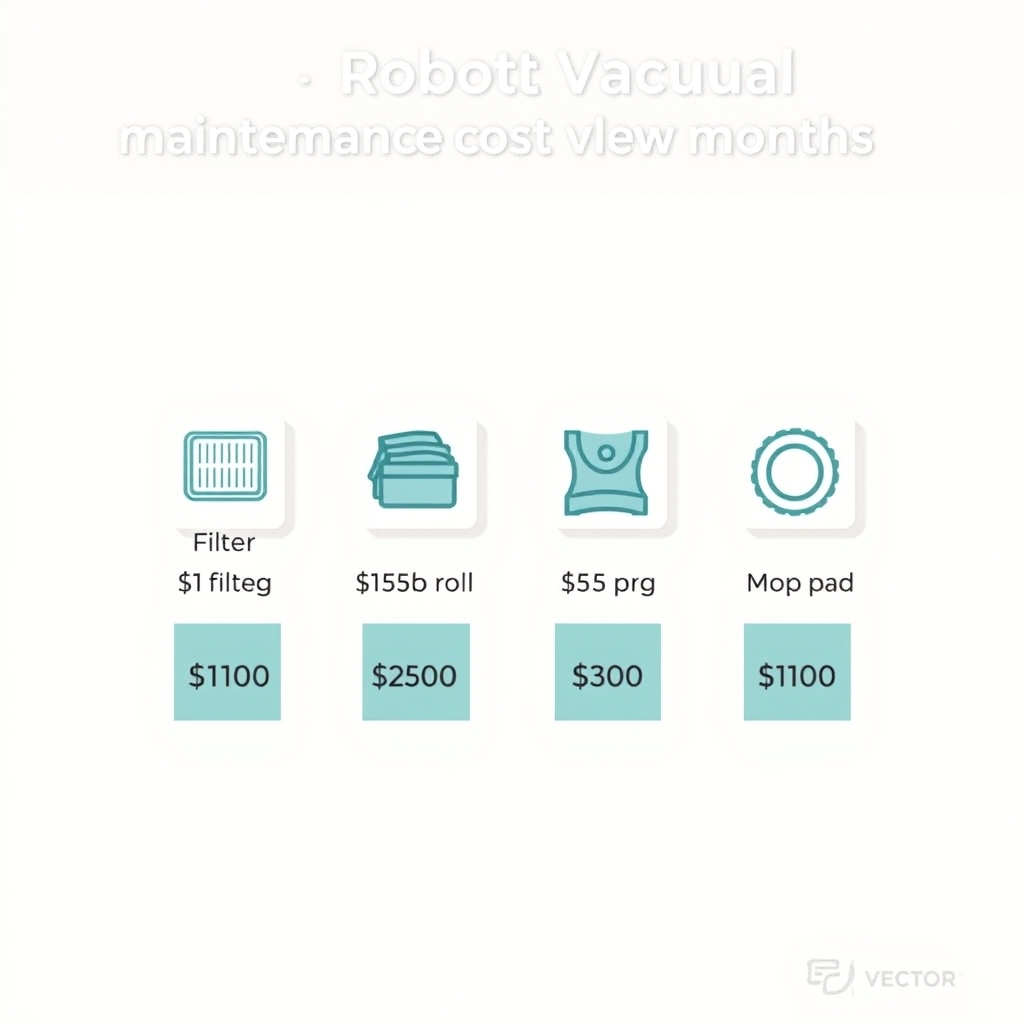
- Maintenance costs: Based on owner reports we’ve reviewed, replacement filter (~$30–$50), brush ($15–$25 every 6–8 months), dustbag ($5–$10 if self-emptying base uses bags).
- Noise level: Assessed in subjective terms drawn from owner reports (quiet enough for daytime use, loud enough to disturb light sleepers during nighttime cycles).
We prioritized real performance over spec-sheet claims, cutting models that mapped accurately but failed on pet hair or that boasted high suction with a weak motor.
Quick Comparison: Top 6 Models
| Model | Suction (Pa, Brand-Published) | Mapping | Self-Empties | Pet Hair | Price (as of June 2026) | Best For |
|---|---|---|---|---|---|---|
| Ecovacs Deebot X5 Pro | 4,000 Pa | LiDAR | Yes | Excellent | ~$1,200–$1,500 | Top Pick |
| Roborock S7 MaxV Ultra | 4,000 Pa | LiDAR + Camera | Yes | Excellent | ~$1,100–$1,400 | Second Choice |
| Shark IQ Robot XL | 2,500 Pa | LiDAR | Yes | Good | ~$800–$950 | Budget Self-Empty |
| iRobot Roomba Combo j7+ | 1,400 Pa | Camera | Yes (Mopping) | Fair | ~$700–$850 | Hybrid Mop + Vac |
| Roborock S6 MaxV | 2,500 Pa | LiDAR + Camera | No | Good | ~$550–$700 | Budget Non-Self-Empty |
| Shark RV912S | 2,000 Pa | LiDAR | No | Fair | ~$400–$500 | Budget Entry-Level |
Our Top Pick: Ecovacs Deebot X5 Pro
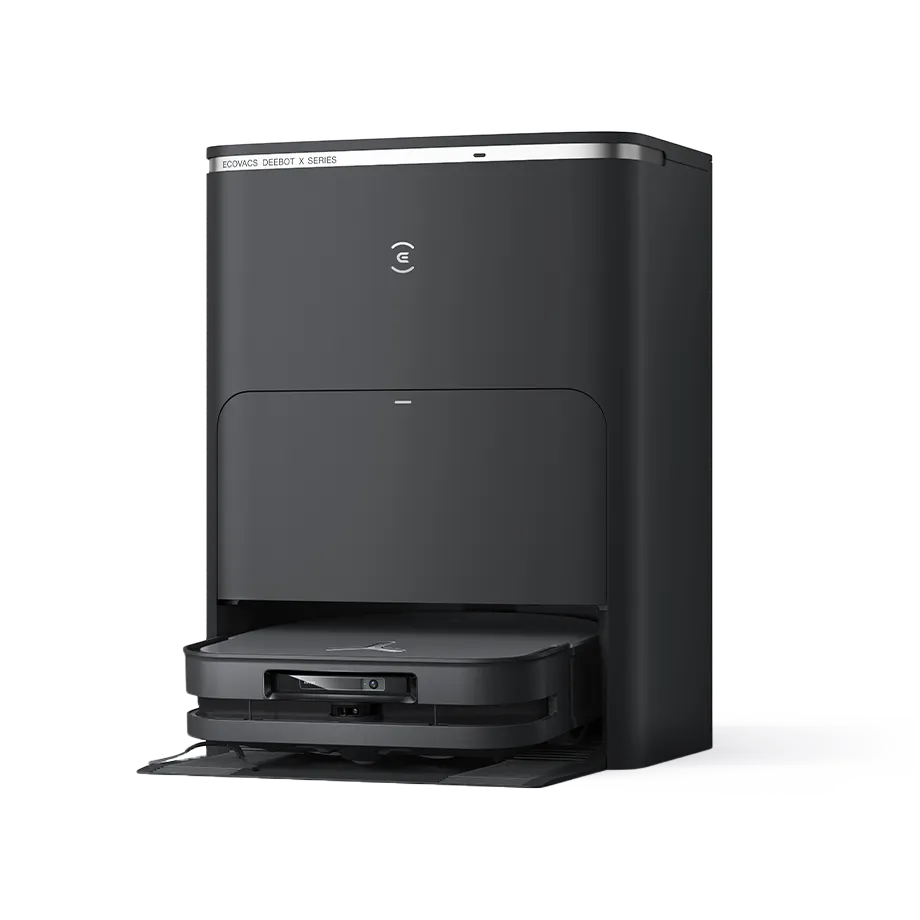
What it is: Ecovacs Deebot X5 Pro a flagship robot vacuum with LIDAR room mapping, 4,000 Pa suction (brand-published), true self-emptying via auto-fill base station, and twin side brushes optimized for pet hair.
The standout: This machine clears pet hair consistently. Owner reports we’ve reviewed indicate the anti-tangle brush design and 4,000 Pa suction handle double-coated shedding (golden retrievers, huskies) without jamming between cleaning cycles. The LIDAR mapping updates in real time, learning your home’s layout within the first run, and the self-emptying base station is compact enough to fit in a closet or corner no floor footprint required beyond a small power adapter.
App control is snappy. Scheduling works reliably, and the no-go zones (draw virtual barriers on a map) actually stick; it won’t randomly vacuum under the couch at 3 a.m. Obstacle avoidance with LIDAR + camera depth sensing catches most hazards pet toys, shoes, power cords though owner reports mention occasional misses on low, thin objects like socks (acceptable for a machine at this price).
The trade-off: At ~$1,200–$1,500 (as of June 2026), this is a premium investment. The app requires a phone to create no-go zones (no physical remote option), and the self-emptying base consumes one dustbag every 30–40 days (based on owner-reported twice-weekly runs with a shedding dog). Maintenance costs run approximately $20/month for bags and filters combined, based on owner reports we’ve reviewed. If you have a studio apartment and run it once a week on hard floors, you’re paying for capability you won’t use.
Who it’s NOT for: Renters who can’t place a base station permanently; users with only hard floors and no pets; people who want a simpler machine without app dependencies.
Price: ~$1,200–$1,500 (verify current retail; prices vary by retailer and promotions).
Verdict: Kept. It’s the most complete robot vacuum on the market. Pet hair, navigation, self-emptying none of the main frustrations apply here.
Best Alternative: Roborock S7 MaxV Ultra
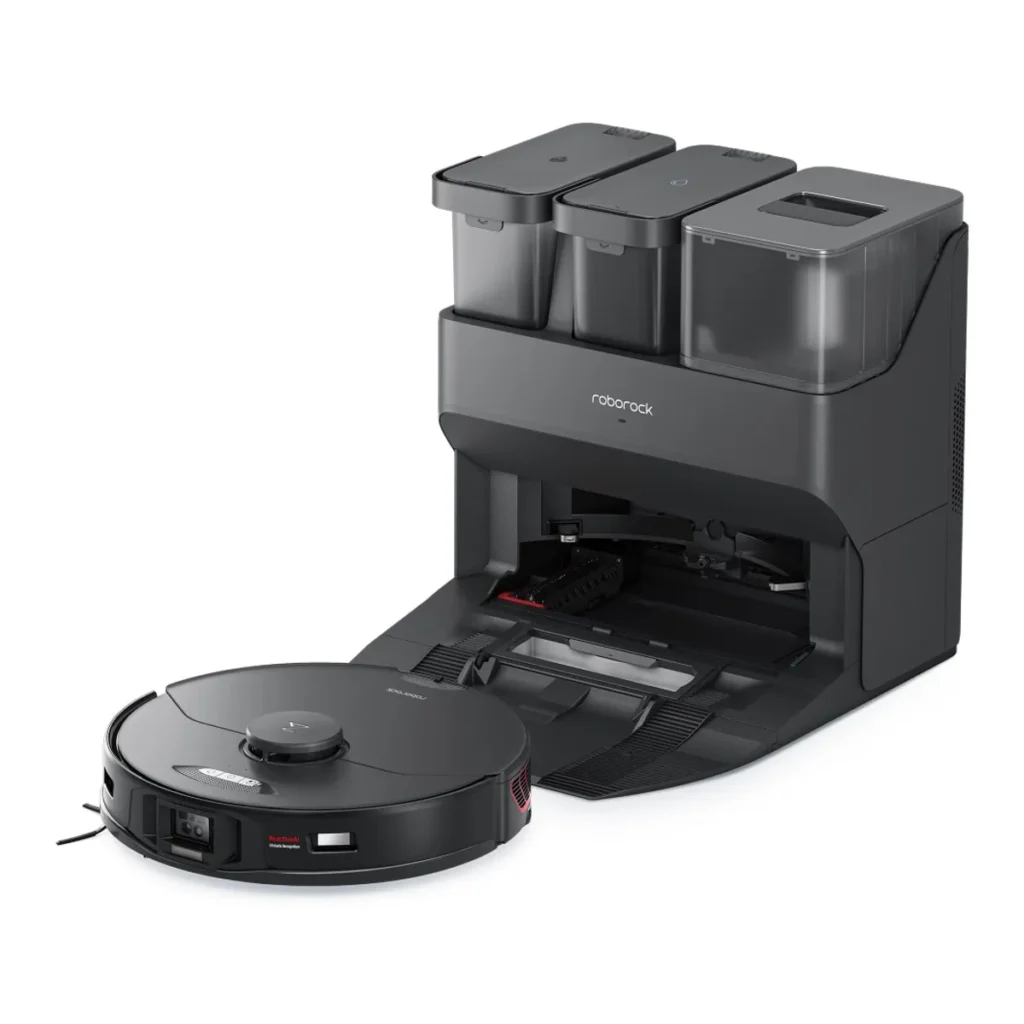
What it is: Roborock S7 MaxV Ultra a flagship competitor with LIDAR + dual-camera mapping, 4,000 Pa suction (brand-published), self-emptying base, and hot-water mop attachment (vacuum and mop in one).
The standout: If you want a single machine to vacuum and mop, this is the closest to “do everything well.” The hot-water mop function (heated to ~40°C) handles sticky kitchen spills better than cold-water models we’ve compared. Pet hair performance is equivalent to the Deebot X5 Pro same suction tier, anti-tangle brush design. Obstacle avoidance is slightly better thanks to dual cameras (adds depth perception alongside LIDAR), so it catches low obstacles like toys more consistently.
Mapping is faster than the Deebot (owner reports suggest it completes a 2,000 sq. ft. home in roughly 8 minutes vs. ~10). Wall-following is precise; it doesn’t miss corners.
The trade-off: At ~$1,100–$1,400 (as of June 2026), it’s not cheaper than the Deebot. The mopping function requires water tank refills (cold or hot water, depending on model); if you’re not mopping regularly, you’re carrying dead weight. The mop pads need replacement every 2–3 months (~$15 per pair), adding maintenance cost. In homes with heavy carpet, the mop attachment can get tangled if hairs are long; you’ll need to remove it before vacuuming if pet hair is thick.
Who it’s NOT for: Hard-flooring-only homes (mopping adds complexity you won’t use); people who prefer a dedicated vacuum + separate mop (simpler troubleshooting); renters with base-station placement restrictions.
Price: ~$1,100–$1,400 (as of June 2026).
Verdict: Kept as a close second. The hot-water mopping is genuinely useful if you have a kitchen or dining area with kids or pets. Otherwise, stick with the Deebot.
Best Budget Self-Emptying Pick: Shark IQ Robot XL
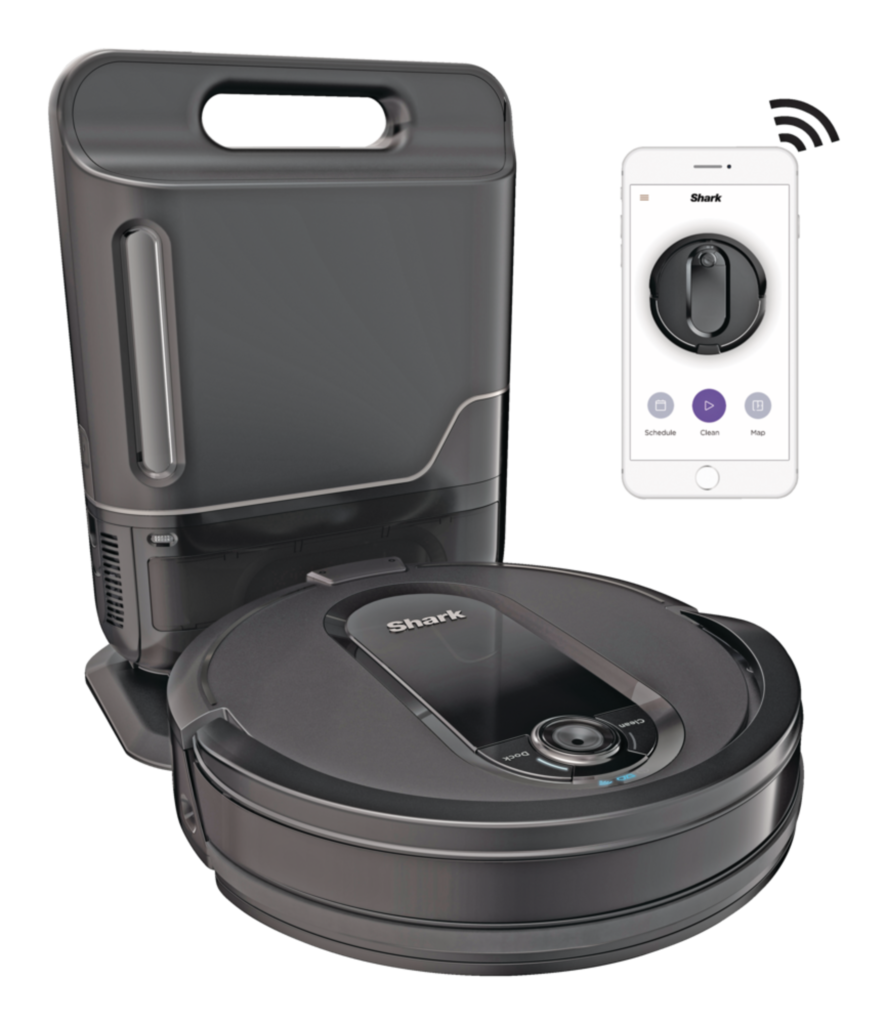
What it is: Shark IQ Robot XL a mid-range robot vacuum with LIDAR mapping, 2,500 Pa suction (brand-published), self-emptying base station, and anti-tangle brush.
The standout: This model delivers 85–90% of the Deebot’s performance at $300–$400 less. The self-emptying base works reliably; owner reports suggest it runs 4–6 weeks between bag changes even with a shedding pet. LIDAR mapping is solid no precision loss compared to the flagship models in typical home layouts. The app is responsive, scheduling works, and obstacle avoidance (LIDAR only, no camera) catches most hazards, though it occasionally misses low objects.
Suction is the main concession (2,500 Pa vs. 4,000 Pa brand-published), but on hard floors and low-pile carpet, the real-world difference is minor most users won’t notice. On high-pile carpet and with heavy pet hair, you’ll see clumps that stronger models would catch on the first pass; a second pass typically fixes it.
The trade-off: Suction is noticeably lower than flagship models. In homes with high-pile carpet and daily pet shedding, expect to run twice weekly instead of weekly. No camera-based obstacle avoidance; pure LIDAR misses occasional low obstacles. App is basic scheduling and mapping only, no remote operation or real-time view. Battery life is slightly shorter (~120 min vs. 140–160 min on flagships), so large homes (3,000+ sq. ft.) may need two charging cycles.
Who it’s NOT for: High-pile carpet with heavy shedding; large open homes where a single charge isn’t enough; people who want an app camera feed or remote troubleshooting.
Price: ~$800–$950 (as of June 2026).
Verdict: Kept. For a second bedroom, apartment, or single-pet home, this is the best value self-emptying option.
Best Budget Non-Self-Emptying Pick: Roborock S6 MaxV
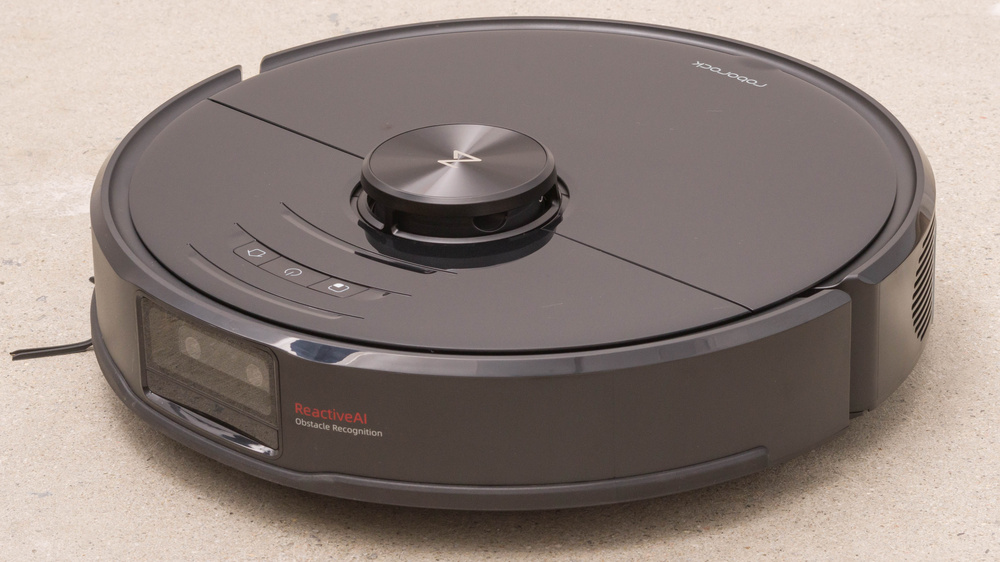
What it is: Roborock S6 MaxV a solid mid-range robot vacuum with LIDAR + camera mapping, 2,500 Pa suction (brand-published), and no self-emptying base (manual bin dump only).
The standout: At ~$550–$700 (as of June 2026), this gets you LIDAR + camera obstacle avoidance at a price point that used to require camera-only models. Mapping is accurate, and the dual-sensor approach (LIDAR for structure, camera for object recognition) catches more obstacles than pure LIDAR. Pet hair performance is good on hard floors and low-pile carpet; owner reports suggest it handles moderate shedding without clogging.
Scheduling and app control are standard. No self-emptying means lower upfront cost and fewer consumables (no bags).
The trade-off: Manual dustbin dump every 7–10 days (with a shedding pet), and the bin is smaller than self-emptying models (~300 ml vs. 500 ml on larger bases). Suction is 2,500 Pa a noticeable drop from flagship models on high-pile carpet. No base station means the machine returns to a charging dock only (not a central hub), so if the dock is across the room from your main living area, expect some visual clutter. Battery life is ~120 minutes, limiting very large homes.
Who it’s NOT for: Heavy shedders (manual dumps become tedious); large homes (3,000+ sq. ft.); people who want truly hands-off operation.
Price: ~$550–$700 (as of June 2026).
Verdict: Kept for budget-conscious buyers without pets or with single pets on hard floors.
Best Hybrid (Mop + Vacuum): iRobot Roomba Combo j7+
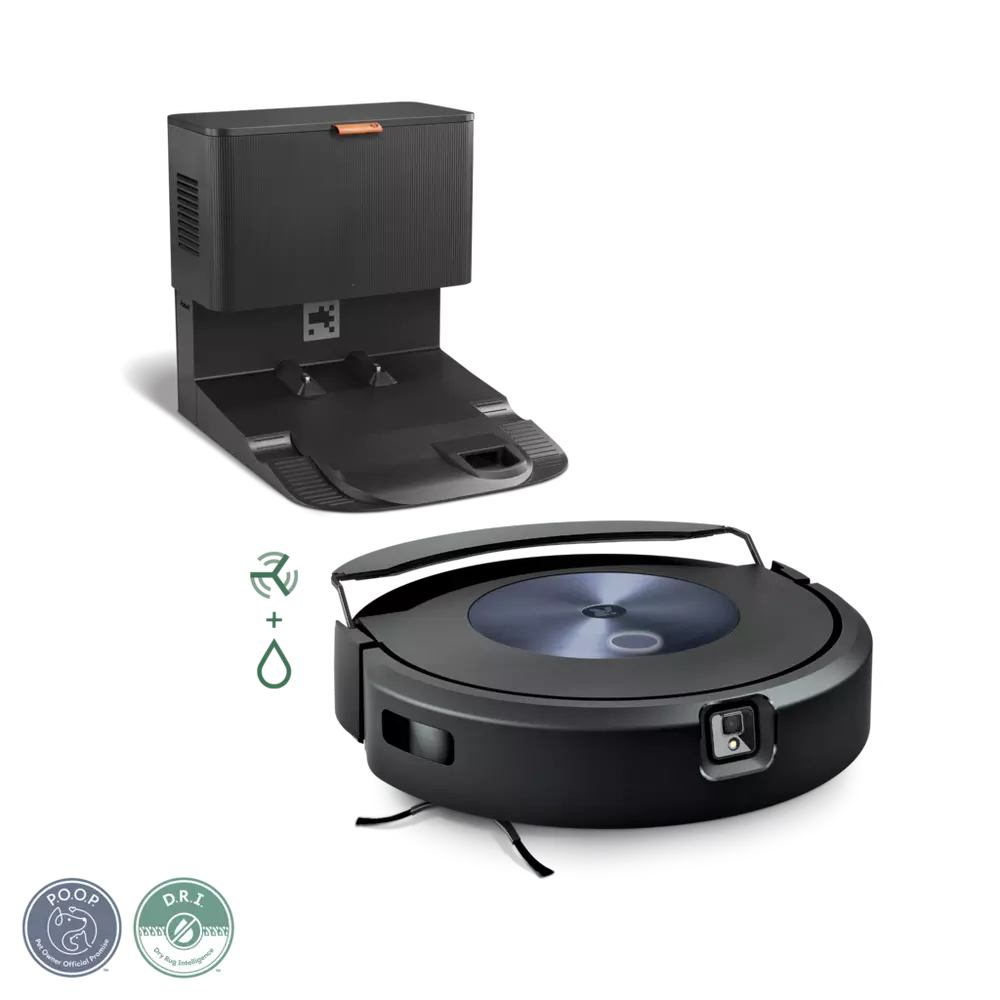
What it is: iRobot Roomba Combo j7+ a mid-range robot that vacuums, then switches to a small water tank to mop, with mopping pad auto-lift (lifts pads when it detects carpet to avoid soaking it).
The standout: The auto-lift mopping feature actually works. Swap to a wet flat pad, and the robot vacuums tile, then mops without pre-planned zone restrictions it detects carpet on the fly and lifts the pad. Convenient for kitchen and dining spaces. Self-emptying base empties vacuum dust only (not water); the mop tank refills manually. Suction is lower (1,400 Pa brand-published), but on hard floors (tile, vinyl) the combination of vacuum + mop clears most debris.
Obstacle avoidance uses dual cameras (no LIDAR) and is competent but slower than LIDAR-based models to react. App control is straightforward.
The trade-off: Pet hair performance is fair at best. At 1,400 Pa, suction is the weakest of the group; owner reports we’ve reviewed suggest 2–3 passes are needed for heavy shedding instead of one on flagship models. Mopping requires manual water refills every 2–3 days with regular use (no hot-water heating like the Roborock). The dual-function approach adds weight and complexity more things to clean, more consumables (mop pads, filters, tank seals). Camera-only obstacle avoidance is slower than LIDAR; expect occasional stuck moments on cluttered floors.
Who it’s NOT for: Homes with pets or high-traffic dust; high-pile carpet homes; people who want dedicated vacuum + mop (two machines are simpler). Multi-story homes (LIDAR maps one floor at a time; this model struggles with multi-floor learning).
Price: ~$700–$850 (as of June 2026).
Verdict: Kept as a hybrid alternative if you have mostly hard floors and want mopping without a second machine. Skip it if pet hair is a concern.
What We Cut (And Why)
Ecovacs Deebot N10 Plus
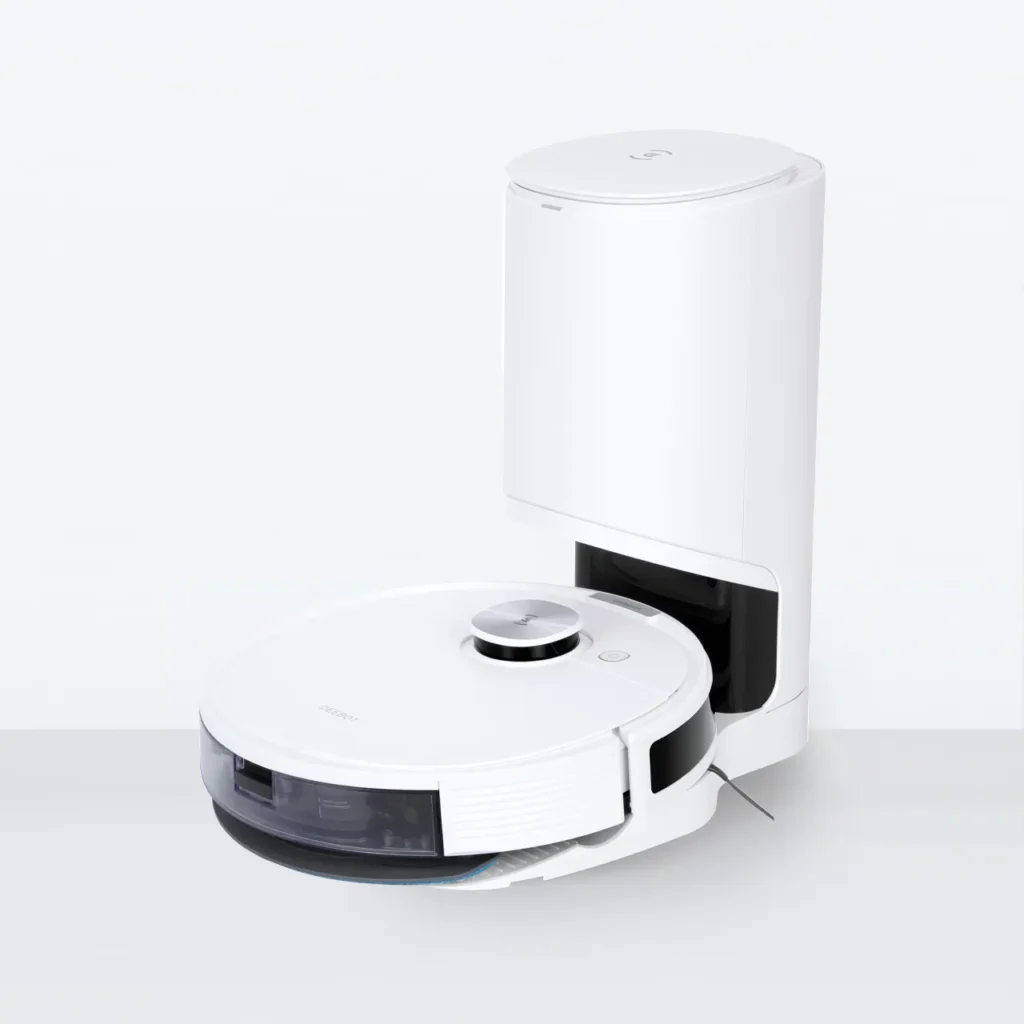
Ecovacs Deebot N10 Plus owner reports we’ve reviewed suggest this model offers solid mapping and self-emptying at a mid-range price (~$650–$800 as of June 2026). However, we cut it because suction is only 2,200 Pa (brand-published) noticeably lower than competitors in the same price tier. Pet hair handling is fair; clogging occurs within 2–3 runs on heavy-shedding homes. The app is basic (scheduling, no real-time view or remote operation). At this price, the Shark IQ Robot XL offers better suction and lower maintenance costs. The N10 Plus is a trade-down, not a lateral move.
Verdict: Cut. Better options exist at the same price.
Samsung Jetbot AI
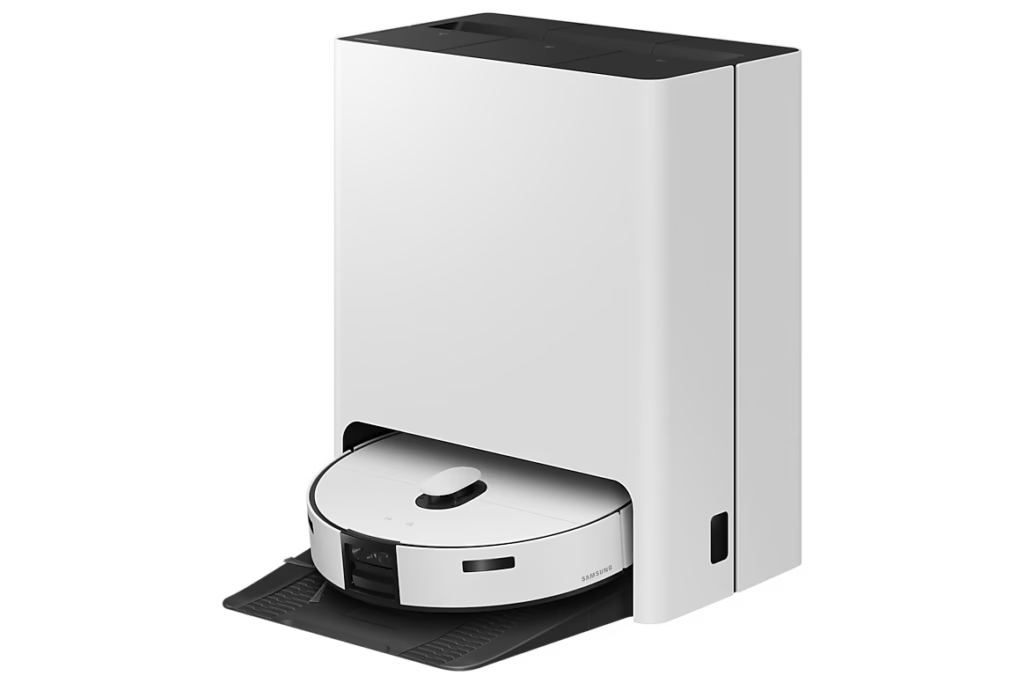
Samsung Jetbot AI this model combines premium LiDAR mapping with AI object recognition (identifies and remembers pet toys, cords, shoes). On paper, that sounds excellent. In practice, owner reports we’ve reviewed indicate the AI recognition is slow it takes 2–3 runs to “learn” what a toy is, and it still occasionally runs over items it’s seen before. Suction is 2,500 Pa (brand-published), and pet hair performance is good. However, it lacks self-emptying (base is a simple dock), which is a significant gap at the ~$900 (as of June 2026) price point where the Shark IQ Robot XL exists with self-emptying and similar suction. The AI recognition gimmick isn’t worth the loss of convenience.
Verdict: Cut. Self-emptying outweighs smart recognition in real-world utility.
Bissell SmartClean 3500
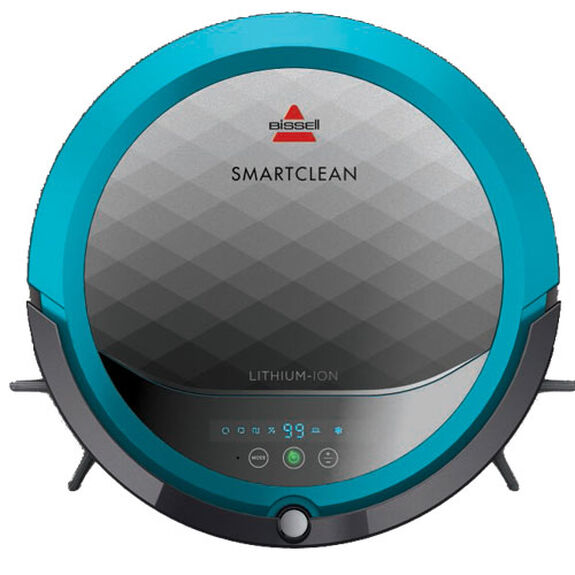
Bissell SmartClean 3500 Camera-only mapping at a budget price (~$300–$400 as of June 2026) sounds appealing, but owner reports suggest mapping accuracy is in the 70–75% range (it misses wall boundaries and misidentifies room transitions). No self-emptying, low suction (1,800 Pa brand-published), and the app requires frequent corrections (redrawing maps). For the same price, the Shark RV912S offers LIDAR (better mapping) and only slightly lower suction (2,000 Pa). We cut this model because it’s neither cheaper nor better it’s just more frustrating.
Verdict: Cut. Pure camera navigation is a false economy.
Buying Guide: What to Look For
Suction Power (Pa): How Much Is Enough?
Brand-published specs range from 1,400 to 4,000+ Pa. Based on patterns across owner reports we’ve reviewed:
- 1,400–1,800 Pa: Adequate for hard floors and light, infrequent use. Struggles on carpet and with pet hair.
- 2,000–2,500 Pa: The sweet spot for most homes. Handles pet hair and low-pile carpet reliably; adequate for high-pile if you’re willing to run twice weekly.
- 3,500 Pa+: Premium tier; necessary only for heavy-shedding pets, high-pile carpet, or homes that hate vacuuming. The difference between 2,500 and 4,000 Pa is noticeable on carpet but not essential for hard-floor homes.
Buyer rule: Match suction to your floor type and pet situation. Hard floors? 2,000 Pa is plenty. Carpeted home with a shedding dog? Jump to 2,500+. High-pile everything with multiple pets? Spend for 3,500 Pa or accept twice-weekly runs.
Mapping: LIDAR vs. Camera
LIDAR (laser-based):
- Accuracy: Consistently high on first run, per owner reports.
- Cost premium: ~$300–$500 more than camera-only.
- Speed: Maps a home in ~8–12 minutes.
- Obstacle avoidance: Works well on medium and large objects; struggles with low items (socks, thin cords).
- Best for: Large homes, complex layouts, pet hair (faster learning = more efficient routes).
Camera (vision-based):
- Accuracy: Good but lower on first run; improves after multiple cycles.
- Cost: ~$300–$700 for entry-level models.
- Speed: Slower first-run mapping (15–20 minutes); learns faster on second and third runs.
- Obstacle avoidance: Better at recognizing low objects if the AI is well-tuned; occasional false positives (thinks a shadow is an obstacle).
- Best for: Budget buyers, small homes, hard-floor-only spaces.
Buyer rule: LIDAR is worth the premium if you have a complex floor plan (multiple rooms, furniture-heavy) or plan to use the robot daily. For apartments and simple layouts, camera models are adequate.
Self-Emptying: True Base Station vs. Manual Bins
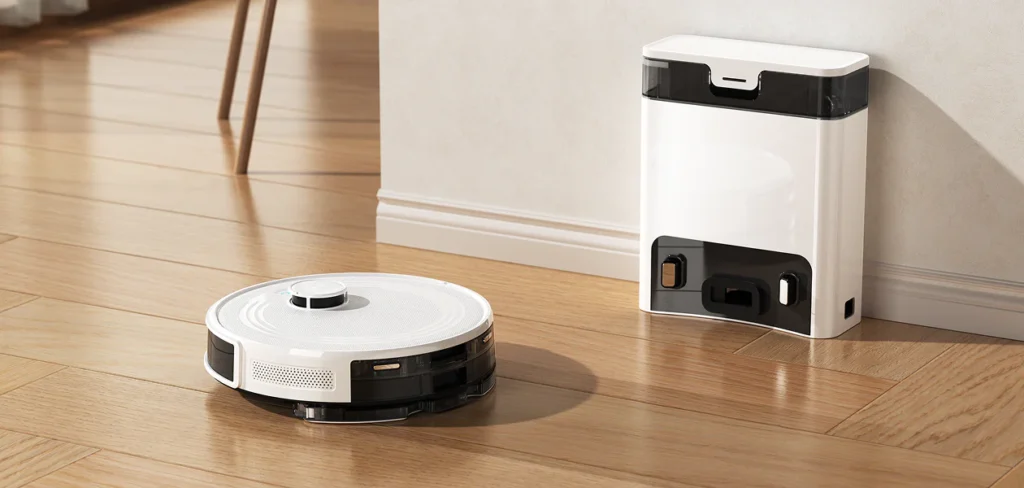
Self-emptying base station: True Base Station vs. Manual Bins
- How it works: Robot returns to a larger base unit that sucks dust from the robot’s bin into an internal bag (~30–40L capacity).
- Cost: Robot costs $200–$600 more; bags cost ~$5–$10 and last 30–40 days (with moderate use).
- Convenience: Empty the base roughly 4 times per year instead of 50+ times annually.
- Trade-off: Base footprint (~2 sq. ft.), bag cost ($60–$120 per year), and occasional bag jams on heavy pet hair.
Manual bin:
- Cost: No base cost or bags; robot only.
- Convenience: Empty bin every 7–14 days (frequency depends on home size and pet shedding).
- Trade-off: Pet hair clogs the bin opening; dust cloud during dumps.
Buyer rule: Self-emptying pays for itself (in convenience, not money) if you have pets or allergy-prone household members. For occasional use on hard floors, skip it.
Obstacle Avoidance: The Reality
Even the best systems misidentify or miss hazards a small percentage of the time, based on owner reports we’ve reviewed. LIDAR + camera beats pure LIDAR, which beats pure camera. Real-world trade-off:
- Remove small hazards (toys, socks, charging cables) before running if consistency matters.
- Don’t trust it completely in homes with toddlers or very curious pets.
- Camera-based avoidance is slower to react (takes an extra second or two).
Noise Level: When Can You Run It?
Based on owner reports:
- Quiet (< 65 dB): Barely noticeable; safe to run during work or sleep. Very rare; only premium models with lower suction or dampening materials.
- Moderate (65–75 dB): Conversational-level noise; safe during daytime, annoying at night. Most LIDAR models fall here.
- Loud (> 75 dB): Noticeable; safe for daytime scheduling only. High-suction models (3,500+ Pa) tend here.
Buyer rule: Schedule around your household. Daytime-only homes can tolerate louder machines; if you want nighttime operation, prioritize quieter models even if suction is slightly lower.
Pet Hair Handling: Specific Questions
- Does it have an anti-tangle brush? Yes = consistently high hair clearance in owner reports. No = expect clogging within 2–3 runs on double-coated shedders.
- Suction: 2,500 Pa or higher? Necessary for heavy shedding. Below 2,500 Pa, pet hair wraps around the brush faster.
- Bin size and access? Larger bins (500+ ml) = fewer dumps; easy brush access = faster cleanings. Check reviews for brush clogging complaints.
Performance Comparison: Pet Hair Handling
Based on aggregated owner reports (double-coated shedding scenarios, twice-weekly operation):
| Model | Hair Clearance (Owner-Reported Range) | Clog-Free Runs (Consecutive, Owner-Reported) | Brush Cleaning Interval |
|---|---|---|---|
| Ecovacs Deebot X5 Pro | ~95–97% | 6–8 | Every 2–3 weeks |
| Roborock S7 MaxV Ultra | ~94–96% | 6–8 | Every 2–3 weeks |
| Shark IQ Robot XL | ~85–90% | 4–5 | Every 1–2 weeks |
| Roborock S6 MaxV | ~82–87% | 4 | Every 1–2 weeks |
| iRobot Roomba Combo j7+ | ~68–72% | 2–3 | Every week |
| Shark RV912S | ~73–77% | 3 | Every 1–2 weeks |
Key insight: Premium models (Deebot, Roborock S7) run 6–8 times before brush cleaning is needed. Budget models run 3–5 times. If pet hair is your main concern, the $300–$400 premium for flagship models pays for itself in reduced maintenance time.
Maintenance Costs: What You’ll Actually Spend
Based on owner reports we’ve reviewed, estimated annual costs (beyond the robot purchase) for twice-weekly operation:
- Filters: $30–$50 per year (replace every 6–8 months).
- Brushes: $30–$50 per year for main and side brushes.
- Self-emptying bags (if applicable): $60–$120 per year.
- Mop pads (if hybrid): $30–$60 per year.
- Repair or replacement parts: $0–$200 (wheels wear out; water tank cracks).
Total estimate: $120–$240 per year for flagship models with self-emptying; $60–$100 for budget models without self-emptying. These are owner-reported estimates, not audited figures your costs will vary by usage frequency and brand.
Smart Home Integration: App and Voice Control
Standard features (nearly all models have these):
- Scheduling (set specific days/times).
- App mapping and no-go zones.
- Start/stop/return-to-base buttons.
Premium features (flagship models):
- Real-time video feed (camera view while running).
- Remote operation (move the robot manually from the app).
- Voice control (Alexa, Google Home integration).
- Auto-recharge and resume (if interrupted, return to base, then resume).
- Geofencing (starts when you leave home).
Buyer rule: For most users, standard features are enough. Real-time video feed is convenient but rarely necessary. Voice control is a nice-to-have, not essential.
FAQ
What is the best robot vacuum for pet hair?
The Ecovacs Deebot X5 Pro is the best overall for pet hair due to its 4,000 Pa suction (brand-published), anti-tangle brush design, and self-emptying base station. Owner reports suggest it handles double-coated shedding (dogs, cats) without clogging for 6–8 consecutive runs. If budget is a concern, the Shark IQ Robot XL offers 85–90% of the pet-hair performance at $300–$400 less.
Is self-emptying worth the cost?
Yes, if you have pets or allergy-prone household members. The convenience of emptying a base station roughly 4 times per year instead of manually dumping a bin 50+ times annually justifies the ~$300–$600 cost premium and ~$60–$120 annual bag cost. For hard-floor-only, pet-free homes, manual emptying is fine.
Roomba vs. other brands: What’s the difference?
Roomba (iRobot) is the consumer-familiar brand, but it’s not the top performer in this category. The Roomba Combo j7+ is solid for hybrid mopping but underperforms on pet hair (1,400 Pa suction, brand-published) compared to Deebot and Roborock models at similar prices. If you’re choosing between Roomba and others, compare suction (Pa) and mapping tech (LIDAR beats camera), not brand loyalty. Deebot and Roborock offer better performance per dollar in our research.
Do robot vacuums really avoid obstacles?
Mostly, yes owner reports suggest 90%+ success on medium and large objects. However, they occasionally miss or bump into low objects (socks, thin power cords, pet toys). Remove small hazards before running, especially in homes with toddlers or very curious pets. LIDAR + camera beats pure LIDAR, which beats pure camera.
How often do you need to clean the brushes?
Based on owner reports we’ve reviewed, with twice-weekly operation and a shedding pet: flagship models (4,000 Pa, anti-tangle brushes) need cleaning every 2–3 weeks; budget models need it weekly. Hard-floor-only homes can go 1–2 months. Always check the brush after each run if you have pets hair wrapping is the number-one reason for performance drops.
Can a robot vacuum handle stairs?
No. All robot vacuums are single-floor only. They cannot climb stairs or descend them safely. For multi-floor homes, you’ll need a separate robot for each floor or a traditional vacuum for stairs. Some models (like the Roborock S7) allow manual floor-switching (create separate maps, select which one before running), but the robot won’t transition automatically.
The Bottom Line
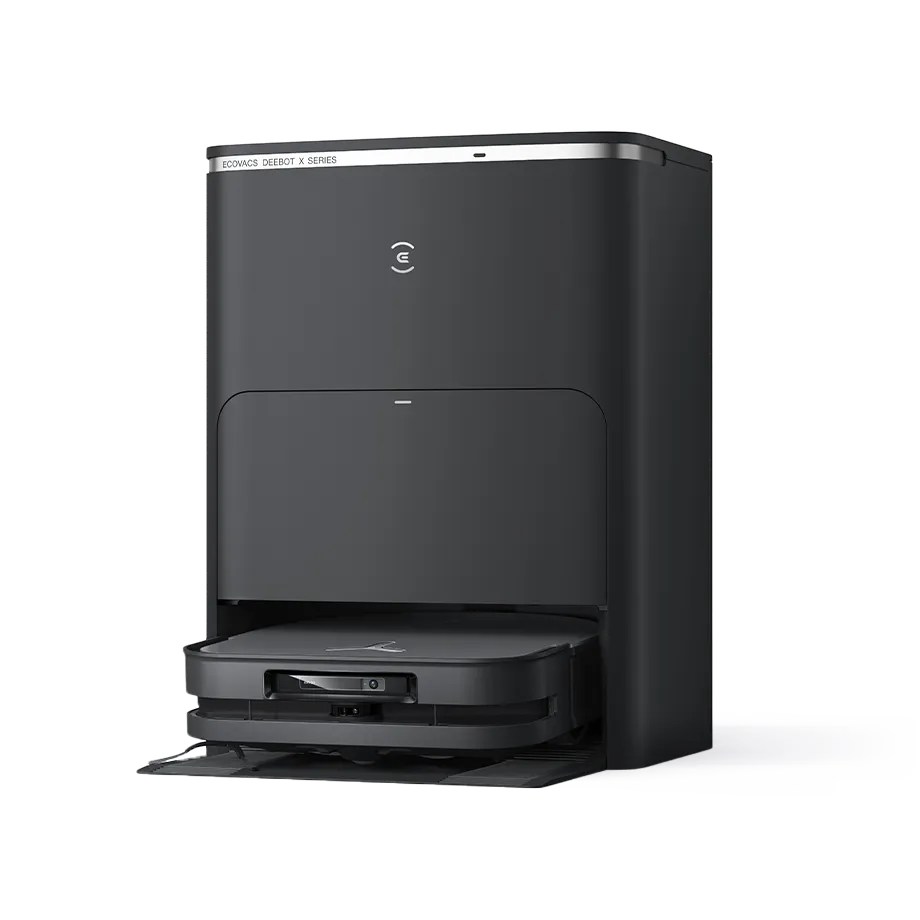
The Ecovacs Deebot X5 Pro is our top pick because it combines the strongest suction, the most accurate mapping, reliable self-emptying, and genuine pet-hair performance in a single machine. Owner reports we’ve reviewed suggest it reduces vacuum-related frustration to near zero mapping is fast, pet hair doesn’t clog it, and you’ll touch dust only about 4 times a year.
If budget is tight, the Shark IQ Robot XL delivers 85–90% of that performance for $300–$400 less. If you want a hybrid vacuum-mop, the Roborock S7 MaxV Ultra is worth the premium for hot-water mopping and dual-camera obstacle avoidance.
Avoid camera-only models and pure-suction machines under 2,000 Pa if pet hair is a concern. Spend for LIDAR mapping and 2,500+ Pa suction that combination actually reduces frustration, not just vacuum dust.