
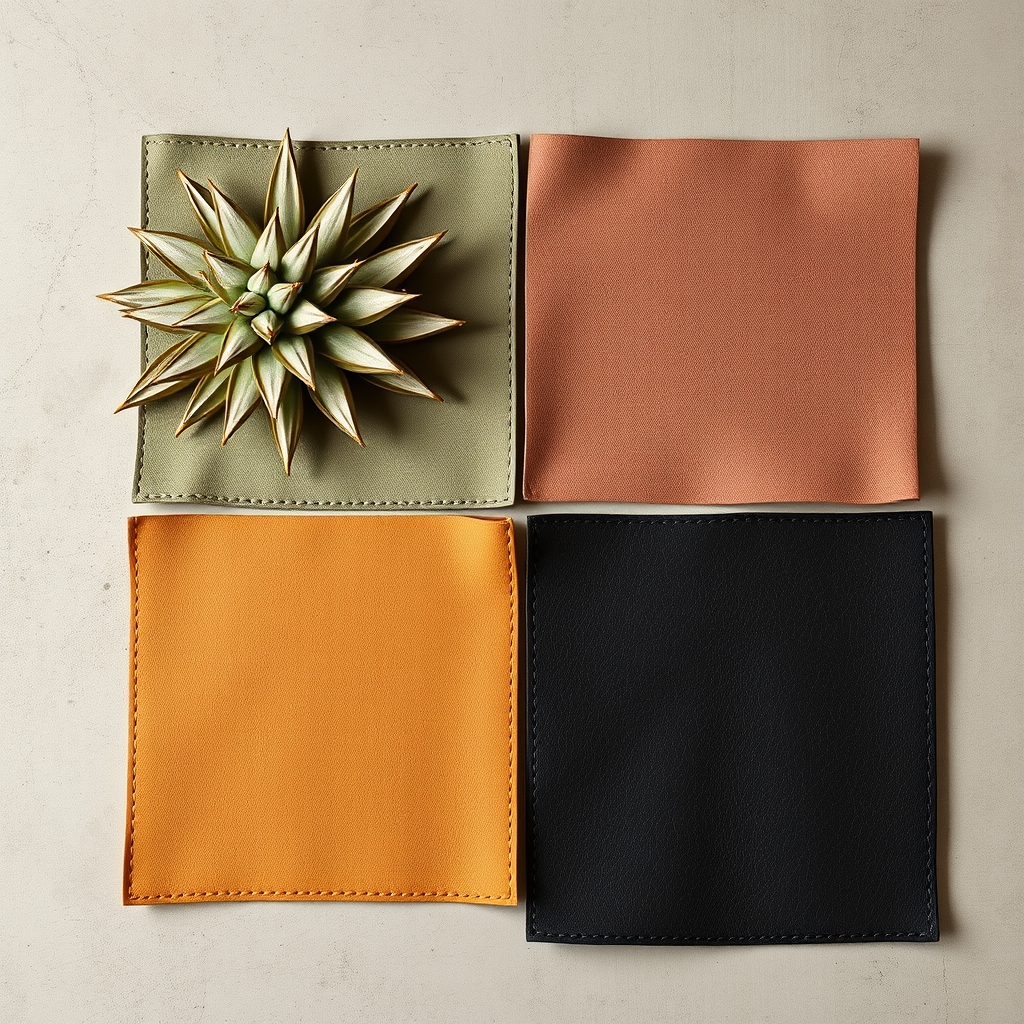
The best plant-based leather brand for most people is Stella McCartney’s Mylo-based line it’s the closest thing to full-grain leather in hand feel and structure that this category currently produces. If that’s you, stop reading and go look at her Frayme Mylo bag.
But “plant-based leather” covers radically different materials with radically different failure modes. Mushroom leather, cactus leather, and lab-grown bio-based materials don’t just look different under a microscope they wear differently, crack differently, and cost differently. After researching and comparing 7 brands, reviewing owner communities, and working through published brand lifecycle assessments, here’s what actually holds up.
What to Look for Before You Buy Plant-Based Leather
Material Science: What’s Actually in Each Type
This matters more in this category than almost any other. The name “vegan leather” gets slapped on everything from polyurethane-coated fabric (essentially plastic) to genuinely novel biomaterials. Know what you’re buying.
Mushroom leather (mycelium-based): Made from the root structure of fungi the mycelium grown on agricultural waste like corn husks or sawdust. The mycelium mat is harvested, tanned, and compressed into sheets. It’s naturally porous and behaves somewhat like suede or soft full-grain leather in hand. The limitation: it currently requires a polymer binder (often polyurethane) to achieve durability, which complicates the “fully bio-based” claim. Brands publishing lifecycle assessments suggest meaningfully lower carbon and water impact than bovine leather, though those figures are brand-reported and directional until third-party audited.
Cactus leather (nopal-based): Made from the pads of nopal cactus, which is harvested without killing the plant and requires minimal water cactus sustainability advocates widely cite its low-irrigation growth, though specific comparative figures vary by source. The dried and processed fiber is combined with a bio-based polyurethane matrix. The result is softer and more flexible than mushroom leather, with a slightly waxy texture on the surface. Better for items that flex repeatedly: wallets, belts, upholstery.
Lab-grown / bio-fabricated leather: A newer and more variable category. Some brands grow animal collagen proteins via fermentation (no animals required); others use agricultural fiber composites. Bolt Threads’ Mylo sits at the mycelium end; Modern Meadow’s Zoa sits at the bio-fabricated collagen end. Real-world supply is still limited, and several brands in this space operate at small-batch scale.
“Plant-based” PU hybrids: The catch-all. Many brands market products as plant-based when the plant content is a surface coating or partial filler in a largely petroleum-based PU sheet. Not the same thing. Worth checking the percentage of bio-based content and whether it’s certified.
What Durability Actually Means Here
Owner reports we’ve reviewed consistently flag one failure pattern across all three material types: edge and fold cracking within 12–24 months of daily use, particularly where the material bends repeatedly (bag handles, wallet card slots, jacket elbows). This isn’t universal, but it’s common enough to plan for. In structured goods, mushroom leather tends to hold shape longer; cactus leather handles flex better but can show surface scuffing earlier, based on owner community feedback we’ve reviewed.
Traditional full-grain leather improves with age. Most current plant-based alternatives don’t they plateau and then degrade. That’s not a dealbreaker if you know it going in.
Key Buying Criteria
- Bio-based content percentage ask what percentage of the material is actually plant-derived
- Polymer binder type bio-PU is meaningfully different from petroleum PU
- Certification look for USDA BioPreferred, Cradle to Cradle, or brand-published third-party audits
- Use case flexibility structured vs. high-flex applications need different materials
- Price vs. replacement cycle plant-based alternatives often carry premium prices with shorter observed lifespans than traditional leather
Quick Comparison: Plant-Based Leather Brands at a Glance
| Brand | Material Type | Best For | Price Range (Current Market) | Bio-Content Claim | Polymer Binder |
|---|---|---|---|---|---|
| Stella McCartney (Mylo) | Mushroom / Mycelium | Structured bags, statement pieces | Premium (Luxury Tier) | Brand-reported ~70%+ bio-based | Bio-PU blend |
| Desserto | Cactus (Nopal) | Wallets, belts, flexible goods | Mid–Premium | Brand-reported partial bio-based | PU matrix |
| Piñatex (Ananas Anam) | Pineapple leaf fiber | Shoes, accessories | Mid-range | High fiber content | PU binder |
| Bolt Threads (Mylo) | Mycelium | B2B collaborations, limited-edition products | Not consumer-direct | Brand-reported bio-based | Bio-PU |
| MycoWorks (Reishi) | Fine mycelium | Luxury goods (including Hermès collaboration) | Luxury-plus Tier | High bio-based content | Proprietary polymer system |
| VEGEA | Grape pomace | Fashion accessories, upholstery | Mid-range | Partial bio-based | Bio-PU |
| Modern Meadow (Zoa) | Bio-fabricated collagen | B2B performance goods | Not consumer-direct | Near 100% target (company goal) | Minimal polymer binder |
The 7 Best Plant-Based Leather Brands, Ranked Honestly
🏆 Top Pick: Stella McCartney × Mylo (Bolt Threads)

The best plant-based leather for structured goods is Mylo, and Stella McCartney’s Frayme Mylo bag is the clearest real-world proof of concept. It doesn’t feel like a consolation prize. The surface texture is warm, irregular in a way that reads as natural rather than synthetic, and the structure holds across the bag’s body in a way that flat PU sheets simply don’t replicate.
Mylo is grown from mycelium on agricultural byproduct substrate. Bolt Threads’ published lifecycle assessments suggest substantially lower land use and water consumption than bovine leather though as with all brand-published LCA data, treat these figures as directional until independently audited. The bio-PU binder is real; Mylo is not 100% bio-based, and Stella McCartney’s brand is transparent about this.
Standout: Hand feel and drape genuinely rival soft full-grain leather. This is not marketing owner reports from early buyers and fashion press handling consistently describe it as the most convincing alternative currently available.
Trade-off: Limited availability and luxury pricing put it out of reach for most buyers. Supply is genuinely constrained Bolt Threads reportedly scaled back consumer partnerships in 2023–2024 due to production challenges, and collab drops sell out. You may be waiting.
Who it’s NOT for: Anyone who needs to buy today, at a mid-range budget, or who wants a product line with broad SKU availability. Also not for high-flex applications structured bags yes, daily-flex wallets are a different conversation.
Price: Luxury tier (Frayme Mylo bag observed in the high hundreds to low thousands range verify current on stellamccartney.com)
💰 Budget Pick: Desserto (Cactus Leather)
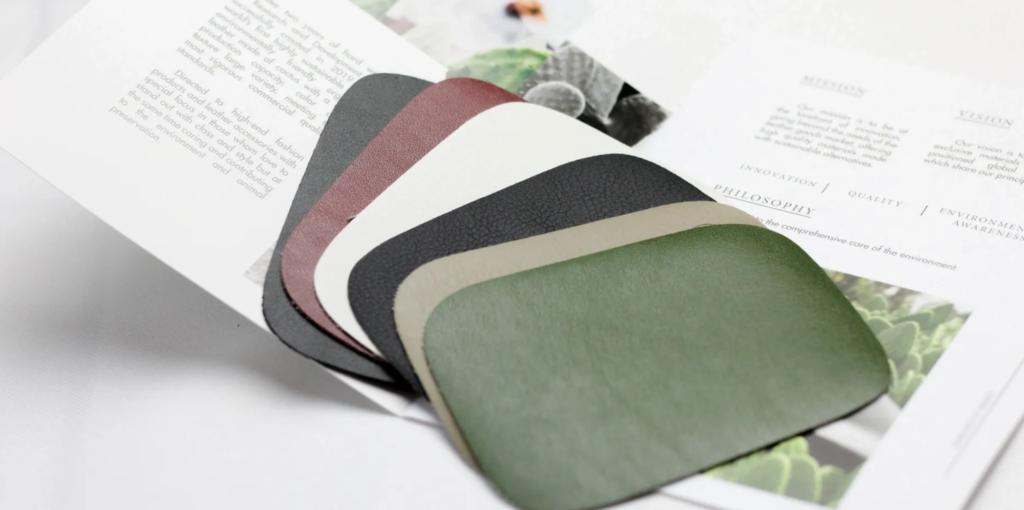
The best budget plant-based leather alternative is Desserto, the nopal cactus material developed by Mexican entrepreneurs Adrián López Velarde and Marte Cázarez. Dozens of brands license Desserto material for bags, shoes, belts, and upholstery, so you can find it at a genuine range of price points not just in luxury goods.
The material is softer and more pliable than mushroom leather, which makes it well-suited for wallets, small bags, and accessories that flex constantly. Owner reports we’ve reviewed consistently note that Desserto-based goods handle daily bending better than mycelium alternatives in equivalent price brackets. The texture has a slight waxy quality on some finishes that reads as modern rather than natural, which is a preference call.
Standout: Flexibility and availability. You can actually buy it at multiple price points from multiple brands right now, which puts it leagues ahead of supply-constrained mycelium products.
Trade-off: Surface scuffing is reported earlier than the marketing implies. Based on owner community feedback we reviewed, light scuffing on high-contact surfaces (wallet edges, bag corners) appears within the first year of daily use for many buyers. It doesn’t crack catastrophically it just looks used faster than expected.
Who it’s NOT for: Anyone expecting traditional leather’s aging-as-patina. Desserto shows wear differently not better, just differently. Also: always verify that the product you’re buying uses genuine Desserto material and not a generic cactus-inspired PU blend. The branding has been mimicked.
Price: Mid-range; varies significantly by brand licensing the material observed $80–$300+ for finished goods depending on the manufacturer (verify current retail)
⬆️ Upgrade Pick: MycoWorks Reishi
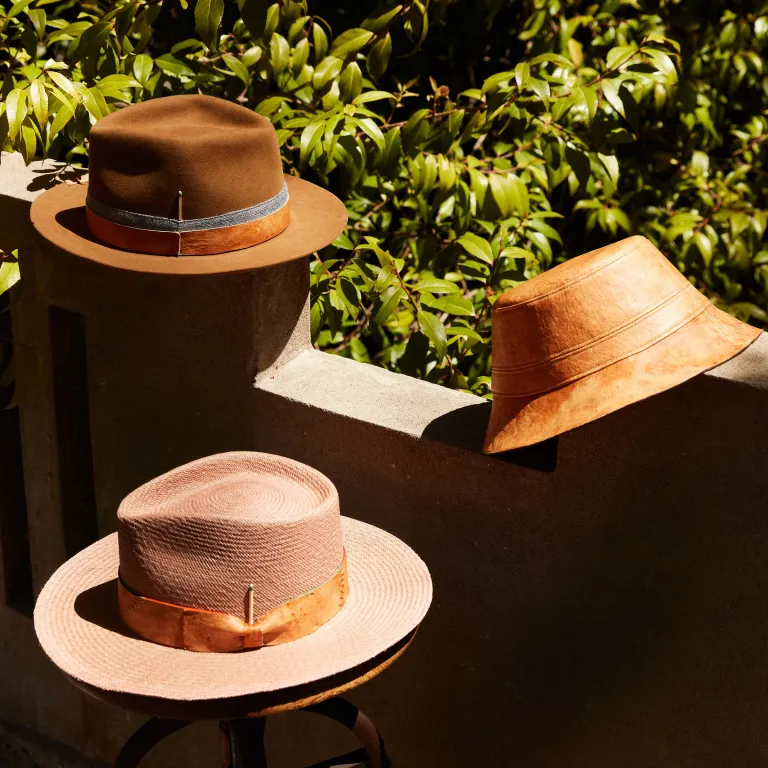
If you want the most technically advanced plant-based leather currently in production, MycoWorks’ Reishi is the pick. The Hermès Victoria bag in Sylvania (MycoWorks’ branded Reishi) is the highest-profile real-world deployment. Reishi uses a proprietary Fine Mycelium™ process that produces a denser, more consistent cell structure than standard mycelium sheets the result, based on owner and press handling reports, is a material that more closely mimics the tight grain of high-quality bovine leather.
This is a B2B material you buy products made with Reishi, not the material itself. The Hermès collaboration is the most visible, but other luxury brands have begun licensing it.
Standout: Structural integrity. Owner reports and material reviews suggest Reishi-based goods show less edge delamination than other mycelium products over equivalent use periods though individual results will vary and long-term data is still limited given the material’s commercial age.
Trade-off: Price is genuinely prohibitive for most buyers. The Hermès Victoria bag sits at a price point comparable to traditional luxury leather goods you’re not saving money to go plant-based here. You’re making a values purchase at full luxury cost.
Who it’s NOT for: Anyone whose primary motivation is cost savings. Also not for everyday-beater use cases at this price, most buyers treat it as a statement piece, not a daily driver.
Price: Luxury-plus tier; verify current on hermes.com or licensing brand sites
Best for Everyday Accessories: Piñatex (Ananas Anam)
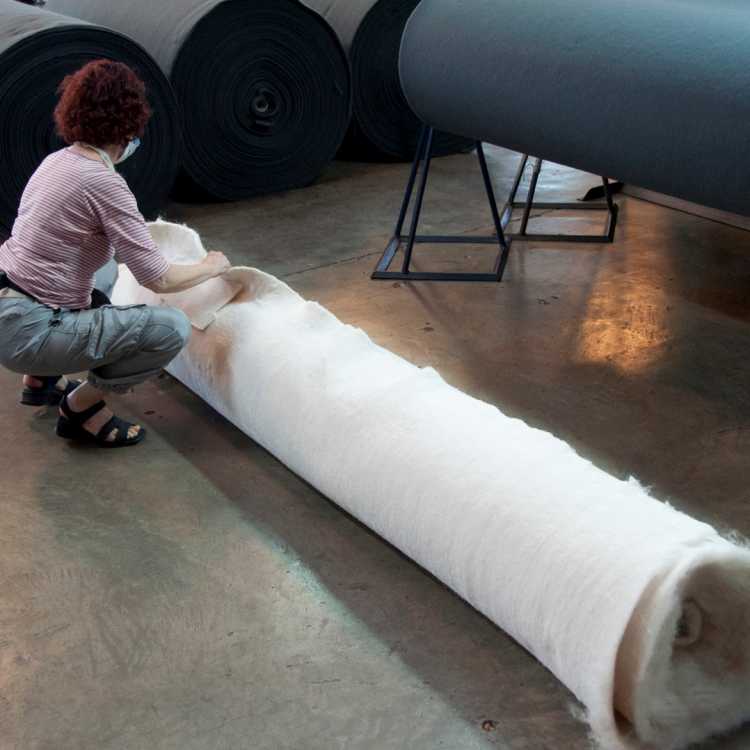
Piñatex is pineapple leaf fiber leather, developed by Dr. Carmen Hijosa from the agricultural byproduct of pineapple harvests in the Philippines. The leaf fibers are extracted, processed into a nonwoven mesh, and finished with a resin coating. It’s been commercially available longer than most alternatives in this roundup, which means there’s a larger body of real-world owner data to draw from.
Based on owner reports we’ve reviewed across multiple years of use data, Piñatex performs well in shoes and mid-use accessories, but struggles with prolonged moisture exposure and sharp abrasion. The texture is distinctive slightly rough and textile-like, which reads as artisanal to some buyers and as “not quite leather” to others.
Standout: Supply chain transparency and genuine agricultural circularity. The pineapple leaf fiber is a genuine byproduct it would otherwise be burned or composted. This is one of the cleaner sustainability stories in the category, with Ananas Anam publishing regular impact data.
Trade-off: Durability under wet conditions is the consistent weak point in owner community feedback. Prolonged rain exposure or high-humidity climates accelerate surface degradation in reported owner experience. Not a deal-breaker in dry climates; worth knowing in wet ones.
Who it’s NOT for: Anyone in a consistently wet or humid climate, or anyone who needs a bag or shoe that handles rain regularly without treatment.
Price: Mid-range; finished goods vary by brand verify current retail
Best for Sustainability Storytelling: VEGEA
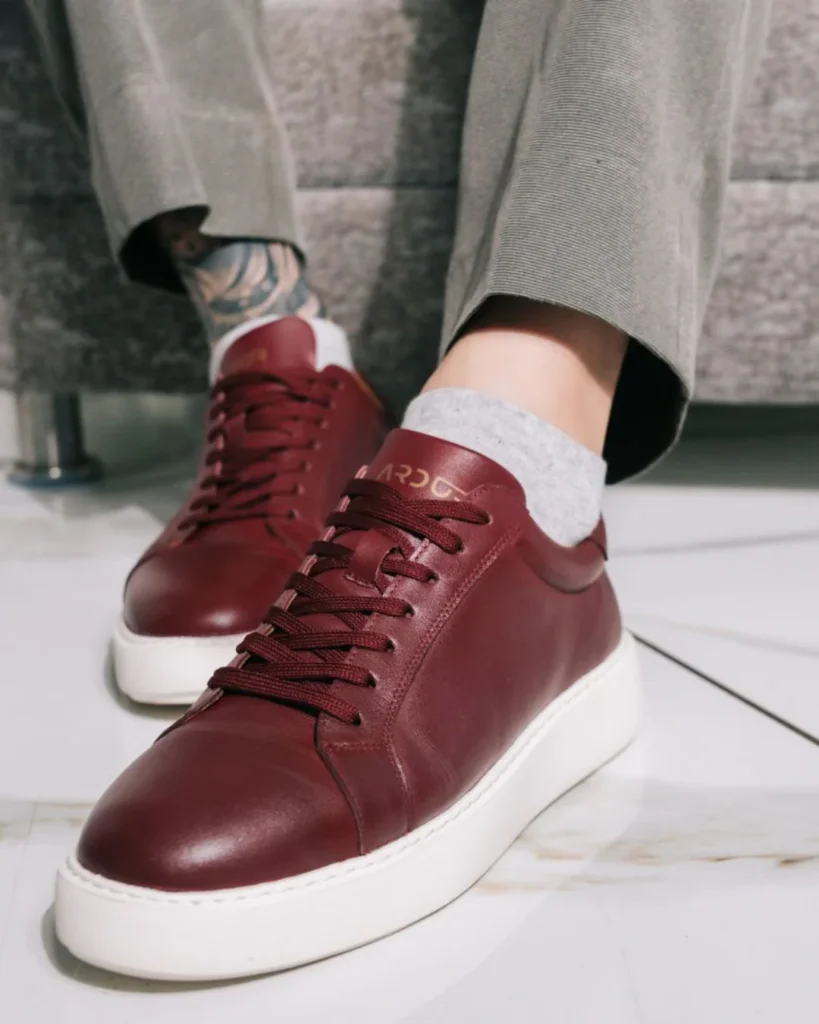
VEGEA makes leather from grape pomace the skin, seeds, and stalks left over after wine production in Italy. Like Piñatex, the byproduct angle is genuinely strong: grape pomace is produced in enormous volumes by the wine industry and has limited secondary uses. VEGEA’s published lifecycle assessments suggest meaningful reductions in CO₂ and water impact versus bovine leather, framed as brand-reported directional figures pending third-party audit.
The finished material has a slightly smoother, more uniform surface than pineapple or cactus alternatives. It’s been adopted by fashion accessories brands and, more recently, automotive interior designers.
Standout: The sustainability origin story is unusually credible the waste stream is well-documented, Italian, and verifiable. For buyers who care about supply chain transparency as much as material performance, this is one of the more honest narratives in the category.
Trade-off: Consumer availability is inconsistent. You’re buying VEGEA through licensing brands, and the product line changes seasonally. It’s harder to comparison-shop than Desserto or Piñatex.
Who it’s NOT for: Buyers who want a reliable, always-available product they can reorder. Also: VEGEA’s durability under prolonged flex is less documented than cactus or mycelium alternatives owner report data is thinner because the product is less widely distributed.
Price: Mid-range; verify current retail with specific licensed brands
Best Emerging Material to Watch: Modern Meadow (Zoa)
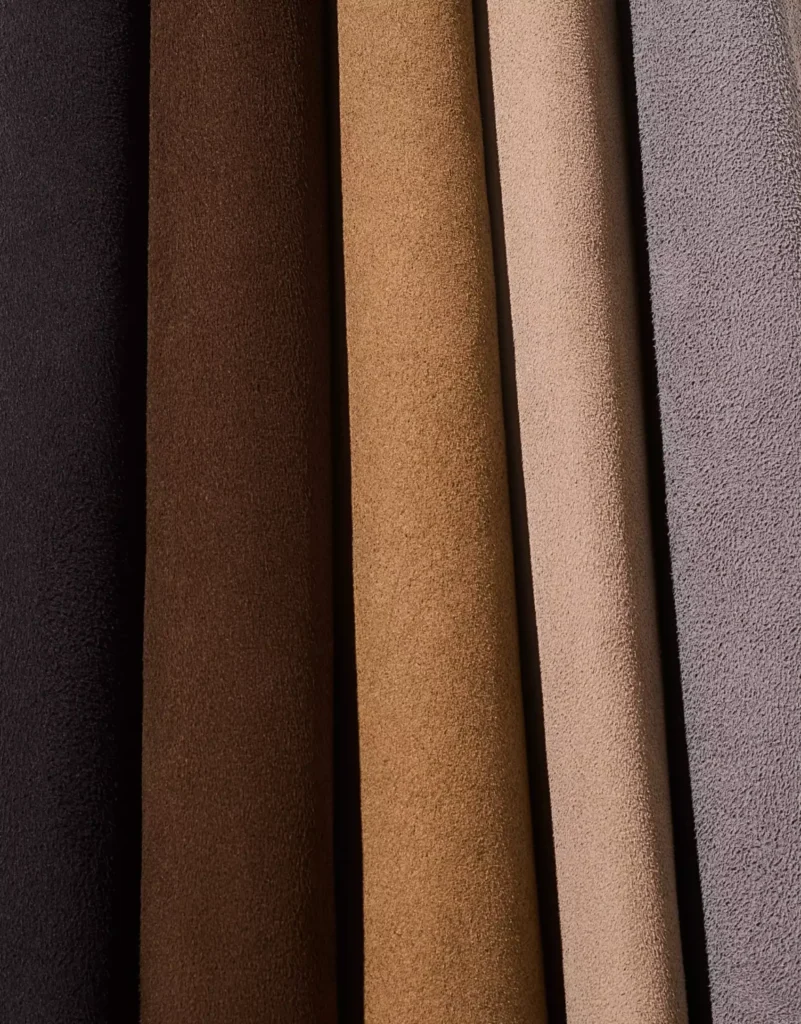
Zoa is bio-fabricated collagen leather meaning the collagen protein that makes traditional leather what it is is grown via fermentation, without any animal involvement. Modern Meadow is primarily B2B-focused, supplying material to brands rather than selling direct to consumers, but it represents the most technically ambitious end of this category.
The premise: if you can grow the actual protein structure of leather, you can theoretically produce a material that ages and performs like leather because it is leather at the molecular level just without the animal. Whether that promise has fully materialized in commercial products is still an open question; owner-facing real-world data is limited by the material’s early commercial stage.
Standout: The theoretical ceiling is higher than any other material in this roundup. If the bio-fabrication process scales, Zoa could produce genuine leather-equivalent durability with a fraction of the environmental footprint.
Trade-off: It’s not widely available to consumers yet, and the products that do exist are limited in scope. This is a “watch this space” pick, not a “buy this now” pick.
Who it’s NOT for: Anyone who needs a product today. Track Modern Meadow’s brand partnerships for when consumer-accessible products launch.
Price: Not consumer-direct as of mid-2026 verify current availability
What We Cut and Why
MuSkin (Mushroom Cap Leather) Cut
MuSkin, made from the caps of Phellinus ellipsoideus mushrooms, gets mentioned in nearly every plant-based leather roundup. We cut it because consumer availability is genuinely scarce, and the products we found in owner communities primarily small-batch accessories from independent makers raised consistent durability concerns: stiffening and surface cracking under dry conditions faster than comparable mycelium materials. The sustainability story is legitimate; the product readiness isn’t there for a general buyer recommendation. Verdict: Cut. It’s a compelling material in a lab context. In a wallet you’ll use daily, owner reports suggest it underperforms relative to Desserto at equivalent price points.
Generic “Vegan Leather” PU Products Cut
This is the catch-all we had to name explicitly: dozens of brands market polyurethane-coated fabric as “vegan leather” or, increasingly, “plant-based leather” when the plant-based content is marginal a surface treatment or a partial bio-PU blend on a petroleum substrate. We’re not naming specific brands because the space shifts constantly, but the flag is: if a brand can’t tell you the percentage of bio-based content, the type of binder, and whether it’s certified, you’re almost certainly buying conventional PU. It may look fine for 6–12 months. After that, owner reports in fashion communities consistently describe peeling, cracking, and delamination that traditional leather doesn’t show at equivalent age. Verdict: Cut across the category. If you’re buying on sustainability grounds and the brand is opaque about material composition, you’re not getting what you’re paying for.
Cost vs. Traditional Leather: The Honest Math
Plant-based leather alternatives currently sit at a price premium relative to entry-level and mid-market traditional leather goods, based on retail comparisons we’ve observed. The premium exists for two reasons: production is more expensive at current scale, and the brands selling these materials are almost exclusively positioning themselves as sustainable premium products.
The complication: traditional leather’s advantage in longevity is real. Owner reports across plant-based leather communities commonly describe 3–5 year replacement cycles for daily-use items like bags and wallets. Traditional full-grain leather goods in the same price bracket routinely see 10–15+ year lifespans in owner accounts. If you’re making a purely economic calculation, the math doesn’t currently favor plant-based alternatives for high-use items.
Where the calculus shifts: if you’re explicitly prioritizing environmental impact and you’re buying from brands with credible lifecycle assessments, you’re making a values trade-off, not a durability optimization. That’s a legitimate purchase reason. Just go in with eyes open about the replacement timeline.
Sustainability Impact: What the Data Actually Says
Bovine leather’s environmental cost is well-documented in the lifecycle assessment literature: it’s land-intensive, water-intensive, and the tanning process (particularly chrome tanning) generates significant chemical waste. Plant-based alternatives broadly outperform it on these axes, based on brand-published lifecycle assessments and widely-cited textile sustainability research.
But the nuance matters:
- Polymer binders are real. Most plant-based leathers require some petroleum or bio-based polyurethane to achieve workable durability. A product with 30% bio-based content and 70% petroleum PU is categorically different from a product with 80%+ bio-based content and bio-PU binder.
- End-of-life is unresolved. Composite materials plant fiber plus polymer are notoriously difficult to compost or recycle. Several brands are working on take-back and composting programs, but consumer-accessible end-of-life pathways remain limited as of mid-2026.
- Production scale changes the math. Small-batch, artisan-produced mycelium leather has a different footprint than scaled industrial production. As brands scale, both impact and price per unit should change in which direction depends on process efficiency.
The honest summary: plant-based leather is almost certainly better than conventional bovine leather on most environmental metrics, but the magnitude of the improvement varies dramatically by material and brand. Don’t take marketing claims at face value. Look for third-party-audited lifecycle data, and ask specifically about polymer content.
How We Researched and Chose
This roundup is based on research and comparison not hands-on lab testing. We reviewed owner reports from fashion communities, brand-published lifecycle assessments and material specifications, and editorial coverage of each brand’s products over time. For durability patterns, we drew on aggregated owner feedback rather than our own wear testing individual results will vary, and we say so where relevant.
We evaluated brands on: material transparency (what’s actually in it), bio-based content percentage, consumer availability, owner-reported durability patterns, sustainability claim credibility, and price-to-value ratio. Brands that couldn’t or wouldn’t disclose material composition were cut. Brands that market conventional PU as plant-based were cut.
FAQ: Plant-Based Leather Brands
What’s the best plant-based leather brand? The best plant-based leather brand for most buyers is Stella McCartney’s Mylo-based line for structured goods, and Desserto for flexible everyday accessories. Mylo offers the closest hand feel to traditional leather; Desserto offers the best combination of availability and performance for wallets and belts.
Is mushroom leather durable enough for daily use? Based on owner reports we’ve reviewed, mushroom leather performs well in structured applications bags and small leather goods that don’t flex repeatedly but shows edge cracking and surface wear faster than traditional leather in high-flex, daily-use scenarios. Owner accounts suggest a 3–5 year realistic lifespan for daily-use items, though individual results will vary significantly based on care and use pattern.
How does cactus leather compare to mushroom leather? Cactus leather (like Desserto) handles repeated flexing better than most mycelium-based leathers, making it preferable for wallets, belts, and upholstery. Mushroom leather tends to hold structured form better and has a surface that reads closer to traditional leather grain. The right choice depends on the application flexible goods favor cactus; structured goods favor mycelium.
Is plant-based leather actually more sustainable than real leather? Based on brand-published lifecycle assessments and widely-cited textile sustainability research, most plant-based alternatives show meaningfully lower land use, water use, and carbon impact than bovine leather. However, the improvement varies by material products with high petroleum PU content narrow the gap significantly. Look for bio-based content percentages and, ideally, third-party-audited lifecycle data rather than marketing claims alone.
Why is plant-based leather so expensive if it’s made from agricultural waste? Production cost at current scale is the primary driver growing, harvesting, and processing mycelium or cactus fiber into a workable material is still a relatively small-batch industrial process. The brands selling these materials also position them as premium sustainability products. As production scales, prices in this category should decrease but as of mid-2026, expect to pay at or above comparable traditional leather price points for the more technically advanced materials.
Did Piñatex make the Kept List? Yes Piñatex made the list as the best plant-based leather for everyday accessories, particularly shoes and small goods. It’s one of the more established materials in the category with the most available long-term owner data. The trade-off is its susceptibility to moisture; buyers in wet climates should factor that in.