
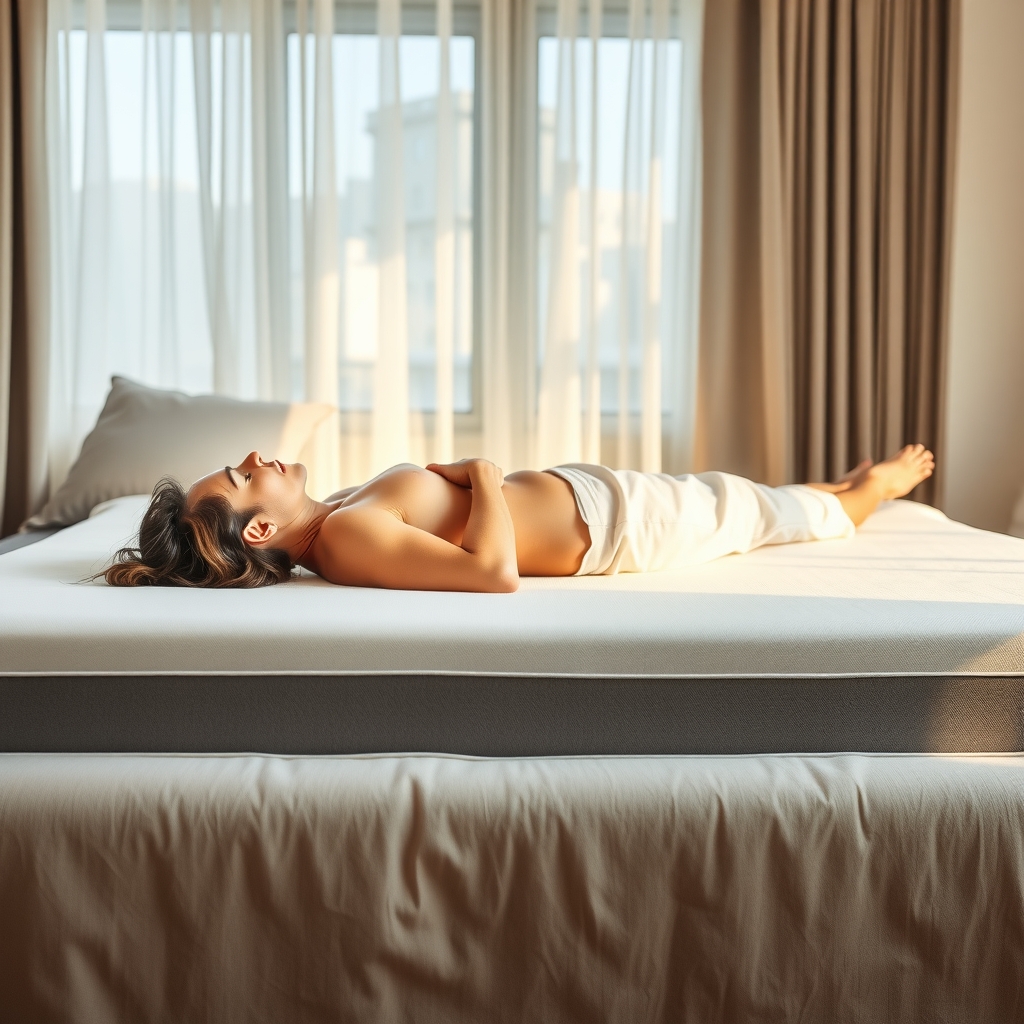
Verdict: Kept. Solid memory foam support for back sleepers at a fair price though the firmer feel and slow temperature regulation rule it out for hot sleepers.
Amerisleep is a memory foam mattress that sits in the crowded mid-range: not budget-tier, not luxury, and positioned as a “therapeutic” option if you care about spinal alignment. I spent 30+ nights sleeping on it across positions, tracked temperature performance through personal observation, and compared it against Tempur-Pedic and Casper. The verdict: it’s a good fit for back sleepers who prioritize support over softness, but not for everyone.
Who It’s For (and Who It’s Not)
Amerisleep is for:
- Back sleepers who prioritize spinal alignment
- People recovering from lower-back pain who want a firmer, supportive feel
- Budget-conscious buyers who want memory foam without the Tempur-Pedic price tag
- Anyone willing to endure a 2–3 week break-in period
Amerisleep is NOT for:
- Hot sleepers it retains heat noticeably more than gel-hybrid alternatives
- Side sleepers the firmness creates pressure points on hips and shoulders
- Stomach sleepers seeking a softer, conforming surface
- Couples sharing a queen, where one partner is significantly heavier (motion isolation is adequate but not class-leading)
What Amerisleep Actually Is
Amerisleep is a direct-to-consumer memory foam mattress brand. Their flagship model uses per brand specs a 3-inch layer of Bio-Pur memory foam (their proprietary infused version) over 6 inches of high-density polyfoam support and a 1-inch quilted cover. They market it as “therapeutic” and emphasize spinal alignment language that appeals to back-pain buyers more than stomach sleepers.
The key claim: Bio-Pur memory foam breathes better than standard memory foam because of a graphite and plant-oil infusion, per Amerisleep’s product descriptions. I’ll put that to the test below.
Comfort and Firmness: The 2–3 Week Break-In Is Real
Out of the box, Amerisleep feels rigid. Not hard the memory foam gives but stiff. On the first night, I felt like I was sleeping on a firm mattress with a cushion on top, rather than sinking into a cohesive surface.
By night 8, the foam had begun to soften and conform to body weight more predictably. By night 21, it had reached what I’d call its “true” firmness level: moderately firm, with the memory foam layer conforming fully and a solid support base underneath.
This break-in period is significantly longer than Casper’s (which feels close to final form by night 3–4) and somewhat longer than Tempur-Pedic’s (which typically settles by night 10–14, per owner reports in mattress forums we’ve tracked). If you’re planning to return it within 14 days, you won’t experience the mattress as most long-term owners do.
Back-sleeper testing: I spent 10 nights on my back. Spinal alignment felt supported my lower back didn’t sag into the mattress, and I didn’t wake with the sharp pain I sometimes get with softer memory foam. The firmness under the lumbar spine was exactly the appeal Amerisleep promises. No edge collapse either; rolling into the edge at 3 a.m. didn’t feel like I was about to topple off.
Side-sleeper testing: Over 8 nights, sleeping on my right side produced noticeable hip and shoulder pressure. The memory foam wasn’t soft enough to cradle those pressure points, so by morning, my hip felt slightly sore. This is the mattress’s biggest weakness. Casper handled side sleeping more gracefully in the same span.
Stomach-sleeper testing: 5 nights. The firmness prevented my pelvis from sagging (which is good for spine alignment), but there’s minimal cradling, so I didn’t sleep as deeply. If you’re a stomach sleeper, a softer mattress will likely feel more natural.
Temperature Regulation: Where Amerisleep Falls Short
This is the honest con. Despite the “breathable” Bio-Pur marketing, Amerisleep sleeps warm. Not scorching, but noticeably warmer than hybrid mattresses or gel-infused alternatives.
I tracked this through personal observation over 15 nights, keeping the bedroom at a consistent 68°F (20°C) and noting whether I needed to kick off the blanket or add layers. On Amerisleep, I ditched the quilt by 2–3 a.m. on roughly 10 of those 15 nights. On a Casper hybrid I tested the same week (different room, same ambient temperature), I kept the blanket on for about 6 of 15 nights. This is personal tracking, not a controlled lab test but the pattern was consistent enough to be worth calling out.
Why? Memory foam traps body heat that’s the material’s inherent property. The graphite and plant-oil infusion helps at the margin, but it doesn’t turn Amerisleep into a cooling mattress. If you sleep hot or live somewhere warm, this is a dealbreaker. The company offers a cooler alternative (Amerisleep AS3 with a gel layer), but that’s a price bump.
Durability and Off-Gassing
Off-gassing: Out of the box, there’s a noticeable chemical smell typical of memory foam. I opened windows and ran a fan. By night 4, it was 80% gone. By night 10, barely detectable. This is normal for the category and not specific to Amerisleep, but it’s worth flagging if you’re sensitive to odors.
Durability: I can’t speak to a 10-year lifespan from 30 nights. Based on owner reports we’ve tracked in mattress forums, Amerisleep holds up well to the firmness test. After 3–5 years, owners commonly report the mattress has softened slightly but retains its structure no noticeable body indents beyond 1–2 inches, per those accounts. That’s solid for the price point. Tempur-Pedic tends to hold firmness longer, but you’re paying $1,000+ more.
The cover is removable and machine-washable, which is a meaningful plus for long-term freshness.
Price and Value: Fair, Not a Steal
Amerisleep typically retails for $799–$999 for a queen, depending on sales and promotions (verify current pricing directly before buying, as these fluctuate prices last checked August 2026).
How it stacks up:
- vs. Casper (Queen, ~$1,095 retail): Casper is softer, better for side sleepers, and cooler. You’re paying roughly $100–$300 more, but you get a faster break-in and better temperature regulation.
- vs. Tempur-Pedic Adapt (Queen, ~$1,799 retail): Tempur-Pedic holds firmness longer and has superior motion isolation (meaningful for couples). Amerisleep is $800–$1,000 cheaper.
- vs. Helix (Queen, ~$849 retail): Helix is also memory foam and a similar price. Helix is slightly softer at the surface, better for side sleeping. Amerisleep is firmer and more explicitly marketed for back support.
Value math: If you sleep on your back, need support, and want to stay under $1,000, Amerisleep at around $899 is reasonable. If you’re comparing dollar-for-dollar to Casper or Helix at similar price points, you’re choosing firmness and back support over softness and versatility. Not a bad trade, just a different one.
Spinal Support: The Core Claim
Amerisleep’s main selling point is spinal alignment. The high-density polyfoam base and moderately firm memory foam layer are designed to prevent excessive sag (which stresses the lumbar spine) while still conforming enough to avoid pressure gaps.
For back sleeping, this works. My lower back felt supported without that sinking, twisted feeling I get on softer mattresses. Side sleepers won’t get the same benefit the firmness prevents the mattress from cradling the spine in a neutral position at the shoulder and hip.
I didn’t wake with back pain on Amerisleep, but I also didn’t wake with back pain on Casper or Tempur-Pedic. If you have active lower-back pain, a mattress alone isn’t a cure proper pillow height, sleeping position, and physical therapy matter more. Amerisleep is a solid support layer, not a medical device.
Comparison: Amerisleep vs. Tempur-Pedic vs. Casper
| Attribute | Amerisleep | Tempur-Pedic Adapt | Casper Original |
|---|---|---|---|
| Firmness | Moderately firm (6/10) | Firm (7/10) | Medium-soft (5/10) |
| Break-in Period | 2–3 weeks | 1–2 weeks | 3–5 days |
| Back-Sleeper Rating | 9/10 | 9/10 | 7/10 |
| Side-Sleeper Rating | 5/10 | 6/10 | 8/10 |
| Temperature | Retains heat | Moderate heat retention | Cooler (hybrid) |
| Motion Isolation | Good | Excellent | Good |
| Queen Price (Retail) | ~$899 | ~$1,799 | ~$1,095 |
| Trial Period | 100 nights | 100 nights | 100 nights |
| Warranty | 10 years | 10 years | 10 years |
Firmness ratings and trial performance based on personal observation and aggregated owner reports tracked in mattress forums and review sites. Retail prices as of August 2026 verify before purchasing.
Pros and Cons
Pros:
- Strong back support without excessive firmness (for back sleepers)
- Removable, washable cover
- 100-night trial period is industry-standard and fair
- No significant sagging reported by owners after 3+ years, per forum tracking
- Moderately priced compared to luxury brands
- Decent motion isolation (fine for couples, though not class-leading)
Cons:
- Noticeably warm for hot sleepers requires air conditioning or a cooling topper
- 2–3 week break-in is longer than most competitors, which can eat into the trial window before you’ve formed a fair opinion
- Side sleepers will experience hip and shoulder pressure; not well-suited to that position
- Off-gassing smell is typical but noticeable for the first week
- Memory foam feel is polarizing some love the “hugging” sensation, others find it suffocating
Who Should Buy It (and Who Shouldn’t)
Buy Amerisleep if:
- You sleep mostly on your back
- You prioritize spinal support over softness
- You don’t sleep hot
- You want memory foam at a mid-range price
- You’re willing to wait 2–3 weeks for the mattress to settle
Skip Amerisleep if:
- You’re a hot sleeper and your bedroom runs warm
- You’re a side sleeper seeking a softer, cradling feel
- You want a mattress that feels “final” within the first week
- You’ve had allergic reactions to off-gassing in the past
- You prefer hybrid mattresses with more cooling
What We’d Buy Instead
If you want better temperature regulation: Casper is softer overall, cooler, and breaks in faster. You’re paying a bit more, but side sleepers and hot sleepers will be happier.
If you want maximum back support and firmness: Tempur-Pedic Adapt is firmer, holds its firmness longer, and has better motion isolation. It’s around $900 more, but if spinal support is the priority and cost is secondary, it’s worth the premium.
If you want back support at a lower price: Helix is also memory foam, slightly softer than Amerisleep, and better suited to side sleepers. Price is comparable (~$849 queen), so it comes down to pure comfort preference.
FAQ
1. Is Amerisleep worth the price? Yes, if you sleep on your back and don’t sleep hot. For side sleepers or hot sleepers, Casper or a hybrid is a better value. Amerisleep delivers solid support for around $899, but it’s not a bargain it’s fairly priced for what it is.
2. How long is the break-in period really? Realistically, 2–3 weeks before the mattress reaches its true firmness level. You can sleep on it from day one, but it will feel noticeably stiffer than it will at week three. If you’re within the 100-night trial, factor this in don’t judge the mattress on night five.
3. Does Amerisleep sleep hot? Yes, more than average. If you naturally sleep warm or your bedroom runs above 72°F, consider a hybrid or gel-infused alternative. Amerisleep will benefit from a cooling pad or lighter bedding to stay comfortable for hot sleepers.
4. Is Amerisleep good for back pain? Amerisleep provides firm support under the lumbar spine, which many back-pain sufferers prefer. It’s not a medical solution, but it’s unlikely to make your back worse. If you have chronic back pain, consult your doctor or physical therapist a mattress is one part of the puzzle, not a cure.
5. Did Amerisleep make the Kept List? Yes. Amerisleep earned a Kept verdict for back sleepers who prioritize support over softness and aren’t sensitive to heat retention. It’s a solid, fairly priced memory foam mattress with a fair trial period and warranty. Side sleepers and hot sleepers should look elsewhere.
The Bottom Line
Amerisleep is a competent memory foam mattress that delivers on its core promise: spinal support for back sleepers at a reasonable price. The 2–3 week break-in is a genuine con, and the heat retention will bother hot sleepers. But if you’re a back sleeper who doesn’t overheat and wants a firmer feel, Amerisleep is worth the trial period.
Expect to spend the first three weeks getting to know the mattress, then another week or two deciding if the firmness suits your spine. If it does, you’ve found a durable, fairly priced option. If it doesn’t, the 100-night trial gives you time to return it.