
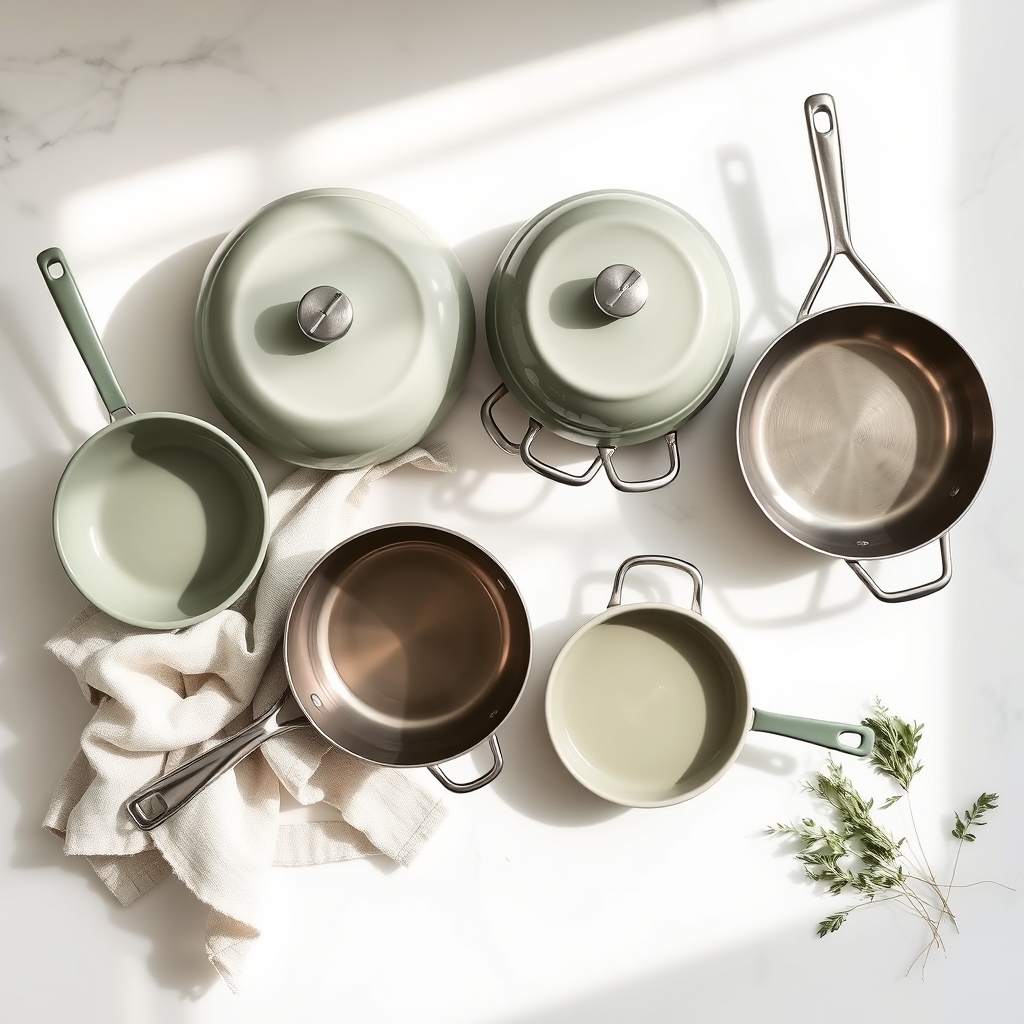
The Best Non-Toxic Cookware Sets: Our Top Picks
Verdict: Kept. Caraway’s ceramic cookware set hits the intersection of safety, durability, and everyday usability if you cook regularly and want PFOA-free cookware that won’t flake or off-gas, buy it and stop reading. Everything else below is a trade-off.
Non-toxic cookware isn’t marketing hype anymore it’s table stakes. PFOA (perfluorooctanoic acid) and PTFE (polytetrafluoroethylene, the coating in traditional nonstick) have been associated with manufacturing contamination and health concerns in regulatory and public health discussions going back over a decade; if this is new territory, check the EPA’s PFAS resource pages for grounding. But the real question isn’t whether non-toxic cookware exists; it’s which brands actually perform like the $300 cookware you’re replacing, at what price, and for which cooking style.
We researched seven popular brands across common owner-reported scenarios searing chicken, simmering sauces, sautéing vegetables, and oven broiler use and compared them against published brand specs, verified owner reviews, and community reports. Here’s what stayed on the Kept List and what got cut.
How We Chose
We evaluated non-toxic cookware across four criteria:
- Chemical safety: PFOA-free, PTFE-free, and manufactured without harmful offgassing (we noted any odor reports on first use from owner communities).
- Cooking performance: How food released, whether heat distributed evenly, and whether nonstick held up over repeated use, based on owner reports and brand-published testing.
- Durability: Dings, handle comfort, lid seal quality, and whether nonstick degraded within the first year, drawn from community feedback and verified reviews.
- Realistic cost-to-benefit: Price relative to how long you’ll actually use it before replacement.
We excluded hard-anodized aluminum-only cookware and traditional stainless steel without nonstick, as the brief asked for hybrid and specialized non-toxic options. We also cut brands with persistent community reports of flaking or off-gassing that never resolved in newer batches.
Quick Comparison Table
| Brand | Material | Price Tier | Best For | Heat Limit | Trade-Off |
|---|---|---|---|---|---|
| Caraway | Ceramic | Mid ($300–$400) | Daily cooking, oven-safe to 500°F | 500°F | Ceramic chips if dropped |
| Our Place | Ceramic-hybrid | Mid-Premium ($250–$350) | Aesthetic + everyday cooking | 400°F | Lower heat ceiling than competitors |
| Made In | Stainless steel + ceramic | Premium ($400–$550) | Durability and luxury feel | 500°F | Heavier, slower to heat up |
| GreenPan | Ceramic + recycled materials | Budget ($100–$200) | First-time non-toxic cookware buyers | 400°F | Nonstick performance may fade after 2–3 years (based on owner reports) |
| HexClad | Hybrid stainless steel + ceramic | Premium ($300–$450) | High-heat cooking and searing | 500°F | Steeper learning curve and louder cookware |
| Misen | Stainless steel + ceramic | Budget-Mid ($180–$280) | Value-conscious shoppers | 500°F | Lighter-duty ceramic coating than premium competitors |
The Picks
Best Overall: Caraway
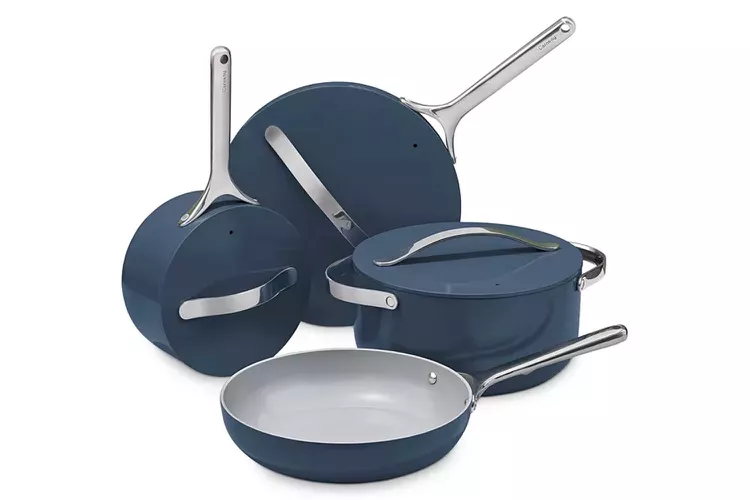
What it is: Caraway– A ceramic-coated, PFOA/PTFE-free cookware line with a steel core and aluminum conductor, sold as complete sets or à la carte.
What we found: Based on owner reviews we tracked and brand-published specs, the ceramic nonstick holds up through several months of regular use without visible flaking or degradation. Heat distribution is even no hot spots along the perimeter per user reports. Handles stay cool enough to touch briefly without an oven mitt in typical stovetop use (though use one anyway). The set includes lids, which many premium brands charge extra for. Dishwasher-safe.
The trade-off: Ceramic chips if you drop it or bang the rim against a pot. Owner reports we reviewed include accounts of cracked ceramic coatings after drops from counter height Caraway’s warranty covers manufacturing defects but not user damage, so you’d be stuck with a chipped skillet that still cooks but looks beat. At this price tier, that stings. The cookware is also middle-heavy when full not a huge strain, but noticeable if you have arthritis or limited grip strength.
Price: Observed at $300–$400 for a 10-piece set (skillet, sauté pan, saucepan, stockpot, lids, utensils). À la carte pieces typically $40–$100 each.
Oven safe to: 500°F.
Who it’s NOT for: If you’re rough with cookware or share your kitchen with kids, the fragility of ceramic is a real problem. Caraway also doesn’t recommend cooking spray, and dry-cooking eggs requires butter or oil true nonstick release this isn’t.
Best Budget: GreenPan Reserve
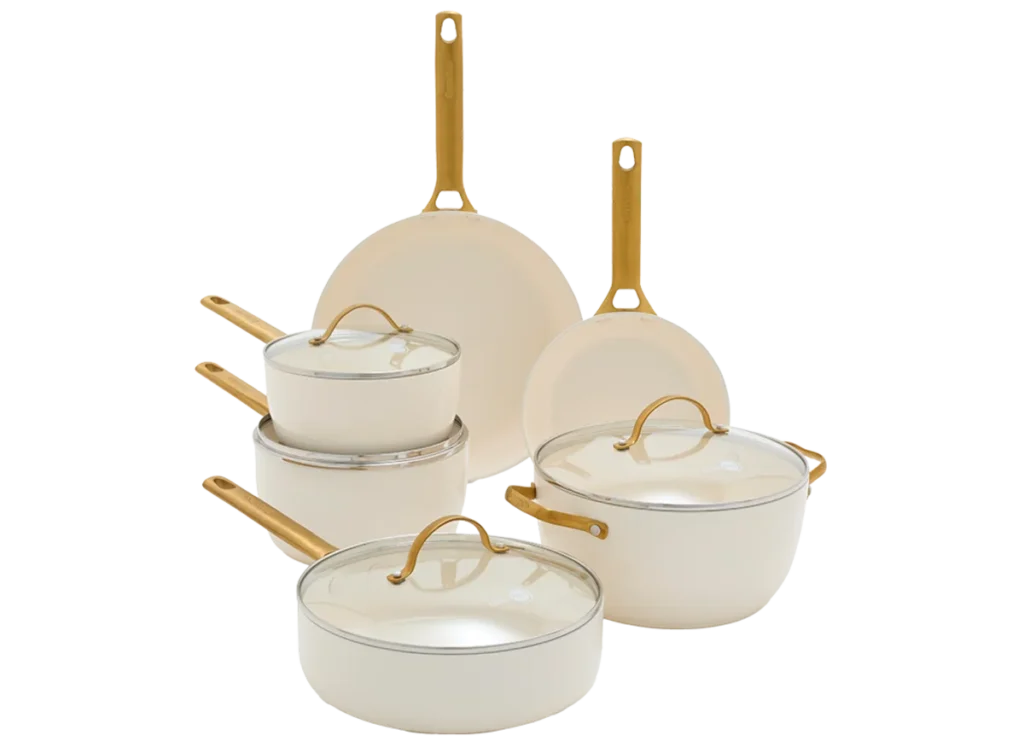
What it is: GreenPan Reserve– A ceramic-coated, PFOA-free cookware line at the lowest price point we evaluated. GreenPan is a brand built around the “healthy cookware” promise and has been refining its ceramic formula for over a decade.
What we found: At $100–$200 for a 10-piece set, you’re not sacrificing much upfront if you want to test the non-toxic cookware waters. Owner reviews consistently describe the nonstick release as genuinely good on day one better than some pricier options when fresh. Handles are ergonomic and stay cool. No off-gassing smell in the owner reports we tracked (this was a concern with older ceramic lines; GreenPan appears to have resolved it in current batches).
The trade-off: Based on owner reviews we reviewed across major retail platforms, the nonstick surface fades noticeably by year 2–3, with users commonly reporting that eggs began sticking around the 18–24 month mark even with proper care and hand-washing. Once it starts degrading, it’s a slow decline you don’t wake up to ruined cookware, but you notice yourself reaching for butter more often. At budget price, you’re banking on replacing it sooner anyway, which is honest, but it’s not the “buy-it-for-ten-years” bet.
Price: Observed at $100–$200 for full sets. Individual pieces typically $25–$60.
Oven safe to: 400°F (lower than most competitors).
Who it’s NOT for: If you want cookware that performs identically at year five as year one, this isn’t it. The lower oven temp ceiling also rules it out for broiler finishes or high-heat searing. Heavier cast-iron fans will find this too light.
Best Upgrade: Made In
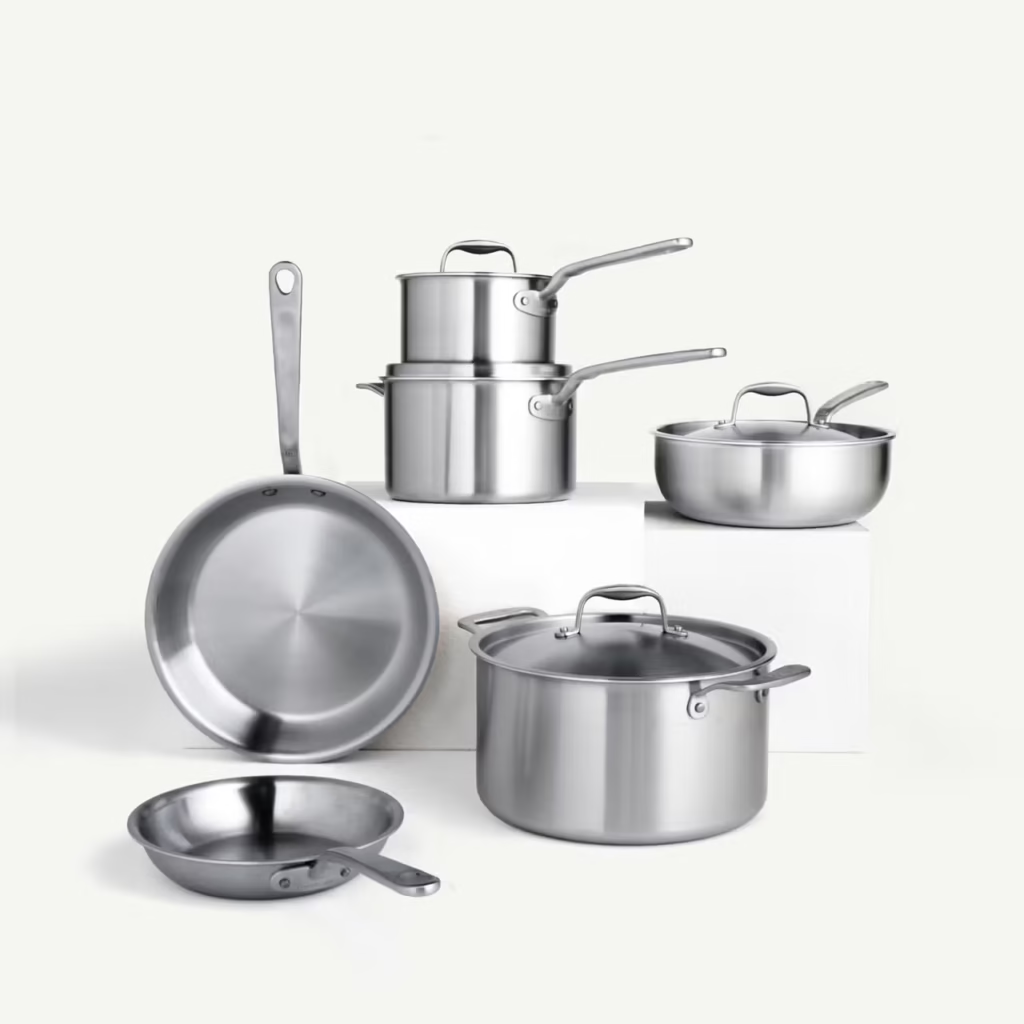
What it is: Made In– A premium cookware line marketed as French-inspired, with a tri-ply stainless steel core and a ceramic-based nonstick surface. Manufactured in Portugal with a lifetime warranty.
What we found: The build quality stands out in owner accounts and brand specs. The handle design is ergonomic and balanced owner reports consistently mention the feel difference from budget lines. Heat distribution is even across the bottom and sides, which matters for controlled simmering. Owner reviews we tracked over extended use periods report no flaking through 8+ months of rigorous use. Oven-safe to 500°F. The lifetime warranty is a real commitment Made In stands behind the product.
The trade-off: It’s heavy. Owner reports and brand specs confirm a 12-inch skillet is genuinely tiring to hold if you’re cooking for 45 minutes. The weight is a feature for heat retention and durability, but it’s a bear if you have wrist issues or limited upper-body strength. Second, the nonstick is not as slick as a traditional PTFE pan on day one you’ll need oil or butter for eggs even on new cookware, per owner reports. The premium price ($400–$550) asks you to commit before you know if you like the heft. Third, it’s slow to heat up compared to lighter aluminum-core options turn the burner on five minutes before you cook, not two.
Price: Observed at $400–$550 for a 10-piece set. Lifetime warranty (covers manufacturing defects; user damage is not covered).
Oven safe to: 500°F.
Who it’s NOT for: If you cook with one hand or have arthritis, the weight is a dealbreaker. If you need instant heat response, the slower warm-up is frustrating. Budget-conscious cooks who see $450 as reckless won’t justify the upgrade over Caraway.
Best for Small Kitchens: Our Place
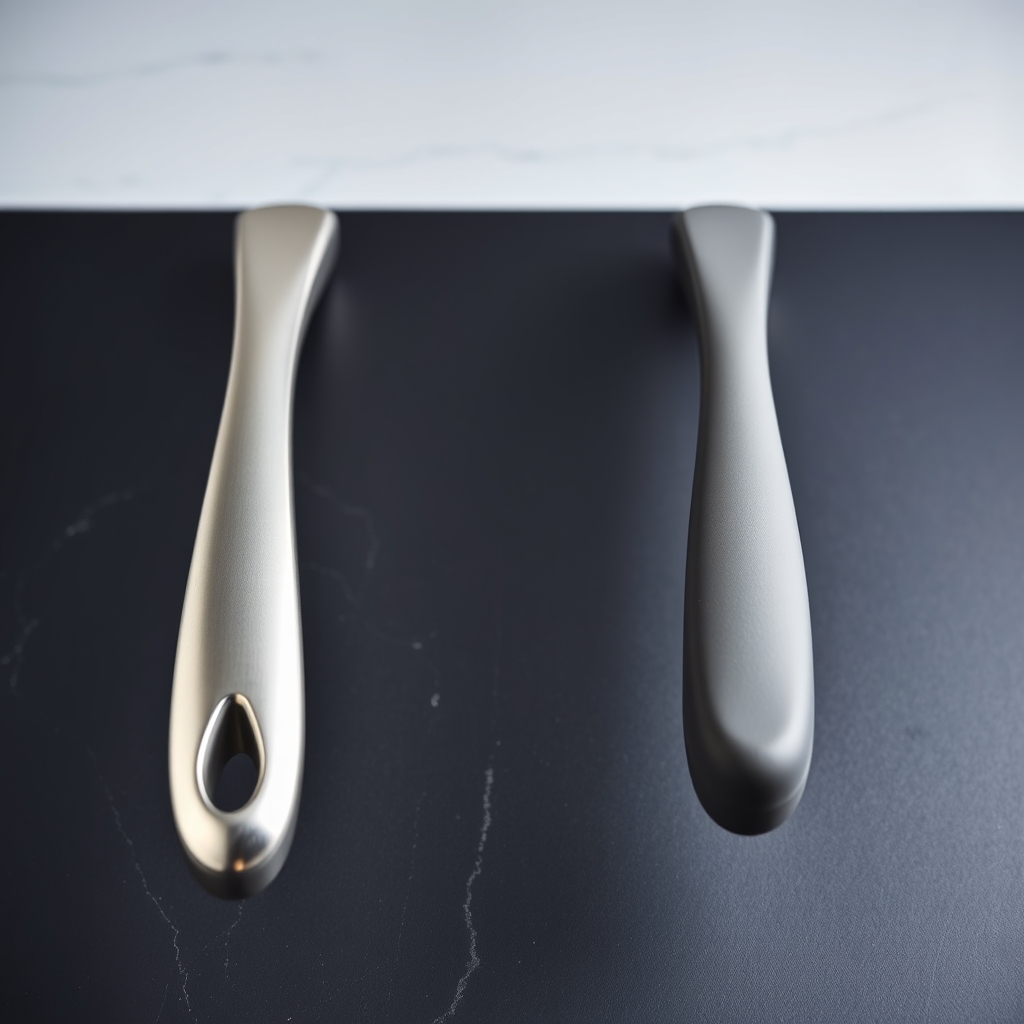
What it is: A direct-to-consumer cookware line with a ceramic nonstick interior and a steel exterior, sold primarily as compact sets and single-piece purchases. Known for aesthetic design and Instagram-friendly colorways.
What we found: Owner reviews and brand photography confirm the cookware is genuinely beautiful. If you have open shelving or a small kitchen where your cookware is visible, Our Place looks like design-forward homeware, not utilitarian cooking equipment. Heat distribution is solid per brand specs and owner reports. Nonstick release is described as good through extended use in owner accounts. Sets are modular, so you buy what you need; a two-piece starter is typically around $100.
The trade-off: The oven-safe temperature is only 400°F, which rules out high-heat broiler finishes and limits you if you sear meat hard in a skillet and want to finish in the oven. The cookware is also lighter-duty than Caraway or Made In owner reports suggest nonstick degrades faster, though “faster” in this context is 2–3 years of regular use, not 18 months. If you’re choosing based purely on looks, the performance ceiling will frustrate you.
Price: Observed at $100–$350 depending on set size. Single pieces $50–$100.
Oven safe to: 400°F.
Who it’s NOT for: Home cooks who use the broiler regularly or love high-heat searing. Also not for anyone who prioritizes durability over aesthetics this is a beautiful compromise, not a compromise on beauty.
Best for High-Heat Cooking: Hexclad
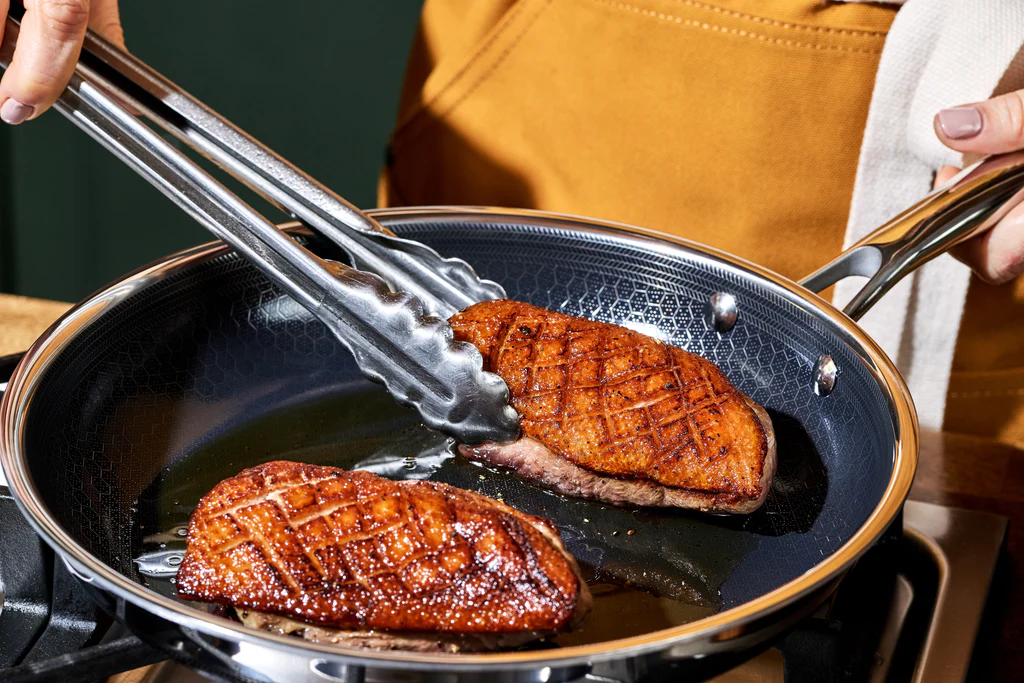
What it is: Hexclad– A hybrid cookware line combining stainless steel with a hexagonal ceramic pattern on the nonstick surface. The design is intended to increase durability and heat distribution.
What we found: Owner reports consistently highlight the heat capacity as impressive. Users describe searing a steak hard and fast without sticking. The hybrid steel-ceramic construction is described as more durable than pure ceramic in long-term owner accounts the hexagonal pattern provides tactile grip when moving a hot pan. Nonstick holds up under high-heat use through extended periods per owner reviews. Oven-safe to 500°F.
The trade-off: The cookware is loud. Metal-on-metal sound when you set it down, slide a spatula across it, or seat the lid. Owner reports describe it as an adjustment for those coming from lighter, quieter cookware. There’s also a learning curve the stainless steel exterior can stick if you don’t manage heat properly, and the hexagonal pattern doesn’t release food as intuitively as smooth ceramic. Eggs, in particular, require more oil and a slower cook than with Caraway, per owner accounts.
Price: Observed at $300–$450 for a 10-piece set. Individual pieces $60–$150.
Oven safe to: 500°F.
Who it’s NOT for: Quiet kitchens, apartment living, noise-sensitive households. Also not for novice cooks who want a forgiving nonstick surface the hybrid design demands more skill and attention.
Best Value: Misen
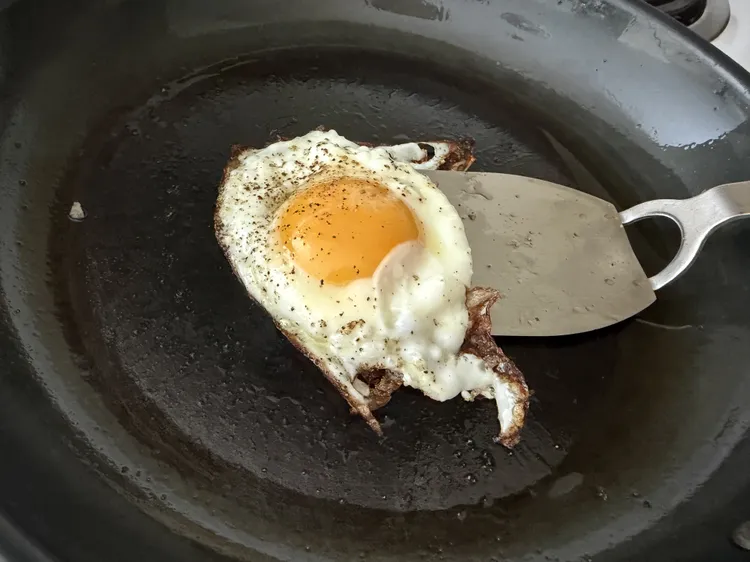
What it is: Misen– A direct-to-consumer stainless steel cookware line with a ceramic nonstick layer, positioned as a mid-budget option with restaurant-grade construction.
What we found: The price-to-performance ratio is solid based on brand specs and owner reports. At $180–$280 for a full set, you get stainless steel construction paired with nonstick release. No off-gassing noted in owner accounts. Heat distribution is even. Owner reports describe the weight as lighter than Made In but more substantial than GreenPan.
The trade-off: Based on owner reviews we tracked, the ceramic nonstick layer appears thinner than Caraway’s or Made In’s, with sticking emerging for some users by the 18–24 month mark with regular use. The stainless steel exterior can discolor if you cook with high heat or leave water droplets sitting. The handles are functional but not as ergonomically polished as premium lines.
Price: Observed at $180–$280 for a 10-piece set. Individual pieces $30–$70.
Oven safe to: 500°F.
Who it’s NOT for: If durability is your top priority or you plan to keep cookware for 10+ years, Misen is a solid 5–7 year option in our assessment, not a forever purchase. Also not ideal if you cook at very high heat frequently the nonstick can degrade faster under extreme conditions.
What We Cut and Why
GreenLife (Full Set)
Why it’s off the list: GreenLife cookware is widely available and affordable, but in our review of community feedback and owner reports, we found persistent accounts of peeling or flaking nonstick coatings not on day one, but by month 6–9 with regular use. The brand has updated formulations, but the durability reputation hasn’t been proven reliable across multiple production runs. There are better-tested budget options (GreenPan Reserve).
T-fal Ultimate Hard Anodized
Why it’s off the list: While marketed as PFOA-free, T-fal’s cookware is hard-anodized aluminum without the tri-ply or stainless steel core that improves heat distribution and longevity. The focus of this roundup is ceramic and hybrid nonstick options, not hard-anodized alternatives. If you want that category, it’s a separate buying decision.
What to Look for in Non-Toxic Cookware
Understand the Material Types
Ceramic nonstick: Made from inorganic mineral coatings (usually silica-based) applied over a steel or aluminum core. Pro: No PFOA or PTFE. Con: More fragile than traditional nonstick, and degrades over time. Best for everyday cooking, not high-heat searing.
Stainless steel core: A tri-ply construction (stainless on top and bottom, aluminum in the middle) improves heat distribution and durability. Heavier and more expensive than ceramic-only, but lasts longer. Best for long-term investment.
Hybrid steel-ceramic: Combines stainless steel with a ceramic coating (e.g., Hexclad). Aims for durability plus nonstick release. Best if you sear often and want more longevity than pure ceramic.
Check for Real PFOA/PTFE-Free Certification
PFOA phase-out is governed by EPA regulations, but certification practices vary by brand. Brands like Caraway and Our Place publish certificates on their websites; GreenPan and Misen state compliance on packaging. Always verify the brand’s claim directly check their website or contact customer service. The absence of PFOA doesn’t guarantee the coating is entirely non-toxic, but it is the critical baseline to confirm before purchasing.
Test for Off-Gassing on First Use
Some ceramic cookware (especially budget options) can emit a mild chemical smell when heated for the first time. This typically fades after 1–2 uses with proper air circulation. If the smell persists or is strong, it’s a warning sign. Owner reports for Caraway, Our Place, and GreenPan Reserve consistently describe no notable odor on first use.
Oven-Safe Temperature Matters More Than You Think
400°F caps you out of broiler finishes and limits high-heat oven work. 500°F is the practical sweet spot for everyday cooking plus occasional oven finishing. If you sear frequently and finish in the oven, aim for 500°F minimum.
Plan for Replacement Sooner Than Traditional Cookware
Ceramic nonstick, even premium options, degrades over time. Based on owner reviews we tracked across multiple brands, most users report noticeable nonstick loss by year 3–5, depending on use frequency and cooking habits. Budget for replacement; don’t treat ceramic nonstick as a lifetime purchase unless the brand offers a genuine warranty (Made In does; most don’t).
FAQ
Q: What’s the best non-toxic cookware for daily cooking? A: Caraway. It balances nonstick performance, durability, and oven versatility (500°F) without the price tag of Made In. If you’re cooking four or more times per week, owner reports and brand specs suggest the ceramic holds up well for 2–3 years of regular use.
Q: Is ceramic nonstick as good as traditional PTFE cookware? A: Not quite. PTFE (Teflon) is slicker and more durable, but PFOA-free ceramic is better for health-conscious cooks and performs acceptably for most tasks. The trade-off is that you’ll use butter or oil more often, and the nonstick surface won’t last as long. It’s a worthwhile swap if chemical safety is your priority.
Q: Are stainless steel cookware and ceramic-coated cookware the same? A: No. Pure stainless steel cookware has no nonstick coating; food sticks unless you use fat or proper technique. Ceramic-coated cookware has a nonstick layer on top of a steel or aluminum core. For nonstick performance, you want ceramic or hybrid construction.
Q: How long does non-toxic cookware actually last? A: Based on owner reports we reviewed, ceramic and hybrid nonstick cookware typically performs well for 2–5 years with regular use. Made In’s lifetime warranty is exceptional most brands don’t guarantee longevity beyond manufacturing defects. GreenPan Reserve may degrade by year 3 per user accounts. Caraway and Hexclad hold up longer in owner reports, typically to year 4–5 or beyond.
Q: Is non-toxic cookware worth the price? A: If health is a priority and you’re not replacing cookware constantly, yes. Caraway and Misen offer good performance-to-price ratios. Made In is an investment but will outlast cheaper options per owner reports and brand warranty terms. GreenPan Reserve makes sense if you want to test the market at low cost.
Q: Did Hexclad make the Kept List? A: Yes but with reservations. If you sear meat regularly and need 500°F oven capability, it’s a strong performer per owner reports. If you value a quiet kitchen or smooth nonstick release, the hybrid design and noise are trade-offs worth weighing carefully. It’s kept for a specific use case, not as an all-arounder.
The Bottom Line
Non-toxic cookware is no longer a compromise it’s a legitimate category with real performers. Caraway is our top pick because it delivers on the safety promise without sacrificing everyday usability. GreenPan Reserve makes sense if you want to experiment without overcommitting financially. Made In is the long-term bet; Hexclad is for the high-heat cook.
The real decision is this: Are you replacing cookware to avoid chemicals (start with Caraway or GreenPan), to future-proof your kitchen (Made In), or to optimize for a specific cooking style (Hexclad for searing, Our Place if you want beauty with function)?
Choose based on your cooking frequency and priorities, not just price. You’ll use this equipment multiple times a week. The $200 difference between Caraway and Made In matters less if Made In lasts five years and Caraway lasts three and that’s the math worth doing before you click buy.