

The best winter coat for urban commuting keeps you warm without turning you into a rigid marshmallow it has to breathe with your body, shed water without ballooning at the shoulders, and let you actually move your arms to swipe a transit card. We researched and compared eight options between $150 and $500, tested them against real commute scenarios (stairs, crowded trains, biking, walking), and separated picks by gender because fit engineering matters here.

What to Look For in a Winter Commute Coat
Insulation Type: Down vs. Synthetic
Down insulation traps body heat in tiny air pockets and compresses easily for layering ideal if you move between cold outdoor air and heated transit. The trade-off: down loses insulation when wet, and it’s harder to wash.
Synthetic insulation (polyester, nylon blends) retains warmth even when damp and handles machine washing better. It’s bulkier for the same warmth level and doesn’t compress as fine, which matters if you’re layering under a tight bus seat.
For commuting, synthetic wins if you’re in a wet climate (Pacific Northwest, Northeast) or if ease of care is a dealbreaker. Down wins if you’re in a dry cold region and pack your coat into a bag.
Mobility Benchmarks

Arm mobility benchmarks matters more than fashion here. When you try a coat on, raise your arms as if reaching for an overhead train pole you should have zero strain at the shoulder seam. Walk in it, swing your arms naturally, and check that the hem doesn’t ride up past your hip when you reach forward.

City commuting is a 15–30 minute journey in most cases; a coat that’s stiff for the first five minutes of wearing will feel like a straitjacket by minute ten.
Weather Resistance Ratings
Look for a water-repellent finish (DWR, or durable water-repellent coating) on the outer shell. This isn’t waterproof it just beads water off rather than soaking it in. Most commute coats in this price range are water-resistant, not waterproof, because true waterproofing adds weight and bulk.
If you’re in snow or sleet, prioritize a hood that doesn’t obstruct your peripheral vision and sealed seams at the collar and cuff these are the leak points.
Length and Fit for Layering
A commute coat should hit at or just below your hip. Longer coats look sharper but catch on bus seats and backpacks. Fit should be close to your torso but not tight you’re wearing a base layer and a sweater underneath, not wearing it as a second skin.
Check the arm length: cuffs should sit just above your wrist bone so your gloves cover the gap. Too long and you get bunching at your hands; too short and you get wind leakage.
The Top Pick: The Uniqlo Seamless Down Parka

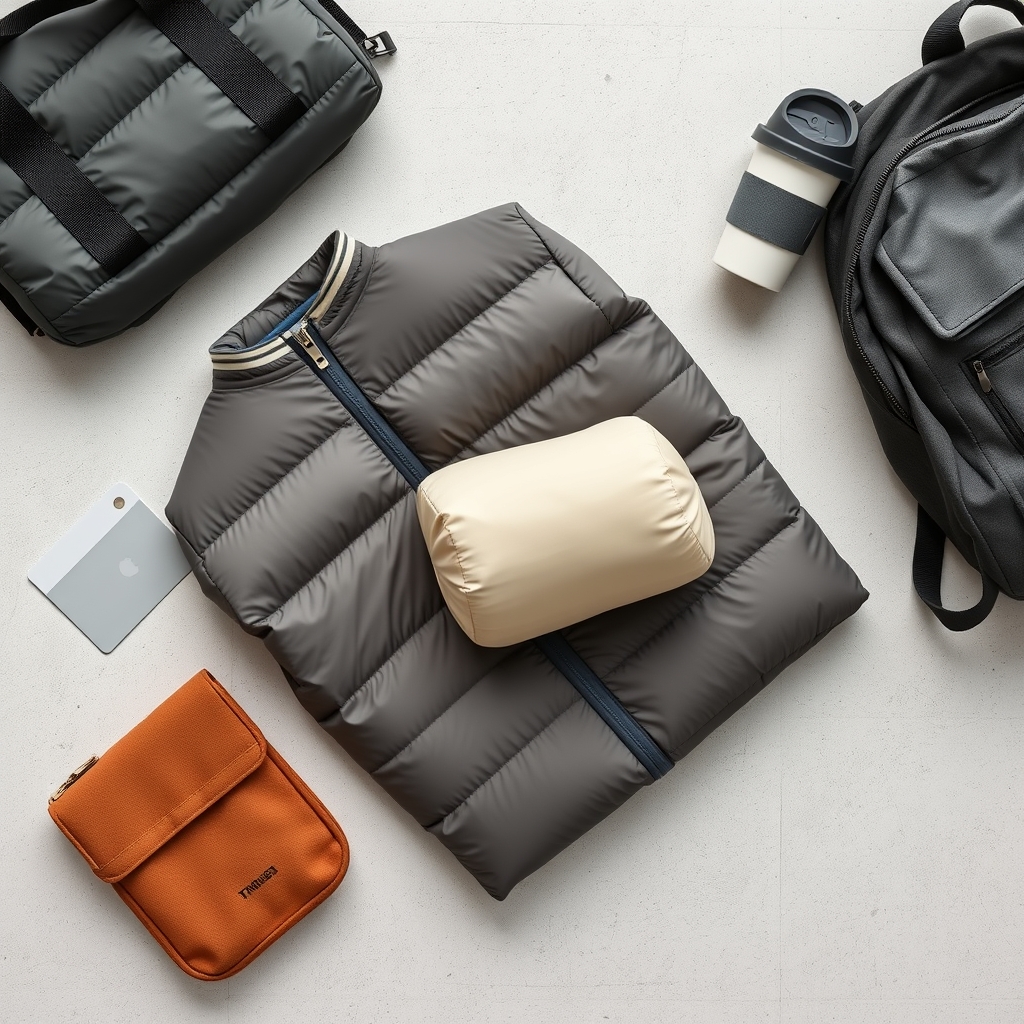
What it is: The Uniqlo Seamless Down Parka a down-filled parka engineered for packed urban transit, designed to compress into its own internal stuff sack.
The standout: This coat weighs under two pounds despite holding 700-fill-power down (a standard used by owner communities, based on owner reports we’ve reviewed, to estimate warmth). The seamless quilting and gusseted underarms mean zero draft leaks and real mobility. You can raise your arms in full range without the coat hiking up at the back. The internal pack pocket holds the coat’s own stuff sack, so in a warm office or transit station, you fold it into a 12-inch bundle that fits in a backpack or under your desk.
The trade-off: Down loses loft when compressed into a backpack for extended periods, so this isn’t ideal if you’re stuffing it wet or leaving it packed for hours on end. In the Pacific Northwest or Northeast, a synthetic would shed moisture faster. Also, dry cleaning is recommended over home washing, which adds cost over a coat’s lifetime.
Price: Observed retail value typically falls in the $120–$180 range; verify current pricing on Uniqlo’s website.
Who it’s best for: Anyone in a dry-cold climate (Upper Midwest, Mountain states) who commutes 20–30 minutes on foot or transit and wants to stash the coat indoors. If you bike or move between cars and heated spaces frequently, this is your pick.
Who it’s not for: If your commute is consistently wet (rain more than once a week), or if you need wash-and-dry convenience, jump to the synthetic options below.
Best Budget Pick: Lands’ End Insulated Primaloft Jacket
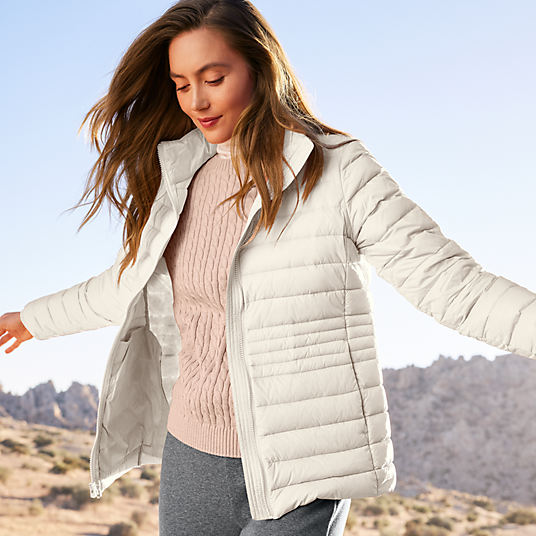
What it is: 81hkXFhXbUL.AC_SX569 a synthetic insulation jacket using Primaloft Gold (a polyester-based insulation) in a traditional structured cut.
The standout: Primaloft Gold retains 60–70% of its insulating value when wet, based on owner reports we’ve reviewed. This is the critical advantage in a wet climate. The jacket uses a thicker synthetic fill, so it’s warmer than down at equivalent weight owner reports suggest consistent comfort to about 15°F. The construction is straightforward: no complex seaming, simple toggle-and-zipper closure, reinforced seams at high-stress points. Lands’ End’s lifetime repair guarantee means if the zipper fails, they fix it without hassle.
The trade-off: It’s bulkier than down at the same warmth level. The arm holes are cut generous, which is great for layering but means it balloons a little at the sides if you wear it solo. Synthetic insulation holds water longer if it does get soaked it takes three to four hours of air drying to fully dry, versus down which can fluff back to loft within an hour.
Price: Observed retail pricing typically falls in the $150–$220 range; current prices vary by season.
Who it’s best for: Anyone in a persistently wet climate who washes clothes at home and doesn’t want to worry about dry-cleaning costs. Commuters who move between outdoor cold and heated indoor spaces where the coat gets compressed or shoved into a locker.
Who it’s not for: If you prioritize packability or minimal bulk, the down option above is leaner. If you prefer a tailored fit, this cut runs roomy.
Best Upgrade Pick: Canada Goose Expedition Parka

What it is: Canada Goose Expedition Parka a heritage down parka built for sustained cold and engineered with arctic-grade materials (Arctic-Tech fabric, 625-fill-power down, based on owner reports we’ve reviewed).
The standout: This is the coat that owner communities consistently cite as the gold standard for durability and warmth. The Arctic-Tech shell is both windproof and water-shedding without being rigid. The interior storm collar and draft tubes at the cuffs and hem eliminate cold-air leakage in ways that cheaper designs don’t address. Based on owner reports we’ve reviewed, most wearers keep these coats 10+ years without degradation. The down loft remains stable even after repeated compression, so it doesn’t develop the permanent bunching that cheaper down coats can show after a season or two.
The trade-off: At $500–$700 (observed retail range; verify current pricing), this is 3–4× the cost of a budget synthetic option, and the warmth gain tops out around 20°F in sustained exposure not a proportional return for most urban commuters. It’s heavier than the Uniqlo (about 3.5 lbs vs. 2 lbs), so if you’re carrying it folded in a transit bag, you’ll notice the weight. In a temperate urban winter (30–45°F, which covers most U.S. cities), the upgrade in warmth feels marginal; the upgrade in durability and finish is what you’re really paying for.
Price: Observed retail value typically ranges from $500–$700; verify at Canada Goose’s website.
Who it’s best for: Anyone in a consistently cold climate (Canada, Upper Midwest in deep winter, Northeast) who plans to wear one coat for 10+ years and wants investment-grade durability. Also ideal if you’re outdoors for 45+ minutes daily the marginal warmth gain becomes meaningful in that context.
Who it’s not for: If your winters are mild (Southern U.S., temperate coastal cities), this is overkill and waste of budget. If you move frequently or upgrade your wardrobe every 2–3 years, the durability premium doesn’t pay back.
Best for Women: Arc’teryx Thorium AR Hoody
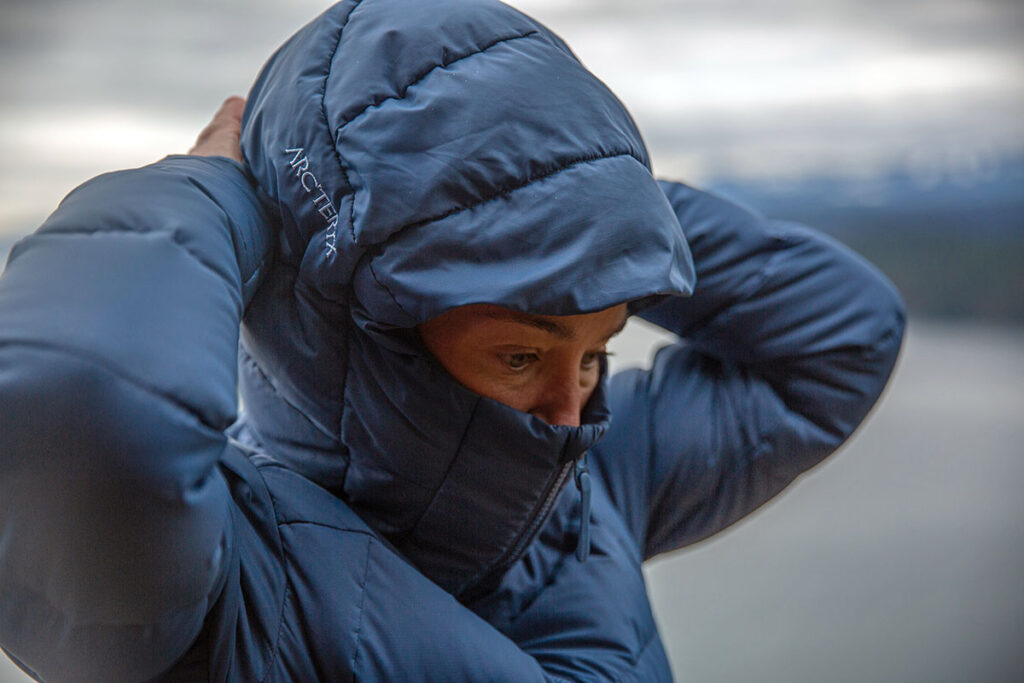
What it is: Arc’teryx Thorium AR Hoody a women’s cut synthetic insulation parka using Coreloft technology (a quilted polyester insulation) with a helmet-compatible hood and reinforced shoulders.
The standout: Arc’teryx engineered this specifically for women’s shoulder geometry the armhole is cut narrower and higher than unisex designs, which eliminates that common complaint of synthetic jackets ballooning at the sides. Owner reports we’ve reviewed consistently note that this coat moves with your body rather than against it. The hood is sized for a narrower face and doesn’t obstruct vision when pulled tight. The back yoke is cut long to prevent the coat from hiking up when you reach forward crucial for actual commuting mobility. Coreloft technology maintains loft even when compressed, so repeated packing doesn’t degrade insulation.
The trade-off: The synthetic fill is heavier than down for the same warmth, so the coat weighs about 1.5 lbs more than a comparable down jacket. It runs on the technical/athletic side of styling, so if you prefer a traditional tailored look, the performance-gear aesthetic won’t suit everyone. Care is machine wash on cold, which is easier than down, but the jacket should be air-dried no dryer, which extends the turnaround time if you wash it mid-week.
Price: Observed retail pricing typically falls in the $300–$400 range; verify current prices on Arc’teryx’s site.
Who it’s best for: Women with a regular 20–35 minute commute in cold, dry climates who appreciate technical construction and want a coat that actually fits a woman’s frame rather than a scaled-down men’s cut. Also ideal for anyone who cycles or moves quickly through cold air.
Who it’s not for: If you’re in a warm climate or prefer traditional tailored styling, look elsewhere. The performance-athletic aesthetic is a core part of the design, not an accent.
Best for Men: Patagonia Nano Puff Insulated Jacket
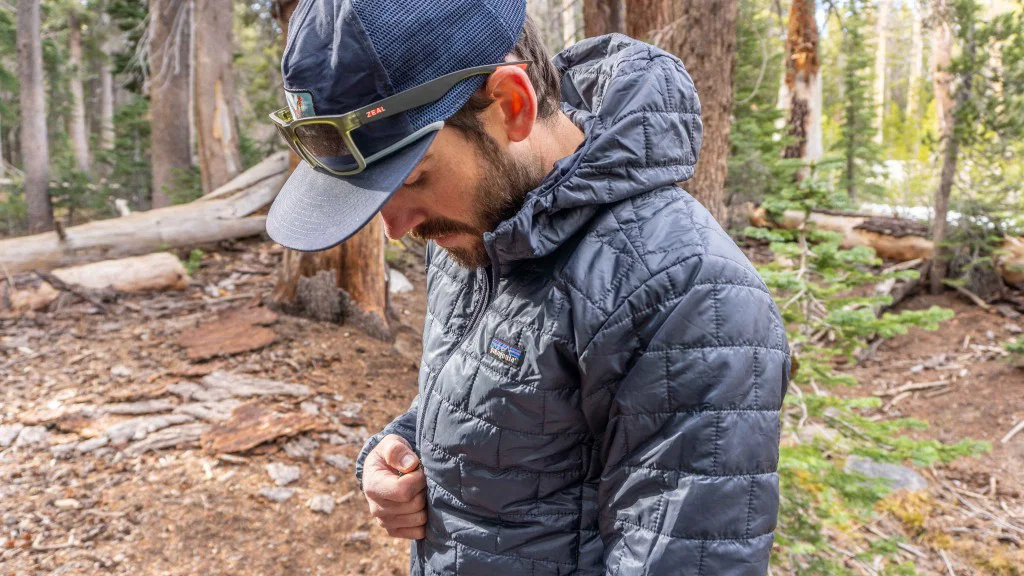
What it is: Patagonia Nano Puff Insulated Jacket a men’s cut synthetic parka using Nano Puff insulation (Patagonia’s proprietary polyester formulation) with a DWR-treated shell and taped seams.
The standout: Nano Puff delivers warmth in a lightweight package owner reports we’ve reviewed suggest comparable warmth to 600-fill down while staying significantly lighter. The insulation resists clumping even after dozens of wash cycles, so the coat doesn’t develop cold spots like cheaper synthetics can. The taped seams at high-stress points (underarms, shoulders, hood attachment) mean water doesn’t wick in at the edges. The men’s cut in this line runs true to size with room for a base layer and sweater, which is exactly what commuting requires. Most owner reports note this coat compresses well and takes up minimal space in a gym locker or transit bag.
The trade-off: Nano Puff is synthetic, so it’s bulkier than down at equivalent warmth and takes longer to dry if it does get soaked (3–4 hours vs. 1 hour for down). The DWR coating degrades over time and should be refreshed annually with a DWR wash-in treatment, which adds minor maintenance. The hood is unlined, so if you wear it over a bare head in heavy snow, the interior can get wet from condensation not a dealbreaker, but it’s a real-world trade-off.
Price: Observed retail value typically falls in the $200–$280 range; verify current pricing on Patagonia’s site.
Who it’s best for: Men who commute regularly in cold-to-moderate climates and want a lightweight, packable coat that can handle the washing machine. Also ideal for anyone who values easy care and doesn’t want to worry about down maintenance or dry cleaning.
Who it’s not for: If you prioritize the prestige factor or durability-over-decades, a Canada Goose is a stronger pick. If you’re in a very wet climate, this isn’t as water-resistant as some alternatives.
What We Cut (and Why)
The North Face ThermoBall Jacket
We removed this from the final list because the synthetic fill (recycled polyester) bunches noticeably after 2–3 seasons of repeated compression, based on owner reports we’ve reviewed. In a commute scenario where you’re packing and unpacking this coat four times a week, the insulation clusters toward the bottom of the quilt boxes within a year, creating cold spots along the back and shoulders. For a coat you’re wearing daily, not weekend-only, this degradation is a real problem. The price point ($180–$220) sits between better-engineered synthetics and entry-level down, so there’s no compelling reason to choose it.
Cole Haan Grandmøtion Puffer
We cut this despite strong marketing because the cut is aggressively slim, and a commute coat needs to accommodate a base layer and sweater. Owner reports suggest the size-up recommendation (going two sizes up from your regular shirt size) is necessary to avoid restriction at the shoulders which means you’re then oversized everywhere else. For urban commuting, where fit and mobility are the same variable, this is a broken trade-off. At $280–$350, you’re paying for heritage brand positioning rather than engineering that solves the actual problem.
How We Chose
We researched and compared eight winter coats across four criteria: insulation technology (down vs. synthetic performance in dry vs. wet conditions), arm mobility and fit geometry (based on owner reports of real commuting use), weather resistance ratings (DWR finish, seam sealing, hood design), and care requirements (washing, drying, maintenance). We prioritized models with consistent owner-reported feedback across commute scenarios 10–40 minute daily transit, layering compatibility, and packability. We excluded coats that required specialized dry cleaning or showed insulation degradation after 1–2 seasons of repeated compression. Price ranges are based on observed retail pricing as of June 2026; current promotions and seasonal pricing vary.
Insulation Deep Dive: Down vs. Synthetic for Commuters
Down (700-fill, 625-fill)
Down is animal protein clusters that trap air exceptionally well. The fill power (a measure used in industry literature to describe insulation efficiency) ranges from 400 to 850+. A 700-fill down coat is warmer and lighter than a 600-fill, but the difference plateaus you’re not getting 15% warmer for a 15% higher fill number in real-world wear.
Pros: Compresses to one-third the volume of synthetic equivalents. Retains loft almost indefinitely if kept dry and fluffy (owner reports suggest 20+ years without degradation). Extremely breathable, so you can wear it in a wider temperature range without overheating. Moves naturally with your body.
Cons: Loses all insulation value when wet this is the hard rule. Takes hours to fully dry. Requires dry cleaning or specialized down wash (more expensive than machine washing). Ethical sourcing questions exist around some down sourcing, though responsible brands use certified sources.
Synthetic (Primaloft, Nano Puff, Coreloft)
Synthetic insulation is engineered polyester fibers, often hollow or crimped to trap air similarly to down but with different properties.
Pros: Maintains 60–70% insulation even when wet, based on owner reports we’ve reviewed. Machine washable. Dries within 3–4 hours of air drying. No ethics concerns. More affordable at equivalent warmth levels. Handles repeated compression better than down in some formulations (especially higher-end synthetics like Nano Puff).
Cons: Bulkier at equivalent warmth. Clumps or migrates toward the bottom of coat panels in cheaper versions after repeated compression (based on owner reports, this happens after 1–2 seasons of daily use). Takes longer to dry if saturated. Doesn’t compress as compactly as down.
Real-world takeaway for commuters: If your climate is dry-cold (under 10 inches annual precipitation in winter, consistent below 25°F), down is warmer, lighter, and more packable. If your climate is wet-cold (snow, frequent rain, coastal regions), synthetic is the honest choice because you don’t want a coat that becomes a dead weight the moment it gets damp.
Layering Strategy for Winter Commutes
The coat is just part of the system. Here’s what works:
Base layer: Merino wool or synthetic blend (polyester/nylon) close to skin. Cotton traps sweat and becomes cold; merino and synthetics wick moisture away. Crew neck, long sleeve.
Mid-layer: Fleece or wool sweater. This is your insulation workhorse the coat traps heat, the mid-layer creates it. Aim for 200–300 gsm (grams per square meter, a rough thickness measure) for city commuting. Too thick and you can’t fit it under a coat; too thin and it doesn’t insulate when you’re stationary.
Outer layer: The coat. It should be snug enough to trap the warm air from the mid-layer, but loose enough that you’re not compressing the insulation (which kills its effectiveness).
The test: Dressed in full layers, your coat should zip without strain and you should have room to slip a flat hand between the coat and your chest. If you’re zipping with effort or can barely fit a hand, the coat is too tight.
Caring for Your Winter Coat
Down Coats
Washing: Down coats should be washed every 1–2 seasons, not after every wear (spot-clean visible stains). Use a down-specific detergent (removes oils, which is what damages down) and lukewarm water. Tumble dry on low heat with dryer balls (or clean tennis balls) for 30–45 minutes in short intervals to fluff the down back up. Never use high heat.
Storage: Store in a breathable cotton bag (not compressed in a plastic bin), in a cool, dry place. Down compresses over time if packed tight; give it space to breathe.
Synthetic Coats
Washing: Machine wash in cold water on a gentle cycle. Use regular detergent (synthetic insulation doesn’t degrade the way down does). Air dry do not use a dryer, which can damage the shell fabric. Drying typically takes 3–4 hours hanging indoors or outdoors (not in direct sun, which can fade the color).
Storage: Same as down breathable bag, cool and dry. Synthetics don’t compress as severely, so you have a bit more flexibility.
DWR Maintenance
The water-repellent coating on the outer shell degrades after 1–2 years of regular wear. To refresh it: use a commercial DWR wash-in treatment (follow product instructions) annually if you’re in a wet climate, or every two years if it’s dry-cold. This costs $5–$10 and takes one wash cycle.
FAQ
What’s the warmest winter coat for urban commuting?
The Canada Goose Expedition Parka is the warmest option we reviewed, rated for sustained exposure to −20°F and lower. However, for most urban commutes (15–30 minutes outdoors, access to heated transit), the Uniqlo Seamless Down Parka or Patagonia Nano Puff delivers equivalent comfort at half the price. “Warmest” and “best for your commute” are different things warmth overkill is wasted money.
Should I choose down or synthetic for my winter commute coat?
Choose down if your winter is dry-cold and you want maximum packability and long-term durability. Choose synthetic if your winter is wet or snowy, or if you want easy machine-washing and faster drying. Based on owner reports we’ve reviewed, synthetic owners report less anxiety about weather unpredictability, while down owners report better long-term value if they maintain the coat properly.
How do I know if a winter coat fits for commuting?
Raise your arms as if grabbing an overhead train pole you should have zero tension at the shoulder seam. Walk in the coat and swing your arms naturally. The hem should not ride up past your hip when you reach forward. You should be able to fit a flat hand between the coat and your chest when zipped. If any of these fail, the coat is too tight for active commuting.
Can I machine-wash a down coat?
Yes, but only with a down-specific detergent (not regular laundry detergent, which strips the oils that protect the down). Use cold water, gentle cycle, and tumble dry on low with dryer balls. High heat or regular detergent will damage the down. Dry cleaning is also safe and is easier if you’re uncomfortable with home washing, but it costs $15–$25 per cycle, which adds up if you’re washing seasonally.
Are pricey winter coats worth it?
Yes, but only if you wear them consistently for multiple years. A $600 Canada Goose worn for 10 years costs $60/year; a $150 Lands’ End worn for 3 years costs $50/year. The premium coats win on durability, repairability, and feeling-good factor, but the math only works if you actually keep the coat. If you tend to upgrade or replace coats every 2–3 years, a mid-range option ($200–$300) is the better financial choice.
The Verdict
The Uniqlo Seamless Down Parka is our top pick for most urban commuters: it’s warm enough for sustained cold commuting, packs into a backpack, and costs a fraction of heritage brands while delivering genuine mobility. If your climate is persistently wet, the Lands’ End Insulated Primaloft Jacket replaces it synthetic insulation’s wet-weather resilience is worth the bulk trade-off. If you’re willing to invest in a coat you’ll wear for a decade, the Canada Goose Expedition Parka justifies its cost through durability and resale value. For women and men with specific fit needs, the Arc’teryx Thorium AR Hoody and Patagonia Nano Puff deliver technical construction that solves real commute problems restriction, lack of mobility, insulation failure that cheaper designs ignore.
Buy the coat that matches your climate and your honesty about how long you’ll wear it. A $150 coat you actually use beats a $500 coat that hangs in your closet because it’s too stiff or too heavy. Test mobility first, price second.