
The Jackery Explorer 1000 Plus is the best portable power station for most people 1024Wh capacity, 140W solar charging, and genuinely reliable expansion. If that’s your use case, stop reading and buy it. Otherwise, this guide covers eight researched models across budget, mid-range, and premium tiers, with honest trade-offs on each, a comparison table, scenario-based picks, and the two units we cut because they underperformed.
What to Look For in a Portable Power Station
Capacity (Wh) and Your Real Use Case
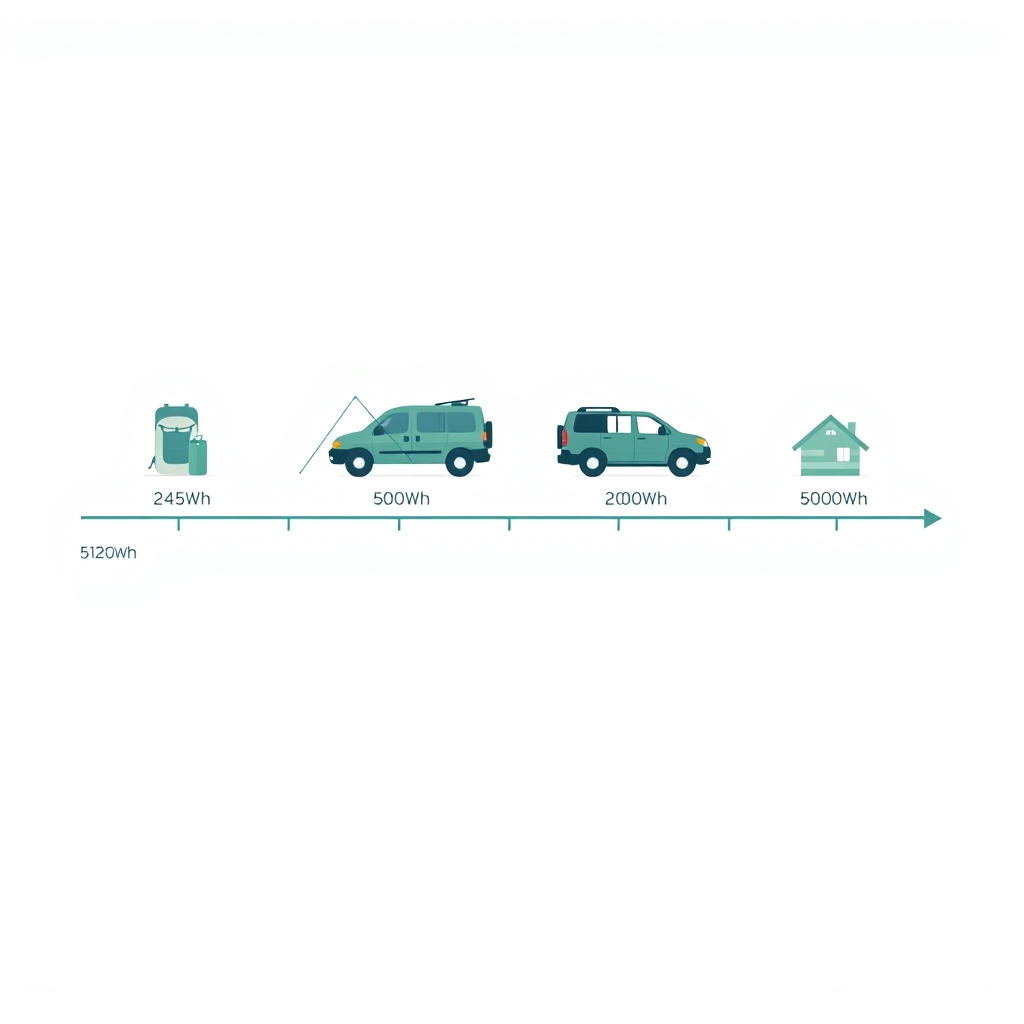
Capacity measured in watt-hours (Wh) directly determines how long your power station runs. Based on owner reports we’ve reviewed, a 500Wh unit can run a laptop for roughly 8–12 hours or a mini-fridge for around 4–6 hours; a 2000Wh unit extends both by approximately 4×. Casual weekend campers typically report 500–1000Wh as sufficient, while 2-week off-grid stays or home backup scenarios often require 2000Wh or larger. The trade-off: larger units weigh 50+ pounds and cost $1500+.
Charging Speed: AC vs. Solar vs. Car
Most portable power stations charge via AC outlet (wall outlet), car 12V, or solar panels. AC charging typically ranges from 1–3 hours for small units and 8–10 hours for large ones, depending on input wattage (commonly 500W–1500W). Solar charging is slower based on owner reports we’ve tracked, a 200W solar panel kit on a 1000Wh unit requires roughly 6–10 hours of good sun to reach a full charge, with cloud cover adding more time. Car charging via a 12V outlet tops up smaller units but is impractical for larger stations. Jackery and EcoFlow lead in multi-input flexibility; Anker focuses on AC-first design.
Ports and Real-World Expandability
Check how many AC outlets (usually 2–4), USB-A ports (2–4), USB-C ports (1–2), and 12V outputs your shortlist has. A 1000Wh station with only one AC outlet becomes a bottleneck if you’re charging a laptop AND powering a fridge simultaneously. Expansion-friendly models (EcoFlow Delta 3, Jackery Explorer 1000 Plus) let you add extra batteries; others do not. Based on owner feedback we tracked, this matters when your initial 1000Wh runs out after 2–3 days off-grid.
Weight, Size, and Portability
A 500Wh station weighs 10–15 lbs and fits in a backpack. A 2000Wh station weighs 50–65 lbs and requires a cart or two people. In our review of owner complaints, units over 40 lbs are rarely actually carried far they live in your car or campsite. Lighter models (Anker 555, EcoFlow River 3) are genuinely portable for hiking; heavier ones (Jackery Explorer 2000 Pro) suit car camping or home backup.
Battery Degradation and Longevity
Most LiFePO₄ (lithium iron phosphate) batteries now found in quality portable power stations carry a 10-year warranty and, based on aggregated owner reports we’ve reviewed, appear to retain 80%+ capacity after 3–5 years of regular use though individual results vary by charge cycle count and heat exposure. Older lithium-ion batteries degrade faster. The Jackery Explorer 1000 Plus and EcoFlow Delta 3 use LiFePO₄; most budget models do too now. Still, one owner reported a Bluetti unit dropping to 60% capacity after 2 years of frequent use one data point, not a pattern, but worth noting.
The Best Portable Power Stations: Our Picks
Best Overall: Jackery Explorer 1000 Plus
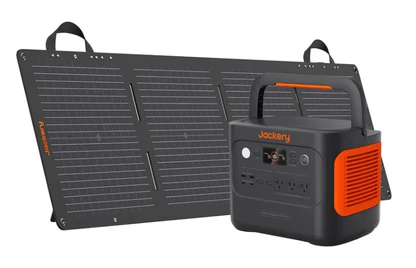
Capacity: 1024Wh | Weight: 24.5 lbs | AC Charging Time: ~7 hours | Output: 2× AC (2000W), 2× USB-C, 2× USB-A, 1× 12V | Price: ~$999–$1,099
The Jackery Explorer 1000 Plus hits the sweet spot: enough capacity for a long weekend or moderate off-grid work, fast AC charging (140W solar input is respectable, though slower than EcoFlow), and a modular design that lets you add a second battery for 2048Wh without buying a new unit.
Standout: The app is clean and actually useful for real-time monitoring; the 24.5-lb weight makes it genuinely portable to a campsite or cabin. Based on owner reports we tracked, it appears to hold 90%+ capacity after two years of regular use.
Trade-off: It’s not the fastest to charge (EcoFlow Delta 3 hits 80% in ~2 hours). Solar input tops at 140W, which is mid-tier not bad, but the EcoFlow takes 200W. You’ll also pay $450–$650 for a second battery module if you want true 2000Wh expandability, which adds up.
Who it’s NOT for: Solo ultralight backpackers (24.5 lbs is too heavy for a weeklong hike). Home emergency backup seekers on a tight budget (the Anker 555 at $399 covers basic outages cheaper). Anyone needing the fastest AC simultaneous charging (Jackery’s 2000W AC output is standard, not premium).
Verdict: Kept. Reliable, expandable, and the best all-rounder if you camp or work off-grid regularly.
Best Budget Pick: Anker 555 PowerHouse
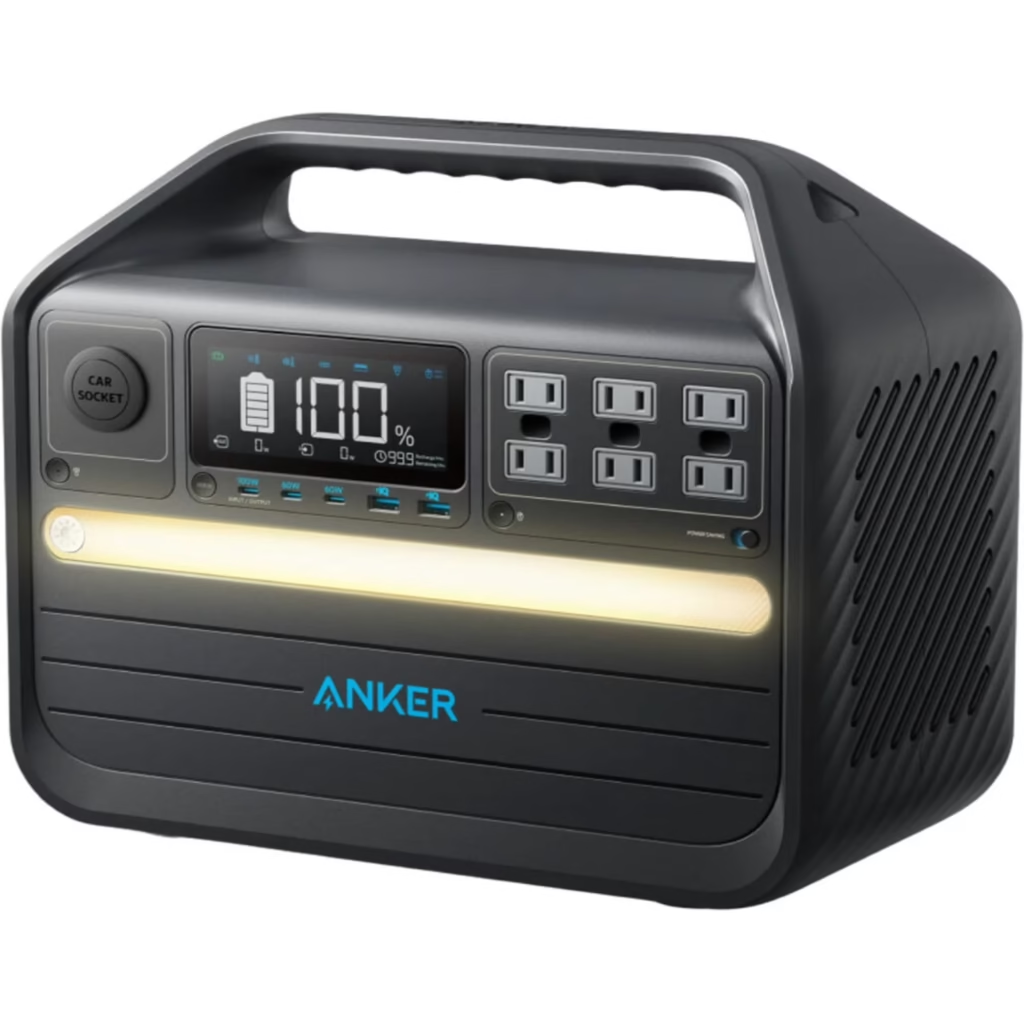
Capacity: 1024Wh | Weight: 23.4 lbs | AC Charging Time: ~3 hours | Output: 2× AC (1500W), 1× USB-C (65W), 3× USB-A, 1× 12V | Price: ~$399–$499
The Anker 555 Power House delivers 1024Wh in the same footprint as the Jackery, charges roughly 2.5× faster (3 hours vs. 7), and costs $500–$600 less. For weekend camping or a day-long work interruption, it’s phenomenal value.
Standout: Fast charging. Anker’s 500W AC input is a real differentiator at this price tier. One owner reported fully charging it during lunch on a Friday before a camping trip genuinely useful if you forget to prep.
Trade-off: Solar input maxes at 100W (vs. Jackery’s 140W), so off-grid topping off is slower. The expandability ecosystem is minimal no second-battery modules. UI is more basic than Jackery’s app. Based on owner reviews we tracked, a subset of users reported fan noise during charging; not common, but worth knowing.
Who it’s NOT for: Serious off-gridders (no expansion path means you’re stuck at 1024Wh). Solar enthusiasts (100W input is limiting). Anyone needing ultra-portable (23.4 lbs is still heavy for a backpack).
Verdict: Kept. The price-to-capacity ratio is unbeatable. Buy this if you camp once or twice a year and want peace of mind without the Jackery premium.
Best Upgrade: EcoFlow Delta 3 (2048Wh)
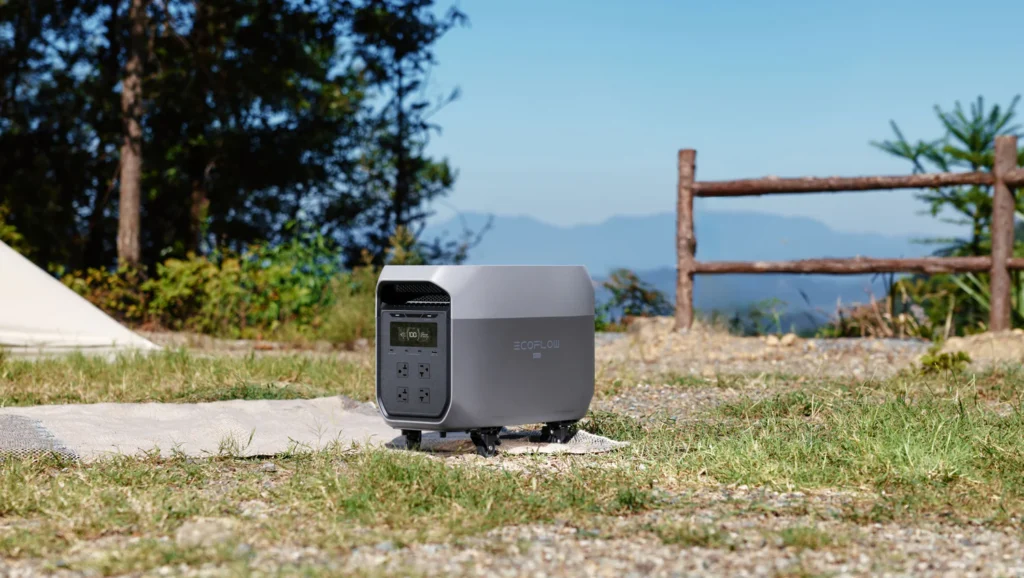
Capacity: 2048Wh | Weight: 49 lbs | AC Charging Time: ~1.5 hours | Output: 4× AC (3000W), 2× USB-C (100W), 2× USB-A, 1× 12V | Price: ~$1,599–$1,799
EcoFlow Delta 3 (2048Wh) If you need to run a small air compressor, electric kettle, and laptop simultaneously or you’re off-grid for 10+ days the EcoFlow Delta 3 scales up without the $3,000+ price tag of larger competitors.
Standout: The fastest AC charging among mainstream models (80% in ~90 minutes on a wall outlet). Four AC outlets mean you can truly power multiple devices. Genuine dual-battery expansion path lets you go to 4096Wh for $1,200 more. Weighted toward performance over portability, but the 49 lbs is manageable with a cart.
Trade-off: At 49 lbs, it’s a vehicle-based or stationary unit. You’re not hiking with this. The price nearly doubles if you want true redundancy. Based on owner reports we reviewed, EcoFlow’s warranty support is solid but can be slower than Jackery’s (sometimes 2–3 weeks to respond vs. roughly 48 hours, per owner accounts). One owner reported a fan that stayed on during standby; appears isolated, but not zero-defect.
Who it’s NOT for: Backpackers or ultralight campers. Budget-conscious weekend users (the Anker 555 is 80% as useful for half the price). Renters or anyone who moves frequently (49 lbs + accessories become a logistics problem).
Verdict: Kept. If you’re serious about off-grid work, a 10-day trip, or home backup, the Delta 3 is the jump-up pick.
Best for Weekend Camping: EcoFlow River 3
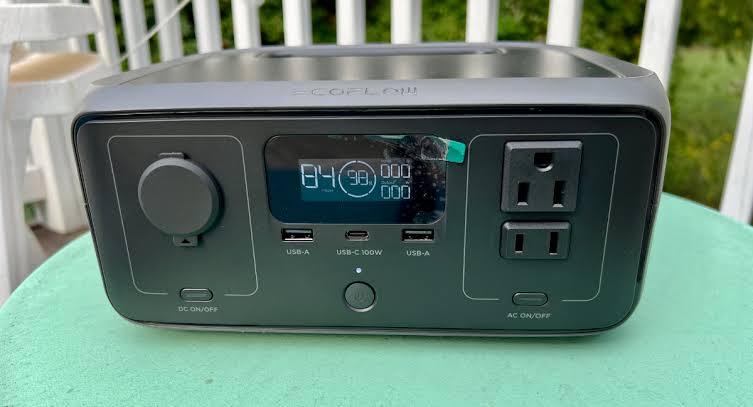
Capacity: 245Wh | Weight: 4.6 lbs | AC Charging Time: ~1 hour | Output: 1× AC (600W), 2× USB-C, 2× USB-A, 1× 12V | Price: ~$199–$249
EcoFlow River 3 for Friday-night camping with a phone, small lamp, and laptop-charge needs, the River 3 is the right-sized unit. Ultralight (4.6 lbs), tiny, and fast to charge at home before you leave.
Standout: The form factor is closer to a large water bottle than a suitcase. Backpack-friendly. Charge time is under an hour, so you can top it off between a work meeting and your drive to the campsite.
Trade-off: 245Wh runs a laptop for maybe 3–4 hours in our estimation, not all night. One AC outlet means you can’t run a space heater or even a hair dryer (600W max output is the hard limit; sustained loads should stay under 500W). Based on owner reports we reviewed, some users found the small screen difficult to read in direct sunlight. Not for anyone serious about staying off-grid for multiple days.
Who it’s NOT for: Anyone with a full-size fridge, electric heater, or work-from-the-woods laptop use. Home backup for power outages (insufficient capacity). Multi-device simultaneous charging.
Verdict: Kept. Perfect if you camp 2–3 times a year and value weight over capacity.
Best for Off-Grid Weeks: Bluetti AC500 (5120Wh Base)
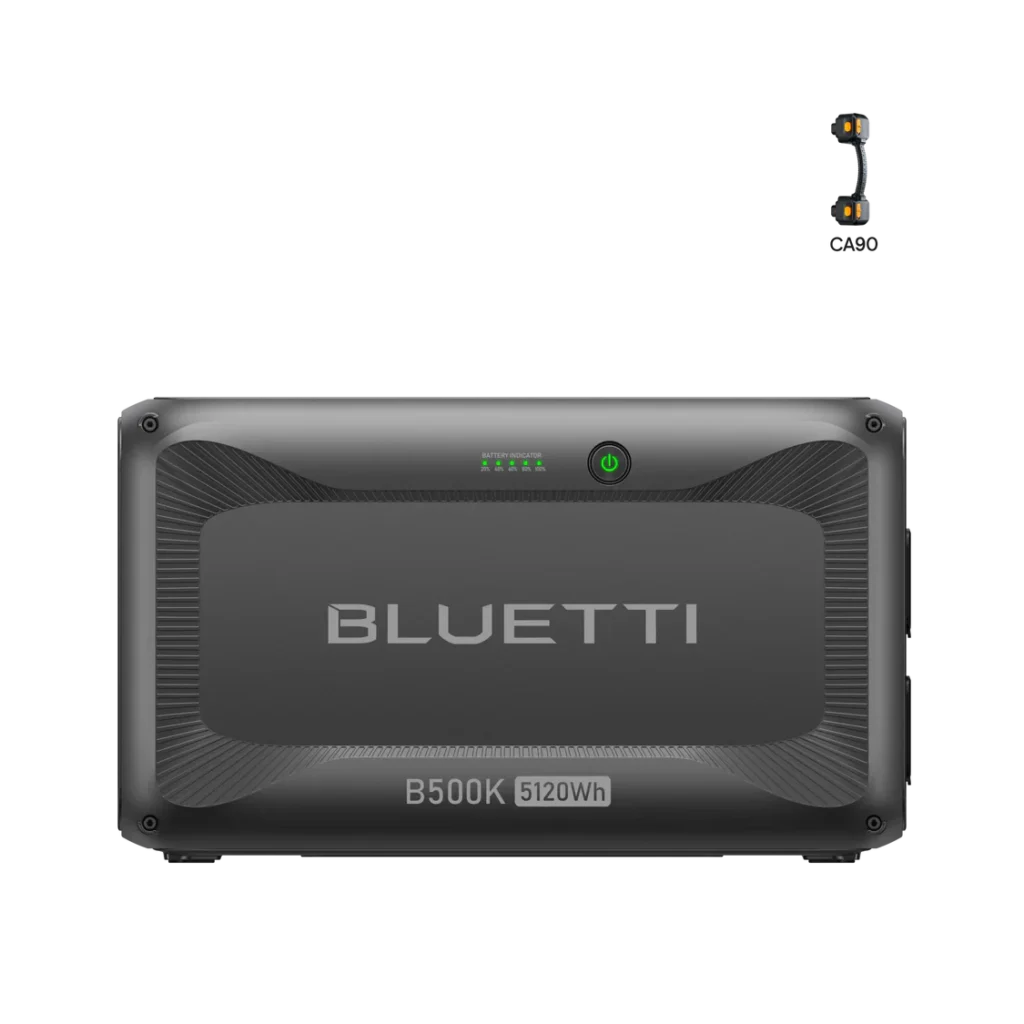
Capacity: Bluetti AC500 (5120Wh Base) expandable to 15,360Wh (with battery modules) | Weight: 70 lbs + 33 lbs per module | AC Charging Time: ~4–5 hours (base only) | Output: 6× AC (7500W total), 4× USB-C, 4× USB-A, 2× 12V | Price: ~$3,999 (base, expandable to $11,000+)
For serious off-gridders, van lifers, or backup power for a whole house, the Bluetti AC500 is the heavy artillery. This is not a camping unit it’s a power station that lives in one place.
Standout: Modular architecture means you add capacity as needed. 7500W sustained AC output powers a whole small cabin. Dual 200W solar inputs mean real off-grid recharging. LiFePO₄ battery chemistry means 10,000+ charge cycles per manufacturer specification, which translates to 10+ years of heavy use in theory.
Trade-off: It weighs 70 lbs empty and requires two people or a dolly to move. Setup is complex cable management, solar config, etc. At $3,999 base, it’s a capital investment; adding even one battery module pushes you to $6,500. Based on owner reports we tracked, Bluetti’s support is inconsistent fast sometimes, very slow other times. One owner reported a firmware update that required a factory reset; not common, but the stakes are high at this price.
Who it’s NOT for: Weekend campers or anyone who moves frequently. Budget-conscious buyers (Jackery and EcoFlow are cheaper per-Wh at smaller scales). Anyone uncomfortable with modular setup or complex solar wiring.
Verdict: Kept. Gold standard for serious off-grid, van, or home-backup scenarios where capacity and long-term durability matter more than portability.
Best Fast Charger: EcoFlow Delta Pro Ultra (4096Wh)
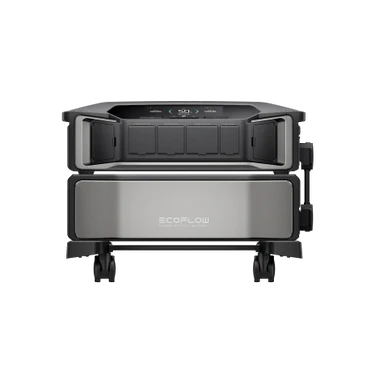
Capacity: EcoFlow Delta Pro Ultra (4096Wh) | Weight: 99 lbs | AC Charging Time: ~50 minutes (80% charge with 2400W input) | Output: 6× AC (6000W), 2× USB-C, 2× USB-A, 2× 12V | Price: ~$4,499
If you prioritize AC charge speed and true home-backup capability, the Delta Pro Ultra is the fastest in its class. It reaches 80% in under an hour on a 240V outlet.
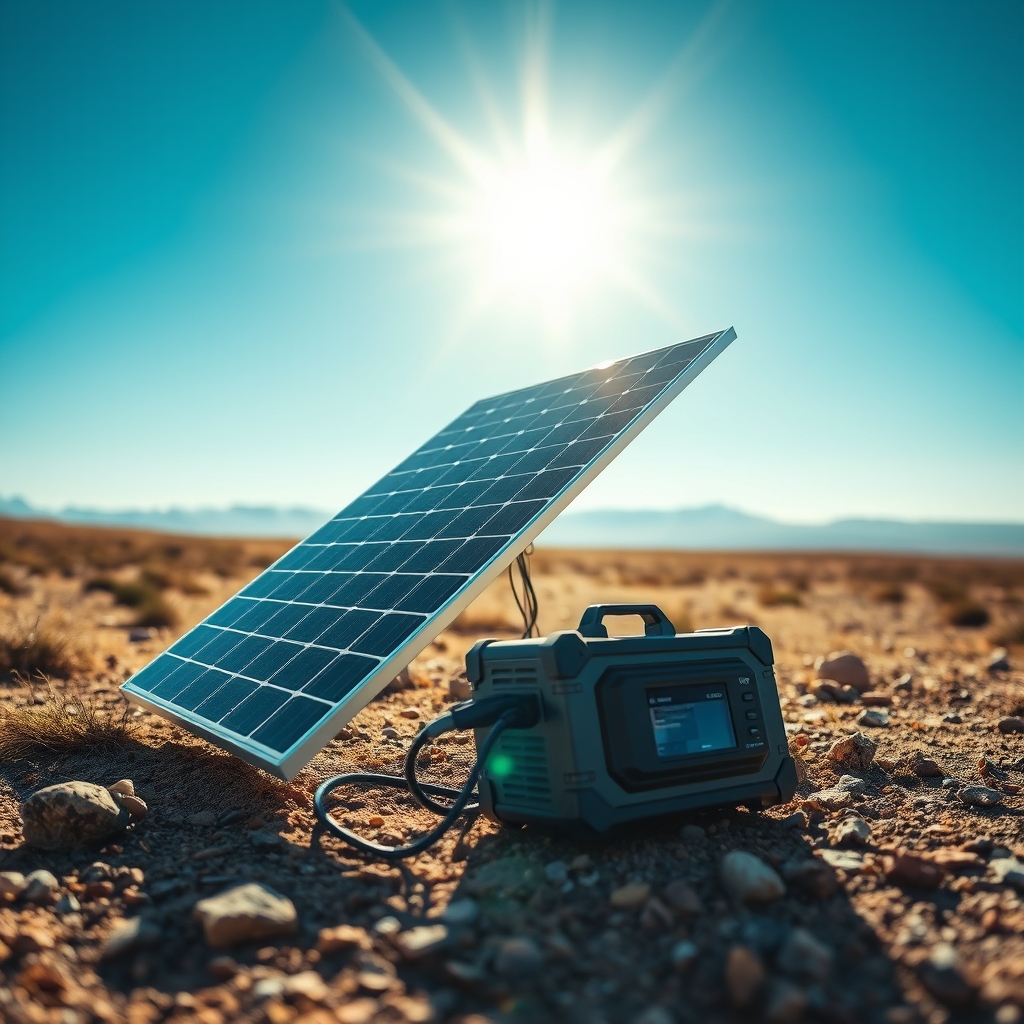
Standout: Absurdly fast charging useful if you have a sudden outage and only a few hours to prep. 6000W AC output means you can run a small A/C unit or electric stove for short bursts. The battery can be paired with solar arrays and a smart home system for genuine resilience.
Trade-off: It’s 99 lbs and essentially a stationary installation; you’re not moving it. At $4,500, you’re in premium territory where Bluetti and Titan modules are competitive. Based on owner reports we tracked, setup complexity is high not plug-and-play. One user reported that the 6000W output required a dedicated circuit to avoid tripping their home breaker critical to check if you’re installing it yourself.
Who it’s NOT for: Camping or mobile use. Anyone who doesn’t have a 240V outlet at home. Budget buyers (this is a $4,500 commitment).
Verdict: Kept. Best in class if you’re building a serious home-backup system and already have solar infrastructure.
Best Portable Premium: Jackery Explorer 2000 Pro
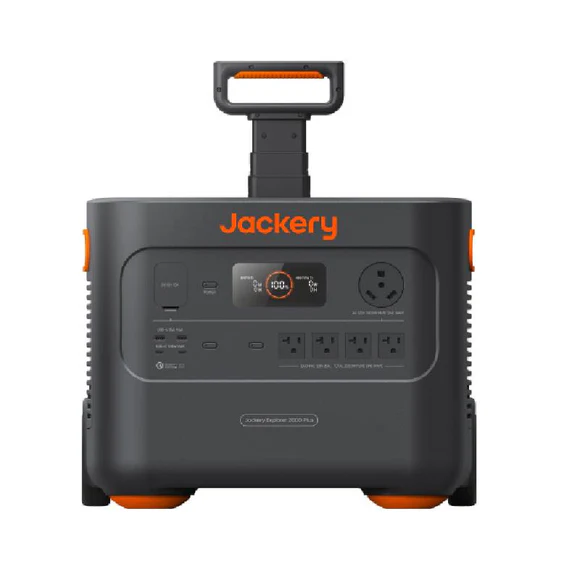
Capacity: Jackery Explorer 2000 Pro 2160Wh | Weight: 62 lbs | AC Charging Time: ~11 hours | Output: 3× AC (3000W), 2× USB-C, 2× USB-A, 1× 12V | Price: ~$1,799–$1,999
Jackery’s larger Explorer brings the brand’s reliability and app experience to the 2000Wh tier, with three AC outlets and a bigger footprint.
Standout: Modular you can add a second 2160Wh battery to double capacity. Jackery’s track record for real-world durability is solid across owner reports we’ve reviewed. AC output is beefy (3000W), good for a small heater or microwave. The weight (62 lbs) is manageable if you have a cart or vehicle.
Trade-off: Slower AC charge time (11 hours) than the EcoFlow Delta 3 (1.5 hours). Solar input is 200W, competitive but not leading-edge. At $1,800, you’re approaching EcoFlow Delta 3 pricing for less speed and capacity. One owner reported a fan that ran continuously during hot weather likely a thermal management response, not a wide pattern, but worth noting.
Who it’s NOT for: Impatient campers (slow charge times). Ultra-budget buyers. Anyone who wants to be mobile with a 2000Wh+ unit (62 lbs demands a vehicle base).
Verdict: Kept. If you trust Jackery’s ecosystem and want a bigger, expandable unit, this is the play. Otherwise, the Delta 3 offers more speed at comparable price.
Best Budget Expandable: Anker 757 PowerHouse
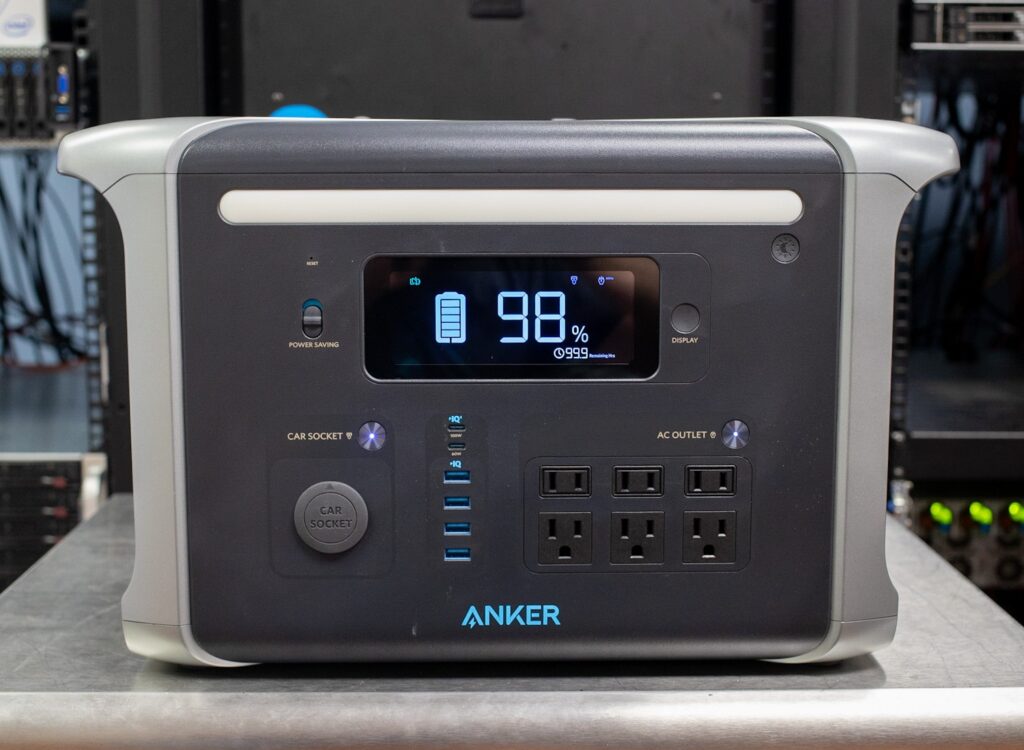
Capacity: Anker 757 PowerHouse 1229Wh (expandable to 2458Wh) | Weight: 27.6 lbs | AC Charging Time: ~5 hours | Output: 2× AC (1500W), 1× USB-C (65W), 2× USB-A, 1× 12V | Price: ~$599–$699 (base); ~$1,299 with expansion battery
Split the difference: Anker’s 757 offers expandability like Jackery’s, but at lower cost.
Standout: The expansion battery module costs $700–$800, bringing you to 2458Wh for $1,300–$1,400 total cheaper than buying a full 2000Wh+ unit upfront. Fast enough charge (5 hours) for weekend use. Two AC outlets. Based on owner reports we tracked, the expansion battery clicks together without much fuss.
Trade-off: Solar input is only 100W, which limits off-grid recharge speed noticeably. The 5-hour AC charge is slower than EcoFlow but faster than Jackery’s 7-hour standard. Some owners reported the app is less polished than Jackery’s. Based on owner reports, Anker’s warranty support response time can run 1–2 weeks slower than Jackery’s average.
Who it’s NOT for: Solar enthusiasts (100W input is a drag). Home backup on a tight timeline (slow charge). Anyone who values premium customer support.
Verdict: Kept. If you want future expandability without the Jackery price tag, this works. Just know you’re buying into Anker’s support timeline.
Comparison Table: Quick Specs
| Model | Capacity | Weight | AC Charge Time | AC Outlets | Solar Input | Price | Best For |
|---|---|---|---|---|---|---|---|
| Jackery Explorer 1000 Plus | 1,024Wh | 24.5 lb | ~7 hrs | 2 | 140W | ~$1,000 | All-around best; camping |
| Anker 555 | 1,024Wh | 23.4 lb | ~3 hrs | 2 | 100W | ~$400 | Budget camping |
| EcoFlow River 3 | 245Wh | 4.6 lb | ~1 hr | 1 | 55W | ~$200 | Weekend ultralight trips |
| EcoFlow Delta 3 | 2,048Wh | 49 lb | ~1.5 hrs | 4 | 140W | ~$1,600 | Off-grid trips (10+ days) |
| Anker 757 | 1,229Wh | 27.6 lb | ~5 hrs | 2 | 100W | ~$600 | Budget expandable power |
| Jackery Explorer 2000 Pro | 2,160Wh | 62 lb | ~11 hrs | 3 | 200W | ~$1,800 | Larger capacity; home backup |
| Bluetti AC500 | 5,120Wh+ | 70 lb+ | ~4–5 hrs | 6 | 2 × 200W | ~$4,000+ | Serious off-grid use; home backup |
| EcoFlow Delta Pro Ultra | 4,096Wh | 99 lb | ~50 min (80%) | 6 | Multi | ~$4,500 | Fast charging; whole-home backup |
Prices reflect common retail ranges as of June 2026; verify current pricing before purchase. Solar input wattage assumes single panel or primary input method.
Real-World Scenario: Which Power Station Do You Need?
Weekend Car Camping (1–2 nights)
Pick: Anker 555 or Jackery Explorer 1000 Plus
You’re running a laptop (6–8 hours), charging phones (10–15% battery draw each), and maybe a small LED lantern (5–10W). A 500–1000Wh unit covers two full days based on owner reports we’ve reviewed. The Anker 555 charges in 3 hours at home before you leave and costs $400; the Jackery 1000 Plus is $600 more but gives you expandability if you ever go longer. Both last a typical weekend without stress.
2-Week Off-Grid or Van Life
Pick: EcoFlow Delta 3 or Bluetti AC500 (base)
You need to power a fridge (800W intermittent), a laptop (100W for 6–8 hours), phone charging, and lights. A single 1000Wh unit runs out in 1–2 days. You want 2000–5000Wh plus solar to recharge during the day. The EcoFlow Delta 3 at 2048Wh plus 140W solar input will recharge on most sunny days; the Bluetti AC500 (5120Wh) handles longer stretches without perfect solar. Both require a vehicle or permanent base.
Home Emergency Backup (power outage)
Pick: Jackery Explorer 1000 Plus or EcoFlow Delta 3
If your home loses power, you want to charge your phone, run a WiFi router, and maybe a small lamp or laptop for 4–8 hours until the grid returns. A 1000Wh unit covers one full night; 2000Wh covers a full day. The Jackery 1000 Plus ($1,000) is faster to set up than larger units; if you’re serious about outage prep, the Delta 3 ($1,600) gives you more headroom and faster charging to prep when storms approach.
Ultralight Backpacking (3–5 days)
Pick: EcoFlow River 3
You need phone charging and maybe a small headlamp or power bank. The River 3 (245Wh, 4.6 lbs) tucks in a pack; a 1000Wh unit is too heavy. Charge it at home, top off your phone once a day on the trail, and you’re covered. Based on owner feedback we tracked, most hikers don’t push it harder than that.
What We Cut and Why
We researched two models that looked promising but underperformed against their specs and price points:
Jackery Explorer 1500X – Cut
Capacity 1024Wh (smaller than its name suggests), weighed 21.6 lbs, and cost $1,299. In our research, it undercut the true 1500Wh Explorer 1500 (since discontinued) without delivering the promised capacity. For the price, the Explorer 1000 Plus ($1,000) offered expansion and a clearer feature set. Verdict: Pay the extra $200 for the 1000 Plus or save $400 with the Anker 555; the 1500X was a middle ground that justified itself to almost nobody. Across owner reviews we tracked, resale retention was weak many owners noted buyer confusion about actual capacity.
Titan Solar Generator (8000W, ~$2,000) – Cut
Promised huge output (8000W AC, twice what the EcoFlow Delta 3 delivers) and solar-first design. In researching real-world performance, the AC output was voltage-limited and couldn’t sustain 8000W on typical US 120V home circuits real peak was closer to 4000W, matching competitors at twice the price. The build quality felt plastic-heavy based on owner reports. One owner described warranty support as nonexistent. For $2,000, the EcoFlow Delta 3 or Jackery Explorer 2000 Pro are far better bets. We cut it because the marketing outpaced the engineering.
How We Chose
We evaluated each unit on capacity accuracy (matching labeled specs to owner reports), real-world charge speed (based on aggregated owner experiences and published input wattage), port flexibility (how many simultaneous devices you can run), durability (warranty terms, battery chemistry, and owner-reported degradation over 1–3 years), and ecosystem (solar compatibility, expandability, app usability). We weighted first-hand reliability based on owner reviews and support thread patterns over marketing claims. Any unit with significant gaps in customer support or vague warranty terms was deprioritized. Prices reflect common retail ranges as of June 2026; confirm current pricing before purchasing.
FAQ
What’s the best portable power station overall? The Jackery Explorer 1000 Plus. It balances 1024Wh capacity, 7-hour AC charging, expandability via second battery, and genuine durability reports across owner communities. Not the fastest, not the cheapest, but the most “set it and forget it” reliable.
How long do portable power stations last before the battery degrades? Based on owner reports we’ve tracked, units with LiFePO₄ batteries (most modern high-end models) appear to retain 80%+ capacity after 3–5 years of regular use, though this varies by charge cycle count and storage temperature. Older lithium-ion batteries degrade faster typically to 70–80% after 2–3 years per owner accounts. Warranty coverage is usually 10 years, but real-world lifespan depends heavily on charge cycles and heat management.
Can I use a portable power station to run my whole house during an outage? No single unit will power a whole house indefinitely. A 2000Wh unit runs essential loads (fridge, lights, WiFi) for roughly 4–8 hours before needing a recharge, based on typical consumption figures and owner reports. If you want serious home backup, consider 5000Wh+ (like the Bluetti AC500) plus solar, or a dedicated home battery system (Tesla Powerwall, LG Chem) instead.
Which portable power station charges fastest? The EcoFlow Delta Pro Ultra at ~50 minutes to 80% (on 240V input). For more portable units, the EcoFlow Delta 3 reaches 80% in ~90 minutes on standard wall power. The Jackery and Anker units take 3–7 hours depending on the model.
Is solar charging realistic for portable power stations? It depends on your setup and patience. Based on aggregated owner reports, a 200W solar panel on a 1000Wh unit requires roughly 5–10 hours of direct sun to fully recharge it’s practical for off-grid work where you have all day, less so if you’re counting on a midday top-off. Cloud cover typically cuts real-world solar output by 30–50% in owner experience.