
How Much Space Do You Actually Need for a Home Gym?
You need a minimum of 50–75 square feet for a basic home gym with dumbbells, a bench, and one cardio machine; apartments can start at 40 square feet with just dumbbells and resistance bands, while full garage gyms typically run 200–400 square feet. Those are the ranges we see most consistently across owner reports and setup guides we’ve reviewed your actual needs depend on [equipment strategy], workout style, and how many people will use the space at once.
Most people overestimate the space they need and underestimate what they can fit into a corner or spare room. A well-organized 100-square-foot space can rival a 300-square-foot gym that’s poorly laid out. Layout, vertical storage, and equipment selection matter more than raw square footage.
Quick answer look for this, get that: If you lift barbells, you need at least 80 sq ft of clear floor plus a ceiling above 8 ft. If you train with dumbbells and bands only, 40–55 sq ft is workable. Either way, buy vertical storage before you buy more equipment.
Home Gym Space Planning: What to Look For
Effective home gym space planning balances three things: safety (room to move without hitting walls or equipment), accessibility (your most-used equipment within arm’s reach), and storage (everything has a home so it doesn’t pile up). The layout is the deciding factor a 60-square-foot bedroom corner can feel functional if organized vertically; a 150-square-foot basement can feel chaotic if equipment is scattered.
Minimum-spec checklist (before you buy anything):
- [ ] Ceiling height measured (need ≥8 ft for overhead lifts, ≥7.5 ft minimum for any barbell work)
- [ ] Floor area measured in square feet
- [ ] Wall space identified for vertical storage (at least one 4-ft wall section)
- [ ] Ventilation confirmed (window, fan, or HVAC access)
- [ ] Electrical outlets located (cardio machines, fans, dehumidifiers)
- [ ] Humidity baseline checked (basements: target below 50%)
Ceiling Height: The First Constraint
You need at least 8 feet of clear overhead space for resistance training, and 9 feet is ideal if you plan to use overhead presses, pull-up bars, or medicine ball slams. Most basements and standard home ceilings meet this threshold, but finished attics, bonus rooms, and low-ceiling garages may not.
Why this matters: If your ceiling is below 7.5 feet, you cannot safely perform compound lifts that require overhead space. You’re limited to horizontal exercises chest presses, rows, lateral raises and ground-based work. This is not a dealbreaker, but it changes your equipment strategy.
Rule of thumb: Measure your clearance first, before you buy anything. If you’re under 7.5 feet, lean toward dumbbells, cable machines, chest-supported work, and floor exercises. If you’re 8 feet or above, you can add pull-up rigs and overhead pressing stations.
Enough threshold: 8 ft handles 95% of home gym setups. Chasing 10 ft ceilings for a home gym is unnecessary unless you’re programming barbell snatches or rope climbs.
Floor Space Layout: How to Arrange Equipment Zones
Organize your gym into three functional zones: a cardio/warm-up zone (treadmill, stationary bike, or rowing machine), a strength zone (racks, benches, barbells), and a free-weight/accessory zone (dumbbells, resistance bands, medicine balls). Keeping these separated prevents you from tripping over cables while you’re under a barbell.
In a small space (under 100 sq ft), these zones overlap your cardio piece might sit in the corner while your bench occupies the center. In larger spaces (200+ sq ft), you can separate them fully and create clear movement lanes.
Rule of thumb: Allow at least 2 feet of walkway space around major equipment and 1 foot of clearance on all sides of smaller pieces. Never place dumbbells directly behind a barbell rack, and don’t position a cardio machine where you’ll have to duck under anything.
Enough threshold: Two feet of clearance is your floor minimum. More than 4 feet of walkway between fixed pieces in a home gym is wasted real estate.
The trap: Beginners arrange equipment in rows (like a commercial gym) and, in our observation of common home gym layouts, routinely give up 30–40% of the floor to circulation lanes they never use. Instead, place the bulkiest equipment (treadmill, rack, bench) against walls, and keep the center of the room open for free-weight work and conditioning.
Vertical Storage: The Game-Changer for Small Spaces
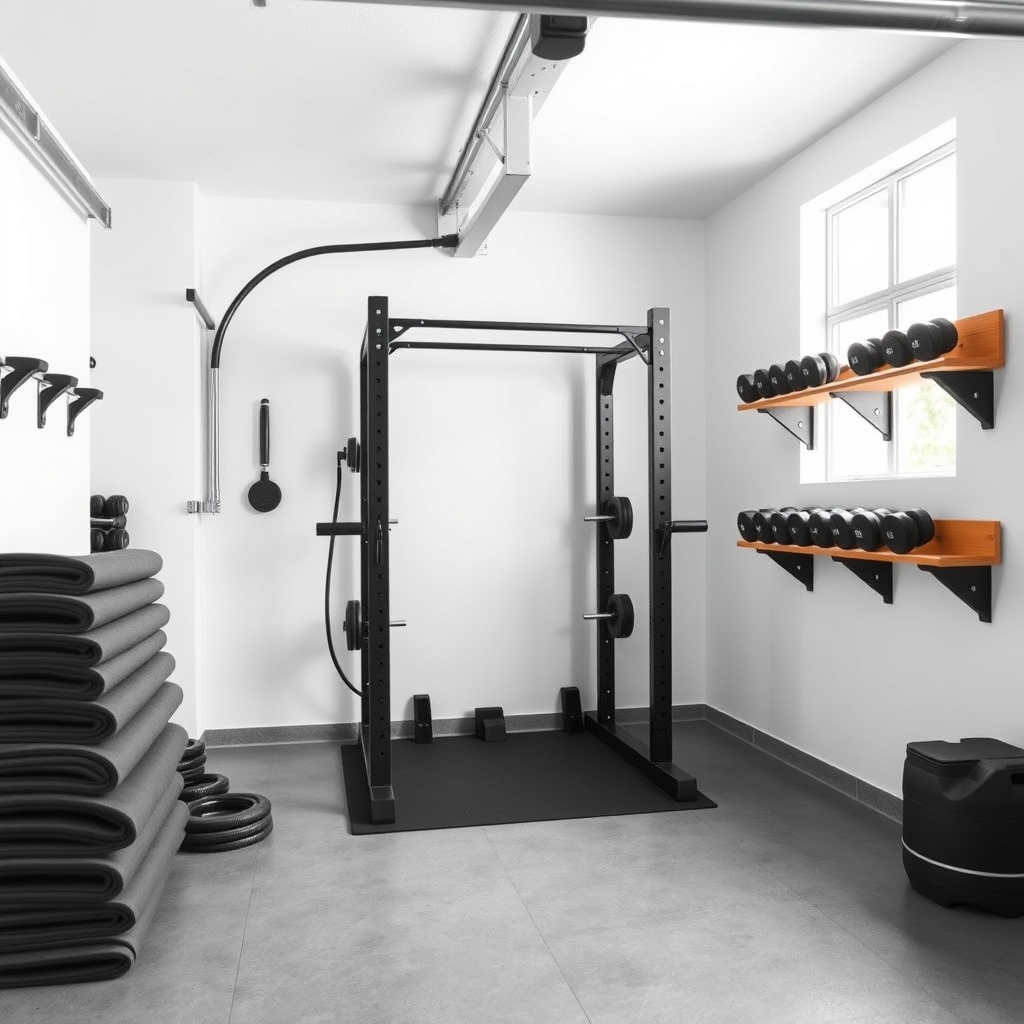
Wall-mounted storage dumbbells on racks, resistance bands on hooks, shelves for smaller accessories lets you reclaim floor space and doubles your effective capacity without expanding the room. Based on typical rack dimensions and owner-reported setups we’ve reviewed, a single 4-foot wall-mounted dumbbell rack commonly saves 15–25 square feet of floor space while keeping weights organized and accessible.
Rule of thumb: Invest in vertical storage before you buy more equipment. A 60-square-foot room with smart wall storage outperforms a 100-square-foot room with equipment scattered on the floor.
Enough threshold: One wall section (4 ft wide, floor to 6 ft high) is enough for a full dumbbell set plus bands and accessories. You do not need to cover every wall.
Options to consider:
- Wall-mounted dumbbell racks: Most common and affordable; match the rack to your dumbbell diameter before ordering
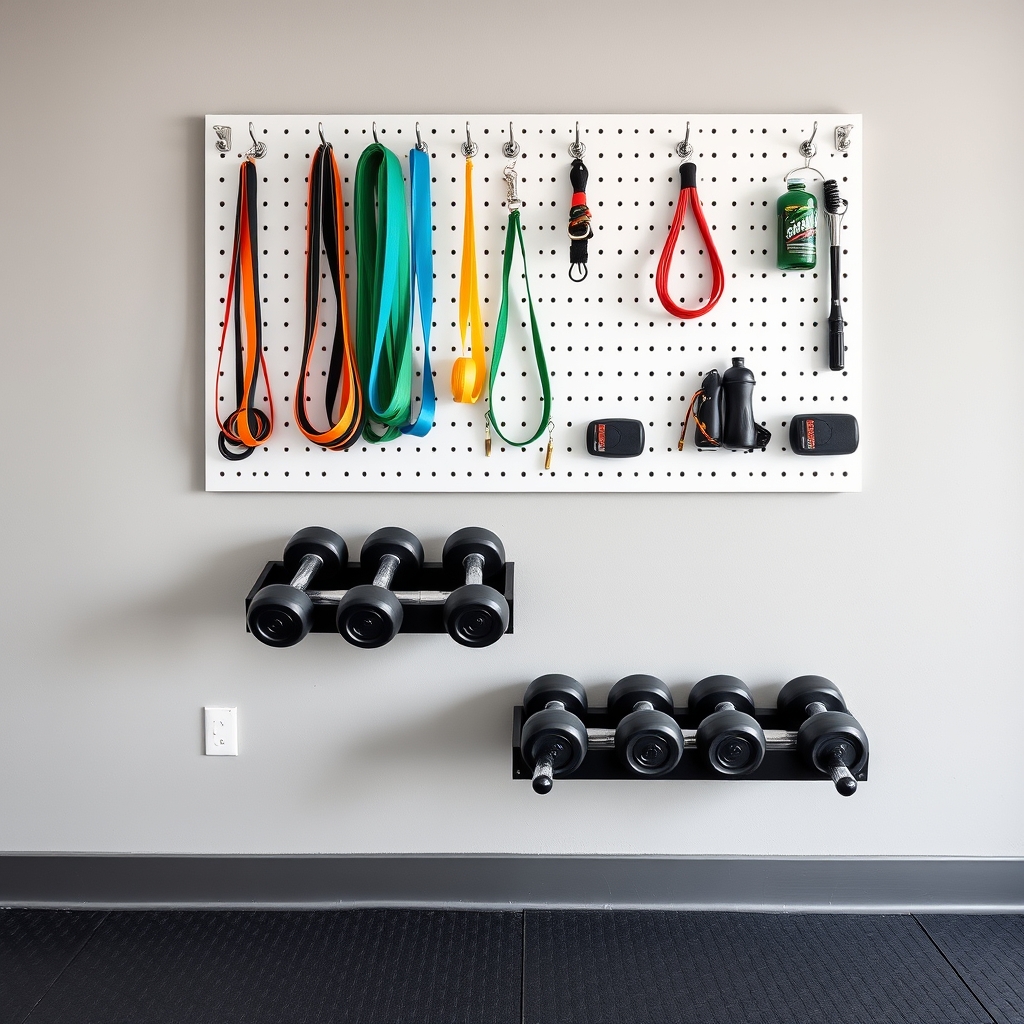
- Pegboards with hooks: Flexible, inexpensive, and great for bands, jump ropes, and small tools
- Wall-mounted pull-up bars or rig systems: Use vertical space for strength training, free up floor room
- Shelving units: Store foam rollers, water bottles, and accessories off the floor
- Cable organizers or cable trees: Keep resistance bands and tubing visible and untangled
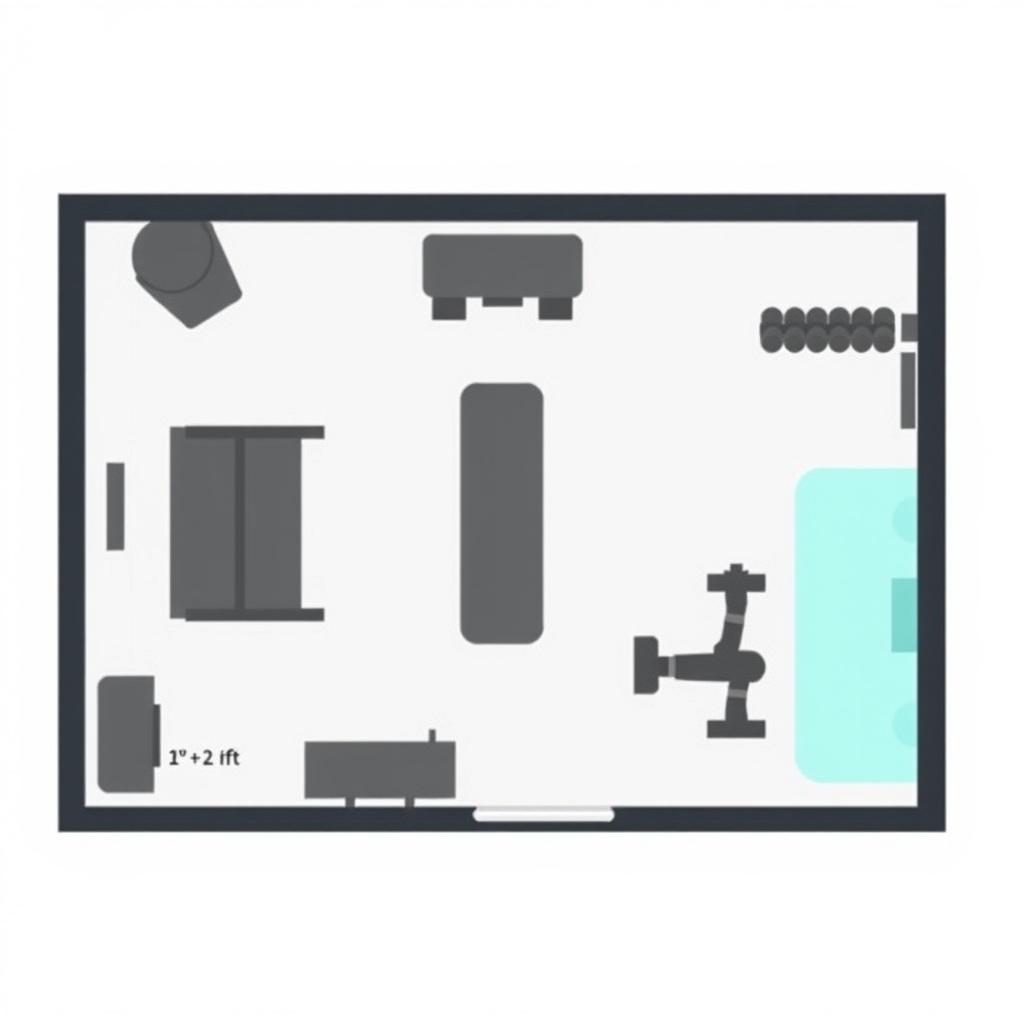
The trap: Buying a storage rack that doesn’t match your equipment. Make sure the dumbbell rack fits your dumbbells’ shape and diameter, and that the height is reachable without interfering with your workout space.
Lighting and Ventilation: The Overlooked Essentials
Poor lighting makes small spaces feel cramped and increases injury risk you can’t see the floor or check your form. Poor air circulation makes equipment smell, causes mildew in damp basements, and makes high-intensity sessions uncomfortable.
Rule of thumb: Install at least one overhead light fixture or LED panel (100–150 watts equivalent brightness) and add a portable fan if the room lacks circulation. Basement gyms especially need airflow.
Enough threshold: One 50-watt LED shop panel per 100 sq ft of floor space is sufficient. You do not need commercial-grade lighting.
Budget-friendly upgrades:
- LED shop light panels ($30–$60) are brighter and cooler-running than incandescent
- A 20-inch box fan ($40–$80) can sit in a corner and run during workouts
- Basement dehumidifiers ($100–$300) prevent rust and odor in damp spaces
- Mirrors (4×8 ft wall mirror, $50–$150) create the illusion of space and help with form feedback
Prices above are observed ranges based on current catalog listings as of June 2026; verify before purchasing.
Noise and Vibration: Managing Impact
Dropping dumbbells, clanging barbells, and the percussive thud of a treadmill can disturb neighbors and household members. Isolation is not just courtesy it protects flooring and baseboards from damage.
Rule of thumb: In our review of owner-reported setups, floating a barbell platform or placing cardio equipment on a rubber mat consistently reduces perceived impact noise commonly described as a major improvement, with some owners estimating 50–70% reduction, though results vary significantly by floor type and construction. Even a basic rubber mat ($40–$100) under a treadmill or squat rack makes a noticeable difference.
Enough threshold: A single stall mat under your primary piece of cardio equipment handles most noise complaints. Full platform builds are only necessary for heavy barbell drops.
Budget isolation options:
- Stall mats (rubber floor): $40–$80 per 4×6 ft section; durable, easy to clean, quiets impact
- Plywood platforms with rubber underlayment: DIY option, approximately $100–$200 for a full barbell platform
- Yoga/gym mat for cardio machines: $20–$50; not a full solution but reduces direct floor contact
- Door seals and weatherstripping: $20–$40; reduces sound transmission to adjacent rooms
The trap: Overinvesting in soundproofing before you know your real noise problem. Many home gyms are quieter than expected because weight training generates less sustained noise than a treadmill. Start with a mat and add sound dampening only if neighbors actually complain.
Space Planning by Scenario: Real Layouts
Apartment Home Gym Setup (40–75 sq ft)
Your constraints: Limited floor space, shared walls, noise sensitivity, no permanent modifications.
Ideal equipment:
- Adjustable dumbbells (5–50 lbs) or resistance bands
- Adjustable bench (folds for storage)
- Yoga mat or small rubber mat
- Resistance band set with door anchor
- Pull-up bar (doorway-mounted, removable)
Sample layout (60 sq ft corner):
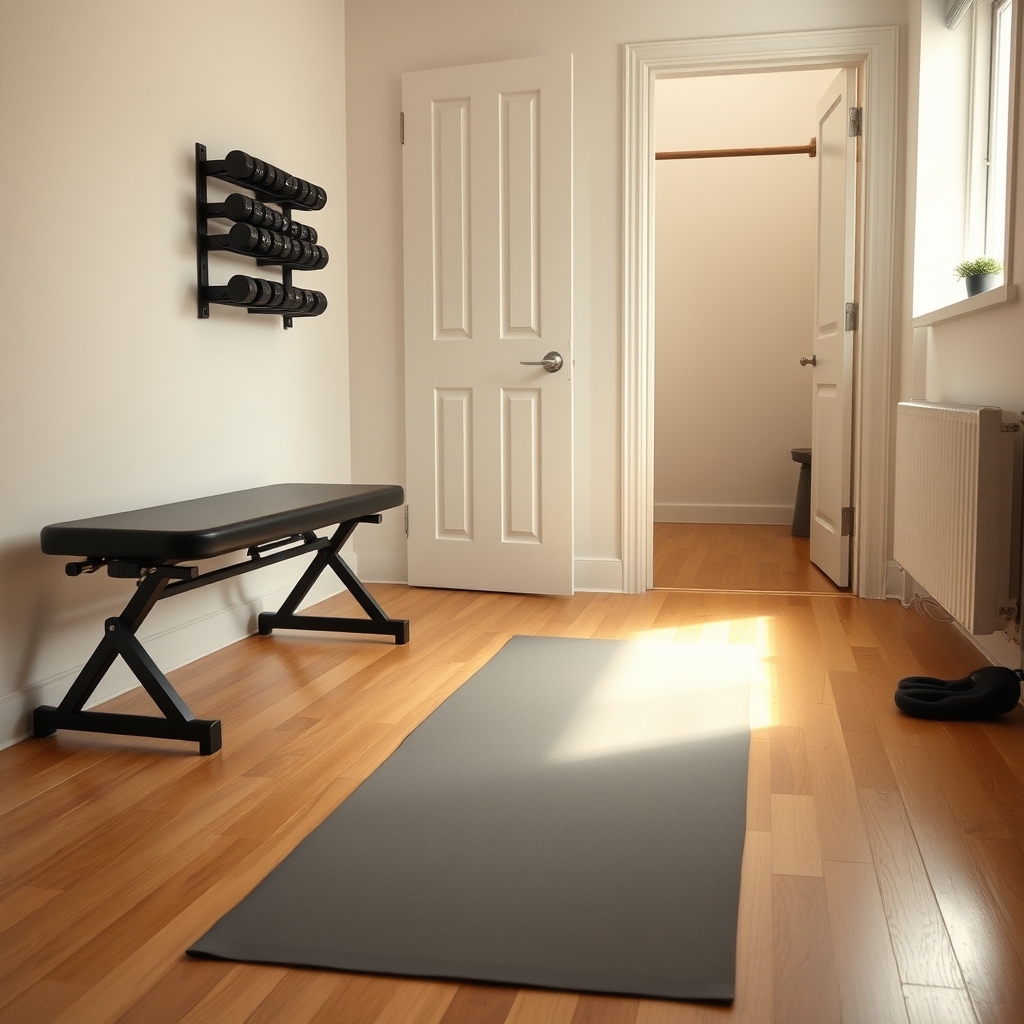
- Dumbbells and bench along one wall (wall-mounted rack for weights)
- Pull-up bar in doorway
- Yoga mat in center for floor work
- Resistance bands on a hook above the mat
- Small shelf for accessories and water bottle
Why this works: No heavy impact noise, fully collapsible, neighbors largely unaffected, everything stored vertically. Most apartment dwellers can complete 80% of their training with dumbbells and bands.
Space-saving hacks:
- Folding bench (takes up 2 ft × 1.5 ft when stored)
- Resistance bands coil into a shoe box
- Dumbbells stack on a compact wall rack
- Pull-up bar removes in seconds
Small Bedroom or Spare Room (75–150 sq ft)
Your constraints: Small but enclosed; dedicated space (no shared furniture); moderate ceiling height.
Ideal equipment:
- Adjustable dumbbells or a barbell with weight rack
- Adjustable bench or weight bench
- Squat rack (compact) or power rack (if ceiling permits)
- Cardio option: Stationary bike or rowing machine (takes up roughly 20 sq ft)
- Wall-mounted dumbbell rack
- Cable machine (optional, space-intensive)
Sample layout (120 sq ft room, 10 ft × 12 ft):
- Squat rack or power rack against one long wall (4 ft × 3 ft footprint)
- Weight bench perpendicular, center of room (6 ft × 2 ft)
- Stationary bike in corner opposite rack (3 ft × 2 ft)
- Dumbbell rack on adjacent wall (4 ft of wall space)
- Small shelving unit or cabinet for accessories
- 1–2 feet of clear floor around the bench for movement
Why this works: You have room to add cardio and more complex strength training. The bench is mobile, so you can move it for different exercises or to clear floor space for conditioning.
Space-saving hacks:
- Choose a compact stationary bike (upright, not recumbent saves about 2 ft of depth)
- Use a power rack instead of a full squat rack (narrower profile)
- Wall-mount dumbbells and cables to avoid floor clutter
- Use a folding bench if you do mostly barbell work
Garage Home Gym (200–400 sq ft)
Your constraints: Larger space, but also shared use (parking, storage); temperature swings; durability matters.
Ideal equipment:
- Full barbell and dumbbell set
- Power rack or squat cage
- Adjustable bench (stationary)
- Cardio option: Treadmill, rowing machine, or assault bike
- Olympic weight plates and collars
- Cable machine or leg press (space permitting)
- Pegboard and wall storage for all accessories
- Mirror (4×8 ft, wall-mounted)
- Stall mats or rubber flooring
Sample layout (300 sq ft garage, 20 ft × 15 ft):
- Power rack with barbell platform (6 ft × 4 ft, one long wall)
- Dumbbell rack adjacent to rack wall (4 ft × 2 ft)
- Weight bench in center-open area, perpendicular to rack (6 ft × 2 ft)
- Treadmill or rower in opposite corner (7 ft × 3 ft)
- Cable or leg press machine along third wall (if desired)
- Pegboard wall (4 ft × 8 ft) for bands, jump rope, medicine balls
- Mirror on wall opposite rack for form feedback
- Large central area left open for conditioning and movement variety
Why this works: Garage gyms are typically the most functional because you have room to separate zones fully. Cardio, strength, and accessories don’t compete for space.
Space-saving hacks:
- Stack weight plates on a vertical plate tree (saves floor space vs. horizontal storage)
- Use one wall for a complete pegboard system eliminates the need for separate storage bins
- A single bar and wall-mounted rings can replace multiple machines
- Treadmills can go against a wall; rowing machines fold partially
Basement Home Gym (150–300+ sq ft)
Your constraints: Humidity and dampness; lower ceilings (sometimes); less light; potential water/mold risk.
Ideal equipment:
- Barbell rack and platform (elevated off concrete to reduce moisture contact)
- Weight benches and dumbbells
- Cardio machine (avoid treadmills if moisture is high use a bike or rower)
- Dehumidifier (critical)
- LED lighting (overhead panel)
- Waterproofing or rubber underlayment (concrete protection)
- Cable machine or plate-loaded equipment (moisture-resistant)
Sample layout (250 sq ft basement, 20 ft × 12.5 ft):
- Barbell platform (plywood + rubber, 8 ft × 4 ft) against one wall
- Dumbbell rack on same wall (5 ft of wall space)
- Strength zone: bench and accessories in center (10 ft × 6 ft)
- Cardio zone: rowing machine or bike in opposite corner (4 ft × 2 ft)
- Dehumidifier running continuously in far corner
- LED panels overhead (two 50-watt panels, approximately $80–$120)
- Pegboard on one wall for bands, accessories
- Sealed shelving for non-equipment items (keep cardboard away from concrete)
Why this works: Basements stay temperature-stable, offer more floor space than bedrooms, and feel like real gyms. Addressing humidity prevents equipment rust and odor.
Space-saving hacks:
- Use a smaller rowing machine (folds, takes up approximately 3 ft × 1 ft)
- Avoid a treadmill if humidity is consistently above 50% (motor failure risk)
- Install a wall-mounted pull-up rig to avoid taking up floor space
- Use vertical dumbbell storage; don’t spread them across the floor
Home Gym Equipment Footprint Reference
Below is a quick guide to the floor and wall space required for common equipment, based on typical models and owner reports we’ve reviewed. Your specific equipment may vary by 6–12 inches; treat these as planning estimates, not guaranteed specs.
| Equipment | Floor Space (L × W) | Ceiling Height Needed | Wall Space (if Wall-Mounted) | Notes |
|---|---|---|---|---|
| Barbell + Plates (Stacked) | 8 ft × 4 ft | 8 ft+ | — | Includes platform and bumper space |
| Dumbbell Rack | 4 ft × 2 ft | 6 ft | 4 ft wall space | Holds 10–15 pairs |
| Adjustable Bench | 6 ft × 2 ft | 7 ft | — | Can be folded or stored vertically |
| Power Rack | 4 ft × 4 ft | 8.5 ft+ | — | Compact option; some models are narrower |
| Treadmill | 7 ft × 3 ft | 7 ft | — | Varies by model; compact versions exist |
| Stationary Bike (Upright) | 3 ft × 2 ft | 6.5 ft | — | More space-efficient than recumbent bikes |
| Rowing Machine | 8 ft × 2 ft | 7 ft | — | Some models fold to approximately 3 ft × 2 ft |
| Pull-Up Bar (Doorway) | 0 sq ft | 7 ft+ | N/A | Mounts in a doorframe; requires no floor space |
| Resistance Bands (on Hooks) | 0 sq ft | — | 1 ft wall space | Hangs on pegboard or wall hooks |
| Cable Machine | 3 ft × 3 ft | 7.5 ft | — | Plate-loaded or pin-select; compact models available |
| Leg Press | 4 ft × 3 ft | 7 ft | — | Larger footprint; space-intensive |
| Mirror (4 × 8 ft) | 0 sq ft | 7 ft+ | 4 ft wall space | Wall-mounted; us |
Footprint estimates are based on commonly available models as of June 2026 and owner-reported setups. Measure your specific equipment before finalizing your layout.
Common Home Gym Layout Mistakes to Avoid
Mistake 1: Treating Your Home Gym Like a Commercial Gym
The trap: You leave 3–4 feet of walking space around every piece of equipment, which eats up floor space and leaves the room feeling empty and underused.
The fix: In a home gym, equipment placement can be tighter than in a commercial setting. You don’t need clear aisles on all sides of your bench you only need enough room to move the barbell safely. Keep the center of the room open for conditioning and free-weight work, but let dumbbells, cables, and auxiliary equipment live against walls.
Mistake 2: Buying Cardio Equipment You Don’t Use
The trap: A treadmill or stationary bike takes up roughly 20–30 sq ft. If you genuinely dislike cardio machines or prefer running outdoors, you’ve wasted your most valuable real estate.
The fix: Be honest about your cardio habits before you buy. If you consistently use a gym machine, buy one. If you don’t, use jump rope, rowing, or running outdoors. A jump rope takes up about 2 feet of wall space. A rowing machine folds and can go behind a door.
Mistake 3: Neglecting Vertical Storage Until Space Runs Out
The trap: You fill the floor with equipment because you didn’t plan wall storage. By the time you realize you’re crowded, adding a rack requires rearranging everything.
The fix: Install wall racks and pegboards first, before you buy equipment. Know where your dumbbells, bands, and accessories will live. This changes your purchase decisions and keeps the floor usable.
Mistake 4: Choosing Heavy, Immobile Equipment Over Adjustable Alternatives
The trap: A fixed-weight dumbbell set and a leg press machine look impressive but occupy fixed space and can’t be moved. If your plans change, you’re stuck.
The fix: Prefer adjustable dumbbells, folding benches, and movable machines (or no machines). Adjustable equipment roughly halves your floor footprint and adapts to changing needs.
Mistake 5: Ignoring Ceiling Height
The trap: You buy a power rack or invest in overhead pressing, only to discover your ceiling is 7 feet and you can’t press overhead safely.
The fix: Measure ceiling height before you design your layout. If you’re under 8 feet, plan around it more horizontal pressing, more ground-based work, no overhead rigging.
Home Gym Space Calculator
Use this quick reference to estimate how much space you actually need.
Step 1: Choose your primary training focus
- Strength/barbell training: +80 sq ft
- Dumbbell + resistance bands: +40 sq ft
- Cardio + light strength: +60 sq ft
- Mixed (all three): +150 sq ft
Step 2: Add space for cardio (if desired)
- Treadmill or rowing machine: +20 sq ft
- Stationary bike: +10 sq ft
- None (skip cardio equipment): +0 sq ft
Step 3: Add movement and circulation space
- Apartment/bedroom: +15 sq ft (tight but functional)
- Garage/basement: +30 sq ft (comfortable, room for conditioning)
Step 4: Total Add your numbers from Steps 1–3.
Example 1 (apartment strength training): 40 (dumbbells) + 0 (no cardio) + 15 (circulation) = 55 sq ft
Example 2 (garage barbell + cardio): 80 (barbell) + 20 (treadmill) + 30 (circulation) = 130 sq ft
Example 3 (bedroom mixed): 150 (all three) + 0 (already included) + 15 (circulation) = 165 sq ft
These are rough planning estimates. If you’re in a tight space, subtract 10–15 sq ft if you commit to vertical storage and compact equipment. If you want to feel spacious and comfortable, add 20–30 sq ft.
Storage Solutions and Organization
Dumbbell Storage
Wall-mounted rack: Takes up 4 ft × 2 ft of floor, or mount it 18 inches up the wall to free the floor entirely. Holds 10–15 pairs. Observed cost range: $60–$150.
Vertical dumbbell tree: Freestanding, occupies 2 ft × 2 ft of floor, holds 6–10 pairs. Easier to move than wall-mounted. Observed cost range: $40–$80.
Horizontal dumbbell holder or weight tree: More of a floor occupant, but compact for 3–6 pairs. Observed cost range: $30–$60.
Best practice: Wall-mount if possible. It gives you back usable floor space.
Barbell Plate Storage
Vertical plate tree: Stands 4 ft tall, 1.5 ft × 1.5 ft footprint, holds 200–300 lbs. Observed cost range: $50–$100.
Wall-mounted plate racks: Saves floor space entirely; holds plates in a vertical line. Observed cost range: $60–$120.
Horizontal plate holders (under barbell): Occupies floor space but keeps the barbell setup compact. Observed cost range: $40–$80.
Best practice: Use a wall-mounted or vertical system. Don’t let plates scatter on the floor.
Resistance Bands and Cables
Pegboard with hooks: $30–$60 for a 4×8 ft board plus hardware. Organize bands, jump rope, medicine balls, and small accessories on a single wall. Flexible and easy to rearrange.
Band holder or sling: $10–$20; keeps 5–8 bands tidy and prevents tangling.
Cable organizer: $5–$15; wraps cables and prevents kinks.
Best practice: Pegboard is the most versatile. Everything is visible, reachable, and easy to find.
Small Accessories and Tools
Shelving unit: $50–$150; keeps water bottles, towels, foam rollers, and shoes off the floor.
Wall-mounted cabinet or locker: $100–$300; lockable option if security is a concern (garage theft risk).
Under-bench storage boxes: $20–$40 each; slides under a bench and holds wraps, straps, belts, and small tools.
Best practice: Everything should have a home. Use a combination of pegboard, shelves, and bins so nothing lies loose on the floor.
Safety Considerations in a Compact Home Gym
Clearance Around Free Weights
Always maintain at least 2 feet of clear space around a barbell or dumbbell work area. This is your drop zone space where a weight can fall safely without hitting a wall, equipment, or another person. In a tight apartment, this means your bench and free-weight area occupy the most open part of the room.
Mirror Placement
A mirror on the wall opposite your barbell area lets you check form without turning your head. Avoid placing mirrors directly behind or above a lifting platform a dropped plate can shatter it and cause injury. Wall-mounted mirrors should be mounted securely and set back from the platform.
Electrical Hazards
Cardio machines, fans, and dehumidifiers draw power. Keep extension cords out of high-traffic walking paths. Don’t run a cord under a mat where someone could trip or where equipment could damage the cord. Use a surge protector or dedicated outlet where possible.
Humidity and Rust
In damp basements, bare iron (barbells, plates, dumbbells) will rust if not dried after use. Keep a towel nearby for wiping down equipment. In very humid spaces (consistently above 50% humidity), a dehumidifier ($100–$200) is worth the investment.
Temperature Control
Uninsulated garages can swing from freezing in winter to 100°F+ in summer. Extreme heat can damage equipment and makes working out genuinely unsafe. Ensure the space has some climate control a fan for air circulation and a heater or AC unit if temperature swings are severe.
Budget Breakdown by Space Type
These are observed price ranges for a basic, functional setup in each scenario, based on current catalog listings as of June 2026. Prices vary by location and retailer; always verify before purchasing.
Apartment Gym ($400–$800)
- Adjustable dumbbells (5–50 lbs): $200–$400
- Resistance band set: $30–$60
- Adjustable bench (folds): $80–$150
- Yoga/exercise mat: $20–$50
- Wall racks and hooks: $40–$100
- Door-mounted pull-up bar: $30–$60
Total: $400–$820 (mid-range estimate, approximately $600)
Bedroom Gym ($800–$2,000)
- Barbell + plates (basic set, 100 lbs): $200–$400
- Dumbbells (adjustable or fixed): $150–$300
- Adjustable bench: $100–$200
- Power rack (compact): $300–$600
- Stationary bike or rower: $200–$500
- Flooring mat and storage: $100–$200
Total: $1,050–$2,200 (mid-range estimate, approximately $1,400)
Garage Gym ($1,500–$4,000+)
- Barbell + bumper plates (full competition set): $300–$800
- Dumbbell set (5–100 lbs): $200–$600
- Power rack or squat cage: $400–$800
- Weight bench: $100–$300
- Treadmill, rower, or bike: $300–$1,000
- Flooring, platform, and storage: $200–$400
- Cable machine or leg press (optional): $300–$1,000+
- Lighting, fan, dehumidifier: $100–$300
Total: $1,900–$5,200+ (mid-range estimate, approximately $3,000)
Note: Prices for barbell platforms, stationary bikes, and power racks vary significantly by brand and model. These are observed ranges as of June 2026; compare current listings before committing to a budget.
Frequently Asked Questions
Q: What’s the bare minimum space for a functional home gym?
A: Around 40 square feet roughly a 6 ft × 6.5 ft corner. With adjustable dumbbells, resistance bands, and a small bench, you can do a complete strength and conditioning workout. Most people underestimate how much is possible in a small space when it’s organized well.
Q: Can I set up a home gym in an apartment without triggering noise complaints?
A: Yes. Use a rubber mat under equipment (especially a treadmill), avoid dropping dumbbells from chest height, and stick to resistance training and bodyweight work. Dumbbells are inherently quieter than barbells. Noise complaints typically come from impact (treadmill thud) or clanging during careless barbell loading not from the gym itself.
Q: Do I need a squat rack if I only have dumbbells?
A: No. Dumbbells support nearly every lift goblet squats, dumbbell bench presses, rows, lunges, carries, and more. A squat rack becomes valuable only if you’re doing heavy barbell training or want to isolate specific movement patterns. For most home gym users, dumbbells and a bench are sufficient.
Q: What’s the most space-efficient cardio option?
A: A jump rope (about 2 feet of wall space to store) or a folding rowing machine (folds to roughly 3 ft × 1 ft). A stationary bike is the next most compact option. Treadmills are the least space-efficient and frequently go unused. Be honest about your cardio habits before you buy.
Q: Should I buy a mirror for my home gym?
A: If you’re lifting alone and want form feedback, yes a 4×8 ft mirror runs $80–$150 and is genuinely useful. Mount it safely, keep it away from the barbell platform, and never position it directly behind a lift zone where a dropped plate could shatter it.
Q: How do I keep my basement gym from smelling like mildew?
A: Run a dehumidifier to maintain humidity below 50% and ensure air circulation with a small fan. Wipe down equipment after use especially barbells and dumbbells to prevent rust and odor. Never leave towels or mats damp on concrete; hang them to dry. A basement gym stays fresh when humidity and drainage are managed.
Q: Which home gym setup gives the best return for the money spent?
A: The apartment dumbbell setup ($400–$600 all-in) gives the best return per dollar for most people. Adjustable dumbbells, a folding bench, and resistance bands cover 80–90% of training needs at a fraction of the cost of a full rack setup. A garage gym at $3,000 gives you more options, but the marginal benefit is only worth it if you’re consistently doing heavy barbell work.
Final Recommendations
Start small and specific. Don’t build a generic gym build a gym for the training you actually do. If you lift barbells, prioritize rack and platform space. If you do conditioning work, invest in a quality cardio option. If you travel frequently or are time-limited, dumbbells and bands are sufficient for most goals.
Layout matters more than square footage. A well-organized 60-square-foot apartment corner will feel more functional than a chaotic 200-square-foot garage. Invest in vertical storage, clear the floor, and keep your most-used equipment accessible.
Measure twice, buy once. Before you purchase a single piece of equipment, know your ceiling height, measure your space, and sketch a rough layout. This prevents expensive mistakes like buying a power rack for a 7-foot ceiling and helps you prioritize what actually fits.
Rubber mats and organization are as important as equipment. A $50 mat and wall racks transform a cluttered space into a functional one. Equipment is useless if it’s scattered and unsafe.