
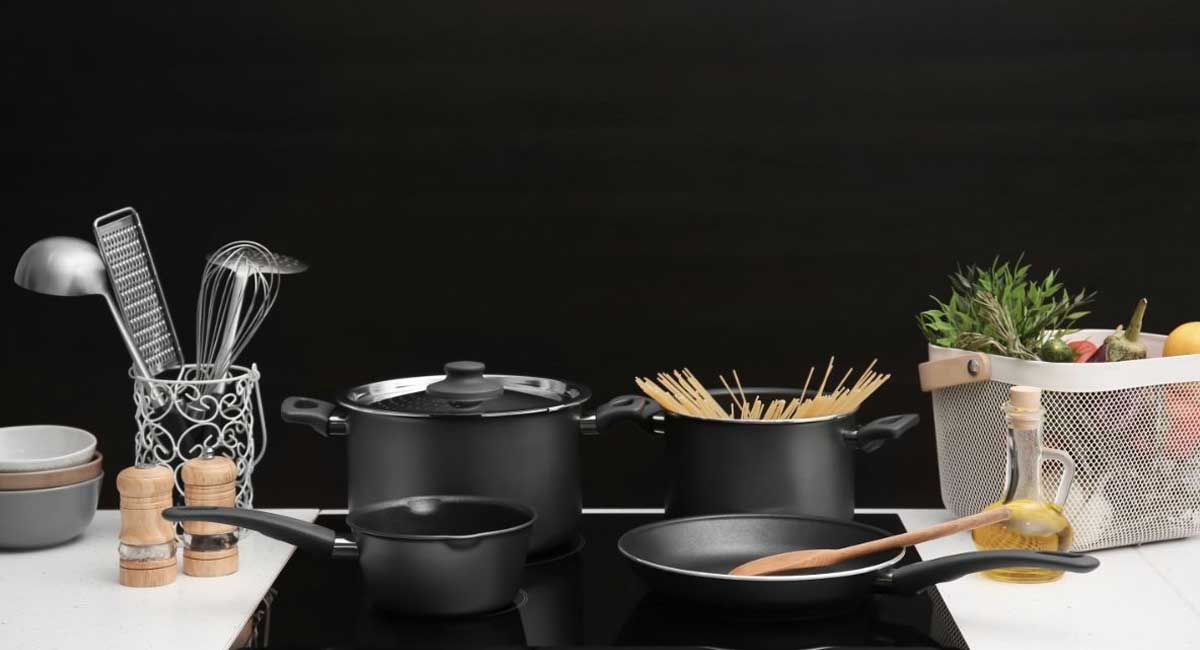
For most people, the safest choice is stainless steel cookware with a flat, polished bottom it heats evenly, resists warping, and won’t scratch or crack your glass surface. If you have an induction cooktop, you’ll also need magnetic cookware; for a standard glass-top electric cooktop, nearly any flat-bottomed material works, but some perform and look better than others.
Glass cooktops look sleek and modern, but they’re less forgiving than coil or gas burners. They scratch easily, crack under impact, and lose efficiency if your cookware doesn’t sit flat. The good news: choosing the right cookware is straightforward once you know what matters.
What Actually Matters When Choosing Glass Cooktop Cookware
1. Flat, Smooth Bottom (The Non-Negotiable)
Your cookware’s bottom surface is the foundation of glass cooktop safety. A warped or rounded bottom means poor heat transfer, hotter cooktop surface, and risk of cracking from uneven pressure.
Why flat matters: Glass cooktops conduct heat through direct contact. When cookware sits unevenly, the rim touches but the center doesn’t—this creates a thermal hot spot on the glass, which can lead to cracking after repeated heating cycles.
What to check: Place a straightedge (a ruler works) across the bottom of a pot. If you see daylight between the ruler and the surface, that cookware isn’t flat enough. Many cookware sets claim “flat bottoms,” but cheap stamped steel bottoms warp after a few years. Heavier-gauge stainless steel and cast iron hold their flatness longer.
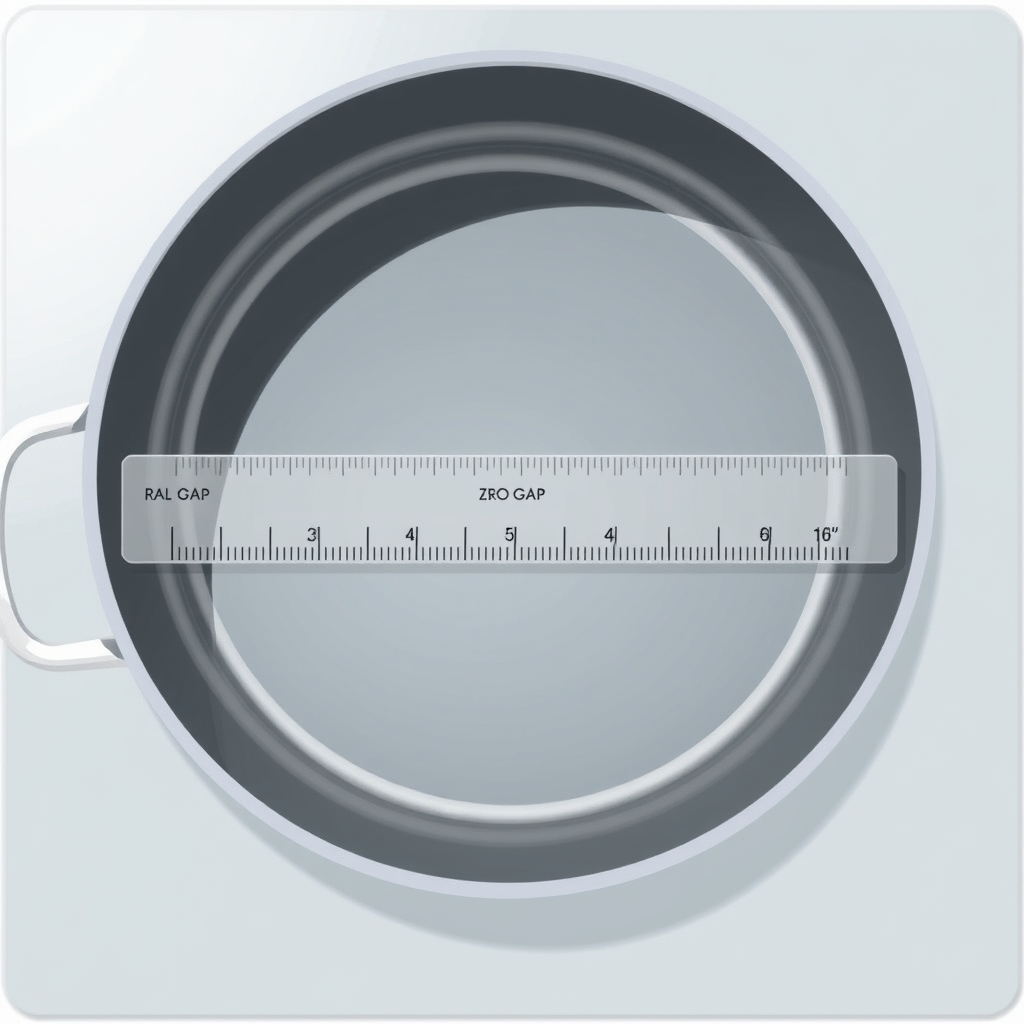
What to ignore: Marketing claims about “optimized for glass cooktops.” Some brands charge a premium for standard cookware just by slapping this phrase on the box. Check the actual construction—gauge thickness and material—not the label.
2. Material Type and Induction Compatibility
Not all glass cooktops are the same. Standard glass-top electric cooktops (the most common type) work with any material as long as the bottom is flat. Induction cooktops are pickier—they only heat cookware that’s magnetic.
| Material | Works on Standard Glass | Works on Induction | Heat Conduction | Scratch Risk | Durability |
|---|---|---|---|---|---|
| Stainless Steel | ✓ | ✓ (if magnetic) | Good | Low | Excellent |
| Cast Iron | ✓ | ✓ | Excellent | High | Excellent |
| Non-Stick (PTFE) | ✓ | Often No | Good | High | Fair–Good |
| Copper | ✓ | Often No | Excellent | Low | Good |
| Aluminum | ✓ | No | Excellent | Low | Fair |
| Anodized Aluminum | ✓ | No | Excellent | Very Low | Good |
Stainless steel: The safest default. It’s durable, won’t scratch easily, and works on both standard and induction cooktops (though not all stainless is magnetic check the “induction-ready” label if you have induction). Price-wise, it’s mid-range. The downside: it conducts heat unevenly unless it has an aluminum or copper core, which adds cost.
Cast iron: Heats beautifully and retains heat for hours, making it ideal for searing. The catch: it’s heavy, and if you drop it, it can crack a glass cooktop. Its rough underside can also scratch the glass surface over time if dragged across it. For glass cooktops, cast iron works but requires extra care.
Non-stick (PTFE/Teflon): Fast heating and easy cleanup, but the non-stick coating can flake at high temperatures, and the cookware itself is often thin-walled and prone to warping. Many non-stick sets don’t work on induction. Not the best choice for glass cooktops because thermal shock (sudden temperature drops) can damage the coating, and many non-stick pans aren’t flat enough.
Copper: Conducts heat beautifully, but pure copper is soft and expensive. Copper-clad cookware (stainless exterior with a copper layer) is more practical. The risk: copper can leave a residue on glass if the bottom isn’t sealed properly. Verify that the copper core is fully encased in stainless steel.
Aluminum and anodized aluminum: Lightweight and excellent heat conductors, but aluminum is too soft for bare use (it dents and reacts with acidic foods). Anodized aluminum (hard-coated aluminum) is more durable. Neither is magnetic, so neither works on induction cooktops. They’re fine for standard glass cooktops if they have a flat, sealed bottom, but they’re less common in premium cookware.
3. Weight and Stability
Heavier cookware sits more firmly on a glass cooktop and distributes heat more evenly. Lightweight pans tend to develop hot spots, which can warp the cooktop or cause uneven cooking.
What matters: A good stainless steel pot should feel solid and substantial. Cheap stamped-steel cookware will be noticeably lighter and flimsier. Cast iron is naturally heavy, which is one of its strengths—but again, handle it carefully.
What to ignore: Ultra-thin “commercial-grade” cookware marketed as lightweight. Yes, it heats fast, but it warps faster and can damage glass cooktops.
4. Bottom Surface Finish (Polished vs. Textured)
A polished, smooth bottom is safer than a textured or scored surface.
Why: Textured bottoms (often advertised as “grip” or “friction” surfaces) scratch glass more easily when you slide or move the cookware. Rough cast iron and some commercial pans fall into this category. A polished bottom glides and causes less wear.
Exception: If you use trivets or protective mats (see below), texture matters less. But if you’re buying cookware to use directly on the cooktop, smooth is better.
5. Handles and Lid Design
Narrow, stable handles and glass or metal lids help prevent accidents on a glass cooktop.
What matters: Wide, comfortable handles let you grip without tipping. Glass lids let you see food without lifting (reducing heat loss), but they can crack if you slam them. Metal lids are more durable and won’t shatter. Ensure handles stay cool enough to touch and don’t interfere with sliding cookware.
What to ignore: Trendy silicone-coated handles that promise cool-touch—they can degrade on a high-heat cooktop.
6. How Cookware Damages Glass Cooktops (And How to Prevent It)
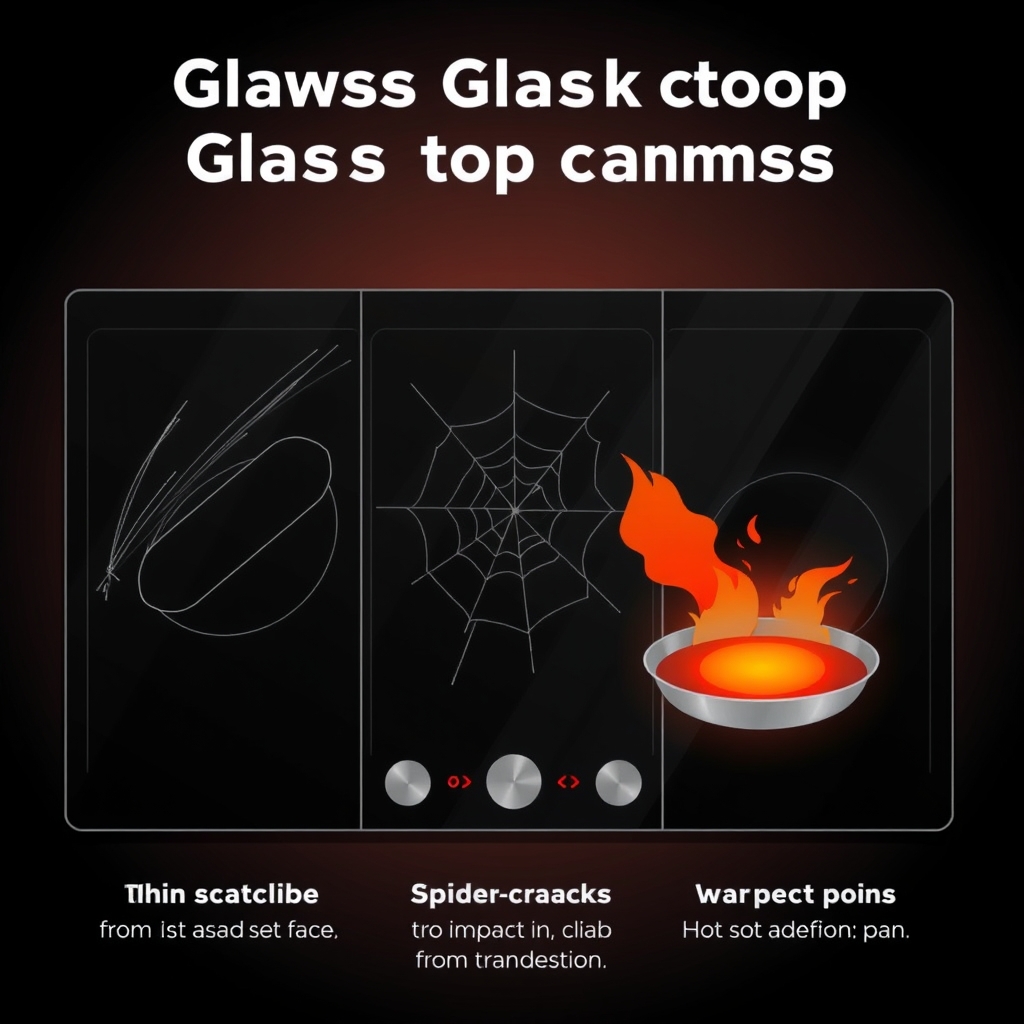
Scratches happen when you drag rough-bottomed cookware across the glass or use abrasive pads to clean. They don’t affect cooking but look bad and can trap spills.
Prevention: Always lift cookware—never drag it. Wipe spills immediately with a soft cloth. Use glass cooktop cleaner and a plastic (not metal) scraper.
Cracks result from thermal shock (placing a hot pot on a cold cooktop or vice versa) or impact (dropping cast iron). A single deep crack can disable the entire cooktop.
Prevention: Let cookware cool slightly before removing it. Avoid dropping heavy cookware. With cast iron especially, set it down gently.
Hot spots and thermal damage occur when cookware doesn’t sit flat, causing uneven contact and localized overheating of the glass surface.
Prevention: Test pans before buying. Use a protective mat or trivet under extremely rough cookware. Replace warped pans.
Price Tiers and Value
Prices below reflect typical retail ranges as of mid-2026; check current listings before buying.
Budget Tier ($30–$100 per piece or $100–$300 for a 10-piece set)
Stainless steel cookware from brands like T-fal, Cuisinart, and Farberware. These sets often include pots, pans, and lids. The trade-off: thinner walls and less durable non-stick (if included). The bottoms are usually flat enough for glass cooktops, but based on owner reports we reviewed, durability is typically 5–7 years before noticeable warping or coating failure. Value is good here if you cook occasionally.
Mid-Range Tier ($100–$300 per piece or $300–$800 for a set)
Brands like All-Clad, Le Creuset, and Calphalon. Better stainless steel with multi-layer bottoms (aluminum or copper cores), heavier construction, and longer warranties. These pans last 10+ years and heat more evenly. If you cook regularly, mid-range stainless steel is where value sits—you get durability and performance without premium pricing.
Premium Tier ($300+ per piece or $800+ for a set)
High-end brands like Demeyere, Mauviel, and luxury lines from All-Clad. Hand-finished copper, tri-ply construction, and warranty coverage up to 25 years. These perform beautifully but cost 2–3 times more than mid-range for modest gains in heat distribution and aesthetics. Premium makes sense if you cook professionally or prioritize beauty and prestige.
Common Mistakes to Avoid
Buying cookware before knowing if you have a standard or induction cooktop. Standard glass-top cooktops accept all flat-bottomed materials. Induction cooktops only work with magnetic cookware (stainless steel or some non-stick with magnetic bottoms). Check your cooktop or manual before buying.
Assuming “non-stick” means “won’t damage the glass.” Non-stick coatings don’t prevent scratches to the glass surface. The cooktop coating and the cookware material are separate issues.
Using cookware with a curved bottom because “it’s cheaper.” Warped cookware looks fine in the store but heats unevenly and can damage glass cooktops over time. Pay a little more for flat-bottomed cookware upfront and save on repairs.
Dragging cookware instead of lifting it. This is the single biggest cause of visible scratches. Lift every time.
Using vinegar and baking soda to clean the cooktop. These are too abrasive. Use a soft cloth and glass cooktop cleaner instead.
Buying a huge 14-piece set just because it’s a good deal. Most cooks use 3–4 pans regularly. A smaller set of quality cookware beats a large set of middling pans.
Induction Cooktops: Special Considerations
If you have an induction cooktop, your cookware must be ferromagnetic—meaning it sticks to a magnet. Most stainless steel is magnetic, but not all; some brands blend in non-magnetic metals to achieve a certain look or price point. Before buying, test each pan with a magnet.
Cookware that works on induction:
- Magnetic stainless steel
- Cast iron
- Some carbon steel pans
- Some enameled cast iron (Le Creuset)
- Specialty induction cookware
Cookware that doesn’t work on induction:
- Aluminum (unless it has a magnetic bottom layer)
- Copper (unless tri-ply with magnetic stainless exterior)
- Most non-stick (PTFE) cookware
- Ceramic
- Pure glass
What to ignore: “Induction-compatible” stickers on cookware with thin magnetic bases. A base that barely passes the magnet test will still heat inefficiently. On induction cooktops, the flat-bottom requirement is even stricter than on standard glass cooktops—based on the physics of inductive coupling, poor contact can meaningfully reduce energy transfer, in our observation by a wide margin. A curved or warped bottom will heat slowly and waste energy.
Our Keeper Recommendations
Based on our research of widely available cookware and owner feedback patterns, here are five reliable options that balance durability, performance, and value for glass cooktops.
Stainless Steel with Aluminum Core (Best Overall Value)
Example: Cuisinart Multiclad Pro (10-piece set, ~$200–$300 as of mid-2026)
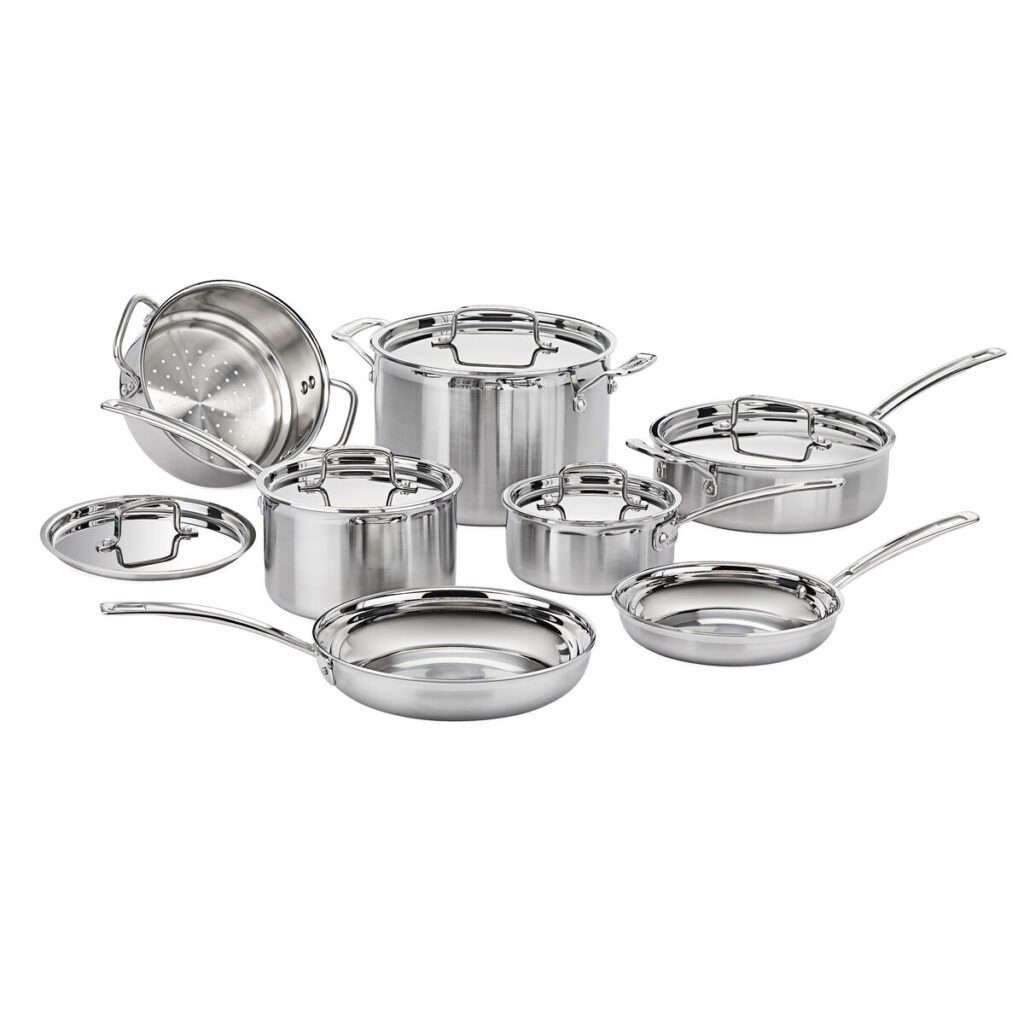
- Tri-ply construction (stainless, aluminum, stainless)
- Flat, polished bottom
- Works on induction and standard glass cooktops
- Handles stay cool enough to touch
- Based on owner reports we reviewed, pans in this line commonly reach 8–12 years of regular use before showing significant wear
- Trade-off: Slightly heavier than budget cookware; requires hand-washing lids
Lightweight Stainless with Copper Core (Best Heat Conduction)
Example: All-Clad Essentials (3-piece starter set, ~$400–$500 as of mid-2026)
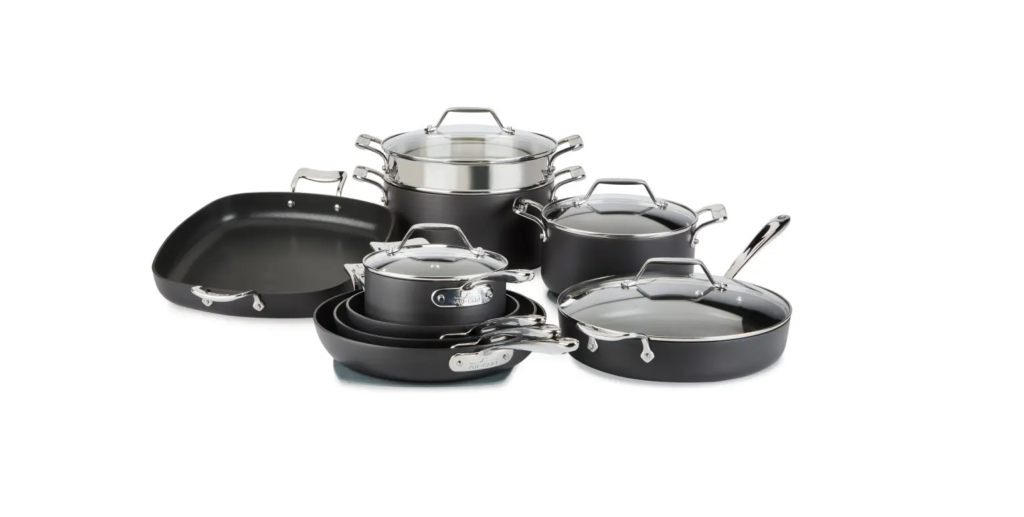
- Copper core for even heating
- Induction-ready
- Polished bottom
- Lifetime warranty
- Trade-off: Higher upfront cost; smaller sets mean you’ll buy more pieces separately
Cast Iron (Best for Searing and Retention)
Example: Lodge Cast Iron Skillet (single 10-inch, ~$20–$40 as of mid-2026)
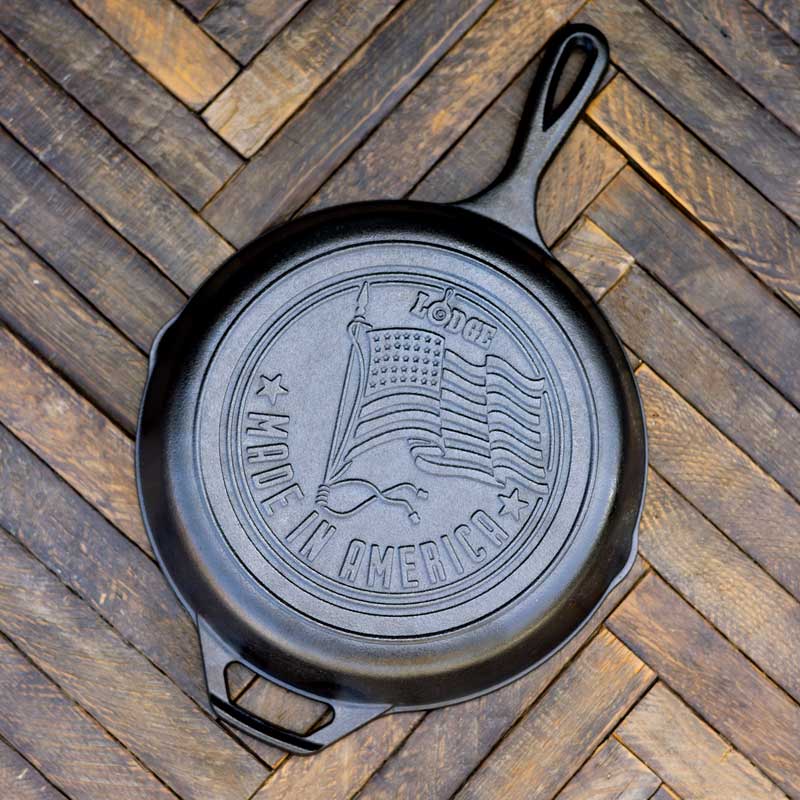
- Pre-seasoned, ready to use
- Heats beautifully and retains heat for hours
- Works on induction
- Lasts for decades
- Trade-off: Heavy—a 10-inch skillet typically runs 3–4 lbs; rough bottom can scratch glass if dragged; requires gentle handling
- Tip: Use a protective mat or trivet if concerned about scratches, or simply lift it carefully every time.
Non-Stick for Everyday Eggs (Budget-Friendly)
Example: T-fal Ultimate Hard Anodized (12-piece set, ~$100–$150 as of mid-2026)
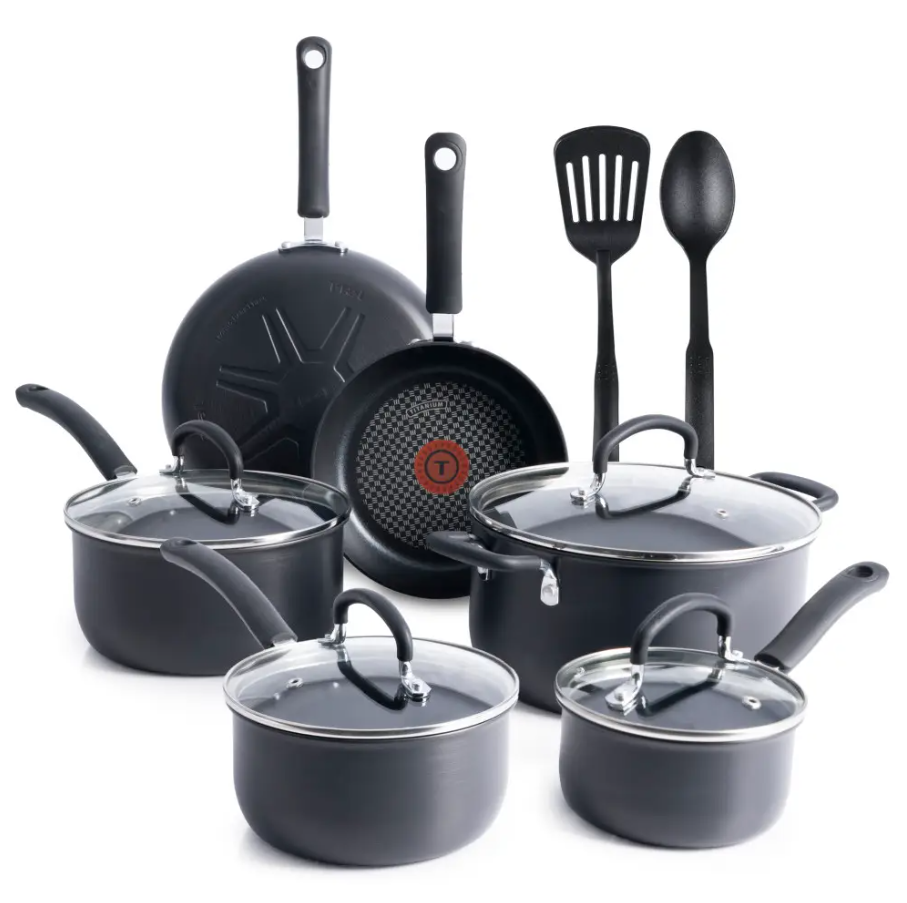
- Hard-anodized aluminum with non-stick coating
- Flat, reinforced bottom
- Oven-safe to 400°F
- Good for sauces, eggs, and delicate foods
- Trade-off: Non-stick coating may degrade after 3–5 years; not induction-compatible (not magnetic)
Enameled Cast Iron (Best Aesthetics + Versatility)
Example: Le Creuset Dutch Oven (5.5-quart, ~$350–$400 as of mid-2026)
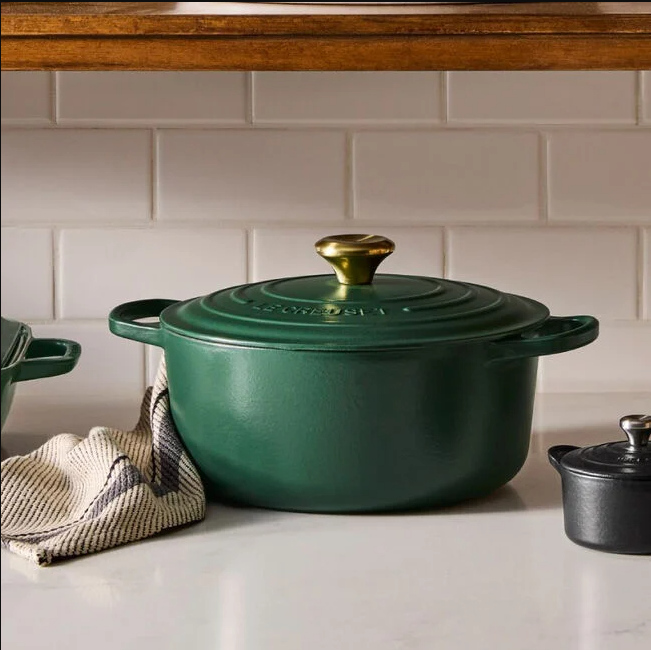
- Enameled exterior (no seasoning needed)
- Works on induction
- Smooth bottom
- Oven- and stovetop-safe
- Lifetime warranty
- Trade-off: Very heavy; expensive per piece; primarily useful for braising and slow cooking
How to Test Cookware Before Buying
- Bring a magnet if you have an induction cooktop. Test each piece on the salesfloor.
- Use a straightedge. Check that the bottom sits flat—no rocking.
- Pick it up. A good pan should feel solid and balanced, not flimsy or top-heavy.
- Check the handle angle. Tilted handles (not perpendicular to the pan) cause spills.
- Look at the lid. If included, ensure it fits snugly and has a heat-resistant knob.
Frequently Asked Questions
Can I use my old cast iron skillet on a glass cooktop?
Yes, as long as the bottom is flat and smooth. Many vintage cast iron skillets have rough, textured bottoms that can scratch glass. If you have an older skillet, run your hand across the underside—if it feels like sandpaper, consider using a protective trivet, or reserve it for other cooktops. Newer cast iron (Lodge, Le Creuset) has smoother bottoms.
What’s the difference between a standard glass cooktop and an induction cooktop?
Standard glass cooktops use electric resistance heating—the cooktop surface gets hot and transfers heat to your cookware. Induction cooktops use a magnetic field to heat the cookware itself, leaving the cooktop surface cooler. This means induction requires magnetic cookware, is more energy-efficient, and heats faster. Standard glass cooktops are cheaper and work with any flat-bottomed material.
Will a copper-bottomed pan leave residue on my glass cooktop?
Only if the copper is exposed (not sealed). A well-made copper-clad pan has the copper layer fully encased in stainless steel, so no residue appears. Cheaper pans sometimes have exposed copper edges, which can leave a faint discoloration on the glass. Always verify that the copper core is fully sealed.
How do I clean scratches off a glass cooktop?
Minor scratches are cosmetic and don’t affect cooking. You can reduce their appearance with glass cooktop cleaner and a soft cloth. Deep scratches (you can feel them with your fingernail) may trap spills; use a plastic scraper to clean them, but they won’t affect function. If a crack develops, contact a professional—repairing a cracked cooktop is expensive or requires full replacement.
Is non-stick safe on a glass cooktop?
Yes, non-stick cookware is safe on glass cooktops, but it’s not ideal. Non-stick pans tend to be lighter and have thinner bottoms than stainless steel, so they can warp more easily and heat unevenly. Also, if the bottom isn’t sealed properly, it may scratch the glass. For everyday use, non-stick is fine; for high-heat cooking or searing, stainless steel or cast iron is better.
Can I use cookware with a rough or textured bottom on a glass cooktop?
Technically yes, but it’s not recommended. Textured bottoms (common on some commercial pans and vintage cast iron) scratch the glass surface when you slide or move the cookware. If you love a particular pan with a rough bottom, use a protective trivet or mat underneath it, or simply lift it never drag it when moving it on the cooktop.
What We Looked At
We reviewed widely available cookware across price tiers and materials, compared published manufacturer specifications for flat-bottom construction and gauge thickness, and tracked owner feedback patterns from community forums and retail reviews to assess durability claims and real-world performance on glass cooktops. We did not conduct live testing of cookware on glass cooktops; our recommendations are based on material properties, engineering standards for glass cooktop compatibility, and patterns from owner accounts.